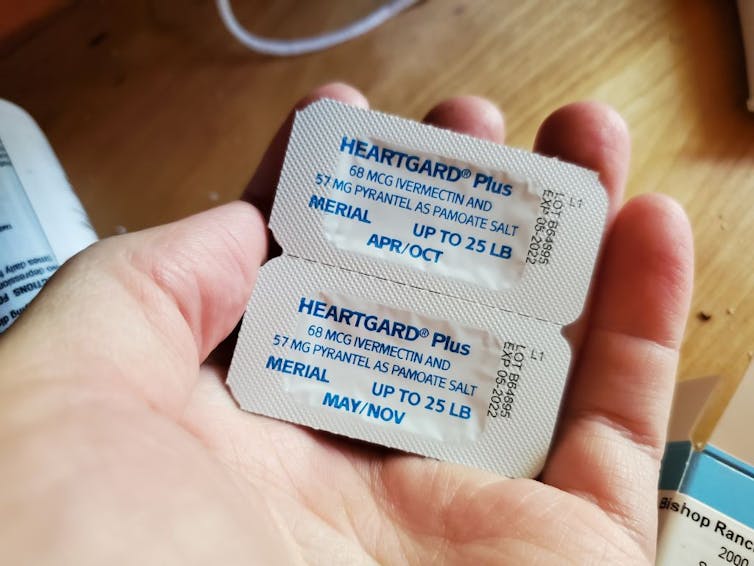
Though researchers have been studying the animal deworming drug ivermectin for decades, there is no evidence that it’s a safe or effective way to treat cancer in people.
However, a June 2026 study put the topic back in the spotlight. After being downloaded more than 85,000 times before its official publication, the study gained traction on social media – particularly X – and within alternative health communities, where it was shared widely to bolster broader claims about repurposing antiparasitic drugs as cancer treatments. While traditional news outlets were covering renewed public interest in ivermectin for cancer following the COVID-19 pandemic, much of the conversation surrounding this particular new study unfolded outside of mainstream media coverage.
Shortly after the study was published, scientists raised serious concerns about how the study arrived at its findings, conflicts of interest and the peer-review process.
For one, the study did not have a comparison group to determine whether patients taking a combination of ivermectin and another antiparasitic truly saw improvements due to these drugs or the conventional cancer therapies they were also taking. Moreover, the study relied on patients’ own self-reports rather than medical record information. Unlike medical records, self-reports cannot be independently verified and are more susceptible to bias, making them less reliable as scientific evidence.
Although the journal issued an Expression of Concern shortly after publication, the study has not yet been retracted.

Smith Collection/Gado via Getty Images
This case illustrates a recurring challenge in how science reaches the public. Early findings can spread quickly through news coverage, social media and online communities, while the evidence needed to fully evaluate them can take months or years to develop. By the time additional evidence emerges, many people have already shared the original report or made financial and medical decisions based on it.
As a health communication researcher, I study how people interpret new cancer information, how health misinformation spreads and how communication can support good health behaviors.
The renewed attention surrounding ivermectin and other antiparasitic drugs offers an opportunity to understand why some scientific findings become influential before researchers fully understand what they mean.
Table of Contents
Why ivermectin keeps returning
Repurposing existing medications for new therapeutic uses, including treating cancer, has a long history.
Among the drugs attracting growing attention for their repurposing potential are antiparasitic medications such as ivermectin. The U.S. Food and Drug Administration has not approved the use of these drugs for cancer. Although laboratory studies on cell cultures have shown some anticancer activity, and early clinical trials are underway, there is not enough evidence to support their use in cancer care.
Despite the limited clinical evidence supporting antiparasitic drugs as cancer treatments, the science and the public conversation unfolded very differently. Popular interest in these drugs was driven less by emerging research than by the spread of compelling personal stories. And possibly none were more influential than that of Oklahoma businessman Joe Tippens.
In 2018, Tippens started a blog describing his recovery from advanced lung cancer. He wrote that while receiving immunotherapy as part of a clinical trial, he had also begun taking fenbendazole, a deworming medication intended for animals. His account spread rapidly online, transforming fenbendazole from a little-known veterinary drug into one of the most-discussed examples of drug repurposing in cancer communities.
By 2019, interest in fenbendazole had circulated internationally. In South Korea, singer Kim Chul-min announced that he was taking fenbendazole for lung cancer after learning about Tippens’ story. His disclosure fueled intense public interest, contributing to shortages of fenbendazole and prompting health officials to warn against its use as a cancer treatment.
The pandemic dramatically expanded the conversation about repurposing antiparasitic medications. Ivermectin was widely promoted as a treatment for COVID-19, but by 2022, large, randomized clinical trials had found that the drug failed to provide meaningful benefits for patients. By then, however, it had become one of the most recognizable medications associated with the pandemic.
When the paper claiming ivermectin could treat cancer was published in June 2026, the deworming medication was already a familiar drug after years of public attention during the pandemic. Interest in its potential use against cancer had also been amplified by celebrity endorsements, patient stories, podcasts and online communities.
Financial incentives also reinforced continued attention. As interest in ivermectin grew, a market emerged around promoting and selling the drug for unproven uses. Physicians, pharmacies, politicians, influencers and media personalities had economic incentives – including paid partnerships or selling the drug through their own businesses – to keep the conversation around ivermectin alive even after scientific evidence remained limited.
Online conversations and real-world decisions
Once published, scientific papers are often viewed and shared online, where their findings become intertwined with headlines, personal stories and commentary.
Those conversations don’t simply reflect public interest. They can also shape it.
After Joe Rogan and Mel Gibson discussed ivermectin and fenbendazole as potential cancer treatments on Rogan’s popular podcast, oncologists reported that patient interest in these drugs spread “like wildfire,” prompting more people to ask about them during clinic visits. Researchers later documented that prescriptions combining ivermectin and drugs similar to fenbendazole among cancer patients more than doubled following these celebrity endorsements.
I observed a similar pattern in my own work. I use social listening methods to monitor how cancer misinformation spreads online in real time. This involves tracking public conversations across social media platforms and identifying changes in the volume and content of posts. Within weeks of Rogan’s podcast, online conversations about ivermectin and fenbendazole had increased by 198% over the course of a month, illustrating how quickly high-profile discussions can attract public attention.
Learning how research travels through those conversations may be just as important for public health as understanding the study itself.
Science moves more slowly than social media
The challenge of evaluating early scientific findings isn’t unique to antiparasitic drugs or one particular paper on ivermectin and cancer.
Science and social media operate on very different timelines. A study can be published and shared around the world within hours. Determining how much confidence to place in its findings often takes months or years as researchers conduct additional studies, attempt to replicate the results and tie together multiple lines of evidence.
Researchers have found that early information can shape what people believe even after it has been corrected or updated. Known as the continued influence effect, this phenomenon helps explain why initial reports often leave a lasting impression even as new evidence comes to light.

iebre/iStock via Getty Images Plus
In the case of ivermectin, early claims about its benefits may continue to influence people’s decisions even after larger, more rigorous studies fail to support initial claims. Some may continue using the drug, delay or forgo treatments proven to be effective, or remain convinced that the drug is helpful despite accumulating evidence to the contrary.
The fact that scientific understanding develops over time does not mean people should ignore promising new research. Every medical advance begins with early findings that require confirmation through additional research. But a single study rarely changes clinical practice on its own.
When the next study goes viral
The next promising study about cancer or another disease is almost certain to appear on your social media feed before long. Whether that study involves ivermectin or something else, a few principles for interpreting new research can help you navigate scientific uncertainty.
Don’t confuse publication with proof. A published study often marks the beginning of scientific discussion, not the end of it. Confidence in findings develops over time as evidence accumulates and results are weighed alongside all available research. If you see something described as a breakthrough, ask yourself whether it reflects a growing body of research or the results of a single study.
Elevate Your Health for Just $29.99/Month
Join the Precision Wellness Subscription at My Healing 365 and get discounted services, priority coaching access, virtual care, and exclusive wellness resources to support your physical, emotional, and hormonal health.
Join for $29.99/MonthPay attention to what happens next. Scientific findings continue to evolve after publication through critiques and new studies that confirm, refine or challenge the original results. At times, a journal’s editorial board may issue corrections or retractions that also contribute to this process. This ongoing scrutiny is a strength of science, not a flaw. If you see a study that could influence your health decisions, don’t stop there. Check whether additional studies have been published or whether trusted medical organizations have updated their recommendations.
Put new findings into context. Before making personal health decisions, discuss promising research with a trusted healthcare professional who is familiar with the relevant medical evidence. They can help you make sense of the study based on your own health needs.
A study can go viral in a day. Good science takes time.
























