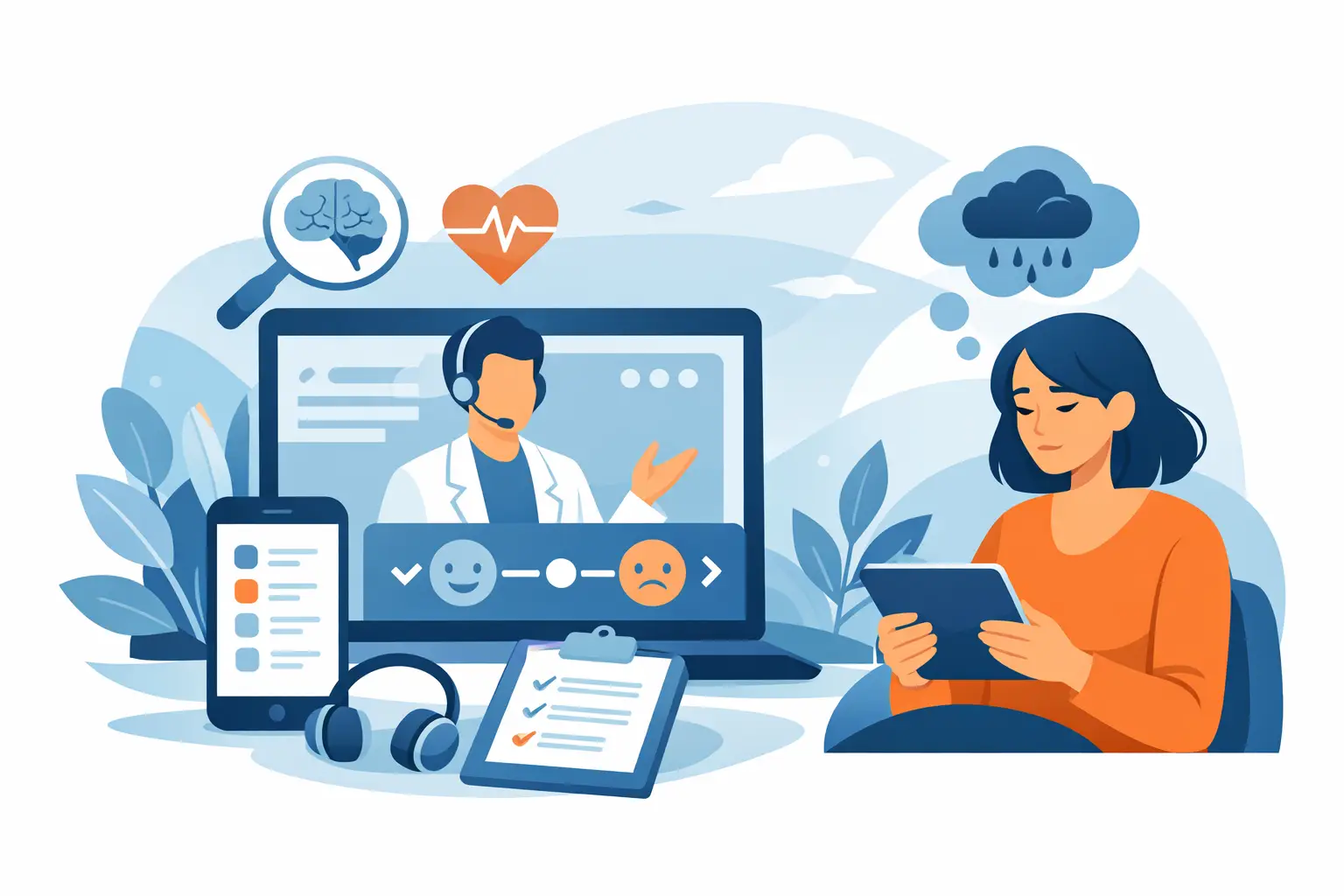
Feeling unlike yourself can be hard to explain, especially when you are still showing up for work, family, and everyday responsibilities. Understanding how online depression screening works can give you a private, low-pressure place to put words to what you have been carrying and decide whether it is time to seek support.
An online screening is not a label and it is not meant to replace a full clinical evaluation. It is a structured check-in that looks for patterns commonly associated with depression, then helps guide the next step. For many people, that step is simply clarity. For others, it opens the door to treatment with a licensed provider without adding another in-person appointment to an already full schedule.
Table of Contents
What an online depression screening measures
Most depression screenings use brief, evidence-based questions about how you have felt and functioned over the past two weeks. You may be asked about low mood, loss of interest in things you usually enjoy, changes in sleep or appetite, trouble concentrating, low energy, feelings of guilt or hopelessness, and changes in how slowly or restlessly you move through the day.
The questions are straightforward because depression does not always look like constant sadness. It can feel like irritability, exhaustion that sleep does not fix, pulling away from people, or struggling to make even small decisions. A screening helps identify whether those experiences may be part of a larger pattern worth discussing with a professional.
Your answers are usually scored based on how often you have experienced each symptom. A higher score can suggest that symptoms may be more frequent or more disruptive. But a score alone cannot tell the whole story. Stress, grief, medical conditions, medications, substance use, anxiety, and major life changes can all affect how you feel.
How online depression screening works step by step
The experience is designed to be simple, but the information you share can be meaningful. While details vary by platform, the process generally follows a few clear stages.
You answer questions privately
You complete a short questionnaire online, often from home and on your own schedule. The questions are not a test you can pass or fail. The most helpful approach is to answer based on your real experience, rather than the version of yourself you think you should be.
If you have had a difficult week but have felt mostly well for months, reflect on the timeframe in the prompt. If your symptoms come and go, choose the answer that most accurately represents how often they have shown up. Honest answers give a provider a better starting point if you decide to move forward with care.
Your responses are reviewed in context
Some screenings provide an immediate educational result, such as a range that suggests minimal, mild, moderate, or more significant symptoms. This can be useful, but it should be viewed as a signal to pay attention, not a diagnosis.
In a telehealth treatment setting, a licensed provider may review your answers alongside your health history, current medications, symptoms, and goals. They may ask follow-up questions about when symptoms began, how they affect daily life, whether anxiety or sleep problems are also present, and what support you have around you. This fuller conversation is what helps determine whether depression is likely, whether another concern may be contributing, and what care may make sense.
You discuss options for support
If treatment is appropriate, your provider can recommend a personalized plan. Depending on your symptoms and clinical needs, that may include lifestyle guidance, therapy recommendations, regular check-ins, or clinically appropriate medication. Medication is not the right choice for everyone, and it is never the only form of support. The best plan depends on your medical history, symptom severity, preferences, and response over time.
With virtual mental health care, follow-up does not have to mean rearranging your day around a waiting room. My Healing 365 connects eligible adults with licensed providers online, with ongoing messaging and treatment guidance designed to make care feel more manageable.
Screening is a starting point, not a diagnosis
It is easy to see a result and assume it defines what is happening. It does not. Depression screening tools are designed to identify symptoms that deserve more attention. They do not diagnose depression on their own, predict exactly how you will feel next month, or replace a conversation with a qualified clinician.
That distinction matters because two people can receive similar screening scores and need different kinds of care. One may be dealing with short-term distress after a major life event. Another may have symptoms that have been building for months and are interfering with sleep, work, relationships, and self-care. A provider considers both the score and the person behind it.
A low score also does not mean you have to ignore your feelings. If you are struggling, your experience is valid even if it does not fit neatly into a questionnaire. Support can be helpful before symptoms become overwhelming.
Elevate Your Health for Just $29.99/Month
Join the Precision Wellness Subscription at My Healing 365 and get discounted services, priority coaching access, virtual care, and exclusive wellness resources to support your physical, emotional, and hormonal health.
Join for $29.99/MonthWhy screening online can make it easier to ask for help
The hardest part of getting mental health support is often getting started. You may worry about being judged, feel unsure whether your symptoms are “bad enough,” or simply not have time to schedule and travel to an appointment.
Online screening removes some of that friction. You can take the first step in a familiar, private setting and learn more about what you are experiencing before deciding what to do next. For busy parents, professionals, caregivers, and anyone who has been putting their own needs last, that convenience can make care feel possible.
Privacy should still be a priority. Before sharing personal health information online, choose a service that clearly explains how it handles your information and uses secure systems for care. If you continue with treatment, ask how provider communication works, how prescriptions are handled when appropriate, and what follow-up support is available.
When to move beyond a screening
Consider speaking with a licensed provider if low mood, numbness, worry, fatigue, or sleep changes have lasted two weeks or more, are affecting your daily routine, or feel difficult to manage on your own. It is also a good idea to reach out if you are withdrawing from people you care about, losing interest in activities, or relying on alcohol or other substances to cope.
You do not need to wait until you are in crisis. Early support can help you understand your symptoms and create a plan before they take up more space in your life. Treatment can also be adjusted as your needs change, which is especially valuable when symptoms overlap with anxiety, insomnia, stress, or a major transition.
If a screening asks about thoughts of harming yourself or not wanting to live, answer honestly. Those questions are there to identify when immediate support may be needed. If you are in immediate danger or think you may act on thoughts of self-harm, call 911 or go to the nearest emergency room. In the United States, you can also call or text 988 for the Suicide & Crisis Lifeline.
Make room for an honest check-in
An online depression screening can take only a few minutes, but it may help you notice something you have been minimizing for a long time. It cannot tell your entire story, and it does not have to. Its purpose is to help you pause, recognize what is affecting you, and consider support that fits your life.
You do not have to go through a difficult season alone. A private screening and a conversation with a licensed provider can be a practical first step toward feeling more supported, more informed, and more like yourself again.























