Dryness can feel like a small issue until it starts affecting sleep, comfort, confidence, intimacy, or the way you feel in your own skin. So, can low estrogen cause dryness? Yes. Lower estrogen is a common contributor to vaginal, skin, and eye dryness, especially during perimenopause and menopause. The good news is that these changes are real, common, and treatable with the right medical guidance.
Table of Contents
Can Low Estrogen Cause Dryness Throughout the Body?
Estrogen does more than regulate menstrual cycles. It supports moisture, elasticity, circulation, and tissue health in several parts of the body. When estrogen levels fall or fluctuate, the tissues that depend on those effects may become thinner, less lubricated, and more sensitive.
For many women, vaginal dryness is the most noticeable symptom. Lower estrogen can reduce natural lubrication and change the health of vaginal tissues. This may lead to burning, itching, irritation, discomfort during sex, or a feeling of tightness. Some people also notice more frequent urinary urgency, burning with urination, or urinary tract infections.
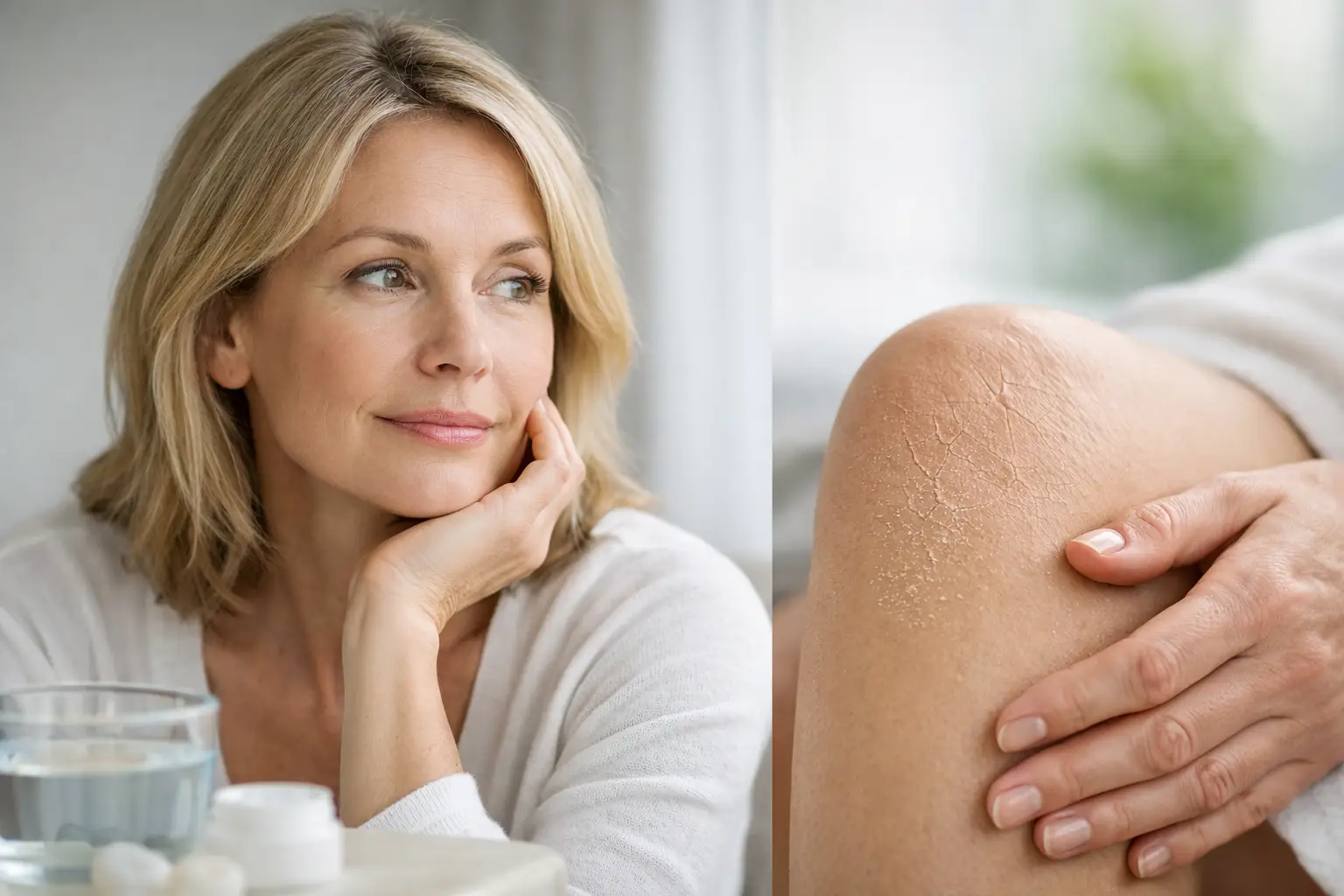
Dry, less elastic skin can also become more noticeable during hormonal shifts. You may feel that your usual moisturizer is no longer enough, or that your skin is suddenly more reactive, itchy, or dull. Some women experience dry eyes as well, particularly when menopause overlaps with other factors such as screen time, contact lens use, allergies, or certain medications.
These symptoms are not a personal failing or something you simply have to tolerate. They are often part of a broader hormonal picture that deserves thoughtful attention.
Why Estrogen Changes Affect Moisture
Healthy vaginal tissue is responsive to estrogen. When levels are steadier, the tissue tends to be thicker, more flexible, and better able to maintain moisture. As estrogen declines, blood flow and natural lubrication can decrease. The vaginal environment may also become less acidic, which can make tissue feel more vulnerable to irritation.
Skin is affected differently but follows a similar pattern. Estrogen helps support collagen production and the skin barrier, which helps hold onto water. With less estrogen support, skin may become thinner and lose moisture more easily. This can be especially frustrating when dryness shows up alongside other changes like sleep disruption, hot flashes, shifts in mood, or lower libido.
It is also possible to have fluctuating estrogen during perimenopause rather than consistently low levels. That is why symptoms can feel unpredictable. You might have dry, uncomfortable days followed by days that feel relatively normal, while your cycle becomes less regular or other symptoms come and go.
Signs Dryness May Be Hormone-Related
Dryness alone does not automatically mean estrogen is low. But it is more likely to be hormone-related when it appears with other changes that affect how you feel day to day.
Vaginal dryness that begins in the years leading up to menopause, after menopause, after ovary removal, or during certain cancer treatments deserves a conversation with a clinician. The same is true if discomfort during intimacy is new, worsening, or causing you to avoid connection with your partner.
Other symptoms that can occur alongside estrogen changes include hot flashes, night sweats, disrupted sleep, irregular or skipped periods, lower sex drive, mood changes, brain fog, and changes in body composition. Not everyone experiences the same combination. Hormone health is personal, and symptoms need to be assessed in the context of your medical history, current medications, and goals.
Lower estrogen can also happen outside menopause. Postpartum hormonal changes, breastfeeding, some birth control methods, medications that affect hormone production, intensive exercise, significant weight changes, and certain medical conditions may all play a role. Men can experience dryness-related symptoms too, though the causes and treatment approach may differ and should be evaluated individually.
When Dryness May Have Another Cause
Hormones are only one piece of the puzzle. Vaginal irritation can also be related to yeast infections, bacterial vaginosis, sexually transmitted infections, dermatologic conditions, fragranced soaps, detergents, lubricants, or allergic reactions. Dry eyes may be tied to allergies, autoimmune conditions, medications, dehydration, or prolonged screen use. Skin dryness can be influenced by weather, harsh cleansers, thyroid conditions, diabetes, and nutritional factors.
That is why self-diagnosing based on one symptom can be limiting. If you have unusual discharge, odor, bleeding after sex, pelvic pain, sores, fever, or new severe symptoms, seek prompt medical evaluation. Postmenopausal bleeding should always be discussed with a healthcare professional.
Ways to Find Relief While You Explore the Cause
Gentle, consistent care can improve comfort while you work with a clinician to understand what is driving your symptoms. For vaginal dryness, regular use of a vaginal moisturizer and a water- or silicone-based lubricant during intimacy may help reduce friction. Avoid scented washes, douches, and products that cause stinging or irritation. The vagina is self-cleaning, and gentle external cleansing with warm water or a mild, fragrance-free cleanser is usually enough.
For dry skin, focus on simple barrier-supporting habits. Use a fragrance-free cream after bathing, keep showers warm rather than hot, and choose cleansers that do not leave skin feeling tight. For dry eyes, taking screen breaks, staying hydrated, and using preservative-free lubricating eye drops may help. Persistent eye pain, vision changes, or significant redness should be assessed by an eye care professional.
These steps can be useful, but they may not fully address dryness caused by a meaningful estrogen decline. If symptoms are affecting your relationships, sleep, confidence, or everyday comfort, it may be time for a more personalized conversation.
Treatment Options for Low-Estrogen Dryness
Treatment depends on your symptoms, health history, and whether you are also dealing with whole-body menopause symptoms. For vaginal symptoms that are primarily local, clinicians may discuss low-dose vaginal estrogen in forms such as creams, tablets, inserts, or rings. These treatments are designed to act mainly in vaginal tissues and can be highly effective for many patients.
Some people may be candidates for other prescription options, including non-estrogen therapies. If hot flashes, night sweats, sleep changes, mood shifts, or other systemic symptoms are also present, systemic hormone therapy may be part of the discussion. It can be delivered through options such as patches, gels, pills, or other formats, depending on what is medically appropriate.
Elevate Your Health for Just $29.99/Month
Join the Precision Wellness Subscription at My Healing 365 and get discounted services, priority coaching access, virtual care, and exclusive wellness resources to support your physical, emotional, and hormonal health.
Join for $29.99/MonthHormone therapy is not one-size-fits-all. Your clinician should review your personal and family history, including blood clotting concerns, certain cancers, unexplained bleeding, liver disease, cardiovascular risks, and medications. The goal is not to chase a number on a lab report. It is to understand your symptoms, assess safety, and create a plan that supports your quality of life.
A More Comfortable Next Step
Dryness can be an early signal that your body needs more support, not a reason to put your life or intimacy on pause. A personalized evaluation can help separate hormone-related changes from other causes and identify treatment options that align with your health needs and goals.
At My Healing 365, hormone care is designed to be convenient, private, and guided by ongoing medical oversight, so you can pursue relief from home with a plan built around how you want to feel. You deserve to feel comfortable in your body, connected in your relationships, and confident moving forward.

























