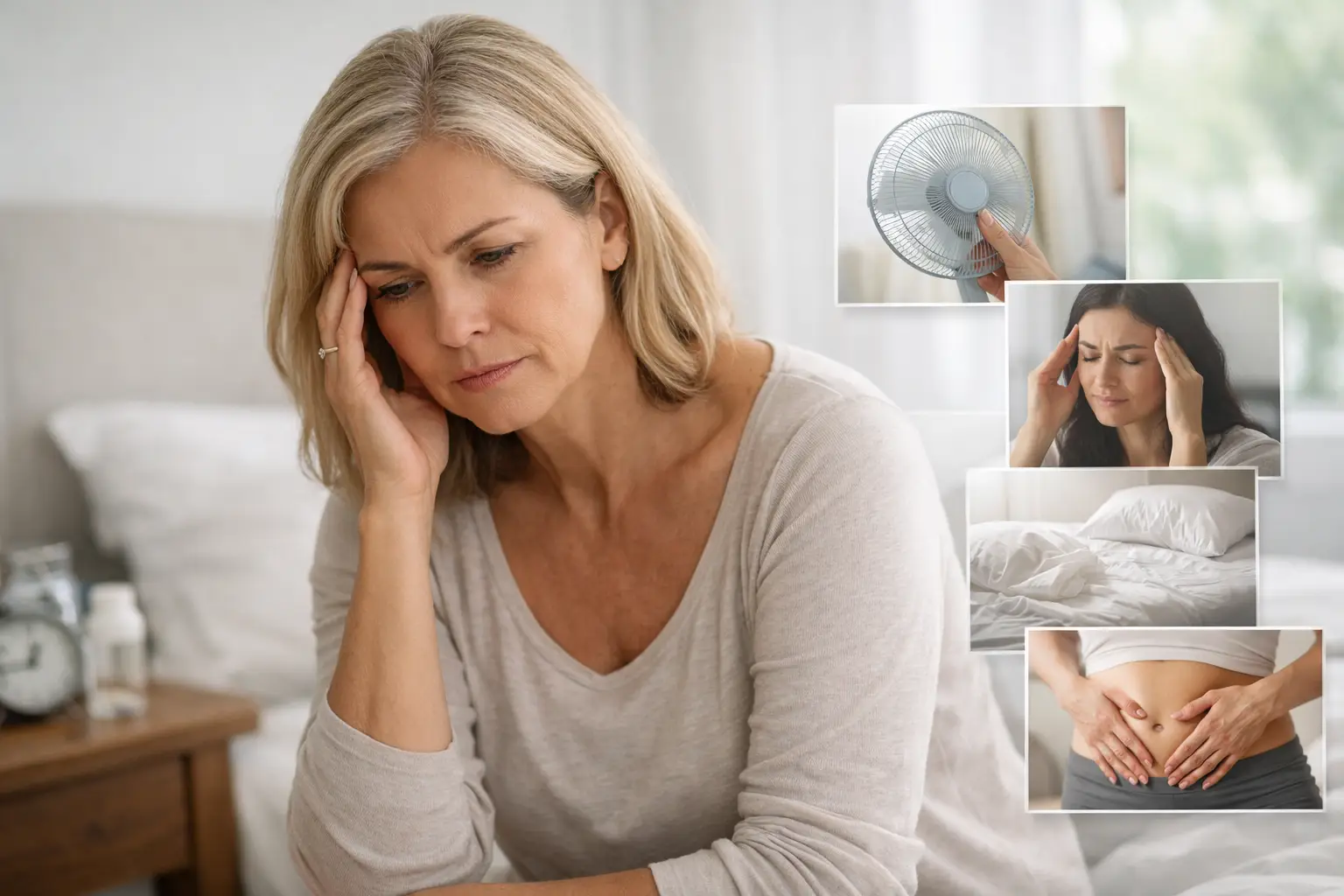
A hot flash during a meeting. A night of waking at 3 a.m. for no obvious reason. Feeling unlike yourself in your own body, even when your routine has not changed. Perimenopause symptoms can arrive gradually or seem to show up all at once, affecting sleep, mood, energy, confidence, and intimacy long before periods stop completely.
This transition is common, but struggling through it is not something you have to accept as your new normal. Understanding what is happening can help you make informed choices, find meaningful relief, and feel more like yourself again.
Table of Contents
What Is Perimenopause?
Perimenopause is the hormonal transition leading up to menopause. It often begins in a woman’s 40s, though it can start earlier or later. During this time, the ovaries do not simply produce less estrogen in a smooth, predictable line. Hormone levels can fluctuate, sometimes significantly, which is why symptoms may feel inconsistent from one month to the next.
Menopause is officially reached after 12 consecutive months without a menstrual period. Perimenopause can last several years before that point. Some women notice only mild changes, while others find that symptoms affect work, relationships, exercise, sleep, and their sense of well-being.
A changing cycle is often one of the first clues. Periods may become shorter, longer, heavier, lighter, closer together, or more spread out. But cycle changes are not the only sign, and they are not always the most disruptive one.
Common Perimenopause Symptoms
Every experience is personal. You may have several symptoms at once, or one symptom may stand out more than the rest. The intensity can also shift as hormones fluctuate.
Hot flashes and night sweats
A sudden rush of heat in the face, neck, or chest can be startling, especially when it comes with sweating, a racing heart, or a chilled feeling afterward. Hot flashes may last only minutes, but frequent episodes can interrupt concentration and make social situations uncomfortable.
Night sweats are hot flashes that occur during sleep. They can leave you overheated, wake you repeatedly, and contribute to exhaustion the next day. Poor sleep often makes other concerns – such as irritability, anxiety, and low energy – feel even more difficult to manage.
Sleep changes and daytime fatigue
Some women wake because of night sweats. Others find themselves awake without feeling hot at all. Trouble falling asleep, early waking, and less restorative sleep are all common during this stage.
Fatigue is not always solved by simply spending more time in bed. If sleep quality is declining, your body may not be getting the recovery it needs. Stress, sleep apnea, thyroid conditions, medications, and mood concerns can also affect sleep, which is one reason a personalized medical review matters.
Mood shifts, brain fog, and feeling off
Hormonal changes can affect the brain as well as the body. You may feel more irritable than usual, emotionally sensitive, anxious, or less able to handle everyday stress. Some women describe a sense of being unlike themselves, even when nothing obvious in life has changed.
Brain fog can include trouble focusing, forgetfulness, losing your train of thought, or feeling mentally slower than usual. These changes can be frustrating, especially for people who are used to being highly organized and productive. They deserve a thoughtful conversation, not dismissal.
Changes in weight and body composition
Weight changes during midlife are complex. Shifting hormones can influence where the body stores fat, particularly around the abdomen, while aging can also bring changes in muscle mass, sleep, activity level, and metabolism. The scale may move even when you feel that you are eating and exercising the same way you always have.
There is no single plan that works for everyone. Strength training, adequate protein, sleep support, stress management, and a realistic nutrition approach can all be useful. For some people, a broader medical and wellness strategy offers more progress than trying to solve the issue through restriction alone.
Lower libido and vaginal changes
A lower interest in sex can be one of the most personal perimenopause symptoms. It may be related to changing estrogen or testosterone levels, disrupted sleep, stress, mood, relationship dynamics, or feeling less comfortable in your body. There is no need to force a simple explanation for a complex concern.
Vaginal dryness, burning, itching, discomfort with sex, and urinary changes can also occur as estrogen levels shift. These symptoms are common and treatable. Speaking honestly with a qualified clinician can open the door to solutions that support comfort, confidence, and connection.
Skin, hair, headaches, and body aches
Some women notice drier skin, acne, hair thinning, or changes in hair texture. Others experience more headaches or migraines, breast tenderness, joint aches, or palpitations. These symptoms can be associated with perimenopause, but they can also have other causes.
Elevate Your Health for Just $29.99/Month
Join the Precision Wellness Subscription at My Healing 365 and get discounted services, priority coaching access, virtual care, and exclusive wellness resources to support your physical, emotional, and hormonal health.
Join for $29.99/MonthThat distinction is worth taking seriously. New or severe headaches, chest pain, fainting, heavy bleeding, or a rapid heartbeat that feels concerning should be evaluated promptly rather than assumed to be hormonal.
When Symptoms Are More Than a Passing Phase
It can be tempting to wait it out, particularly when symptoms come and go. But support may be appropriate when changes are affecting your work, sleep, relationships, sexual wellness, mental health, or ability to enjoy daily life.
You should also seek medical guidance for periods that are very heavy, bleeding between periods, bleeding after sex, cycles that become dramatically irregular, or any bleeding after menopause. Those concerns need evaluation because not every change is caused by perimenopause.
A clinician can consider your symptoms alongside your health history, medications, family history, menstrual pattern, and goals. Hormone testing may be useful in certain situations, but one lab value alone often cannot define perimenopause because levels naturally fluctuate. Your full clinical picture matters more.
Personalized Relief Can Look Different for Everyone
Treatment is not one-size-fits-all. Some women benefit from lifestyle adjustments that improve sleep, support muscle mass, reduce alcohol or trigger foods, and create more room for stress recovery. Others may benefit from prescription options, including menopausal hormone therapy when appropriate.
Hormone therapy can be highly effective for certain symptoms, particularly hot flashes and night sweats, but it is not right for every person. The decision depends on factors such as age, timing of menopause, symptom severity, personal and family medical history, and risks including blood clots, stroke, certain cancers, or liver disease. A qualified clinician can help weigh benefits and considerations clearly.
Nonhormonal prescriptions and targeted vaginal therapies may also be options, depending on what you are experiencing. The goal is not to chase a perfect number on a lab report. It is to create a medically appropriate plan that improves how you feel and functions in real life.
For people who value privacy and convenience, telehealth can make it easier to begin that conversation from home. My Healing 365 approaches hormone care as part of a broader, personalized wellness plan, with ongoing medical support designed around your symptoms and goals.
How to Prepare for a Perimenopause Visit
Before your appointment, keep a simple record for a few weeks. Note cycle dates, hot flashes, sleep disruptions, mood changes, headaches, energy levels, and any changes in libido or vaginal comfort. Include what makes symptoms better or worse.
Bring a list of medications, supplements, medical conditions, and family history. Be direct about what is affecting your quality of life most. If you are waking exhausted, avoiding intimacy because of discomfort, or feeling emotionally depleted, those details help guide better care.
You do not need to prove that your symptoms are severe enough to deserve attention. Perimenopause is a real biological transition, and relief is possible. The next right step may be as simple as giving your experience the time, language, and medical support it deserves.
























