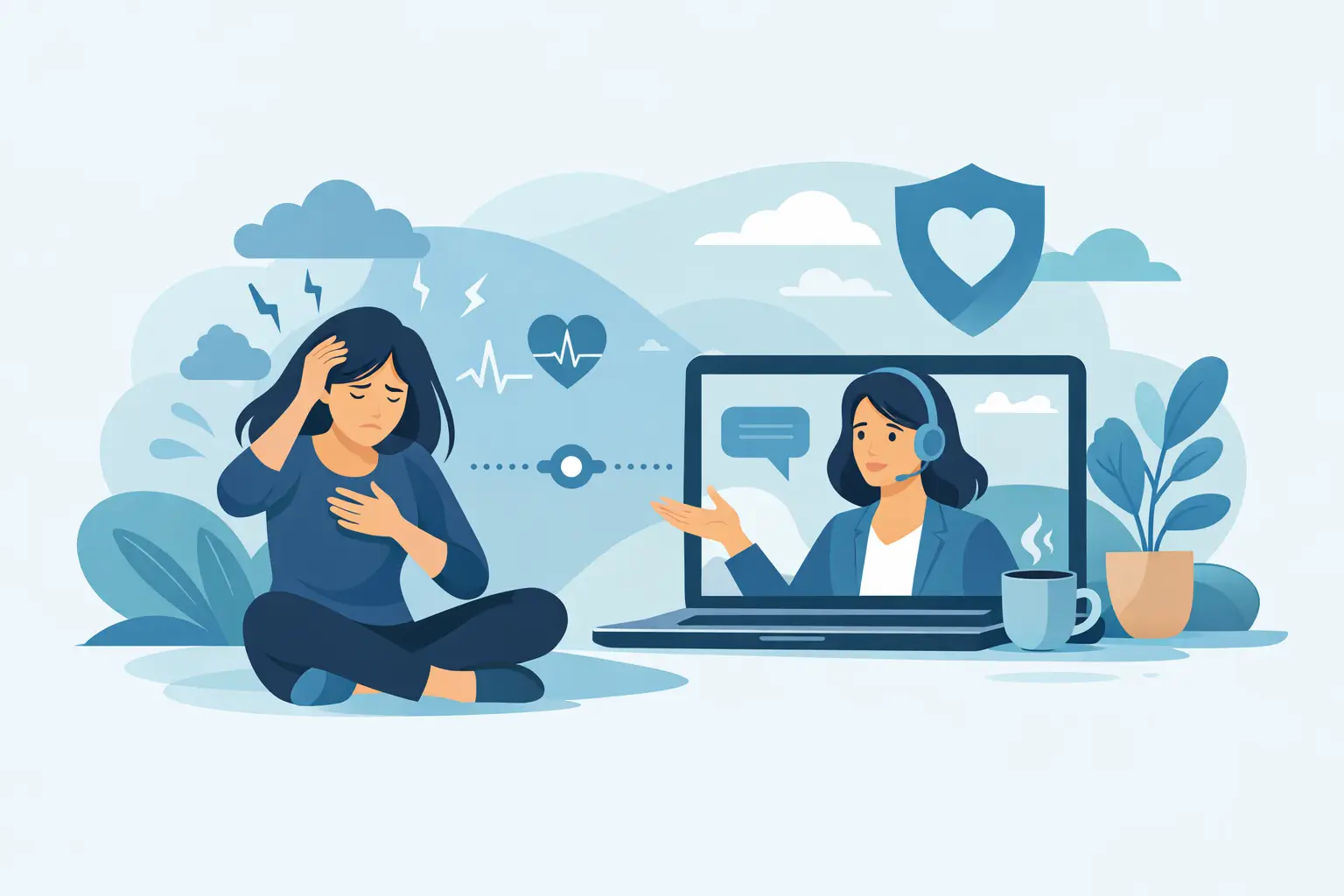
A panic episode can make a normal moment feel suddenly unsafe. Your heart may race, your chest may feel tight, your thoughts may spiral, and the urge to escape can take over fast. Even after the feeling passes, many people spend days worrying about when it will happen again.
Online care for panic symptoms gives you a private, practical way to talk through what is happening with a licensed provider and create a plan for moving forward. You do not have to wait until symptoms disrupt every part of your routine to ask for support.
Table of Contents
What panic symptoms can feel like
Panic symptoms are intense physical and emotional reactions that can arrive without much warning. They often peak quickly, which can make them especially frightening. Some people experience a first episode during a stressful period. Others notice symptoms after poor sleep, a major life change, illness, increased caffeine use, or no clear trigger at all.
Common experiences include a pounding heartbeat, shortness of breath, sweating, shaking, dizziness, nausea, tingling, chest discomfort, feeling detached from yourself, or a strong fear that something terrible is about to happen. You may also worry that you are losing control, fainting, or having a medical emergency.
Elevate Your Health for Just $29.99/Month
Join the Precision Wellness Subscription at My Healing 365 and get discounted services, priority coaching access, virtual care, and exclusive wellness resources to support your physical, emotional, and hormonal health.
Join for $29.99/MonthThese symptoms are real, and they deserve care. At the same time, they can overlap with medical conditions. New, severe, or concerning symptoms – especially chest pain, fainting, severe trouble breathing, or symptoms that could signal an emergency – should be assessed urgently. If you may be in immediate danger or are thinking about harming yourself, call 911 or 988 right away.
When online care for panic symptoms makes sense
Virtual mental health care can be a strong fit when panic, anxiety, or fear of another episode is interfering with your sleep, work, relationships, travel, or ability to do everyday tasks. It is also useful for people who have put off care because an in-person appointment feels difficult to schedule, uncomfortable, or too public.
With telehealth, you can meet with a licensed provider from a place where you feel more at ease. For many people, that means less time away from work, no commute, and more privacy. It can also make follow-up care easier when questions come up between appointments.
Online care is not about treating every difficult feeling as a diagnosis. A good provider will ask about your symptoms, health history, medications, stressors, sleep, and goals. They can help determine whether your experience may be connected to panic, generalized anxiety, depression, a life transition, or another concern that needs a different approach.
What a personalized treatment plan may include
There is no one-size-fits-all answer for panic symptoms. The right plan depends on how often symptoms occur, how severe they feel, what may be contributing to them, and your medical history.
Your provider may start by helping you recognize your personal pattern. For example, you may notice symptoms after skipping meals, during conflict, before presentations, while driving, or when you are trying to fall asleep. Naming the pattern does not make the experience your fault. It gives you useful information and a place to begin.
Treatment may include practical coping tools, guidance around sleep and daily routines, and strategies for responding differently when the first signs of panic appear. A provider may also discuss evidence-based medication options when clinically appropriate. Medication decisions should be individualized, including a clear conversation about expected benefits, possible side effects, interactions, and follow-up.
For some people, therapy is a central part of care. Approaches such as cognitive behavioral therapy can help people understand the connection between thoughts, body sensations, and avoidance. If you have started avoiding places or situations because you fear another episode, addressing that cycle with professional support can be particularly valuable.
What to do in the moment when panic rises
A panic episode is not a personal failure, and you do not need to force yourself to “calm down” perfectly. The goal is to create a little space between the sensations and the fear they create.
Start with your breathing, but keep it gentle. Instead of taking large, fast breaths, try a slower inhale and an even slower exhale. You can also orient yourself to your surroundings by naming a few things you can see, feel, and hear. This may help shift your attention away from scanning your body for danger.
Use a simple, believable reminder: “This feels intense, but I can let the wave pass.” Avoid arguing with every anxious thought. Panic often gets louder when you repeatedly check your pulse, search symptoms online, or immediately leave every uncomfortable situation. Those reactions make sense in the moment, but they can reinforce the fear over time.
If symptoms are new or different from your usual pattern, do not assume they are panic. Seek urgent medical care for symptoms that could be a medical emergency.
Why ongoing access matters
One appointment can be a helpful start, but panic symptoms often change over time. You may need to discuss whether a coping strategy is working, report a medication side effect, or ask for guidance after a difficult week. Consistent follow-up makes care feel less like a one-time conversation and more like a plan you can actually use.
That is where a digital care model can be especially helpful. My Healing 365 connects eligible adults with licensed providers online, with individualized treatment plans, ongoing messaging, and treatment guidance designed to fit real life. Care starts at $99, helping reduce one common barrier to getting support.
Convenience is meaningful, but it should never replace clinical judgment. A responsible telehealth experience includes a thoughtful review of your needs, clear next steps, and guidance about when in-person or urgent care is the better choice.
How to prepare for your first online visit
You do not need the perfect words to begin. It can help to write down when symptoms started, what they feel like in your body, how long they last, and what you were doing before they began. Include any major changes in stress, sleep, alcohol or caffeine use, medications, supplements, or health conditions.
Also think about what you want to be different. Maybe you want to stop leaving meetings because your heart starts racing. Maybe you want to sleep without worrying that you will wake up in a panic. Maybe you simply want to understand what is happening. Those goals help your provider build care around your life, not just a symptom checklist.
Be honest about avoidance, even when it feels embarrassing. Avoiding driving, stores, crowds, exercise, phone calls, or being alone can be a sign that fear is taking up more space than you want it to. It is useful information, and it is something treatment can address.
You deserve support before it gets worse
Panic can convince you that you need to handle everything alone or wait until you feel “bad enough” to seek care. You do not. Reaching out early can help you understand your symptoms, feel more prepared for difficult moments, and regain confidence in your daily life.
A private conversation with a licensed provider can be a meaningful first step. You deserve care that takes your symptoms seriously, respects your time, and helps you feel less alone when the next wave of fear tries to take over.
























