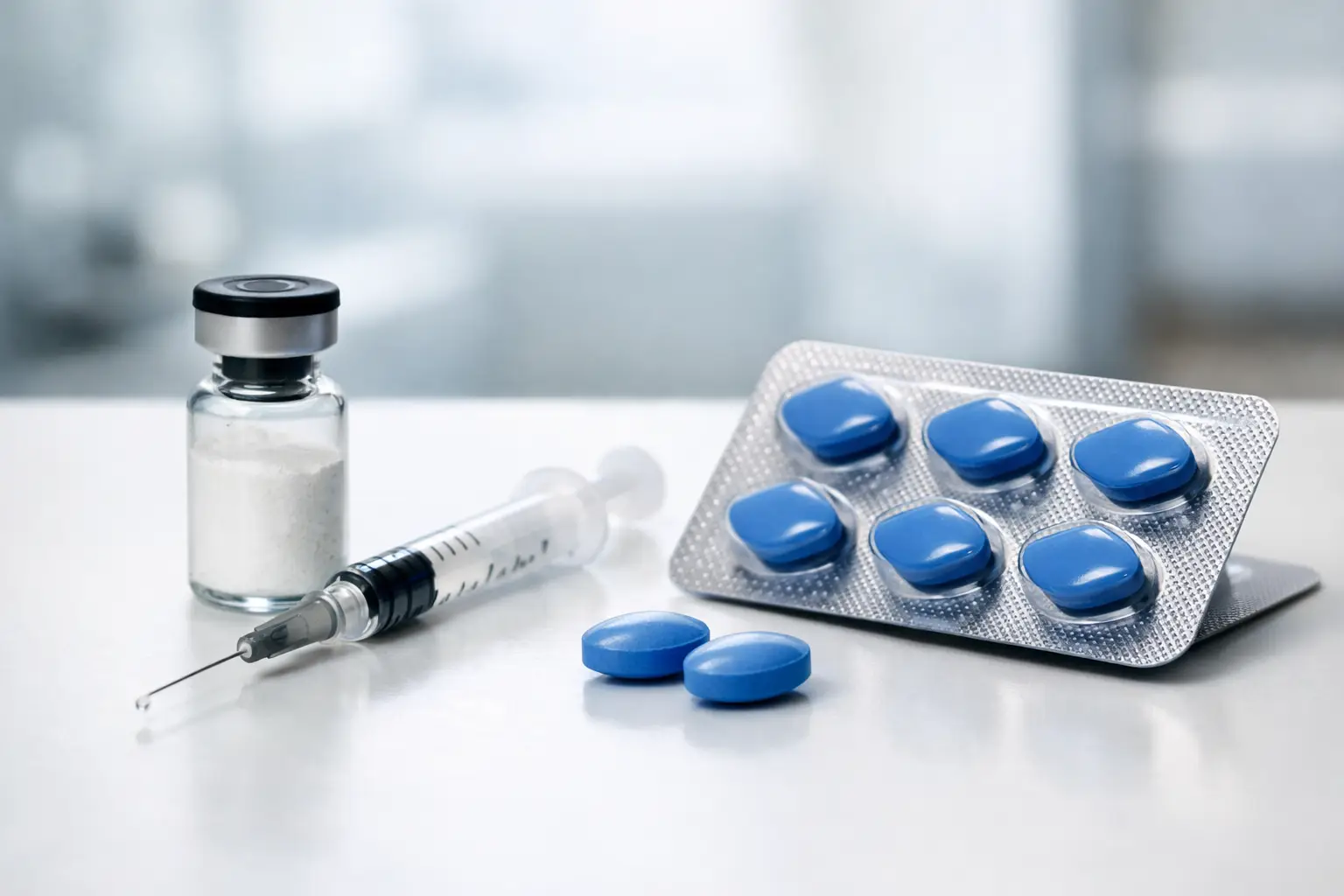
Sexual health concerns rarely fit into a one-size-fits-all box. One person may have reliable desire but struggle to get or maintain an erection. Another may be physically capable of sex yet feel that desire has faded. When comparing PT-141 versus Viagra, the most meaningful difference is not simply which one is stronger. It is which concern each treatment is designed to address.
Both can be part of a modern, provider-guided sexual health plan, but they work through very different pathways. Understanding those differences can help you move beyond guesswork and toward treatment that fits your body, medical history, and goals.
Table of Contents
PT-141 Versus Viagra: The Core Difference
Viagra is the brand name for sildenafil, a prescription medication primarily used to treat erectile dysfunction, or ED. It works by increasing blood flow to the penis during sexual stimulation. For many men, that can make it easier to achieve and sustain an erection.
PT-141, also called bremelanotide, works differently. It acts on melanocortin receptors in the brain involved in sexual desire and arousal. Rather than primarily targeting blood flow, PT-141 is intended to influence the neurological side of sexual response.
Elevate Your Health for Just $29.99/Month
Join the Precision Wellness Subscription at My Healing 365 and get discounted services, priority coaching access, virtual care, and exclusive wellness resources to support your physical, emotional, and hormonal health.
Join for $29.99/MonthThat distinction matters. Viagra is generally an erection-support medication. PT-141 is a desire-focused treatment. Neither option is automatically better. The right choice depends on whether the central issue is arousal, desire, erection quality, medication side effects, relationship context, hormone changes, or a combination of factors.
How Viagra Works for Erectile Dysfunction
An erection depends on sexual stimulation, nerve signaling, circulation, and blood vessel function. Sildenafil supports this process by inhibiting an enzyme called PDE5, allowing blood vessels in the penis to relax and fill more effectively with blood.
Viagra does not create spontaneous desire or an automatic erection. Sexual stimulation is still necessary. Many people take it roughly 30 to 60 minutes before sexual activity, and its effects may last for several hours. A heavy or high-fat meal can delay how quickly it takes effect.
For men whose main concern is inconsistent erections, reduced firmness, or difficulty maintaining an erection, Viagra may be an appropriate first-line option. It is also widely studied and FDA-approved for ED.
When Viagra May Not Address the Full Picture
Viagra can be highly effective for blood-flow-related erectile concerns, but it does not directly treat low libido. If you feel mentally disconnected from sex, rarely experience desire, or have a low level of sexual interest that causes personal distress, improving erection mechanics alone may not resolve the issue.
ED can also be a signal of broader health factors, including cardiovascular changes, diabetes, stress, sleep disruption, low testosterone, medication effects, or anxiety. A provider-guided evaluation can help identify whether sildenafil is the right starting point or one piece of a larger treatment strategy.
How PT-141 Works for Desire and Arousal
PT-141 is a melanocortin receptor agonist. In practical terms, it works through the brain’s sexual arousal pathways rather than through penile blood flow. It may be considered for people experiencing low sexual desire, especially when the issue is not explained by a relationship problem, a medical condition, or another medication.
The FDA-approved bremelanotide product is indicated for acquired, generalized hypoactive sexual desire disorder, or HSDD, in premenopausal women. HSDD is more than having an occasional low-interest day. It involves a persistent or recurring lack of sexual desire that causes meaningful personal distress.
In some care settings, PT-141 may be discussed outside that specific indication based on a provider’s clinical judgment. However, treatment should never be self-directed. The evidence, intended use, safety profile, and formulation all matter, particularly when compounded medications are involved.
What PT-141 Can and Cannot Do
PT-141 may support desire and arousal for people whose concern is primarily neurological or desire-related. It is not a guaranteed solution for every form of low libido, and it does not replace a thoughtful review of hormones, mental health, sleep, relationship concerns, pain during sex, or medication side effects.
It also is not an ED medication in the same way Viagra is. A man with vascular erectile dysfunction may not get the result he wants from PT-141 alone. Conversely, someone with low desire may find that Viagra improves physical readiness without changing the internal drive to be intimate.
Timing, Convenience, and Expectations
Viagra is an oral medication commonly taken as needed before sexual activity. Its relatively predictable timing is one reason it remains a familiar choice for men with ED. Dosing and timing should be individualized, especially if you take other prescriptions or have kidney, liver, or cardiovascular conditions.
Bremelanotide is administered by subcutaneous injection. The FDA-approved product is typically used at least 45 minutes before anticipated sexual activity. The response can vary from person to person, so expectations should be realistic and discussed during treatment planning.
Convenience is personal. Some patients prefer an oral medication with decades of use behind it. Others are open to a peptide-based approach when desire, not erection quality, is the larger concern. The better option is the one that is medically appropriate and practical enough to use consistently and safely.
Side Effects and Safety Considerations
Every sexual health treatment comes with trade-offs. Viagra can cause headache, flushing, nasal congestion, indigestion, dizziness, and visual changes. It should not be used with nitrates, such as nitroglycerin, because the combination can cause a dangerous drop in blood pressure. People with certain heart conditions need individualized medical guidance before using it.
PT-141 commonly causes nausea and may also cause flushing, headache, vomiting, injection-site reactions, or temporary increases in blood pressure. It may not be appropriate for people with uncontrolled hypertension or known cardiovascular disease. Repeated use can also contribute to skin darkening in some individuals.
These are not details to skim past. Sexual wellness treatment should feel empowering, but it should also be medically responsible. A provider needs to review your current medications, blood pressure history, cardiovascular risk, pregnancy status when relevant, and the exact symptoms you want to address.
Can PT-141 and Viagra Be Used Together?
Some people ask whether combining PT-141 and Viagra can address both desire and performance. The concept makes sense on the surface: one treatment works more centrally on desire, while the other supports erection physiology.
Still, combination treatment is not a do-it-yourself experiment. The potential benefits must be weighed against side effects, blood pressure considerations, underlying health conditions, and the possibility that another factor is driving the concern. A personalized plan may include one medication, a combination in carefully selected cases, hormone evaluation, lifestyle support, or counseling depending on the clinical picture.
Choosing the Right Treatment Starts With the Right Question
Instead of asking, “Which medication is best?” start with, “What is actually getting in the way of my sex life?” If you have desire and stimulation but struggle with erection quality, Viagra may be the more direct fit. If low desire or reduced arousal is causing distress, PT-141 may be worth discussing with a qualified provider. If both are present, a more complete sexual health assessment is often the smartest next move.
At My Healing 365, sexual wellness is approached as part of the bigger picture of energy, hormones, confidence, recovery, sleep, and long-term vitality. A telehealth consultation can help clarify your symptoms, screen for safety concerns, and create a treatment plan built around your needs rather than a generic prescription.
You deserve an answer that respects both the physical and personal sides of sexual health. The most useful next step is a candid conversation with a licensed provider who can help you choose treatment with confidence and care.























