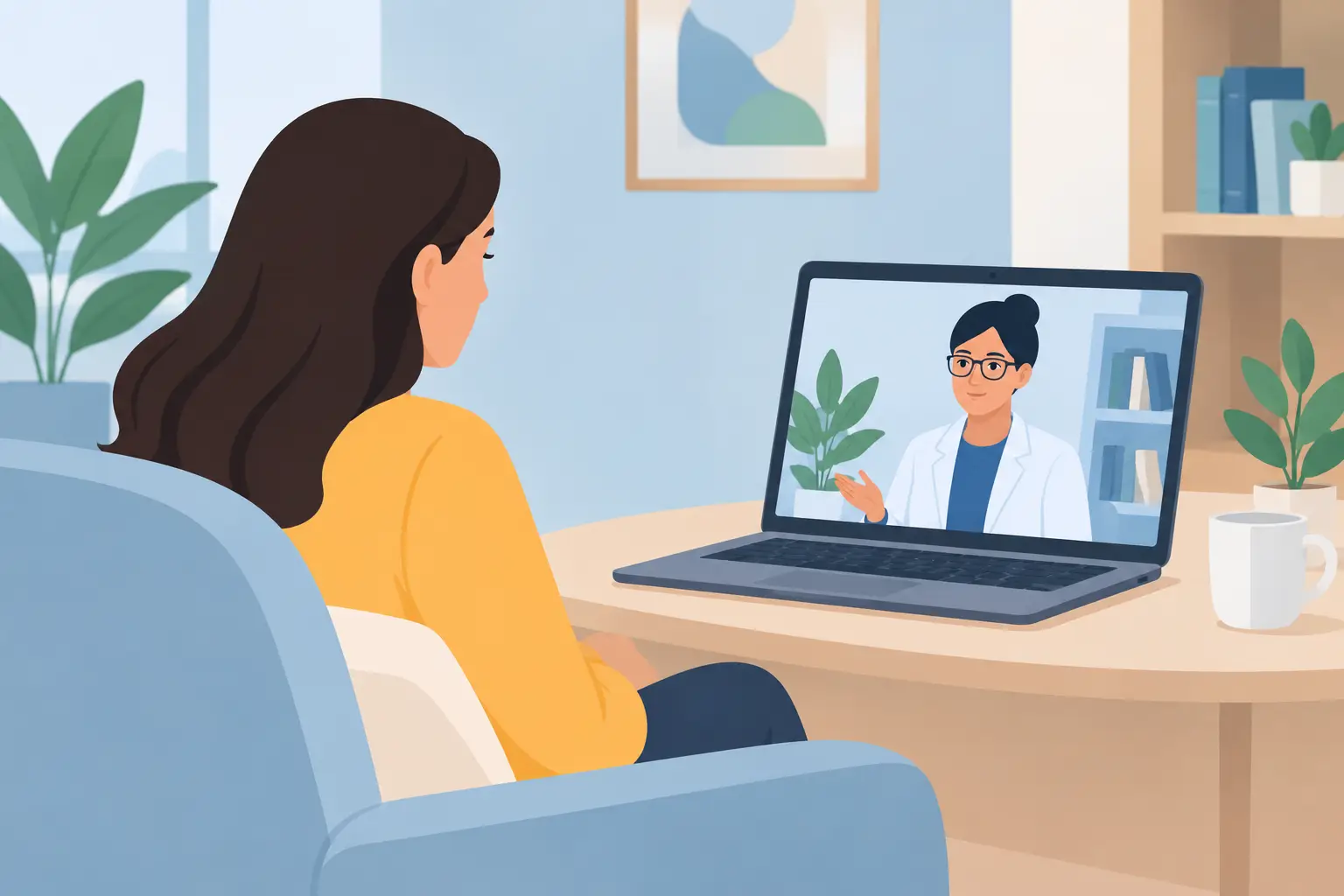
A full calendar can make it easy to put your mental health last. You may be managing anxiety before work, lying awake with racing thoughts, or feeling unlike yourself after a major life change – all while wondering how you could possibly fit another appointment into your week. What is psychiatric telehealth? It is mental health care delivered online, designed to make getting support feel more private, practical, and within reach.
Table of Contents
What Is Psychiatric Telehealth?
Psychiatric telehealth is a secure way to meet with a licensed mental health provider remotely, usually through a video visit and secure online messaging. Rather than traveling to an office and sitting in a waiting room, you can discuss symptoms, concerns, treatment options, and progress from a private place that works for you.
Psychiatric care focuses on the medical side of mental health. A qualified provider can evaluate symptoms, discuss a diagnosis when appropriate, create an individualized treatment plan, prescribe and manage medication when clinically appropriate, and monitor how you are doing over time. Depending on the service and your needs, your care may also include practical treatment guides and regular provider communication between visits.
Telehealth does not make mental health care less personal. It changes where and how care happens. For many adults, opening up from home can feel more comfortable than walking into a clinic, especially when stress, low mood, sleep problems, or fear of judgment have already made it difficult to ask for help.
Psychiatric Telehealth vs. Online Therapy
These terms are often used together, but they are not exactly the same.
Online therapy generally centers on talk-based support. A therapist or counselor helps you process emotions, learn coping strategies, work through relationships, and build skills for handling difficult situations. Therapy can be deeply valuable for many concerns, whether you are dealing with a recent loss, ongoing stress, trauma, or patterns that have been hard to change alone.
Psychiatric telehealth is usually centered on evaluation and treatment from a medical provider. If you are experiencing persistent anxiety, depression symptoms, panic, mood changes, or sleep disruption, a psychiatric provider can help determine whether medication, lifestyle adjustments, therapy, or a combination of approaches may be useful.
One is not automatically better than the other. Some people benefit most from therapy, while others need medication support, or both. The right path depends on your symptoms, health history, preferences, and treatment goals. A good provider should explain your options without making you feel pressured.
How an Online Psychiatric Appointment Works
The process is meant to reduce the barriers that keep people from starting care. While each practice is different, psychiatric telehealth often begins with a confidential online intake. You may answer questions about your symptoms, medical history, current medications, sleep, stress level, and what you hope will improve.
Before your visit
Your provider reviews the information you share and may ask follow-up questions. Be as honest as you can, even if a symptom feels embarrassing or difficult to explain. Details such as when symptoms began, how often they occur, whether they affect work or relationships, and what you have tried before can help guide safer, more personalized care.
Choose a quiet, private setting for the appointment when possible. You do not need a perfect home office. A parked car, a private room, or another place where you can speak freely may work. You will typically need a reliable internet connection and a phone, tablet, or computer with video capability.
During your visit
Your licensed provider will talk with you about what has been going on and how it is affecting your daily life. They may ask about your mood, energy, focus, appetite, sleep, substance use, physical health, and family history. This conversation is not a test. It is a way to see the whole picture rather than treating one symptom in isolation.
If medication may help, your provider can explain potential benefits, possible side effects, and what to expect in the first few weeks. Effective treatment is rarely about finding a one-size-fits-all answer. Your care plan may need adjustments based on how you feel and how your body responds.
After your visit
Follow-up is an important part of psychiatric care. Mental health medications can take time to work, and new symptoms or side effects should be addressed promptly. Many telehealth services offer secure messaging so you can communicate with your care team without waiting for your next appointment.
That ongoing access can be especially helpful when life is busy. Instead of postponing a question because it does not feel urgent enough for an office visit, you may be able to send a message and get guidance through the same secure platform.
What Psychiatric Telehealth Can Help Treat
Online psychiatric care may be appropriate for a range of common mental health concerns. These often include anxiety, depression, panic symptoms, stress connected to major life events, and sleep-related concerns. It can also support people who feel emotionally overwhelmed, persistently irritable, unmotivated, or unable to focus the way they normally do.
Elevate Your Health for Just $29.99/Month
Join the Precision Wellness Subscription at My Healing 365 and get discounted services, priority coaching access, virtual care, and exclusive wellness resources to support your physical, emotional, and hormonal health.
Join for $29.99/MonthSymptoms do not have to reach a breaking point before they deserve care. Feeling anxious every day, withdrawing from people you love, losing interest in activities, or spending night after night unable to sleep can affect your health and quality of life. Support is not reserved for a crisis.
At the same time, telehealth is not the right setting for every situation. Severe or complex symptoms may require in-person evaluation, specialized services, or a higher level of care. A responsible provider will let you know when online treatment is not enough and help guide you toward appropriate next steps.
Why People Choose Online Psychiatric Care
Convenience matters, but it is not the only reason people choose telehealth. Traditional care can involve long wait times, time away from work, transportation challenges, and the discomfort of being recognized in a waiting room. Those obstacles can be enough to delay care for months.
With psychiatric telehealth, appointments can fit more naturally into real life. You can connect from home, avoid commuting, and often access care sooner than you could through a local office. For busy parents, professionals, caregivers, and anyone living far from a mental health clinic, that flexibility can make treatment more realistic to maintain.
Privacy is another benefit. Reputable telehealth services use secure systems for appointments, records, and communication. Still, privacy at home is worth planning for. If you share a living space, use headphones, find a quieter location, and make sure notifications are not visible on a shared device.
Cost and coverage vary by provider and plan. Some people prefer a straightforward self-pay option because it can be easier to understand than navigating insurance requirements. Others want to use insurance benefits. Before starting, ask what the visit fee includes, whether follow-ups or messaging are included, and what medication costs may be separate.
What to Look for in a Psychiatric Telehealth Provider
The most important factor is clinical oversight. Look for a service that connects you with licensed providers who can practice in your state and clearly explains how treatment decisions are made. You should know who you are meeting with, how to reach them after an appointment, and what happens if your needs change.
Clear communication is equally important. Mental health treatment can feel vulnerable, so you deserve straightforward answers about pricing, medication, follow-up care, privacy, and expected response times. A provider should listen to your goals, discuss risks and benefits honestly, and avoid promising instant results.
It also helps to choose care that matches the way you live. If you need regular check-ins, look for a service that offers ongoing treatment rather than a one-time consultation. If messaging would make it easier to stay engaged, confirm that secure messaging is available. The best care model is one you can realistically use consistently.
When to Seek Immediate Help
Psychiatric telehealth can be a meaningful source of support, but it is not emergency care. If you are in immediate danger, thinking about harming yourself or someone else, or unable to stay safe, call 911 or go to the nearest emergency room. You can also call or text 988 in the United States to reach the Suicide & Crisis Lifeline.
You do not have to wait until your mental health feels unmanageable to take the next step. If anxiety, low mood, disrupted sleep, or emotional stress is making daily life harder, speaking with a licensed provider online can be a private, practical place to begin. Small steps toward care can create room to feel more like yourself again.























