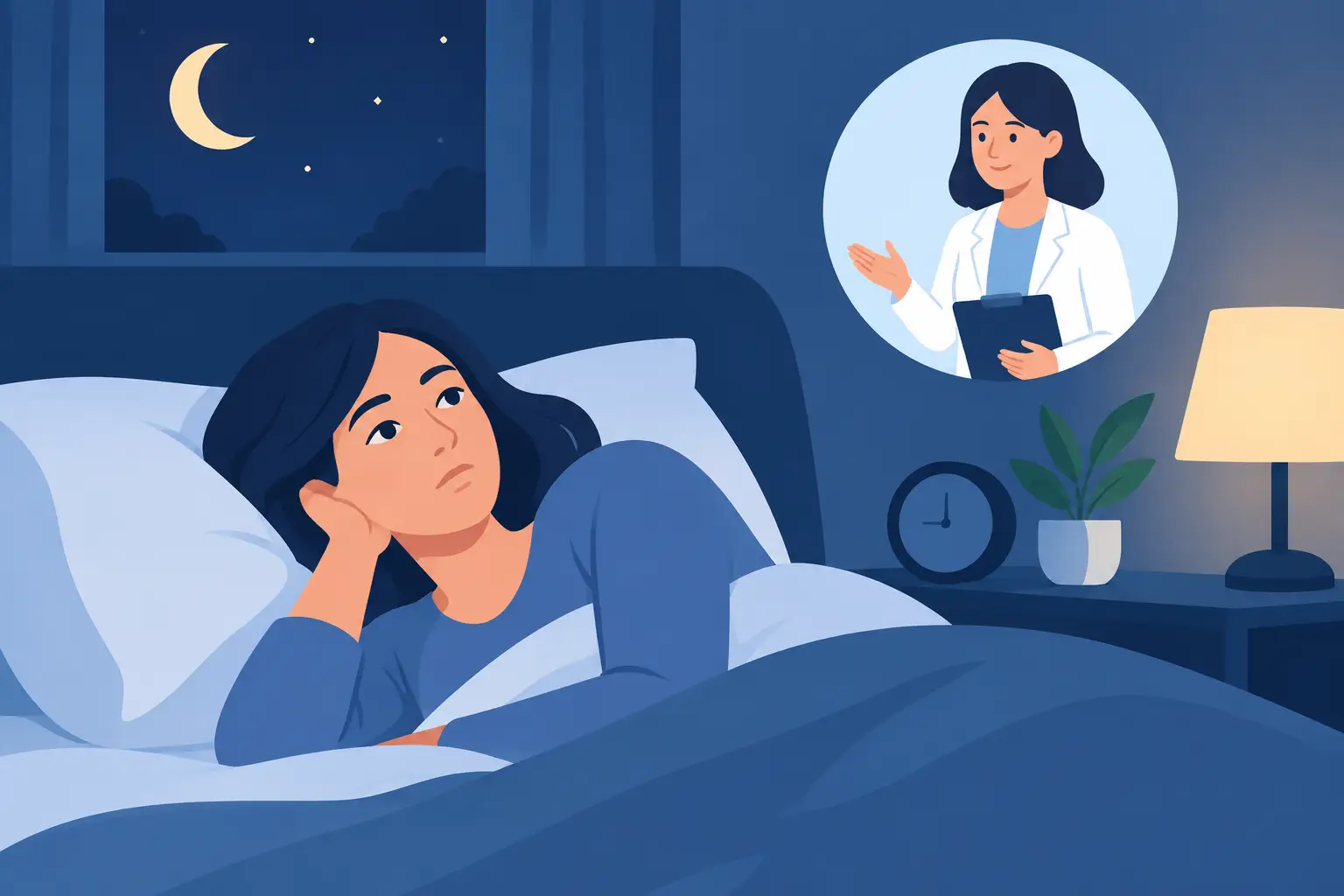
A bad night can happen to anyone. But when you are lying awake at 2 a.m. for the third night this week, replaying tomorrow’s to-do list and calculating how little sleep you will get, it can start to feel like more than a rough patch. Knowing when to seek help for insomnia can help you stop minimizing a problem that is already affecting your days.
Insomnia is not simply getting less sleep than you would like. It may look like trouble falling asleep, waking often, waking too early, or sleeping for hours without feeling restored. You do not have to wait until exhaustion takes over your life to talk with a licensed provider.
Table of Contents
When to seek help for insomnia
Consider reaching out if sleep trouble occurs at least three nights a week and has lasted for three months or longer. This pattern may point to chronic insomnia, and professional care can help identify what is keeping it going. Still, you do not need to meet that timeline before asking for support.
It is reasonable to seek help sooner when poor sleep is disrupting your ability to function. Maybe you are struggling to focus at work, feeling unusually irritable with your family, relying on extra caffeine to get through the afternoon, or canceling plans because you have no energy left. Sleep loss can affect mood, memory, motivation, and physical health. If it is changing how you show up in daily life, it deserves attention.
A provider can also help when insomnia arrives alongside anxiety, depression, grief, a major life change, chronic pain, or a new medication. These concerns often overlap. Treating only the sleeplessness without looking at the full picture may provide temporary relief but miss the cause.
Signs your sleep problem should not wait
Some situations call for a prompt medical conversation, even if your insomnia is new. Talk with a provider if you snore loudly, wake up gasping or choking, have witnessed pauses in breathing, or feel overwhelmingly sleepy during the day. These may be signs of sleep apnea or another sleep condition that needs evaluation.
Elevate Your Health for Just $29.99/Month
Join the Precision Wellness Subscription at My Healing 365 and get discounted services, priority coaching access, virtual care, and exclusive wellness resources to support your physical, emotional, and hormonal health.
Join for $29.99/MonthReach out promptly if you find yourself nodding off while driving, at work, or while caring for a child. Do not try to push through severe daytime drowsiness. Avoid driving or operating equipment when you do not feel alert.
You should also seek urgent support if lack of sleep is contributing to intense hopelessness, panic, unsafe behavior, or thoughts of harming yourself or someone else. In an immediate emergency, call 911 or 988 in the United States, or go to the nearest emergency room. Sleep concerns can be connected to mental health symptoms, and you do not have to manage that alone.
Why insomnia can become a cycle
A stressful week, illness, travel, or a new baby can disrupt sleep for almost anyone. The problem is that worry about sleep can keep the cycle going after the original trigger has passed. You may start watching the clock, going to bed much earlier to “make up” for lost rest, or spending extra hours in bed awake. Those understandable habits can make your bed feel like a place for frustration rather than sleep.
This is one reason willpower rarely solves insomnia. A person can be deeply tired and still unable to sleep because their mind and body have learned to stay on alert at bedtime. The goal of treatment is not to blame you for your habits. It is to understand the pattern and give you realistic ways to change it.
What a provider can help you sort out
A licensed provider will usually ask about your sleep schedule, stress level, mental health, medical history, medications, caffeine or alcohol use, and what your nights and days look like. They may ask how long the problem has been happening and whether you have symptoms such as snoring, leg discomfort, nightmares, or shifts in mood.
That conversation matters because insomnia is not one-size-fits-all. For one person, the main driver may be anxiety that spikes at night. For another, it may be depression, pain, hormonal changes, an irregular work schedule, or a medication side effect. Treatment should fit the cause, your health history, and your preferences.
Care may include behavioral strategies based on cognitive behavioral therapy for insomnia, often called CBT-I. This structured approach helps change thoughts and routines that maintain sleeplessness. A provider may also discuss treatment for anxiety or depression when those symptoms are part of the picture. In some cases, medication may be appropriate, but it should be chosen carefully. Sleep medications can have side effects, interactions, or next-day impairment, and they are not the best long-term answer for everyone.
What you can do while you wait for care
Small changes can support better sleep, but they are not a substitute for evaluation when symptoms are persistent or severe. Try to keep a consistent wake-up time most days, including weekends. Get daylight and gentle movement earlier in the day if you can. In the evening, give yourself a wind-down period that does not involve work, upsetting news, or answering messages from bed.
Keep the bedroom as dark, quiet, and comfortably cool as possible. If you are awake for a long time and growing frustrated, get out of bed and do something calm in low light until you feel sleepy again. This can help rebuild the connection between bed and sleep.
Be thoughtful about common quick fixes. Alcohol may make you drowsy at first, but it can fragment sleep later in the night. Large amounts of caffeine can linger longer than expected. Over-the-counter sleep aids and supplements are not automatically harmless either, especially if you take other medications or have ongoing health conditions. A provider can help you weigh what is safe and likely to help.
It can also be useful to track your sleep for one to two weeks. Write down when you go to bed, roughly how long it takes to fall asleep, nighttime awakenings, wake-up time, naps, caffeine, alcohol, and how you feel during the day. You do not need perfect data. A simple pattern can give your provider useful context and help you notice what is changing.
Getting support without putting life on hold
For many people, scheduling an in-person appointment is one more task that feels impossible when they are already exhausted. Online mental health care can make it easier to begin. A secure virtual visit allows you to discuss your symptoms privately with a licensed provider, review treatment options, and receive a plan that fits your routine.
At My Healing 365, online mental health support is designed for people who need straightforward access to licensed care without waiting rooms or added stress. Depending on your needs and eligibility, your care plan may include provider guidance, ongoing messaging, treatment resources, and medication options when clinically appropriate.
You do not need to prove that you are “tired enough” before asking for help. If sleep has become something you dread rather than a place to recover, a conversation with a qualified provider can be a practical first step toward steadier nights and more manageable days.























