

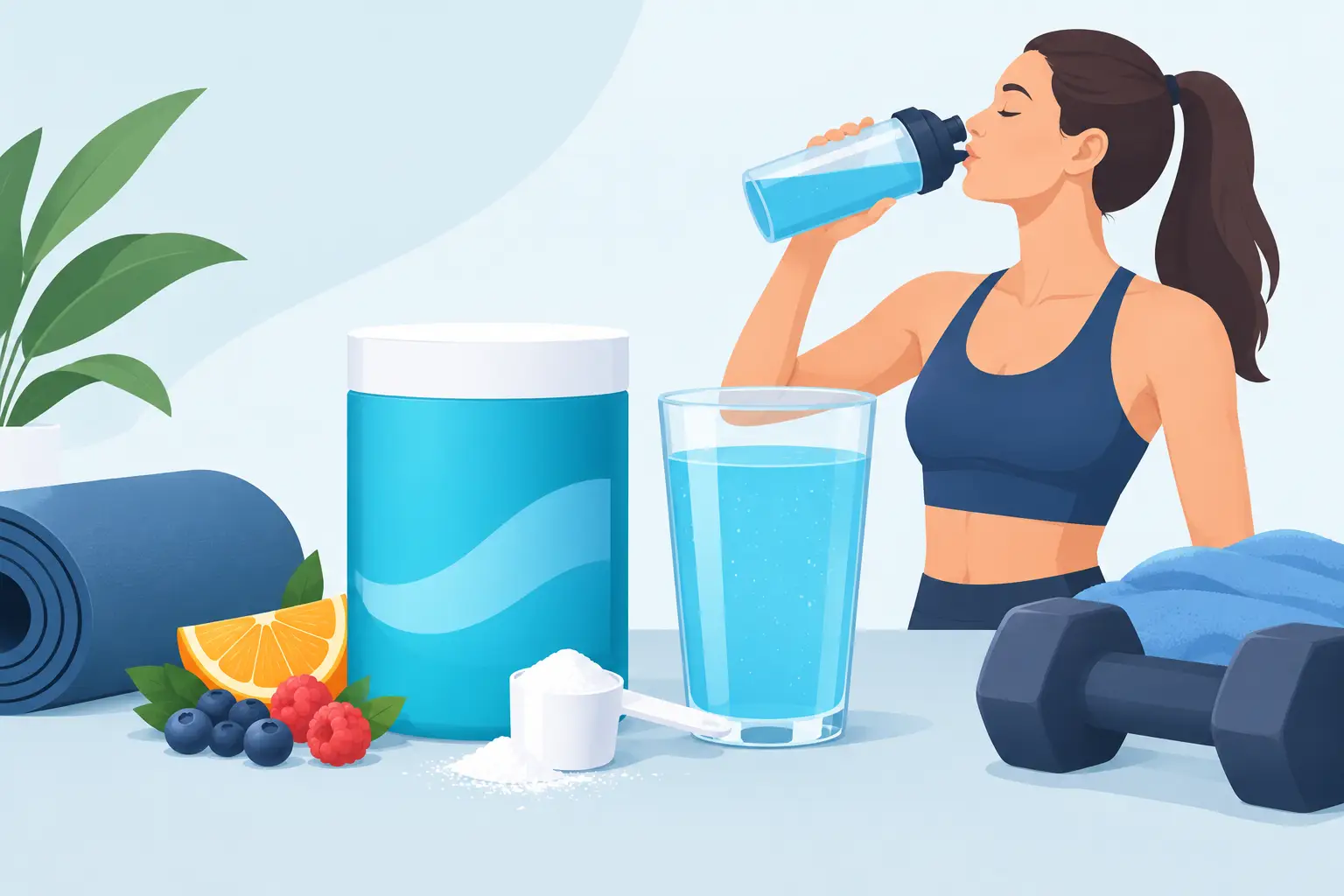
A workout can end with a satisfying kind of tired, or the kind that leaves you headachy, drained, and reaching for whatever is cold. The difference is not always fitness level. When you sweat, you lose fluid and electrolytes, and an electrolyte hydration powder for workouts can be a simple way to replace what water alone may not provide during longer or hotter sessions.
That does not mean everyone needs a sports drink for every walk around the block. Hydration should feel practical, not like another complicated wellness rule. The right choice depends on how long you train, how much you sweat, where you exercise, and what your body tends to need afterward.
Table of Contents
What electrolytes do during exercise
Electrolytes are minerals that carry an electrical charge in the body. They help regulate fluid balance and support normal nerve and muscle function. The ones most often included in hydration formulas are sodium, potassium, magnesium, calcium, and chloride.
Sodium usually deserves the most attention during exercise because it is the primary electrolyte lost in sweat. It helps the body hold onto fluids and supports hydration when you are sweating steadily. Potassium, magnesium, and calcium also play important roles in normal muscle function, though more is not automatically better.
Plain water is an excellent choice for many everyday activities. But if you are exercising for an hour or more, training in heat or humidity, doing physically demanding work, or finishing workouts with salt marks on your clothes, an electrolyte drink may make more sense. It can also be useful when you are returning to exercise after illness, travel, or a day when hydration simply fell behind.
When electrolyte hydration powder for workouts makes sense
The simplest rule is this: match your hydration plan to the demand of the day. A short strength session in a climate-controlled gym may only require water before, during, and after. A long run outside in July calls for more planning.
Electrolyte powder can be especially helpful for endurance sessions, high-intensity training, heated classes, team sports, outdoor work, and double-workout days. It is also convenient for busy parents and working professionals who exercise before work or between commitments and need a reliable option they can keep in a bag, desk drawer, or car.
Your own sweat pattern matters, too. Some people sweat lightly; others lose a lot of fluid quickly. If your workout clothes are soaked, your skin or hat looks salty afterward, or you regularly feel depleted despite drinking water, an electrolyte formula with meaningful sodium may be worth trying.
This is not a reason to self-diagnose every cramp or fatigue spell as an electrolyte issue. Poor sleep, under-fueling, medication effects, illness, and training load can all affect how you feel. Persistent dizziness, weakness, cramping, or unusual symptoms deserve guidance from a qualified healthcare professional.
What to look for in a hydration powder
A good formula should make hydration easier to maintain, not add unnecessary guesswork. Start with the label and consider the ingredients in the context of your workout.
Sodium that matches your sweat loss
For a light workout, a modest amount of sodium may be enough. For long sessions, hot-weather training, or heavy sweaters, a higher-sodium formula is often more useful than one built mostly around trendy ingredients. Sodium supports fluid retention, which is exactly what many active people need after substantial sweat loss.
People managing high blood pressure, kidney disease, heart conditions, or sodium restrictions should speak with their clinician before regularly using higher-sodium hydration products.
Carbohydrates based on workout length
Carbohydrates can help provide quick energy during prolonged exercise. They may be useful for endurance training, long rides, demanding hikes, or athletic events lasting beyond an hour. On the other hand, someone taking a 30-minute walk or lifting weights after work may prefer a lower-sugar option.
There is no prize for choosing the lowest-sugar powder if you are under-fueling a long workout. Likewise, there is no need for a high-calorie drink when your activity does not call for it. The best option is the one that supports your actual routine.
A flavor you will actually drink
Hydration only works when you use it consistently. If a powder tastes overly sweet, chalky, or artificial to you, it will likely stay in the cabinet. Look for a flavor profile you enjoy and a powder that mixes well in cold water.
For many people, a lightly flavored formula is easier to sip during training than a very sweet beverage. If you are sensitive to caffeine, check the label carefully. Hydration and energy are not the same thing, and a workout hydration powder does not need stimulants to do its job.
Quality standards you can feel good about
Supplements should earn a place in your routine. Choose products with transparent labels, clear serving directions, and quality-focused manufacturing practices. Lab-tested ingredients and safety standards can offer added confidence, particularly when you plan to use a product regularly.
Organic-minded ingredients may be important to you, but the full formula still matters. Check the electrolyte amounts, added sugars, sweeteners, allergens, and other active ingredients rather than relying on one front-label claim.
How to use hydration powder without overthinking it
Most people do well by mixing a serving according to the label directions and drinking it around the workout that calls for it. For a long session, begin hydrated rather than waiting until you feel thirsty. Sip during activity as needed, then continue drinking fluids afterward.
Avoid treating hydration powder as a replacement for meals. After hard training, your body may also need protein, carbohydrates, and a balanced meal or snack to support recovery. A hydration drink can be one useful part of that plan, especially when you need something convenient right away.
If you are new to electrolyte products, start with one serving on a demanding workout day and pay attention to how you feel. Notice your energy, thirst, stomach comfort, and recovery. A little self-awareness is more useful than copying someone else’s routine from the gym.
It also helps to keep the basics steady: drink water throughout the day, eat regular meals, and bring fluids with you when you know training will be hot, long, or intense. The goal is not to sip supplements all day. The goal is to make the right support available when your body has a higher demand.
Common hydration mistakes that are easy to avoid
One common mistake is waiting until the end of a hard workout to think about fluids. If you start dehydrated, catching up can feel difficult. Another is drinking large amounts of plain water during extended sweating without replacing electrolytes, especially sodium. That may leave some people feeling less recovered than expected.
The opposite mistake is assuming more powder always means better hydration. Concentrated drinks can be hard on the stomach, and extra servings may add more sodium or sugar than you need. Follow the product directions and adjust based on the duration and conditions of your activity.
Finally, do not overlook convenience. A hydration routine that requires measuring multiple ingredients and tracking a detailed protocol may not survive a busy week. Single-serve sticks or a simple scoop-and-shake powder can make it easier to stay prepared without turning wellness into a full-time project.
Make hydration fit the life you already have
Your workout routine may be a sunrise walk, a lunchtime strength session, weekend pickleball, or training for your next race. Each one places different demands on your body. The value of a hydration powder is not in making your routine look more serious. It is in helping you feel ready to show up again tomorrow.
Choose a formula that fits your sweat level, your training, and your preferences, then keep it simple enough to use. Small, consistent support often goes further than an ambitious plan you cannot sustain.