


Medically Reviewed
Dr. Jose Rossello, MD, PhD, MHCM
Preventive Medicine & Public Health Specialist
Last Reviewed: October 3, 2026
High-sensitivity CRP (hs-CRP) is a blood test that measures low levels of inflammation in your body. Clinicians use it to add context to your cardiovascular risk. For heart risk, an hs-CRP result below 2 mg/L sits in the lower-risk range, while a result of 2 mg/L or higher is treated as a risk-enhancing factor that your clinician weighs alongside your cholesterol, blood pressure, and other risk factors.
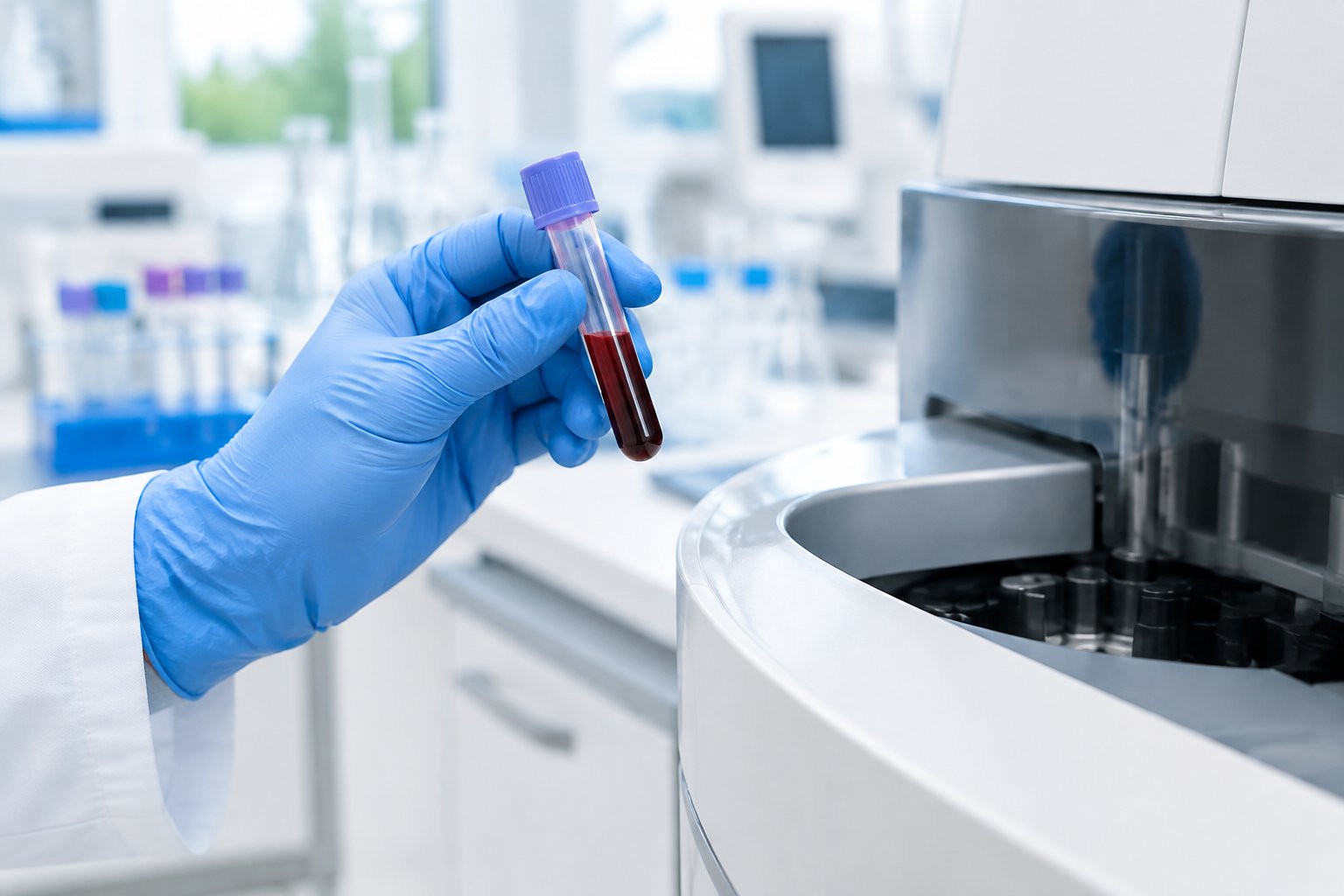
A single number from this test does not tell you whether you will have a heart attack or stroke. It flags inflammation, and inflammation has many causes, from a recent cold to arthritis to plaque building up in your arteries. That is why the same result can lead to very different next steps for two people.
If your report shows an elevated value, a calm conversation with your clinician is the best next move. You can prepare by reviewing what to ask your doctor if your hs-CRP is elevated and bringing your latest cholesterol results to the visit.
Table of Contents
What Does an hs-CRP Test Measure?

An hs-CRP test measures C-reactive protein (CRP), a protein your liver releases into your blood when there is inflammation somewhere in your body. The high-sensitivity version picks up much smaller amounts than a standard CRP test, which makes it useful for estimating heart disease risk in people who feel well.
How Is hs-CRP Different from a Standard CRP Test?
Both tests look for the same protein. The difference is how low each one can measure.
A standard CRP test is built to catch large rises, like those seen with a serious infection or a flare of an inflammatory disease. Results at or above 8 to 10 mg/L are considered high on that test, according to the Mayo Clinic’s overview of CRP testing[1].
The hs-CRP test reads values in the 0 to 10 mg/L range with more precision. That low range is where the signal for long-term heart risk lives.
| Feature | Standard CRP test | hs-CRP test |
|---|---|---|
| Main use | Infection, inflammatory disease | Heart and stroke risk |
| Detects | Large rises | Small rises |
| Key cutoff | About 8 to 10 mg/L | 2 mg/L |
| Units | mg/L | mg/L |
If you are unsure which test you had, look at the test name on your report. Labs often label the high-sensitivity version “cardiac CRP.”
When Might a Clinician Order the Test?
Clinicians most often order hs-CRP when your heart risk falls in a gray zone. Mayo Clinic notes the test may be most useful if you have a 10% to 20% chance of a heart attack in the next 10 years, which is called intermediate risk.
Thinking on who should be tested is shifting. A recent American College of Cardiology scientific statement recommends universal hs-CRP screening in both primary prevention (people without known heart disease) and secondary prevention (people who already have it).
Common reasons your clinician might order it include:
- Your 10-year risk estimate is borderline or intermediate.
- You have a family history of early heart disease.
- You have had a heart attack and your clinician wants to check for leftover inflammatory risk.
- Your cholesterol looks fine, yet other factors raise concern.
If you have not had a formal risk estimate yet, assessing your health risks now gives your hs-CRP result something to anchor to.
What Happens During Testing?
The test uses a standard blood draw from a vein in your arm. It takes a few minutes, and you can go back to your normal day right away.
A few practical tips help you get a cleaner result:
- Skip hard workouts the day before. Heavy weight training or a long run can push CRP up for a short time.
- Tell your clinician about any recent illness. Even a cold or dental infection can raise the number.
- List your medicines. Some drugs affect CRP levels.
- Ask about fasting. You do not need to fast for hs-CRP alone, but you may need to if a cholesterol panel is drawn at the same time.
Results come back quickly. Labcorp lists a turnaround of within 1 day from when the sample is picked up, though your clinician may take longer to review it with you.
What Do hs-CRP Results Mean?

Your hs-CRP result places you in a risk band, and that band nudges your heart risk estimate up or down. Many lab reports still use three bands, while current US cholesterol guidelines use a single 2 mg/L cutoff, so it helps to know how the two fit together.
How Are Low, Average, and High Results Classified?
Many labs use bands that come from a 2003 statement by the Centers for Disease Control and Prevention and the American Heart Association. All values are in mg/L.
| hs-CRP result | Common lab label | What it suggests |
|---|---|---|
| Below 1.0 mg/L | Low risk | Little low-grade inflammation |
| 1.0 to 3.0 mg/L | Average risk | Moderate signal; context needed |
| Above 3.0 mg/L | High risk | Higher inflammatory risk |
| Above 10 mg/L | Markedly elevated | Look for another cause; retest |
People in the top band carry about 1.5 times the relative risk of people in the lowest band, based on a case review from the American College of Cardiology. That is a group-level finding. It describes populations and cannot predict your personal outcome.
Why Is 2 mg/L Important for Heart Risk?
The 2 mg/L mark is the number current US guidelines use to call hs-CRP a “risk-enhancing factor.” That label means the result can tip a borderline decision, such as whether to start a statin.
This threshold sits inside the lab’s “average” band. So a result of 2.4 mg/L might read as average on your report, yet still count as a risk enhancer when your clinician reviews your cholesterol plan. Neither reading is wrong; they serve different purposes.
The ACC links levels of 2 mg/L or higher to increased risk of heart attack, stroke, and other cardiovascular events. In people who already have heart disease, a level in that range points to “residual inflammatory risk,” meaning risk that remains even after cholesterol is treated.
When Should a Result Be Rechecked?
CRP levels move up and down, so one test is a snapshot. Mayo Clinic notes that a heart risk assessment is based on the average of two hs-CRP tests, ideally taken two weeks apart.
A recheck makes sense in these cases:
- Your first result is 2 mg/L or higher.
- You were sick, injured, or exercising hard around the time of the draw.
- Your result is above 10 mg/L.
A value above 10 mg/L calls for a different approach. In the ACC case review, a man with a reading of 13 mg/L turned out to have a chronic sinus infection. After antibiotics, his repeat value was 3.5 mg/L, and that second number guided his care. At this level, clinicians set the first result aside, look for infection or another inflammatory problem, and repeat the test after at least two weeks.
Why Might hs-CRP Be Elevated?
An elevated hs-CRP means your body is making extra CRP in response to inflammation, and the source can sit in your arteries or far from your heart. Sorting out which one applies to you is the main job of the follow-up visit.
How Does Inflammation Relate to Artery Disease?
Atherosclerosis is the slow buildup of plaque inside artery walls. Inflammation plays a part at every stage, from the first fatty streak to the moment a plaque cracks open.
When a plaque in a heart artery ruptures, a clot can form and block blood flow. That causes a heart attack, also called a myocardial infarction. The same process in an artery feeding the brain can cause a stroke.
Low-grade, chronic inflammation tends to track with this process in coronary artery disease. For a deeper look at the effects, see this guide on what happens to your body when hs-CRP is high.
What Else Can Raise hs-CRP?
Many common conditions push CRP up. Some are short-lived, and others last for years.
Temporary causes:
- Infections, including colds, flu, and dental or sinus infections
- Recent injury or surgery
- Intense exercise in the past day or two
Longer-term causes:
- Rheumatoid arthritis and lupus
- Diabetes and metabolic syndrome
- Excess body weight
- Smoking
Labcorp’s test notes say CRP rises are nonspecific and should be read with your full medical history in mind. If you have diabetes or high blood sugar, it is worth checking for the hidden signs your blood sugar is too high, since those conditions raise both CRP and heart risk.
Why Can’t hs-CRP Diagnose Heart Disease?
The test shows that inflammation is present. It does not show where the inflammation is or what is causing it.
You can have a high hs-CRP from arthritis with clean arteries. You can also have a normal hs-CRP and still have plaque. Mayo Clinic states plainly that a high result does not always mean a higher risk of heart disease.
To look for disease directly, clinicians use other tools, such as a coronary artery calcium (CAC) scan or a carotid intima-media thickness test. Think of hs-CRP as one input to your risk estimate.
What Should You Do with an Elevated Result?
Start by confirming the result with a repeat test, then review it with your clinician alongside your cholesterol and other risk factors. From there, lifestyle changes come first for most people, and medication is weighed based on your full risk profile.
How Does hs-CRP Fit with Cholesterol and Other Risk Factors?
Your clinician starts with a 10-year risk estimate built from your age, blood pressure, cholesterol, smoking status, and diabetes status. hs-CRP then refines that number.
Guidelines list hs-CRP of 2 mg/L or higher alongside other risk enhancers, such as a family history of early heart disease. One analysis of NHLBI cohorts found that a single risk enhancer added little on its own, but three or more risk-enhancing factors helped identify intermediate-risk patients likely to benefit from a statin.
LDL cholesterol remains a central target. Other markers worth discussing include apolipoprotein B and lipoprotein(a). If your risk is still unclear after all of this, a CAC scan is often the next step.
Which Lifestyle Changes May Help?
hs-CRP responds to daily habits, and the ACC has put numbers on several of them:
- Exercise: Aerobic exercise lowered hs-CRP by 0.59 mg/L in healthy adults and 0.34 mg/L in people with heart disease. Aim for at least 150 minutes a week of moderate activity or 75 minutes of intense activity.
- Weight loss: Studies report an average drop of about 0.13 mg/L per kilogram lost.
- Quitting smoking: One study found a 0.40 mg/L drop in people with heart disease, with more benefit the longer they stayed smoke-free.
- Diet: A plant-forward, heart-healthy diet rich in fruits, vegetables, legumes, and whole grains helps lower inflammation.
These steps add up. A practical starting point is the American Heart Association’s Life’s Essential 8, and for meal ideas, see food as medicine for heart disease.
When Might Medication Be Considered?
Statins are the main medicine discussed when hs-CRP is persistently elevated. They lower LDL cholesterol and also reduce CRP. Common options include atorvastatin, rosuvastatin, simvastatin, and pravastatin.
The ACC advises starting or stepping up lipid-lowering therapy for patients whose hs-CRP stays high. For people with stable coronary artery disease and leftover inflammatory risk, colchicine is another option, and GLP-1 medicines are considered when they fit other health needs.
The decision is shared between you and your clinician. Bring questions about side effects, cost, and how your LDL goal fits in. For broader context, see these cholesterol management strategies.
Use hs-CRP as One Part of Your Heart Health Picture
An hs-CRP test tells you how much low-grade inflammation is in your blood, and it works best when read alongside your cholesterol, blood pressure, and family history.
Keep these points in mind as you review your result:
- Below 2 mg/L counts as lower risk for heart disease.
- At 2 mg/L or higher, the result acts as a risk enhancer in your cardiovascular risk assessment.
- Above 10 mg/L, look for infection or another inflammatory cause, then repeat the test after at least two weeks.
- Base decisions on two results, not one.
- Exercise, weight loss, diet changes, and quitting smoking all lower hs-CRP.
Before your next visit, write down your most recent hs-CRP, LDL cholesterol, and blood pressure numbers, plus any illness you had near the test date. Those details let your clinician decide whether you need a repeat test, more imaging, or a change in treatment.
Frequently Asked Questions
How much does a high-sensitivity CRP test cost?
Prices vary by lab and insurance plan. Labcorp’s consumer service lists its inflammation hs-CRP test at $69, with an October 2026 sale price of $51.75. When your clinician orders it as part of a heart risk workup, insurance often covers some or all of the cost.
What hs-CRP level is dangerously high?
No single hs-CRP level signals immediate danger to your heart. A value above 10 mg/L suggests an active infection or another inflammatory condition, so your clinician will look for that cause and repeat the test. For long-term heart risk, the key line is 2 mg/L.
Is a low hs-CRP result always good news?
A low result is reassuring about inflammation, but it does not rule out heart disease. You can still have high LDL cholesterol, high blood pressure, or plaque in your arteries. Keep managing your other risk factors.
Should I worry if my hs-CRP is high but my cholesterol is normal?
You do not need to panic, but the result is worth a conversation. Confirm it with a repeat test first, and check for recent illness. If it stays at 2 mg/L or higher, your clinician may weigh it with other factors or suggest a CAC scan.
Can an autoimmune disease raise hs-CRP?
Yes. Rheumatoid arthritis, lupus, and other autoimmune conditions often raise CRP. In that case, a high hs-CRP reflects your disease activity and may not give a clear read on heart risk, so your clinician will interpret it with your full history.
Views: 94