

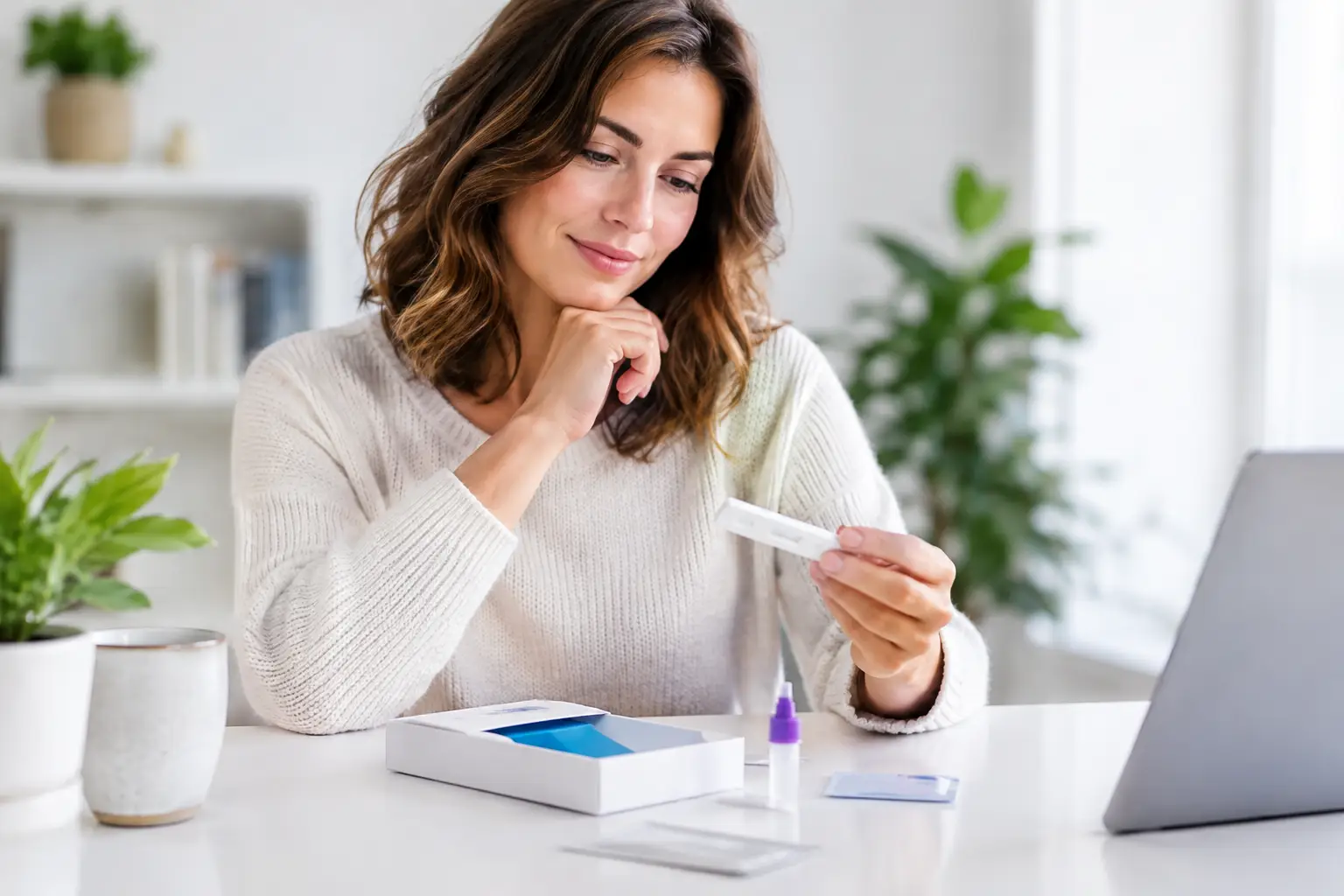
Feeling exhausted despite getting enough sleep, noticing a lower sex drive, or struggling with mood shifts that do not feel like you can simply “push through” can be frustrating. The best at home hormone tests may offer useful information, but a result only becomes meaningful when it is viewed alongside your symptoms, health history, medications, and goals.
A home test can be a convenient first step toward understanding what may be affecting your energy, weight, sleep, confidence, and intimacy. It should not be treated as a final diagnosis or a substitute for personalized medical care. The most useful test is one that helps you move toward a clear, medically guided next step.
Table of Contents
What the Best At-Home Hormone Tests Can Tell You
At-home hormone tests typically use a finger-prick blood sample, saliva sample, or urine collection that you send to a laboratory. Depending on the kit, testing may look at reproductive hormones, thyroid markers, stress-related hormones, or metabolic markers that can influence how you feel day to day.
For women, a panel may include estradiol, progesterone, follicle-stimulating hormone (FSH), luteinizing hormone (LH), testosterone, or DHEA-S. These markers can add context when symptoms such as hot flashes, night sweats, vaginal dryness, low libido, headaches, sleep disruption, mood changes, hair thinning, or unexplained weight changes are affecting quality of life.
For men, common measurements include total testosterone, free testosterone or an estimate of free testosterone, SHBG, estradiol, and sometimes LH and FSH. Low energy, reduced motivation, declining strength, changes in body composition, erectile concerns, and lower sexual desire can have hormonal contributors, though they can also be related to stress, sleep, medication use, thyroid health, metabolic health, or other conditions.
A test result is a snapshot, not the whole picture. Hormones naturally rise and fall based on time of day, menstrual cycle phase, sleep, illness, exercise, alcohol intake, and certain medications. That is why the right interpretation matters just as much as the number on the report.
Which Hormones Are Worth Testing?
The best panel depends on why you are testing. A broad hormone panel is not always better if it includes markers that do not relate to your concerns or produces results that are hard to interpret without clinical context.
If menopause symptoms are your main concern, a clinician may focus on your symptoms, menstrual history, age, medical history, and risk factors rather than relying on one hormone test alone. During perimenopause, estrogen and FSH can fluctuate significantly. A single normal result does not necessarily explain away disruptive hot flashes, poor sleep, changing moods, or a loss of sexual comfort and desire.
If you are seeking testosterone-related care, timing is especially relevant. Testosterone is generally highest in the morning, and an unexpected result may need to be repeated before treatment decisions are made. A complete evaluation may also include blood counts, prostate-related screening when appropriate, metabolic markers, and a discussion about fertility goals.
Thyroid testing may be worth discussing when fatigue, weight changes, hair loss, anxiety, low mood, heart palpitations, or temperature sensitivity are part of the picture. Thyroid symptoms often overlap with hormone-related symptoms, so assuming every concern is caused by estrogen or testosterone can lead to missed answers.
Cortisol tests deserve particular care. Cortisol follows a daily rhythm and responds to acute stress, sleep loss, illness, and physical activity. A single at-home cortisol result may not explain chronic fatigue or burnout, and it should never be used alone to self-diagnose a condition.
Choosing the Best At-Home Hormone Test for Your Needs
Start by looking beyond the marketing language. Some kits are designed for general wellness curiosity, while others connect you with licensed clinicians who can review results and discuss next steps. If symptoms are affecting your relationships, work, sleep, or confidence, medical oversight is usually the more valuable option.
Look for a test that clearly explains which laboratory processes the sample, exactly what markers are included, and whether results are reviewed by a qualified healthcare professional. Transparent information about sample collection, result timing, privacy, and follow-up care can tell you a great deal about whether the service is built for meaningful support or simply a one-time report.
Consider the sample type as well. Blood-based testing is commonly used for many reproductive and thyroid markers and may be more appropriate for certain treatment decisions. Saliva and urine testing can be useful in specific situations, but results are not always interchangeable with standard blood testing. The right method depends on the hormone being measured and the clinical question being asked.
Price matters, but value matters more. A lower-cost kit can become expensive if the report leaves you confused, prompts unnecessary repeat testing, or cannot be used by a clinician to guide care. A well-designed evaluation should help answer practical questions: Could hormones be contributing to my symptoms? Are additional labs needed? Is treatment appropriate? What else should be considered?
How Accurate Are At-Home Hormone Tests?
At-home collection can be accurate when the test uses validated laboratory methods and you follow the instructions carefully. Still, at-home sampling has limits. An insufficient finger-prick sample, collection at the wrong time, delayed shipping, or taking supplements that interfere with testing can affect results.
Before collecting your sample, read the preparation instructions closely. You may be asked to test at a certain time of day, pause specific supplements, or collect on a particular day of your menstrual cycle. Do not stop prescription medication unless the clinician who prescribed it tells you to do so.
Accuracy also includes interpretation. A lab range does not automatically define what is normal for you, and a result slightly outside a reference range does not automatically mean treatment is needed. Your symptoms, medical background, family history, and personal health goals belong in the conversation.
When a Home Test Should Lead to Medical Care
Home testing is most helpful when it opens the door to better care, not when it encourages self-treatment. Avoid changing hormone doses, starting over-the-counter hormone products, or ordering multiple tests in search of a perfect number. Hormone therapy can be life-changing for the right person, but it requires an individualized plan and ongoing monitoring.
Seek prompt medical attention for severe headaches, chest pain, shortness of breath, fainting, heavy or unusual bleeding, a new breast lump, or sudden symptoms that feel intense or alarming. These concerns need more than a home test.
For persistent symptoms, a virtual consultation can make the path forward feel more manageable. At My Healing 365, hormone care is centered on understanding how you feel, reviewing appropriate lab information, and creating a personalized plan with ongoing medical support. The goal is not to chase numbers. It is to help you restore balance, feel more like yourself, and make informed decisions about your well-being.
The best next step is the one that gives you clarity without leaving you to interpret your health alone. When your energy, mood, sleep, and intimate life have changed, you deserve answers that lead to compassionate, personalized care.