

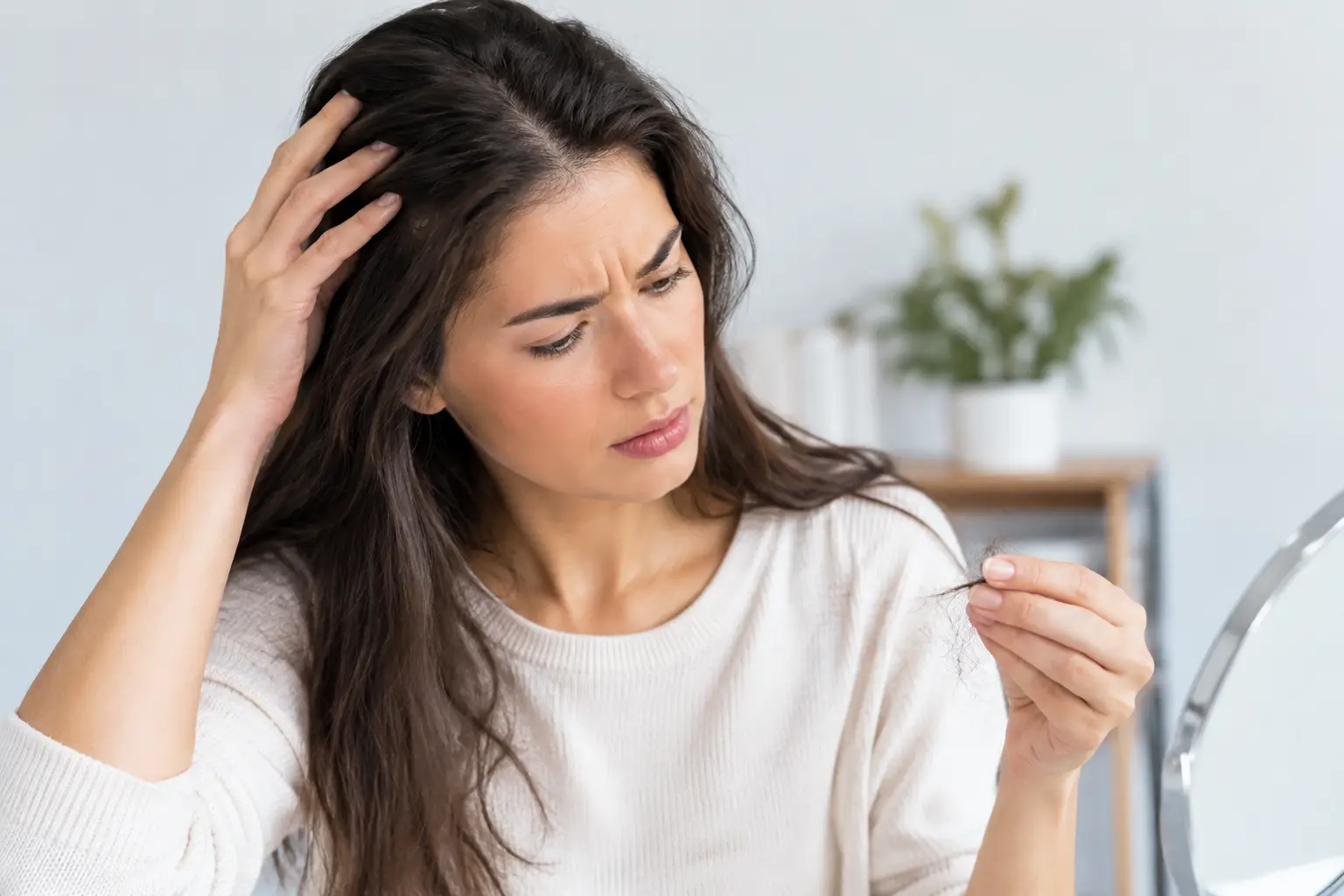
The shower drain, hairbrush, or part in your hair can become an unwelcome daily reminder that something feels off. Hair loss from hormone imbalance is not simply a cosmetic concern. For many adults, it arrives alongside low energy, disrupted sleep, mood changes, weight shifts, skin changes, or a drop in confidence and libido. Looking at the full picture can help you move from uncertainty to a plan that supports how you feel and how you look.
Table of Contents
How Hormones Affect Hair Growth
Hair grows in cycles. Most follicles spend time in an active growth phase, followed by a resting phase and then a shedding phase. Hormones help influence the timing and length of those phases. When hormone levels shift, more follicles may enter the shedding phase at once, or the active growth phase may become shorter. The result can be more hair in the brush, less overall density, or finer strands over time.
Estrogen generally supports a longer growth phase for hair. This is one reason some women notice fuller hair during pregnancy, followed by increased shedding after delivery when hormone levels change quickly. During perimenopause and menopause, declining estrogen can also make the effects of androgens more noticeable in certain hair follicles.
Androgens, including testosterone and its more potent byproduct dihydrotestosterone, can affect hair differently depending on genetics and the area of the body. They may support facial or body hair growth while contributing to thinning at the scalp in people whose follicles are sensitive to them. This is why a hormone pattern that looks similar on paper can cause very different symptoms from one person to another.
Signs Your Hair Changes May Be Hormone-Related
Hormonal hair loss does not always look the same. Women often notice a widening part, reduced volume at the crown, or more diffuse shedding throughout the scalp. Men may see a receding hairline or thinning around the temples and crown. Either pattern may develop gradually, though sudden shedding can also happen after a significant hormonal transition or physical stressor.
Hair changes are more likely to deserve a hormone conversation when they occur with other symptoms. For women, that may include irregular periods, hot flashes, night sweats, vaginal dryness, changes in sexual desire, headaches, or new difficulty sleeping. For men, low testosterone can occur alongside reduced libido, lower energy, decreased muscle mass, mood changes, and changes in body composition.
Other hormone-related conditions can also affect the scalp. Thyroid disorders may contribute to diffuse shedding, dry or brittle hair, fatigue, temperature sensitivity, and weight changes. Polycystic ovary syndrome, or PCOS, may involve irregular cycles, acne, unwanted facial hair, and scalp thinning related to higher androgen activity. The details matter because the right next step depends on the cause.
Hair Loss From Hormone Imbalance Is Not Always the Only Cause
Hormones may be part of the story, but they are not the only possible explanation. Low iron stores, inadequate protein intake, rapid weight loss, illness, surgery, certain medications, scalp conditions, autoimmune disorders, genetics, and ongoing stress can all contribute to thinning or shedding. A new supplement or a restrictive diet can also play a role.
That is why guessing based on one symptom can be frustrating and expensive. A person may start a trendy hair vitamin, change shampoos, or pursue a treatment that does not address the actual driver. A thoughtful evaluation is more useful than a one-size-fits-all approach, especially when hair loss is accompanied by changes in energy, mood, sleep, sexual wellness, or menstrual cycles.
The pattern and timing provide useful clues
A clinician will often ask when shedding started, whether it was sudden or gradual, where thinning is most noticeable, and what was happening in your health at the time. A noticeable shed two to four months after illness, childbirth, rapid weight loss, or a major stress event may point to a temporary cycle disruption. Slow, progressive thinning with menopausal symptoms or androgen-related signs may suggest a different path.
Your personal and family history matters, too. Genetic pattern hair loss can coexist with hormonal changes. Correcting a hormone issue may improve shedding or hair quality, while genetic follicle sensitivity may still need separate attention.
What Testing Can Reveal
Testing is not about chasing a perfect number. Hormone levels naturally change with age, menstrual cycles, medications, sleep, and other health factors. The goal is to connect symptoms, medical history, examination findings when needed, and targeted lab work into a clear clinical picture.
Depending on your symptoms, a medical provider may consider thyroid testing, iron-related labs, vitamin levels, and hormone testing. For women, the conversation may include estrogen, progesterone, testosterone, and signs of androgen excess. For men, testosterone evaluation is typically considered alongside symptoms and may require repeat morning testing to confirm a meaningful pattern.
Not everyone needs every test. Broad testing without context can create more confusion than clarity. Personalized care focuses on the findings most likely to guide safe decisions for you.
Can Hair Loss From Hormone Imbalance Be Treated?
Often, yes, but results depend on the diagnosis, the duration of thinning, genetics, and the health of the follicles. If a hormone imbalance is contributing to increased shedding, addressing that imbalance may help stabilize the hair cycle over time. It can also improve related symptoms such as poor sleep, low libido, mood changes, or lack of energy that may be affecting your daily life.
For some women in perimenopause or menopause, medically supervised hormone therapy may be one part of a broader treatment plan. It is not a universal hair-loss solution, and it should not be started solely to grow hair. The type, dose, personal health history, and balance of hormones all matter. In some cases, certain hormonal approaches may not be appropriate or may require adjustment if androgen-sensitive hair loss is a concern.
Men with confirmed low testosterone and symptoms may benefit from a clinician-guided treatment plan. Yet testosterone therapy can affect androgen pathways, so hair changes should be discussed openly before and during treatment. The right plan weighs your quality-of-life goals alongside potential trade-offs and ongoing monitoring.
A complete plan may include more than hormones
When appropriate, a provider may also discuss evidence-based scalp or hair-focused treatments, nutrition support, stress management, and medication review. Adequate protein, iron when clinically indicated, regular sleep, and avoiding aggressive crash diets can support healthy hair growth conditions. These habits do not replace medical care, but they can make a meaningful difference when the body is under strain.
Be cautious with high-dose biotin and supplement blends marketed as fast fixes. They may not address the underlying cause, and some supplements can interfere with lab testing or interact with medications. Bring everything you take to your appointment, including over-the-counter products and wellness supplements.
Give Your Hair Time to Respond
Hair growth is slow. Even when the underlying trigger is addressed, shedding may take several months to settle because follicles move through their cycle gradually. Visible regrowth often requires patience, consistency, and realistic expectations. Taking monthly photos in the same lighting and parting your hair the same way can be more reliable than evaluating it day to day.
If shedding continues, worsens, or becomes patchy, your care plan may need to be reassessed. Patchy loss, scalp pain, redness, scaling, scarring, or sudden clumps of hair loss should be evaluated promptly. Those signs can point to causes that need dermatology care or more urgent assessment.
Personalized Support Starts With the Whole You
Hair is often one of the first places hormonal changes become visible, but it is rarely the only place they are felt. At My Healing 365, hormone care is designed around the full symptom picture and your goals for energy, intimacy, mood, sleep, and confidence. Virtual care can make it easier to begin the conversation privately, with ongoing medical guidance rather than a one-time guess.
You deserve answers that go beyond covering up the symptom. A thoughtful evaluation can help you understand what your hair may be telling you and choose next steps that support your health, your confidence, and the way you want to feel every day.