

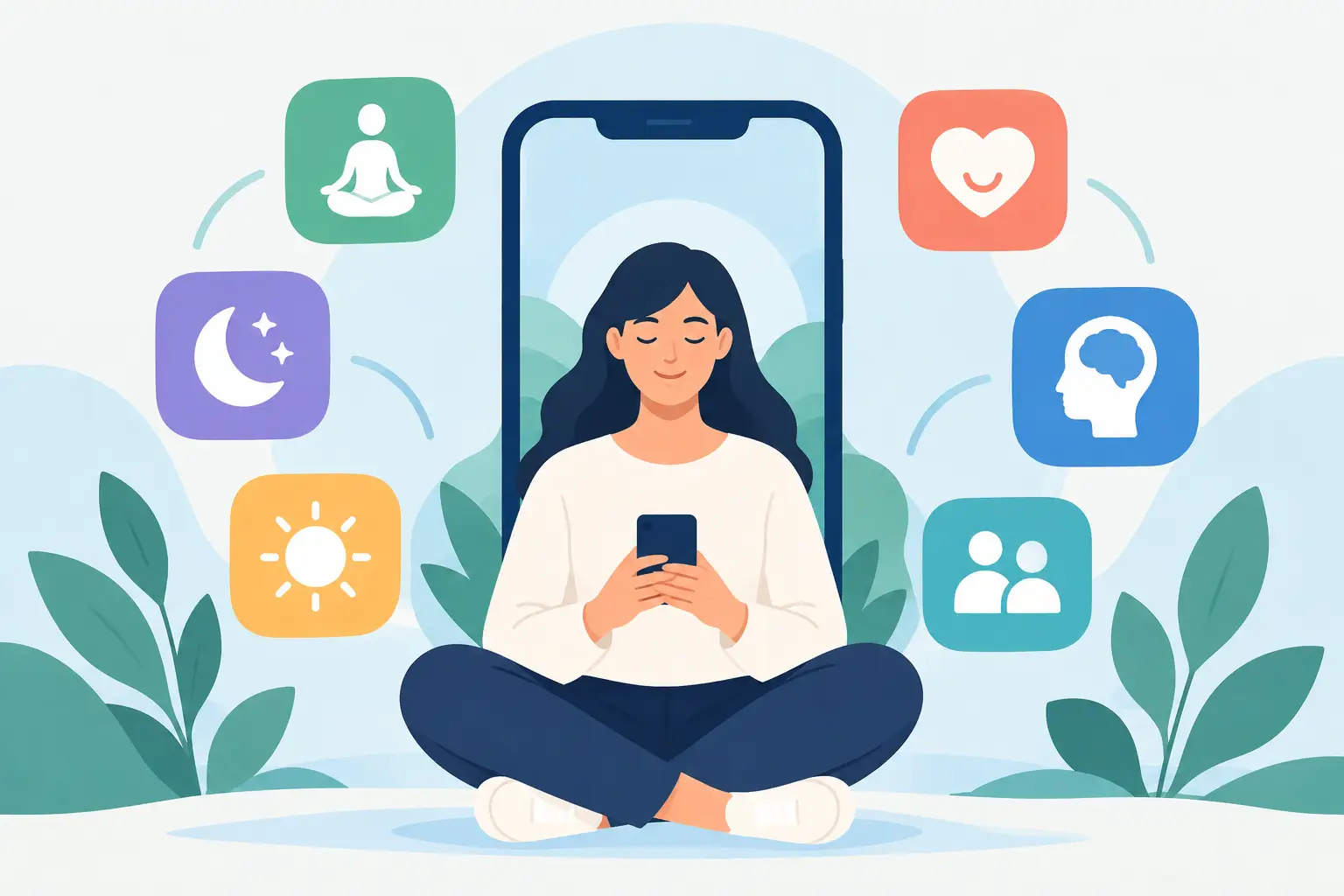
Your anxiety does not always wait for an appointment. It can show up before a presentation, during a sleepless night, or in the quiet moment after everyone else has gone to bed. The best mental health apps can make support feel closer, more private, and easier to fit into a full life. But the right app depends on what you need: a place to talk, tools to manage stress, help tracking patterns, or treatment from a licensed provider.
Table of Contents
What makes a mental health app worth using?
A polished design and a library of calming exercises are not enough on their own. The most useful apps give you a clear next step when you are overwhelmed, distracted, low, or unable to sleep. They should also be transparent about what they can and cannot do.
For some people, a daily meditation app is a meaningful part of stress management. For others, symptoms such as persistent sadness, panic attacks, severe insomnia, or trouble functioning at work may call for clinical care. An app can support treatment, but it should not make promises that sound like a diagnosis or replace urgent help.
When comparing options, look at the kind of support offered, provider credentials when clinical care is involved, privacy practices, cost, and how easily the format fits your routine. A service with weekly video sessions may be right for one person, while another may prefer messaging between appointments or an on-demand tool they can open in two minutes.
7 best mental health apps by need
There is no single app that is best for everyone. These widely known options are useful examples of the different kinds of support available. Features, pricing, provider availability, and insurance coverage can change, so review current details before signing up.
1. Talkspace for structured online therapy
Talkspace is often a fit for people who want to work with a licensed therapist without commuting to an office. Depending on the plan, support may include messaging, live video sessions, or both. It can be a practical choice if you want therapy to feel more accessible around work, childcare, or travel.
The trade-off is that therapist matching and response times can vary. Before committing, consider whether you need scheduled face-to-face time, frequent messaging, a specific therapy specialty, or insurance coverage. Those details matter more than the app’s name.
2. BetterHelp for broad therapist matching
BetterHelp is another well-known online therapy platform designed to connect adults with licensed therapists. Its matching questionnaire can be helpful when you are not sure where to begin, and switching therapists may be easier than starting over with a new local practice.
It may work best for general stress, relationship concerns, grief, and ongoing emotional support. If you need a formal evaluation, medication management, or care for a more complex condition, confirm that the type of professional and treatment you need are available through the service.
3. Brightside or Cerebral for medication-focused care
For anxiety or depression symptoms that may benefit from medication, platforms such as Brightside and Cerebral offer online evaluations and, when clinically appropriate, treatment managed by licensed professionals. This model can reduce the friction of finding an in-person prescriber and may include ongoing check-ins.
Medication is not a quick fix, and it is not right for every situation. A responsible provider should review your health history, current medications, symptoms, and possible side effects before recommending a plan. Ask how follow-up works, what happens if your symptoms change, and whether therapy is also available or recommended.
4. Headspace for guided meditation and sleep support
Headspace is a strong option for guided meditation, breathing exercises, and sleep content. It can be especially useful when your mind feels busy but you do not know how to slow down. Short sessions can make it easier to build a calming routine without needing an hour of free time.
Meditation can help some people feel more grounded, but it should not become another task you feel guilty about skipping. If sitting quietly makes your anxiety worse or brings up difficult thoughts, choose shorter grounding exercises or speak with a mental health professional about alternatives.
5. Calm for relaxation and better bedtime routines
Calm is known for sleep stories, relaxing audio, meditations, and gentle movement content. It can be a good fit if stress tends to follow you into bed and you need a more intentional wind-down routine. Consistent sleep habits can support emotional well-being, even when they do not solve the underlying cause of insomnia.
Keep expectations realistic. If you regularly cannot fall asleep, wake in panic, or feel exhausted despite spending enough time in bed, it may be time to discuss sleep concerns with a licensed provider. Sleep disruption can be connected to anxiety, depression, medical conditions, medications, and major life stress.
6. Daylio for mood tracking without a lot of writing
Daylio is designed for quick mood and activity tracking. Rather than writing a detailed journal entry every day, you can log how you feel and what you were doing. Over time, that record may help you notice patterns: perhaps your mood drops after poor sleep, improves after a walk, or changes during especially stressful weeks.
Tracking works best when it gives you insight, not when it turns into self-monitoring that feels harsh or obsessive. Use the information with curiosity. A mood log can also make it easier to describe your symptoms clearly if you decide to speak with a therapist or medical provider.
7. Finch for gentle daily encouragement
Finch uses self-care check-ins and a virtual companion to make small habits feel more rewarding. It may appeal to people who need a little encouragement to drink water, pause, journal, or complete a manageable goal on a difficult day. The tone is intentionally warm rather than clinical.
That is also its limitation. A supportive habit app can help you create momentum, but it is not treatment for depression, anxiety, trauma, or a mental health crisis. Think of it as a companion tool, not a substitute for professional care when symptoms are affecting your daily life.
How to choose the right app for your symptoms
Start with the problem you want help solving this week. If you need a fast way to settle your body after stressful moments, a meditation or breathing app may be enough to start. If you want to understand patterns in your mood, a tracker may offer useful context. If you need to talk through grief, work stress, relationship strain, or persistent worry, therapy may be the better fit.
If symptoms are ongoing or getting in the way of sleep, work, relationships, or basic routines, look for a service that includes licensed clinical oversight. A personalized treatment plan may involve therapy, medication when appropriate, lifestyle guidance, or a combination of approaches. The goal is not to force yourself into a single format. It is to get support that matches the level of care you need.
Privacy deserves attention, too. Read the app’s privacy policy before entering sensitive details. Find out whether your information is used for advertising, whether you can delete your data, and how messages or health records are protected. Feeling safe enough to be honest is part of effective care.
When an app should lead to real clinical support
Apps are helpful when they lower the barrier to taking care of yourself. They are not meant to leave you managing serious symptoms alone. Consider professional support if anxiety feels constant, low mood lasts more than a couple of weeks, sleep problems are disrupting your days, or you are relying on alcohol, substances, or isolation to cope.
Online care can be a practical middle ground for adults who want privacy and speed without adding another office visit to the calendar. Services such as My Healing 365 connect eligible patients with licensed providers for individualized online mental health treatment, including support for anxiety, depression, sleep-related concerns, and major life stressors.
If you are in immediate danger, thinking about harming yourself, or unable to stay safe, call 911 or contact 988 for immediate crisis support in the United States. You deserve urgent, human help in that moment.
The best app is the one that helps you take a realistic next step, whether that is pausing for a breath, tracking a pattern, booking a therapy session, or asking for medical care. You do not have to wait until things feel unbearable to get support.