

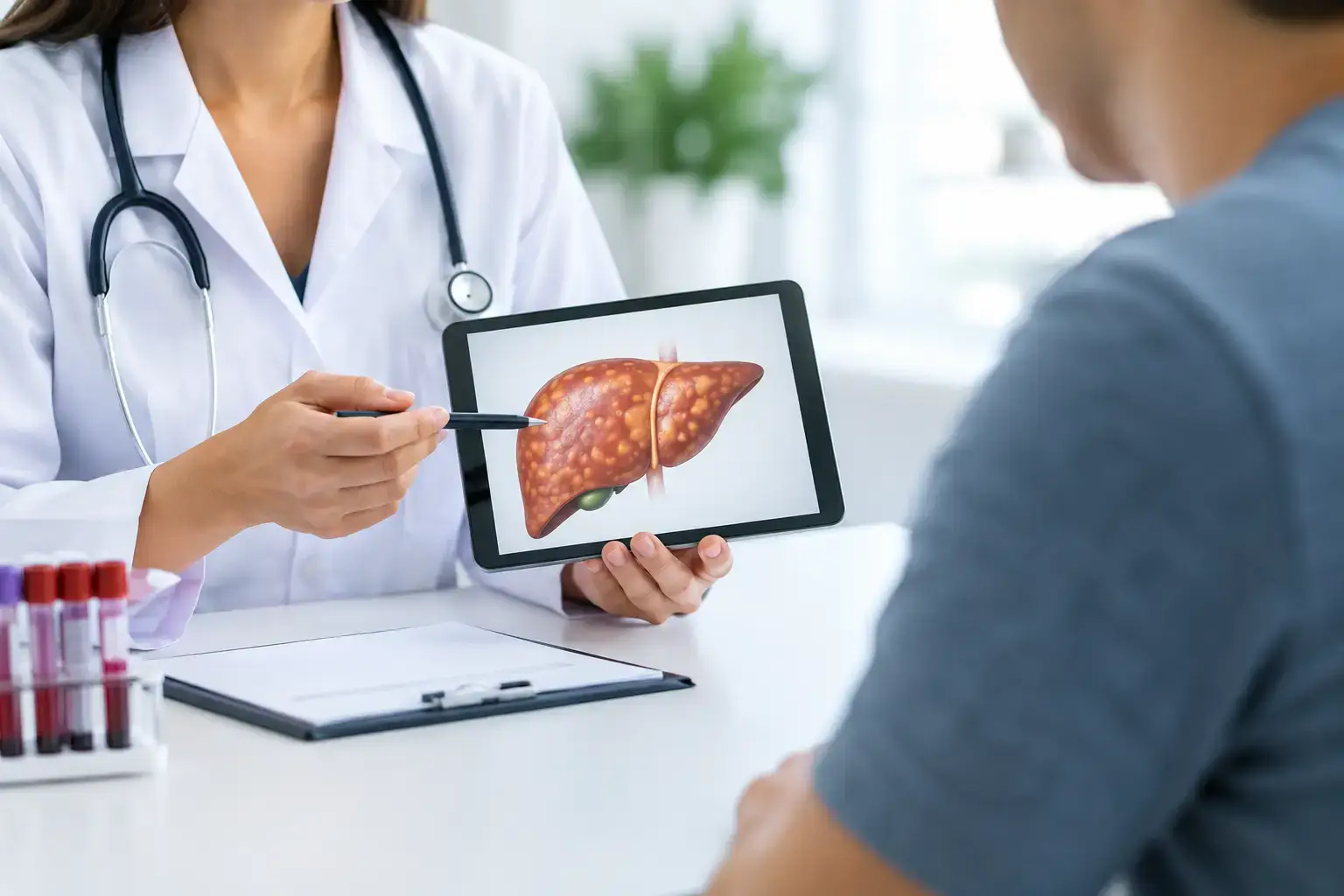
Fatty liver disease can stay quiet for years while metabolic risk builds in the background. You may feel perfectly well even as liver fat, insulin resistance, elevated triglycerides, or inflammation begin affecting your long-term health. The best tests for fatty liver do more than confirm fat in the liver. They help clarify whether scarring may be present, what is driving the problem, and where your prevention plan should begin.
For many adults, a liver assessment becomes especially worthwhile after weight changes, a GLP-1 weight-loss program, an abnormal routine lab result, or a diagnosis of high blood pressure, prediabetes, type 2 diabetes, or high cholesterol. A family history of metabolic disease can also be a reason to look more closely.
Table of Contents
Why one fatty liver test is rarely enough
Fatty liver disease is increasingly called metabolic dysfunction-associated steatotic liver disease, or MASLD. It occurs when excess fat accumulates in the liver alongside metabolic risk factors. Some people also have alcohol exposure, medication effects, viral illness, or other health conditions that need to be considered separately.
No single test gives the full picture. Liver enzymes can be normal even when fat is present. An ultrasound can identify moderate or advanced fat but may not tell you whether fibrosis, or scar tissue, is developing. A high-tech scan may estimate stiffness well but cannot replace a thoughtful review of your history, medications, alcohol intake, body composition, blood sugar, sleep, and cardiovascular risk.
The right testing plan depends on the question. Are you screening for liver fat? Checking whether an elevated ALT is temporary? Looking for fibrosis? Monitoring progress after weight loss? Those are different goals, and they may call for different tools.
Best tests for fatty liver: a practical sequence
Blood tests: the essential starting point
A comprehensive blood panel is often the first step because it can reveal liver stress and identify the metabolic patterns that commonly travel with fatty liver. Common measurements include ALT and AST, alkaline phosphatase, bilirubin, albumin, platelet count, fasting glucose or A1C, fasting insulin, lipid markers, and kidney function.
ALT and AST are enzymes that can rise when liver cells are irritated. However, they are not direct measures of liver fat or fibrosis. Normal values are reassuring, but they do not fully rule out fatty liver disease. Trends matter more than a single isolated result, particularly if you are changing weight, medications, alcohol intake, or exercise habits.
Blood work also helps a qualified clinician consider other causes of abnormal liver results, including hepatitis, iron overload, autoimmune conditions, thyroid dysfunction, and medication-related effects. That broader view prevents people from assuming every abnormal liver marker is simply caused by diet or body weight.
FIB-4: a simple fibrosis risk calculation
FIB-4 is a widely used calculation based on age, AST, ALT, and platelet count. It does not diagnose fatty liver, but it helps estimate the likelihood of advanced fibrosis. This matters because fibrosis is the stage most closely tied to serious liver complications over time.
A low FIB-4 result may support routine monitoring and lifestyle-focused follow-up. An indeterminate or high result usually means you need a closer look, often with liver elastography or a specialist referral. FIB-4 has limitations: age can affect the score, and it may be less reliable in younger adults or during an acute illness. Still, it is a useful, accessible way to decide who needs more advanced testing.
Abdominal ultrasound: useful, but not the full answer
An abdominal ultrasound is often the first imaging test ordered when fatty liver is suspected. It is noninvasive, widely available, and can detect moderate to significant fat accumulation. It may also identify gallstones, changes in liver shape, or other structural concerns.
The trade-off is sensitivity. Ultrasound can miss mild fat accumulation and cannot accurately stage fibrosis on its own. A normal ultrasound does not always mean your liver and metabolic health are fully in the clear, especially if blood sugar, triglycerides, waist circumference, or liver enzymes suggest risk.
FibroScan or liver elastography: clearer insight into scarring
Transient elastography, commonly known by the brand name FibroScan, uses sound waves to estimate liver stiffness. Higher stiffness can suggest fibrosis. Many devices also provide a controlled attenuation parameter, or CAP score, that estimates liver fat.
For people with known or suspected fatty liver, this is often one of the most helpful next-step tests. It is quick, does not involve needles, and can help distinguish uncomplicated liver fat from a liver that may need more active medical evaluation. Results still need context, because inflammation, congestion, and technical factors can affect stiffness readings.
Elastography is particularly helpful when routine labs or FIB-4 suggest possible fibrosis, when an ultrasound has already shown fatty liver, or when you want a clearer baseline while building a long-term metabolic wellness plan.
MRI-PDFF and MR elastography: the most precise noninvasive options
MRI proton density fat fraction, known as MRI-PDFF, is one of the most accurate noninvasive ways to measure liver fat. MR elastography uses MRI technology to assess liver stiffness and can offer highly detailed fibrosis information.
These tests are not necessary for everyone. They are more expensive and less convenient than ultrasound or FibroScan, so they are commonly reserved for unclear cases, specialty evaluation, clinical research, or situations where precise measurement will meaningfully change care. If your basic assessment already provides a clear path forward, advanced MRI testing may not add enough value to justify the cost.
Liver biopsy: reserved for selected situations
A liver biopsy examines a small tissue sample under a microscope. It remains the most definitive way to identify inflammation, the type and extent of fibrosis, and conditions that can mimic fatty liver disease.
Because biopsy is invasive and carries a small risk of complications, it is not a routine screening test. A liver specialist may recommend it when noninvasive tests conflict, advanced disease is suspected, or a diagnosis remains uncertain after blood work and imaging.
Look beyond the liver for the real drivers
Fatty liver is often a signal that the body is struggling with metabolic load. That is why meaningful testing should include more than a liver enzyme panel. Fasting insulin, glucose, A1C, triglycerides, HDL cholesterol, blood pressure, waist circumference, sleep quality, and medication history can all point to factors that influence liver fat and future cardiovascular risk.
For some people, genetic information and family history can add useful context. Genetics do not determine your future, but they may help explain why two people with similar habits have different risks for insulin resistance, cholesterol concerns, inflammation, or weight regain. The most useful approach translates that information into practical choices, not fear.
This is also where follow-up matters. If weight loss improves liver fat but muscle mass declines, protein intake is inadequate, or glucose control remains unstable, the plan may need adjustment. Sustainable progress is not about chasing a single lab value. It is about improving the patterns that protect your liver, brain, heart, and energy over time.
When to ask for testing sooner
Consider discussing a fatty liver evaluation with a qualified healthcare professional if you have type 2 diabetes, prediabetes, obesity, elevated triglycerides, high blood pressure, sleep apnea, polycystic ovary syndrome, or persistently abnormal liver tests. Testing may also be appropriate if you have a family history of liver disease or have regained weight after stopping a weight-loss medication.
Seek timely medical care for yellowing of the skin or eyes, abdominal swelling, confusion, vomiting blood, black stools, or severe persistent abdominal pain. These symptoms are not typical early signs of fatty liver and deserve prompt evaluation.
At My Healing 365, personalized virtual wellness support can help you interpret metabolic and functional lab patterns, identify modifiable risks, and create a prevention-focused roadmap that fits real life. Your testing should lead to clear next steps: food choices you can maintain, movement that supports muscle and insulin sensitivity, sleep and stress strategies, and coordinated medical follow-up when needed.
A liver test is not a verdict. It is an opportunity to see what your body is asking for now, then act early enough to protect the vibrant, healthy years ahead.