

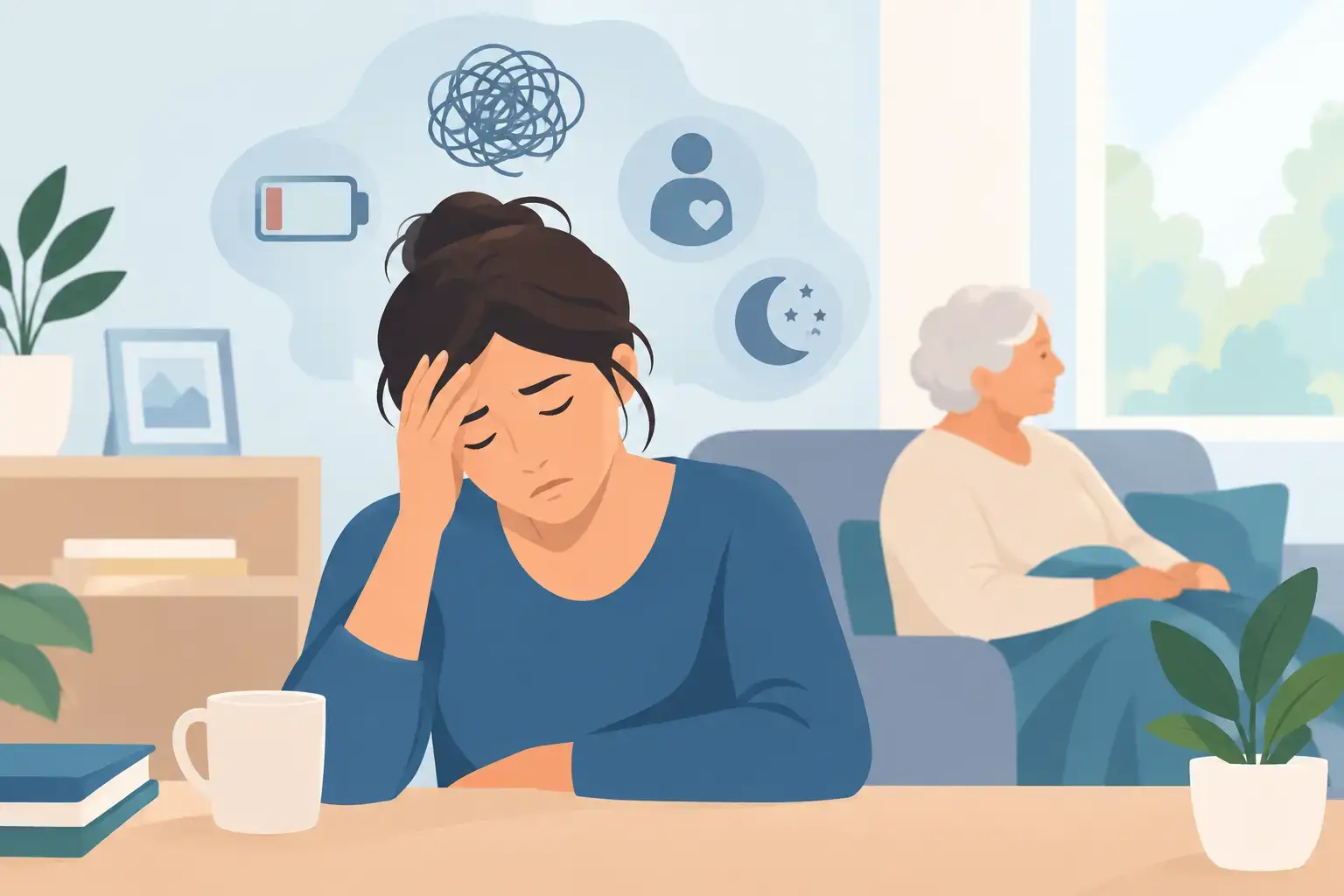
The person who needs care may be getting your full attention while your own needs keep moving to the bottom of the list. Caregiver burnout symptoms can build this way: quietly, gradually, and often behind a capable face. Feeling depleted does not mean you love someone less or that you are failing at caregiving. It means the demands placed on you may be more than one person can carry alone.
Whether you are caring for a parent, partner, child, friend, or someone living with a chronic condition, your mental health deserves care too. Recognizing the signs early can help you protect your energy, relationships, and physical health before stress becomes a crisis.
Table of Contents
What is caregiver burnout?
Caregiver burnout is a state of emotional, mental, and physical exhaustion related to the ongoing stress of caring for someone else. It can happen when responsibilities are constant, support is limited, sleep is interrupted, or your own work, family, and health needs compete for attention.
Burnout is not a diagnosis, and it does not look the same for everyone. Some people feel anxious and constantly on alert. Others feel numb, irritable, hopeless, or disconnected from the person they are caring for. The common thread is that caregiving starts to feel unsustainable.
A hard week does not automatically mean burnout. But when distress lasts for weeks, affects daily functioning, or leaves you unable to recover during downtime, it is worth taking seriously.
Caregiver burnout symptoms to recognize
Caregiver burnout symptoms may show up in your body, your emotions, and your day-to-day behavior. Many people dismiss these changes because they believe they need to stay strong. In reality, these signals are your mind and body asking for more support.
Emotional changes
You may feel unusually irritable, resentful, tearful, worried, or emotionally flat. Small problems can feel overwhelming, and you may lose patience more quickly than usual. Some caregivers feel guilt for wishing they had more time alone, even though needing rest is normal.
You might also notice a sense of dread before caregiving tasks, a loss of interest in activities you once enjoyed, or difficulty feeling hopeful about the future. If you are frequently sad, anxious, or disconnected, those feelings deserve attention.
Physical stress signals
Long-term stress often affects sleep first. You may have trouble falling asleep, wake often, sleep too much, or feel tired no matter how long you rest. Headaches, muscle tension, stomach discomfort, appetite changes, and getting sick more often can also be signs that stress is taking a physical toll.
Caregiving can require late nights, lifting, driving, medication management, and constant decision-making. Physical exhaustion is understandable, but it can become risky when you are too tired to drive safely, manage your own medications, or think clearly.
Changes in habits and relationships
Burnout can make it harder to return calls, keep plans, prepare meals, exercise, or attend appointments. You may pull away from friends because explaining your situation feels exhausting. Others cope by scrolling late at night, drinking more alcohol, overeating, skipping meals, or relying on caffeine to get through the day.
It can also affect your relationship with the person receiving care. You may become impatient, avoid time with them outside of necessary tasks, or feel frustrated by needs you know they cannot control. These reactions can be painful, but they are often signs of overload, not a lack of compassion.
Why burnout can be hard to spot
Caregivers are often praised for being dependable. That can make it difficult to admit that the role is becoming too much. You may tell yourself that other people have it harder, that this is temporary, or that you will rest after the next appointment, hospital visit, or family emergency.
But caregiving rarely follows a neat schedule. Even when a loved one’s health is stable, the mental load can remain high. You may be planning meals, tracking symptoms, coordinating care, managing finances, and anticipating what could go wrong. That ongoing vigilance can keep your nervous system from fully settling.
Family dynamics may add another layer. Perhaps you are the only sibling who helps, or you are balancing caregiving with a full-time job and parenting. Perhaps the person you care for refuses help, or you feel judged when you set limits. There is no single solution for every situation, which is why support should fit your actual life rather than an idealized version of it.
When caregiver stress may be depression or anxiety
Burnout, anxiety, and depression can overlap. Persistent worry, racing thoughts, panic, poor sleep, low mood, loss of interest, and trouble concentrating may be connected to caregiver stress, but they can also signal a mental health condition that deserves treatment.
Consider speaking with a licensed provider if your symptoms last two weeks or more, interfere with work or relationships, or make basic tasks feel difficult. Support can be especially helpful if you feel hopeless, are having frequent panic symptoms, or no longer recognize yourself.
If you are thinking about harming yourself, feel unable to stay safe, or fear you may harm someone else, call or text 988 in the US for immediate crisis support. If there is immediate danger, call 911 or go to the nearest emergency room.
Small steps that can relieve the pressure
You do not need to solve every caregiving challenge at once. Start by identifying one responsibility that can be shared, delayed, simplified, or handled differently. A relative may be able to make calls, pick up groceries, sit with your loved one for an hour, or organize paperwork. Specific requests are usually easier for people to respond to than a general statement that you need help.
Protecting small pockets of recovery time also matters. Ten quiet minutes in the car before going inside, a walk around the block, a shower without interruptions, or an earlier bedtime will not erase burnout, but regular moments of decompression can lower the pressure. If sleep is disrupted by caregiving demands, aim for rest where you can and discuss ongoing sleep problems with a provider.
It may help to write down the tasks you manage in a typical week. Seeing the list can make the workload visible and help you decide what truly requires your attention. It can also give you a clearer way to talk with family members, employers, or a healthcare professional about what you need.
Set limits without abandoning the person you love
Boundaries can feel uncomfortable when someone depends on you. Still, a boundary is not a rejection. It may sound like, “I can take you to appointments on Tuesdays, but I cannot be available every evening,” or, “I need 30 minutes after work before we talk about medical decisions.”
The right limit depends on safety, available support, and the needs of the person receiving care. Some circumstances require more immediate involvement than others. But even in demanding situations, caregivers need a plan for breaks, backup, and their own health appointments.
Mental health support can fit a caregiver’s schedule
Traditional appointments can be difficult to arrange when another person relies on you. Online mental health care can offer a more private, flexible option for discussing stress, anxiety, depression, sleep concerns, and major life changes with a licensed provider.
A provider can help you sort through whether what you are experiencing is caregiver stress, anxiety, depression, insomnia, or a combination of concerns. Depending on your needs, a personalized treatment plan may include coping strategies, ongoing check-ins, therapy recommendations, and clinically appropriate medication. Medication is not the right choice for everyone, but it may be worth discussing when symptoms are persistent or severe.
My Healing 365 offers online mental health support designed to make care easier to access, with licensed-provider guidance, secure communication, and treatment plans built around your symptoms. You do not have to wait until you are completely overwhelmed to ask for help.
Give yourself the same care you give others
Caregiving can be an expression of deep love, duty, and commitment. It can also be exhausting. Both can be true at the same time. Paying attention to caregiver burnout symptoms is not selfish or dramatic – it is a practical step toward staying well enough to care for yourself and the people who matter to you.
Start with one honest question: “What would make this week feel even slightly more manageable?” Then let that answer count.