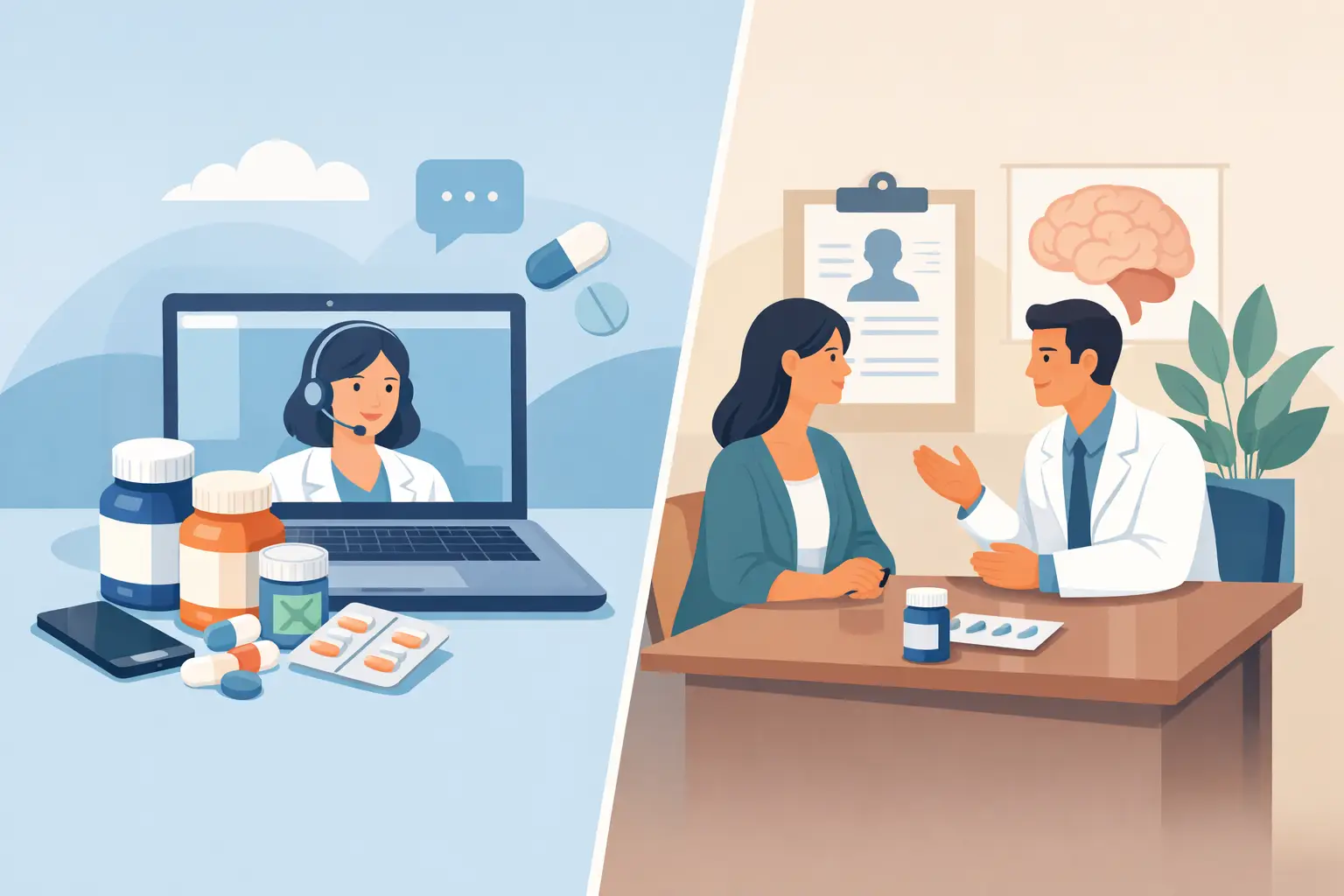
A prescription is only one part of depression treatment. The right care also depends on whether you can speak openly with your provider, follow a plan consistently, and get help when symptoms change. When comparing antidepressants online vs in person, the better option is not automatically the fastest or most familiar one. It is the setting that gives you safe, appropriate care and feels manageable enough to stick with.
For many adults, online care removes the hardest first step: finding time for an appointment, commuting to a clinic, or sitting in a waiting room when they already feel depleted. For others, in-person care provides the closer observation and personal connection they need. Both can be valuable. Here is how to think through the difference.
Table of Contents
How online antidepressant care works
Online treatment begins with a secure health assessment and a conversation with a licensed provider. You share your symptoms, health history, current medications, sleep patterns, and any past experience with mental health treatment. Your provider uses that information to determine whether medication may be appropriate and to build an individualized treatment plan.
If an antidepressant is prescribed, follow-up care matters. These medications often take several weeks to show their full effect, and finding the right medication and dose can require adjustments. A quality telehealth program makes it easy to check in, report side effects, ask questions, and let your provider know how you are feeling between appointments.
This can be especially helpful if your days are packed with work, caregiving, school, or unpredictable schedules. Instead of delaying treatment because you cannot make a weekday office visit, you can access care privately from home. At My Healing 365, eligible patients can connect with licensed providers online, receive personalized treatment guidance, and use unlimited provider messaging as part of ongoing care.
Online care is not less real because it happens on a screen. What matters is the quality of the clinical evaluation, the provider’s judgment, and the follow-up plan.
Antidepressants online vs in person: key differences
The biggest difference is usually access. Online care can reduce wait times and eliminate travel, which may make treatment easier to begin and continue. In-person care may involve more scheduling, transportation, and time away from daily responsibilities, but it can offer face-to-face interaction and access to services that require an office setting.
Privacy can feel different, too. Telehealth lets many people have appointments from a place where they feel comfortable and in control. That can be a meaningful benefit if stigma, limited transportation, or a lack of local providers has kept you from seeking help. Still, privacy at home requires a quiet space where you can talk honestly without worrying that someone will overhear.
Communication style is another practical consideration. Some people feel more comfortable sharing difficult emotions through messaging or video visits. Others find it easier to read body language and build trust in the same room as a provider. Neither preference is wrong. The goal is to choose a format that helps you be candid about your symptoms, medication use, and concerns.
Cost and insurance coverage also vary. An in-person practice may bill insurance but have long waits or limited availability. Online programs may offer straightforward self-pay pricing and convenient ongoing support, although coverage and out-of-pocket costs depend on the service and your plan. Before starting, make sure you understand what is included in the cost of treatment, how follow-ups work, and how prescription renewals are handled.
When online treatment may be a strong fit
Virtual antidepressant care can be a good choice when you have symptoms of depression or anxiety that are affecting your daily life but you are able to participate in a remote evaluation and follow a treatment plan. It can be particularly useful for people who want discreet care, need scheduling flexibility, or live in an area where local appointments are difficult to find.
It may also fit well if you value regular, low-friction communication. Depression can make even simple tasks feel heavy. Being able to message your provider about nausea, changes in sleep, missed doses, or a return of symptoms may make it easier to stay engaged rather than waiting weeks for the next office opening.
Online care can support more than medication decisions. A provider may discuss routines that protect your mental health, such as sleep consistency, movement, alcohol use, stress management, and therapy options. Medication can be an effective tool, but it is not a requirement for every person and it does not have to be your only source of support.
Elevate Your Health for Just $29.99/Month
Join the Precision Wellness Subscription at My Healing 365 and get discounted services, priority coaching access, virtual care, and exclusive wellness resources to support your physical, emotional, and hormonal health.
Join for $29.99/MonthWhen in-person care may be the safer choice
Telehealth is not right for every situation. An in-person appointment, urgent mental health evaluation, or higher level of care may be more appropriate if your symptoms are severe, rapidly worsening, or difficult to assess remotely.
Seek immediate help if you are thinking about harming yourself or someone else, feel unable to stay safe, are experiencing hallucinations or extreme confusion, or are having symptoms of mania such as unusually elevated energy, little need for sleep, racing thoughts, or risky behavior. Call or text 988 in the United States for the Suicide & Crisis Lifeline, call 911, or go to the nearest emergency room if there is immediate danger.
In-person care may also be preferable when you need services beyond medication management, such as intensive therapy, physical examinations, coordinated specialty care, or support for complex medical and psychiatric conditions. A responsible online provider should recognize these limits and help direct you toward appropriate care when needed.
What to expect after starting an antidepressant
Whether you meet online or in person, antidepressant treatment should include realistic expectations. Many people do not feel a major improvement immediately. Some notice changes in sleep, appetite, energy, or anxiety before their mood begins to lift. Side effects can occur, particularly early in treatment, and should be discussed with your provider rather than ignored.
Take medication exactly as prescribed, and do not stop suddenly unless a clinician tells you to do so. Stopping abruptly can cause uncomfortable discontinuation symptoms for some medications. If you are pregnant, trying to become pregnant, breastfeeding, taking other prescriptions or supplements, or managing a medical condition, tell your provider before treatment begins.
Follow-up visits are where the plan becomes personal. Your provider may keep the medication and dose the same, make an adjustment, recommend therapy, or decide that a different approach is better. Progress is not always linear. Honest check-ins help your provider make safer, more informed decisions.
Questions worth asking before you choose
A good treatment option should make it clear who will be managing your care and what happens after the first prescription. Ask whether you will be evaluated by a licensed provider, how quickly you can communicate with them, how follow-ups are scheduled, and what support is available if you have side effects or your symptoms worsen.
It is also reasonable to ask how your health information is protected and whether the service can coordinate with your primary care clinician when appropriate. If you have tried antidepressants before, share what helped, what did not, and why you stopped. That history can help shape a plan that better fits your needs now.
Choosing between online and in-person treatment does not have to be a permanent decision. You can start with the care format that feels accessible, then reassess as your needs change. The most useful next step is a thoughtful evaluation with a licensed provider – one that treats your symptoms seriously and gives you a clear path forward. You do not have to go through it alone.

























