
Category: SCD

  • Sickle Cell Trait: Here’s What You Need to Know

    Sickle Cell Trait: Here’s What You Need to Know

    image

    According to the American Society of Hematology, 8-10% of African Americans have sickle cell trait. That’s between one and three million of us. Dr. Julie Panepinto, Director of the Division of Blood Diseases and Resources (DBDR) at the National Heart, Lung, and Blood Institute of the National Institutes of Health, explains what you need to know about having the trait and how it may impact your health.

    What is Sickle Cell Trait?

    “When a person has one copy of the sickle cell gene passed down from one parent along with a normal hemoglobin gene (hemoglobin A) from the other parent.” Dr Panepinto explains. “People who have sickle cell trait are sometimes called carriers. A person who has sickle cell trait does not have sickle cell disease (SCD) or sickle cell anemia, but they can pass the sickle cell gene down to their children.” When two parents with the trait have children, there is a 25% chance their child will have SCD.

    About the Screening Processing

    Anyone Black person born in the United States before 1975 had no idea whether they had SCT at birth because testing was not standard. New York State was the first partner in the Sickle Cell Initiative, and now the heel test is done by all states. “Within the first 24 to 48 hours after birth, babies undergo a heel stick, and a few drops of blood are collected on a special paper card. Newborn screening laboratories test the blood samples for various conditions that can be detected at birth, including sickle cell trait and SCD,” Panepinto says. “A positive newborn screening test means your baby likely has the condition reported, but you need more testing by your baby’s doctor to know for sure. Testing of parents may also be recommended.”

    Living With Sickle Cell Trait

    According to Dr. Panepinto, most people with sickle cell trait don’t have serious medical problems. “There are rare cases where some people with SCT can experience complications. Someone is more likely to have complications if their body needs more oxygen than usual, like if they are engaged in intense physical activity, dehydrated, active at high elevations, or in extreme temperatures (hot or cold),” she says. “Some people with sickle cell trait may experience damage to their kidneys or spleen.”

    Dr. Panepinto’s best advice on staying healthy is to be proactive:

    • Eat a healthy diet
    • Exercise regularly
    • Get enough sleep
    • Do not smoke
    • See your doctor regularly

    Visit the NHLBI website to learn more about staying healthy while living with sickle cell trait: www.nhlbi.nih.gov/health/sickle-cell-disease/sickle-cell-trait.
  • SCD Newborn Screenings Are Saving Lives in Africa

    SCD Newborn Screenings Are Saving Lives in Africa

    According to the World Health Organization, 240,000 babies are born each year with sickle cell disease (SCD) on the continent of Africa, and 80% of them will die before age five from severe infections or acute chest syndrome. But we talked to one Nigerian family who found a screening program they believed saved their infant son’s life. “There was newborn screening going on at the healthcare center where I took my son Sean to get his immunization,” Debbie explained. “It’s not a popular thing in our country, but we wanted to know the genotype of our baby.”

    Why Debbie Wanted a SCD Screening For Her Baby

    Debbie was aware that she had the sickle cell trait. “My husband didn’t know until a few years earlier that he also had the trait. We discovered that after our first child was born 11 years ago when we lived in the UK, where they regularly screen newborns for SCD, that child has the trait as well.”

    The screening revealed Sean had SCD, and, as a result, he was about to begin treatments. “He was given penicillin b and folic acid right away. He hasn’t any crises, and he is wonderful,” Debbie says. “We are very grateful because we adhere to his medications and doctor’s advice.” Most people in this country don’t know their child has SCD until their child falls sick.

    What is the CONSA Program?

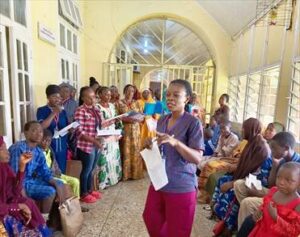
    Debbie took advantage of a program offered by the American Society of Hematology’s Consortium on Newborn Screen in Africa (CONSA). According to Dr. Mohandes Narla, ASH president, the program has been available in seven Sub-Saharan African countries since 2020, including Ghana, Liberia, Nigeria, Kenya, Tanzania, Uganda, and Zambia. “Our goal is to screen 100,000 babies in each of these countries for a total of 700,000 over the next few years,” Dr Narla says. “So far, we have screened 120,000 total and will continue to screen until we reach our targeted number.”

    What Happens After the Screenings?

    Dr. Narla explains that once they have identified the newborns with SCD, they are given prophylactic penicillin to prevent infections and immunization for all the necessary immunizations that these children need to survive. “We also use reasonably effective treatments to control the disease, for example, hydroxyurea. And are also working with these countries to get programs underway,” he says. “But, again, the problem may be the cost of the drugs and making sure people can access reasonable, available, therapeutic strategies as they get older.”

    How Are They Getting the Word Out?

    According to Debbie, few people in Nigeria know that testing is available. She was fortunate to be asked if she wanted it at the healthcare center she took her son to for his immunization. It is probably a similar scenario in many other countries. They actively engage with community groups and local programs, but they need more assistance to reach scale. Dr. Narla said, “But unless we get the public health officials and the Ministries of Health in these countries to realize how important this problem is and how it can be solved with reasonable effectiveness, then it will continue to be a challenge.”

    However, Dr. Narla says ASH remains committed to the CONSA’s success.