

When Canada legalized recreational cannabis in October 2018, one concern was that more legal stores would make cannabis easier for young people to access and encourage adolescent use. But does having more cannabis retailers near high schools actually mean more students use cannabis?
Our study suggests the relationship is more complicated. Across more than 419,000 student survey responses collected in four Canadian provinces, we found little consistent evidence that greater access to nearby cannabis retailers was associated with whether adolescents used cannabis.
However, accessibility was associated with more frequent use among existing users during the first year of legalization.
Our research team examined this question in a study published in the Drug and Alcohol Dependence journal. Our findings offer new insight into how cannabis retail accessibility relates to adolescent use as Canada’s legal market matures.
Table of Contents
Retail accessibility and cannabis use
We examined student survey data collected between 2018–19 and 2023–24 through the COMPASS study in Alberta, British Columbia, Ontario and Québec. We measured accessibility using the distance to the nearest retailer, the number of nearby stores and a measure that gives greater weight to closer retailers.
Overall, greater retail accessibility was not consistently associated with ever using cannabis, past-year or past-month use, or daily and almost-daily use.
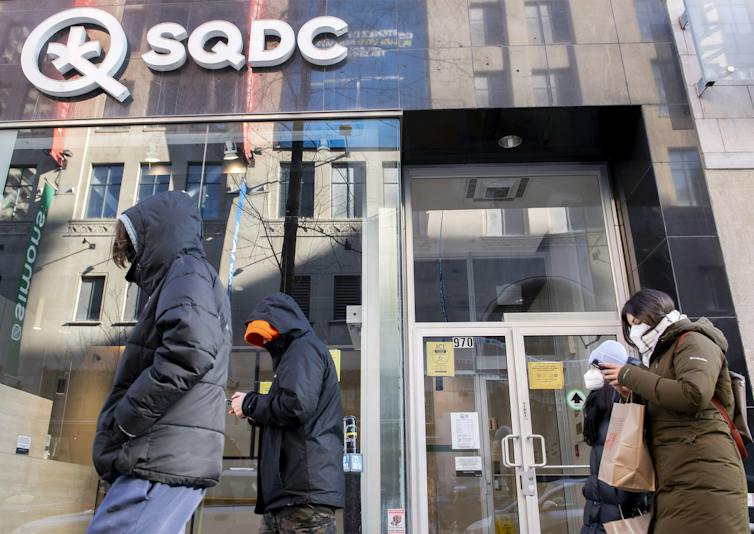
THE CANADIAN PRESS/Graham Hughes
Cannabis use also declined in our study sample. Past-year use fell from 22.2 per cent in 2018 to 10.0 per cent in 2023. Past-month use declined from 13.0 per cent to 6.4 per cent, while almost-daily use fell from 4.2 per cent to 2.4 per cent. These figures describe students in participating schools, not a nationally representative sample.
For national context, Health Canada’s Canadian Student Alcohol and Drugs Survey reported that 18.3 per cent of students in Grades 7 to 12 used cannabis in 2023–24. This estimate comes from a separate survey and should not be directly equated with our findings.
One important exception emerged among students who had already used cannabis. In 2018, greater retail accessibility was associated with more frequent use. This association weakened and was no longer statistically significant in subsequent years. Proximity may have mattered for frequency of use early after legalization, but it did not remain a consistent predictor.
Store proximity may not tell the whole story
Adolescents do not necessarily obtain cannabis directly from legal retailers. They may access it through friends, family members or other social connections, so the distance between a school and a store may not reflect how easily young people can obtain cannabis.
Research on American high school students has identified friends as an important source of cannabis, whether through sharing or purchasing it. This research helps explain why the distance between a student’s school and the nearest cannabis retailer may not reflect how easily they can obtain cannabis. However, our study did not examine where students obtained cannabis, so access through friends is one possible explanation for our findings, not something we directly tested.
Other factors, including peer influences and perceptions of risk, may also affect use. Our study cannot establish which factors explain the findings.
What does this mean for cannabis policy?
Our findings do not mean adolescent cannabis use is harmless or that governments should abandon safeguards. Research has linked adolescent cannabis use with health and educational concerns. A meta-analysis found associations with depression and suicidal ideation, while other research examined associations between cannabis use and poorer academic outcomes.
A 2024 systematic review also examined cannabis retail availability and health outcomes, underscoring the need to consider different populations and outcomes rather than assume store proximity affects everyone in the same way.
Restrictions on how close cannabis stores can operate to schools may still serve important purposes. However, our findings suggest that store proximity alone may be insufficient to understand or prevent adolescent use. Prevention efforts may also need to address social access, peer influences and factors associated with frequent consumption.
Our study has limitations. Cannabis use was self-reported, and we surveyed students across successive years rather than following the same people over time. We measured retail access around schools, which may not reflect where students live or spend their time. The COVID-19 pandemic also disrupted school and social environments during the study period.
The number of cannabis stores near a school is easy to measure, but it is only one part of a larger picture. Understanding adolescent cannabis use requires looking beyond store locations to consider how young people obtain cannabis, why they use it and how to prevent harmful patterns of consumption.