

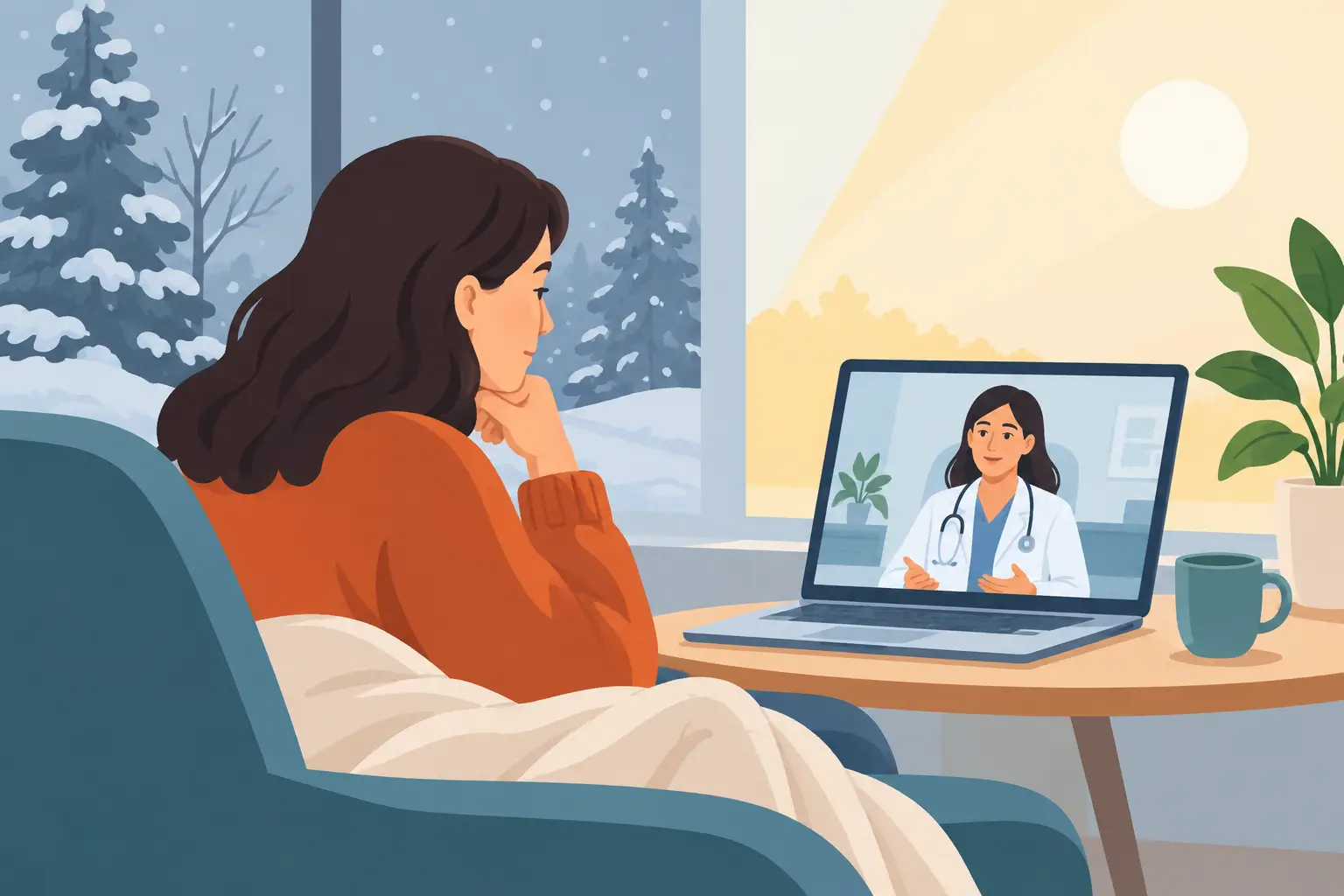
When shorter days start changing how you sleep, eat, focus, or feel about the life you usually enjoy, it can be more than a case of winter blues. So, does telehealth treat seasonal depression? For many adults, yes. Online mental health care can provide a private, practical way to speak with a licensed provider, clarify what is causing your symptoms, and begin a treatment plan without adding another stressful appointment to your week.
Seasonal depression can make everyday responsibilities feel heavier. You may be getting through work and family obligations while feeling unusually tired, withdrawn, hopeless, or disconnected. You do not have to wait until symptoms become overwhelming to ask for support.
Table of Contents
What seasonal depression can look like
Seasonal affective disorder, often called SAD or seasonal depression, is a type of depression that follows a seasonal pattern. For most people, symptoms begin in fall or winter and improve in spring. Less commonly, symptoms appear during spring or summer.
Winter-pattern seasonal depression is often connected with reduced daylight and changes to the body’s internal clock. That does not mean it is simply a lack of willpower or something you should be able to push through. It is a real mental health concern, and it can affect your relationships, work, physical health, and ability to care for yourself.
Symptoms can vary, but common experiences include persistent low mood, low energy, sleeping more than usual, trouble concentrating, pulling away from people, increased appetite, weight changes, and losing interest in activities that normally help you feel like yourself. Some people also feel more irritable or anxious during the darker months.
A seasonal pattern is a useful clue, but it is not a diagnosis on its own. Depression, anxiety, sleep disorders, thyroid conditions, medication effects, and major life stress can create overlapping symptoms. A qualified provider can help look at the full picture rather than assuming every winter slump is seasonal depression.
Does telehealth treat seasonal depression effectively?
Telehealth can be an effective setting for evaluating and treating seasonal depression when your symptoms are appropriate for online care. A licensed provider can discuss your symptoms, health history, current medications, sleep, stress level, and the timing of past mood changes through a secure virtual visit. From there, they can recommend a personalized plan.
For many people, that plan may include therapy, lifestyle strategies, medication when clinically appropriate, or a combination of approaches. Depression treatment is not one-size-fits-all. The best option depends on symptom severity, your medical history, what has helped before, and what feels realistic in your daily life.
Virtual care is especially helpful when depression makes leaving home feel difficult. You can connect from a familiar, private space instead of navigating traffic, time away from work, childcare, or a crowded waiting room. Ongoing messaging can also make it easier to share side effects, changing symptoms, or questions between scheduled check-ins.
Telehealth does have limits. If you have severe symptoms, need an urgent in-person evaluation, are experiencing mania or psychosis, or may be at risk of harming yourself, online routine care may not be enough. In an immediate emergency, call 911 or go to the nearest emergency room. If you are thinking about suicide or need urgent emotional support, call or text 988 in the United States.
What an online treatment plan may include
Your provider should start with an assessment, not a quick assumption. They may ask when your symptoms started, whether they happen around the same time each year, how they affect your functioning, and whether you have a personal or family history of depression or bipolar disorder. This matters because some treatments need extra consideration for people with certain health conditions or mood histories.
Medication support, when appropriate
Antidepressant medication may help some people manage seasonal depression, particularly when symptoms are moderate to severe or return year after year. A licensed clinician can determine whether medication is appropriate, discuss benefits and possible side effects, and monitor how you are doing over time.
Medication is not the only answer, and it does not have to be a forever decision. Some people use it seasonally, while others may benefit from longer-term treatment. Your plan should be based on your symptoms and clinical needs, not pressure to choose one approach.
Therapy-informed tools and ongoing guidance
Talk therapy, especially cognitive behavioral therapy, can help you notice the thoughts and habits that depression tends to reinforce. Online care may include guided tools for building routines, improving sleep, managing stress, and staying connected to the activities that support your mood.
The goal is not to force yourself to feel cheerful. It is to create small, repeatable actions that make depressive symptoms less in control of your day. That might mean setting a consistent wake time, planning a short walk earlier in the day, or making one meaningful social commitment each week.
Light exposure and daily habits
A provider may discuss light therapy, which uses a specialized light box to mimic bright outdoor light. It can be helpful for some people with winter-pattern SAD, but it is worth getting professional guidance first. Light therapy is not right for everyone, particularly people with certain eye conditions, medications that increase light sensitivity, or a history of bipolar disorder.
Regular movement, outdoor daylight exposure, balanced meals, stable sleep, and reduced alcohol use can also support treatment. These habits are not substitutes for medical care when you are depressed. They are practical supports that can make therapy, medication, or both work better.
When to seek care instead of waiting for spring
It is easy to minimize seasonal symptoms because you expect them to pass. But waiting can mean spending months feeling unlike yourself. Consider reaching out if low mood lasts most days for two weeks or more, symptoms are disrupting work or relationships, your sleep or appetite has changed significantly, or you are losing interest in things that usually matter to you.
You can also seek care before symptoms start. If you know you tend to struggle every fall or winter, a provider may help you create a prevention plan before your hardest season arrives. Early treatment can give you more choices and more time to notice what works.
At My Healing 365, mental health care is designed to meet you where you are. You can connect with a licensed provider online, receive an individualized treatment plan, and use secure messaging for ongoing support. Care starts at $99, offering a lower-friction way to get help without putting your life on hold.
How to prepare for a telehealth visit
You do not need to have the perfect words ready. A few notes can make your visit more useful: when symptoms began, whether they recur each year, changes in sleep or appetite, medications and supplements you take, and anything you have tried before. If possible, write down one or two goals, such as having more energy in the morning, sleeping more consistently, or feeling present with your family again.
Be honest about alcohol or substance use, past mental health treatment, and any periods of unusually high energy, decreased need for sleep, impulsivity, or racing thoughts. These details help your provider recommend care safely. A good virtual visit should feel like a conversation, not a test you have to pass.
Seasonal depression can narrow your world slowly, one canceled plan and one exhausted morning at a time. Reaching out online can be a simple first step toward feeling supported, understood, and more in control before another season passes you by.