

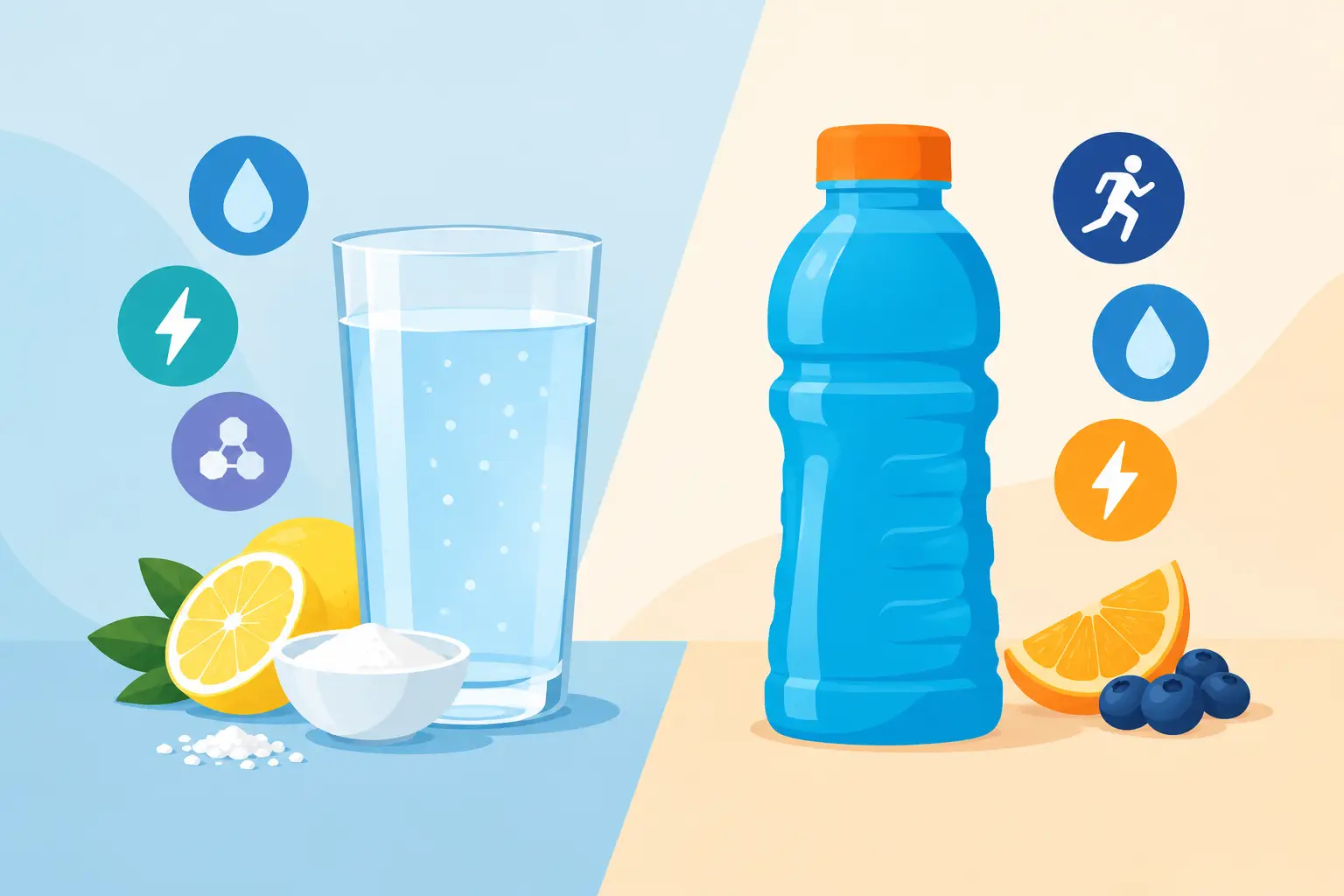
A long afternoon at your desk, a humid walk with the dog, a tough gym session, or a stomach bug can all leave you feeling drained. That is why the question of electrolytes versus sports drinks comes up so often. Both can support hydration in the right moment, but they are not interchangeable – and neither is necessary every time you feel thirsty.
For most everyday routines, plain water and balanced meals do a great job. The real value of hydration products is knowing when your body may need more than water, then choosing an option that fits your activity level, health goals, and preferences.
Table of Contents
What Electrolytes Actually Do
Electrolytes are minerals that carry an electrical charge when dissolved in fluid. Sodium, potassium, magnesium, calcium, chloride, and phosphate are all electrolytes. Your body uses them to help regulate fluid balance, support normal muscle and nerve function, and maintain healthy cellular processes.
You lose electrolytes through sweat, urine, and digestive illness. Sodium is the main electrolyte lost through sweat, which is why it is often the focus of sports and hydration formulas. Potassium, magnesium, and other minerals also matter, but more is not automatically better. The right balance depends on what you have lost and what your body needs.
Electrolytes are not a special category of fuel. They are minerals found naturally in many foods, including fruits, vegetables, dairy products, beans, nuts, and salty foods. A regular meal after moderate activity can often replenish what you need.
What Sports Drinks Add to the Mix
Sports drinks generally combine water, electrolytes, and carbohydrates, usually in the form of sugar. That carbohydrate content is not a flaw by default. During long, demanding exercise, it can provide quick energy while the electrolytes help replace fluid and sodium lost through sweat.
The issue is fit. A drink designed for an athlete training hard for more than an hour may not be the best match for a person taking a 30-minute walk or sitting through a normal workday. In those situations, added sugar and calories may offer little practical benefit.
Some sports drinks also contain artificial colors, strong flavors, or ingredient lists that do not align with everyone’s everyday wellness routine. Others are lower in sugar or made without added sugar. Reading the label matters more than relying on the category name.
The biggest difference is often sugar
When people compare electrolytes versus sports drinks, the clearest difference is usually carbohydrate content. An electrolyte powder, tablet, or ready-to-drink beverage may contain minerals with little or no sugar. A traditional sports drink often includes enough sugar to support endurance activity.
Neither option wins in every circumstance. If you are running, cycling, playing a tournament, or working outdoors in high heat for extended periods, carbohydrate-containing sports drinks can be useful. If your goal is daily hydration, a lower-sugar electrolyte option may make more sense.
When Plain Water Is Enough
Water is the reliable foundation of hydration. For everyday errands, desk work, light exercise, and typical meals, it is usually all you need. Your body gets additional fluids and minerals from food throughout the day.
Consider water first when you are thirsty after a normal day, doing gentle movement, or eating regular meals. Keep a bottle nearby, sip consistently, and let thirst guide you rather than trying to force large amounts of fluid at once.
Water can also be the more comfortable choice if sweet drinks make you feel bloated or if you simply prefer a simple routine. Hydration does not need to be complicated to be effective.
When Electrolyte Support May Be Helpful
An electrolyte drink or supplement may be a practical option when fluid and mineral losses are higher than usual. That can include prolonged exercise, heavy sweating, working outside in hot weather, travel, or recovering from short-term fluid loss due to illness.
You may also find that a lightly flavored electrolyte drink helps you drink more consistently than plain water. That can be a meaningful benefit for busy professionals, parents, and anyone who tends to forget hydration until they already feel depleted.
Pay attention to the full context. Heat, humidity, workout duration, sweat rate, clothing, medications, and your usual diet can all influence hydration needs. Someone who finishes a casual indoor workout may need very little beyond water. Someone doing yard work in summer heat for several hours may benefit from fluid, sodium, and a snack.
Signs you may need to rehydrate
Thirst, dry mouth, darker urine, headache, fatigue, and reduced exercise performance can be signs that you need more fluids. They are not specific to dehydration, though, and they do not automatically mean you need a sports drink.
If you have persistent dizziness, confusion, fainting, severe vomiting or diarrhea, chest symptoms, or symptoms that do not improve, seek medical care. Hydration products are helpful tools, not a replacement for professional evaluation when something feels seriously wrong.
How to Choose a Better Hydration Drink
Start with your reason for using it. Are you looking for support during long endurance exercise? Recovery after a sweaty outdoor shift? A convenient way to stay on top of fluids during travel? The answer should guide the formula.
For routine hydration, look for an electrolyte product with an amount of sodium that makes sense for your activity and sweat loss, without unnecessary added sugar. If you are fueling extended exercise, a product with carbohydrates may be appropriate. Flavor matters, too. The best option is one you will actually use consistently, without turning hydration into another chore.
A few label details deserve attention:
- Sodium: This is often the priority mineral for replacing sweat losses, particularly during extended activity or heat exposure.
- Sugar and calories: Choose based on your energy needs. Lower sugar can be a better daily fit, while carbohydrates can help fuel longer training sessions.
- Serving size: Some containers hold more than one serving, which can quickly change the sugar, sodium, and calorie totals.
- Quality standards: Choose brands that are clear about ingredients, manufacturing practices, and testing. Lab-tested products and transparent labeling make daily choices easier.
People with kidney disease, heart failure, high blood pressure, diabetes, or other conditions that affect fluid, sodium, potassium, or blood sugar management should ask a healthcare professional before making electrolyte products a regular habit. The same applies if you take medications that affect fluid balance or mineral levels.
Food Still Counts for Hydration
A hydration routine is not built on beverages alone. Water-rich foods such as fruit, vegetables, yogurt, soups, and smoothies contribute fluid. Meals with whole-food sources of potassium, magnesium, calcium, and sodium can help support normal electrolyte intake across the day.
After a standard workout, a glass of water and a meal or snack with protein, carbohydrates, and naturally occurring minerals is often a simple recovery plan. Think yogurt with fruit, eggs and toast, a smoothie, or a balanced meal you already enjoy. You do not need an intense wellness protocol to take good care of yourself.
Make Hydration Fit Your Real Life
The best answer is not to choose sides between electrolytes and sports drinks. It is to match the drink to the demand. Water supports most days. Electrolytes can be a smart addition when sweat and fluid losses are higher. Sports drinks can earn their place during long or intense activity when quick carbohydrate energy is useful, too.
At SaaJLife Therapeutics, we believe wellness works best when it is practical enough to repeat. Keep water within reach, use hydration support when your day calls for it, and choose formulas with ingredients and quality standards you feel good about. A small, consistent habit can carry you through the workout, the workday, and everything waiting after both.