• Twenty47HealthNews
  • Health & Wellness
  • Disclaimer
    • Terms of Use
    • Privacy Policy
    • DMCA Notice
  • Twenty47HealthNews
  • Health & Wellness
  • Disclaimer
    • Terms of Use
    • Privacy Policy
    • DMCA Notice
24/7 Health News
No Result
View All Result
Struggling with energy, weight, or blood sugar?
Get personalized medical & wellness support at My Healing 365.
Book Your Wellness Strategy Session
Home Article

Free period products in schools help girls and young women, but only when they’re available

October 5, 2026
in Article
Free period products in schools help girls and young women, but only when they’re available

Ontario students went back to school this month for the final year of a three-year provincial supply of free menstrual products. The products are made available through Ontario’s Menstrual Equity Initiative, which the province renewed in 2024 with a donation of 23 million products and 1,380 new dispensers for school washrooms.

The initiative responds to “period poverty,” the difficulty in affording or accessing menstrual products. In a 2023 national survey, one in four Canadian women said they had chosen between buying menstrual products and paying for essentials such as food or rent in the past year. Among adolescents in Nova Scotia, two-thirds reported difficulty affording products, and about 40 per cent had missed school, sports or social activities as a result.

Free products in schools reach students only when someone keeps the dispensers filled. We set out to measure how often girls reported reliable access to period products at school.

Table of Contents

  • Empty dispensers
  • What students told us
  • Who keeps the dispensers full?

Empty dispensers

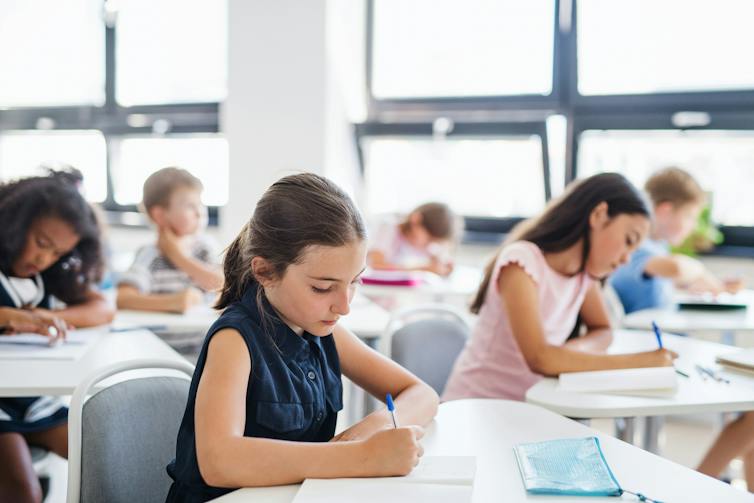
Students in an elementary school classroom
The average age when girls get their first period is now around 12 years, so many girls in Grades 5 to 8 are managing their periods at school for the first time.
(Unsplash+/Getty Images)

In 2025, we surveyed 863 girls in Grades 5 to 12 who had already had their first period. The survey was administered in a mid-sized, mostly rural school board in eastern Ontario. The board partnered with us to evaluate its own implementation of the initiative.

Only one-third of girls that we surveyed (33 per cent) said the dispensers at their school were reliably stocked (often or always). Another 22 per cent said sometimes, and 45 per cent said menstrual products were rarely or never available at their school.

Students in elementary school reported empty dispensers more often than secondary school students; students in Grades 5 to 8 were almost three times as likely as secondary students to say the dispensers were never stocked (29.7 per cent compared with 10.5 per cent). The average age at which girls get their first period has been declining and is now around 12 years, so many girls in these grades are managing their periods at school for the first time and may therefore be the ones that need most support.

However, the way the province has distributed dispensers may impact access for younger students. The original product allocation was calculated from the number of secondary schools in each board, and boards decided whether elementary and middle schools received any.

What students told us
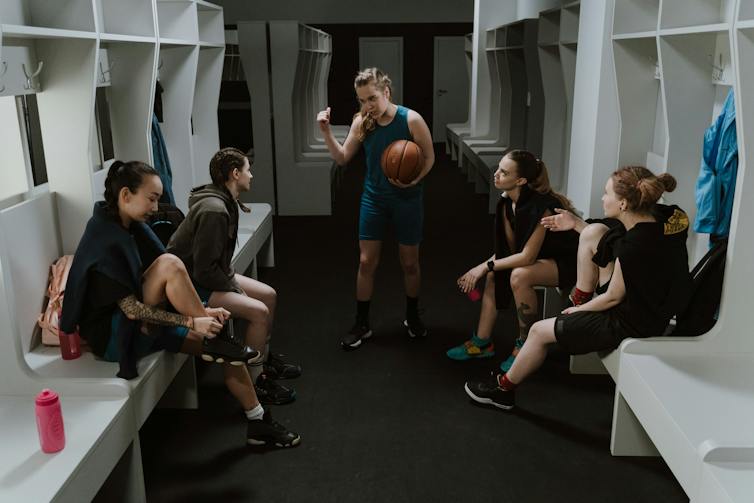
A group of teen girls in a locker room wearing athletic clothes; one of them is holding a basketball
Girls who reported reliably stocked dispensers had about three times higher odds of reporting better attendance, more participation in clubs and sports and better overall well-being.
(Pexels/Cottonbro)

More than half of the students (57 per cent) said they had arrived late, left early, missed a class or stayed home because of their period. Of those students, about one-third (32 per cent) said they had been without pads or tampons when they needed them, and half had leaked or bled through their clothes. One in nine students in the sample had experienced all four kinds of disruption.

We then compared girls who said their school’s dispensers were reliably stocked with girls who said they were not. Girls who reported reliably stocked dispensers had about three times higher odds of reporting better attendance, more participation in clubs and sports and better overall well-being.

This suggests the products were most useful to students who could easily access them. Because we surveyed students at one point in time, we cannot say the dispensers caused these differences, but reliably stocked dispensers were associated with more positive outcomes across all surveyed questions.

The association between access to menstrual products and better attendance has implications for long-term outcomes. A separate Canadian study that followed students from elementary to secondary school found that even a small increase in absences around the move to secondary school were linked to worse grades. If products can help improve attendance, this might protect against concerns about how well students do in school.

Elevate Your Health for Just $29.99/Month

Join the Precision Wellness Subscription at My Healing 365 and get discounted services, priority coaching access, virtual care, and exclusive wellness resources to support your physical, emotional, and hormonal health.

Join for $29.99/Month

As expected, reports of stocking were similar across racial and ethnic groups. However, racialized students were more likely than white students to say the free products eased a financial burden (31 per cent compared with 20 per cent) and helped them join extracurricular activities (29 per cent compared with 19 per cent).

Racialized Canadians are more likely to experience poverty, and rural and remote communities — including many Indigenous communities — face higher prices and fewer places to buy menstrual products. In a rural board, the school dispenser may be the closest supply a student has.

Who keeps the dispensers full?

An evaluation of a similar policy in Chicago Public Schools found inconsistent stocking and limited staff awareness of the program, with individual staff members filling the gaps on their own.

School boards need a plan that names who restocks the dispensers, tracks how often they run empty and includes elementary schools. Research on campus programs also recommends placing dispensers inside school washrooms so students can get a product without asking an adult and involving students in checking supply.

The donation that currently supplies Ontario schools covers the 2024–25 to 2026–27 school years. We encourage the province’s next agreement to include funding for restocking and regular checks that dispensers are filled in schools.

This article was co-authored by Jessica Poff, PhD. She is a senior administrator at a school board in Ontario.


ShareTweetSharePin

Most Read

What causes stuttering? A speech pathology researcher explains the science and the misconceptions around this speech disorder

What causes stuttering? A speech pathology researcher explains the science and the misconceptions around this speech disorder

December 15, 2022
3 women stroke prevention

Silent Stroke Symptoms in Women: What You Might Be Overlooking

February 27, 2026
In war-torn Iran, air pollution from burning oil depots and bombed buildings unleashes invisible health threats

In war-torn cities, air pollution from burning oil depots and bombed buildings unleashes invisible health threats

March 25, 2026
morning back pain

Morning Again Ache Trigger Is Not the Mattress

October 11, 2021
Socialising, work, exercise: what makes a good day and is there a ‘formula’ for making it better?

Socialising, work, exercise: what makes a good day and is there a ‘formula’ for making it better?

April 12, 2026
A job that changed me: My year as a ‘gopher’ taught me that all errand runners are holy

A job that changed me: My year as a ‘gopher’ taught me that all errand runners are holy

July 27, 2026

Why Circadian Rhythms Matter for Your Health

July 30, 2024
lower back pain relief exercises

5 decrease again ache aid workouts

October 11, 2021

4 steps to building a healthier relationship with your phone

January 28, 2025
bleeding in gum

When The Bleeding in gum Is Severe ?

October 11, 2021
Good Night Sleep

6 Causes of Good Evening Sleep

October 11, 2021
3 years after legalization, we have shockingly little information about how it changed cannabis use and health harms

3 years after legalization, we have shockingly little information about how it changed cannabis use and health harms

October 15, 2021
Nasal vaccines promise to stop the COVID-19 virus before it gets to the lungs – an immunologist explains how they work

Nasal vaccines promise to stop the COVID-19 virus before it gets to the lungs – an immunologist explains how they work

December 14, 2022
Kick up your heels – ballroom dancing offers benefits to the aging brain and could help stave off dementia

Kick up your heels – ballroom dancing offers benefits to the aging brain and could help stave off dementia

January 3, 2023
Ten small changes you can make today to prevent weight gain

Ten small changes you can make today to prevent weight gain

October 12, 2021
Biden is getting prostate cancer treatment, but that’s not the best choice for all men − a cancer researcher describes how she helped her father decide

Biden is getting prostate cancer treatment, but that’s not the best choice for all men − a cancer researcher describes how she helped her father decide

May 20, 2025

COVID vaccines: how one can pace up rollout in poorer international locations

October 5, 2021

Maximize Your Performance – Sync with Your Circadian Rhythms

August 9, 2024
GLP-1 drugs may fight addiction across every major substance, according to a study of 600,000 people

GLP-1 drugs may fight addiction across every major substance, according to a study of 600,000 people

March 6, 2026
Five ways to avoid pain and injury when starting a new exercise regime

Five ways to avoid pain and injury when starting a new exercise regime

December 30, 2022
woman covered with white blanket

Exploring the Impact of Sleep Patterns on Mental Health

August 4, 2024

This Simple Hygiene Habit Could Cut Your Risk of Stroke, New Research Reveals

February 1, 2025
Support and collaboration with health-care providers can help people make health decisions

Support and collaboration with health-care providers can help people make health decisions

December 16, 2021
Greece to make COVID vaccines mandatory for over-60s, but do vaccine mandates work?

Greece to make COVID vaccines mandatory for over-60s, but do vaccine mandates work?

December 1, 2021

Multiple sclerosis: the link with earlier infection just got stronger – new study

October 12, 2021
Six ways to improve your cat’s one wild and precious life

Six ways to improve your cat’s one wild and precious life

June 6, 2026
Four ways to avoid gaining weight over the festive period – but also why you shouldn’t fret about it too much

Four ways to avoid gaining weight over the festive period – but also why you shouldn’t fret about it too much

December 22, 2022
How regulatory agencies, not the courts, are imposing COVID-19 vaccine mandates

How regulatory agencies, not the courts, are imposing COVID-19 vaccine mandates

October 24, 2021
You’ve reached your weight loss goal on GLP-1 medications – what now?

You’ve reached your weight loss goal on GLP-1 medications – what now?

February 5, 2026
FDA limits access to COVID-19 vaccine to older adults and other high-risk groups – a public health expert explains the new rules

FDA limits access to COVID-19 vaccine to older adults and other high-risk groups – a public health expert explains the new rules

May 21, 2025

Ready to take control of your health?

Get a personalized plan for your weight, energy, hormones, and blood sugar with My Healing 365.

Book Your Session Now – Limited Weekly Spots
  • Twenty47HealthNews
  • Health & Wellness
  • Disclaimer

© 2020 DAILY HEALTH NEWS

  • Twenty47HealthNews
  • Health & Wellness
  • Disclaimer
    • Terms of Use
    • Privacy Policy
    • DMCA Notice

© 2020 DAILY HEALTH NEWS