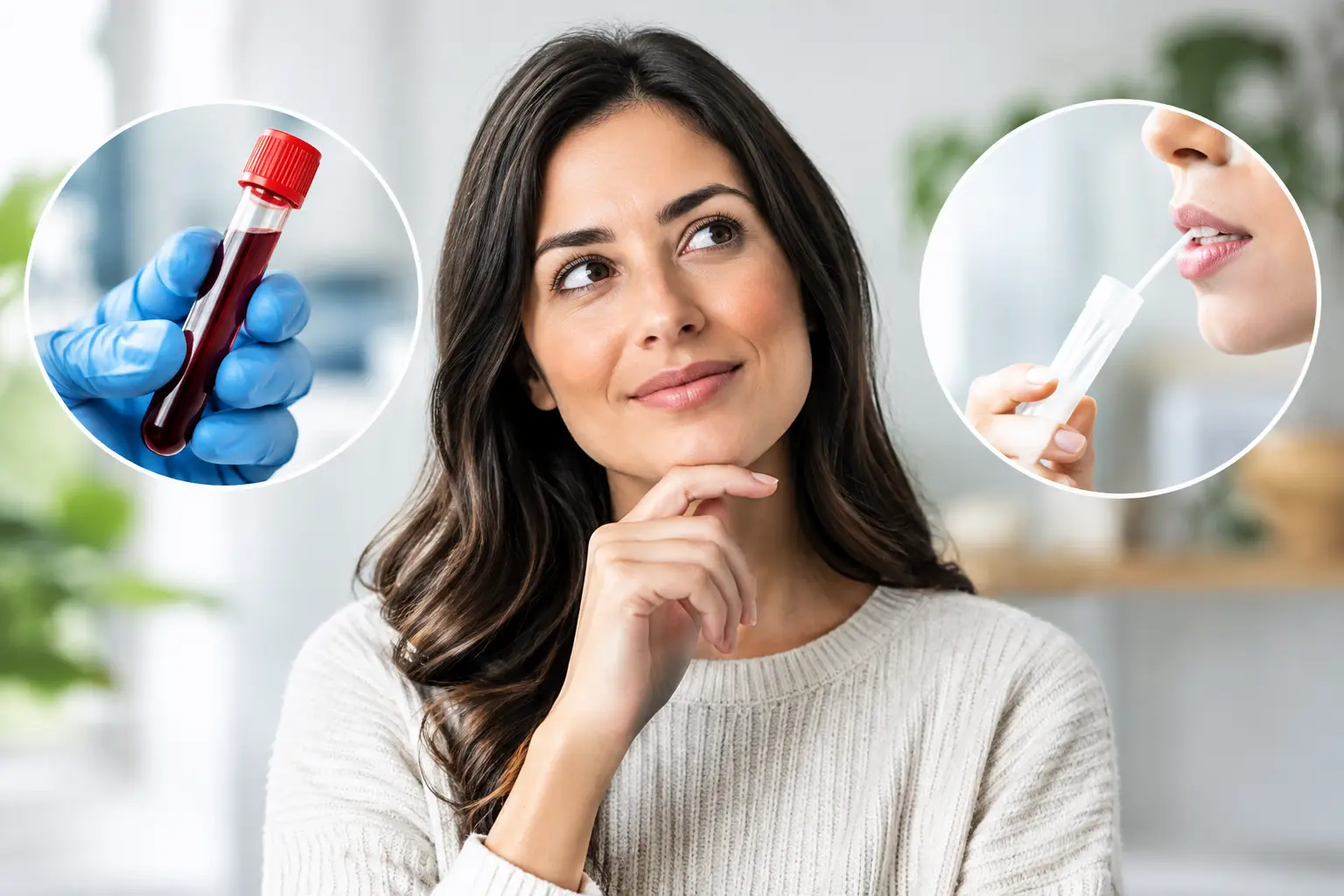
When sleep is disrupted, your mood feels unfamiliar, intimacy changes, or your energy disappears halfway through the day, you want clear answers. The question of hormone blood versus saliva tests often comes up early in that search. Both tests may measure hormones, but they do not offer the same level of reliability, clinical usefulness, or context for most treatment decisions.
The best test is not necessarily the one that feels easiest to take at home. It is the one that gives your clinician information they can use safely alongside your symptoms, medical history, medications, and treatment goals. For many people considering hormone therapy, blood testing remains the primary tool for establishing a baseline and monitoring care.
Table of Contents
Hormone Blood Versus Saliva Tests: The Core Difference
Blood tests measure the amount of a hormone circulating in your bloodstream at the time of collection. Depending on the hormone and laboratory method, bloodwork may assess total levels, free or bioavailable levels, and related markers that help explain how your body is producing, transporting, or responding to hormones.
Saliva testing measures hormones that pass from the bloodstream into saliva. It is noninvasive and can be collected at home, which makes it appealing when you already feel exhausted by appointments and waiting rooms. But convenience does not always equal clinical clarity.
Elevate Your Health for Just $29.99/Month
Join the Precision Wellness Subscription at My Healing 365 and get discounted services, priority coaching access, virtual care, and exclusive wellness resources to support your physical, emotional, and hormonal health.
Join for $29.99/MonthHormone levels naturally rise and fall throughout the day. They can also shift with menstrual cycle timing, sleep, stress, illness, exercise, alcohol use, supplements, and medications. A single result, whether from blood or saliva, is only one piece of a larger health picture.
For most hormone therapy decisions, clinicians commonly rely on blood testing because it is more standardized and has a stronger role in conventional medical monitoring. Saliva testing can occasionally offer additional context in select situations, but it is generally not used alone to diagnose a hormone imbalance or guide prescription dosing.
Why Blood Testing Is Commonly Used for Hormone Care
A blood draw can feel like one more thing to schedule, but it often provides the most actionable starting point. Blood-based testing is widely used to evaluate concerns involving testosterone, estradiol, thyroid function, cortisol, follicle-stimulating hormone, luteinizing hormone, and other markers that may influence symptoms and treatment planning.
For women navigating perimenopause or menopause, bloodwork may help rule out other contributors to fatigue, weight changes, sleep disruption, low mood, or hot flashes. For men concerned about low testosterone, blood testing is typically used to confirm results, often with morning collection when testosterone is naturally highest. A clinician may repeat testing when a result is borderline or does not match the symptom picture.
Blood tests also allow clinicians to monitor health markers beyond hormone levels. Depending on your history and care plan, this may include blood counts, liver function, lipids, glucose, thyroid markers, or prostate-related testing. Hormone care should support how you feel while also protecting your long-term health.
That broader view matters. A treatment plan should not be built around chasing a single number. The goal is to address meaningful symptoms, improve quality of life, and monitor for benefits or side effects with appropriate medical oversight.
Blood Testing Has Limits, Too
Blood testing is useful, but it is not a perfect snapshot of every hormonal experience. A normal result does not automatically mean your symptoms are unimportant. For example, menopause is often diagnosed based on age, menstrual changes, and symptoms rather than one hormone value alone, because levels can fluctuate significantly during the transition.
Timing matters as well. Testosterone is usually checked in the morning. Some reproductive hormones may need to be interpreted in relation to your menstrual cycle. If you use hormone therapy already, your clinician may give specific instructions about when to test relative to your dose. Following those instructions helps make results more meaningful.
What Saliva Tests Can and Cannot Tell You
Saliva collection is simple: a sample is collected into a tube or swab, often at home, and sent to a lab. Some companies promote saliva testing as a way to assess “free” hormones or create a detailed map of daily cortisol patterns. The appeal is understandable, especially for people seeking privacy and convenience.
The challenge is that saliva results can be more vulnerable to collection and interpretation issues. Food, drinks, oral health, blood from irritated gums, and inconsistent collection timing can affect a sample. Results may also vary between laboratories and testing methods.
Saliva testing can be particularly difficult to interpret for people using certain topical or transdermal hormone products. Hormone residue on the skin, hands, or nearby surfaces can potentially contaminate the collection process. A result may look unusually high without accurately reflecting the level circulating in your body.
For these reasons, major medical organizations have generally not supported saliva testing as the primary method for diagnosing menopause, measuring hormone deficiency, or adjusting hormone replacement therapy doses. Symptoms, standardized blood tests, and ongoing clinical assessment usually provide a more dependable foundation.
This does not mean every saliva test is meaningless. In carefully selected circumstances, a clinician may use salivary cortisol testing as part of an evaluation for specific endocrine conditions. That is very different from using a direct-to-consumer saliva panel to self-diagnose low estrogen, low testosterone, or adrenal fatigue.
Your Symptoms Still Matter
It is easy to assume that a lab report will finally explain everything. Sometimes it helps tremendously. Other times, the answer is more layered.
Low libido, brain fog, mood changes, poor sleep, fatigue, weight fluctuations, hair changes, and reduced exercise recovery can be connected to hormone shifts. They can also be influenced by stress, nutritional habits, depression, anxiety, thyroid conditions, iron deficiency, sleep apnea, medication effects, insulin resistance, and other health concerns.
A thoughtful clinician listens for patterns. Are symptoms new or gradual? Did they start after a medication change, childbirth, surgery, illness, or changes in your cycle? Are you waking with night sweats, or simply waking unrefreshed? Is low desire connected to discomfort, relationship stress, vaginal dryness, fatigue, or a change in hormone levels?
These details make lab values more useful. They also help prevent treatment plans that look good on paper but do not help you feel like yourself again.
Choosing the Right Test for Your Situation
If you are considering hormone therapy or concerned about hormonal symptoms, begin with a medical consultation rather than choosing a test in isolation. A personalized plan may include bloodwork before treatment, follow-up labs after treatment begins, symptom tracking, and adjustments based on both safety and results.
Blood testing is often the better choice when you need to establish a baseline, evaluate testosterone or estrogen-related concerns, assess thyroid or metabolic contributors, or monitor prescription hormone treatment. It is also generally preferred when a clinician needs reliable data to make dosing decisions.
Saliva testing may sound more convenient, but it should not replace medical evaluation. Be cautious about any test that promises to explain every symptom or recommends supplements and hormones based on a result alone. Personalized care should feel empowering, not like pressure to buy a one-size-fits-all protocol.
At My Healing 365, hormone care is designed to look beyond a single lab number. The focus is on understanding your symptoms, reviewing appropriate testing, and creating a medically guided plan that supports energy, sleep, mood, confidence, and sexual wellness.
Questions to Ask Before Testing
Before ordering any hormone panel, ask what the test is intended to answer. Will the result change your treatment plan? Is the testing method appropriate for the hormone being measured? Should you collect the sample at a certain time of day or point in your cycle? And if you are already using hormones, should you test before or after applying or taking your dose?
You can also ask how results will be interpreted. A quality care plan includes follow-up, not just a portal full of numbers marked high or low. You deserve someone who can explain what is relevant, what needs monitoring, and what may have nothing to do with your symptoms.
The right next step is not to chase the most convenient test. It is to choose informed, personalized care that helps you understand your body and move toward feeling energized, balanced, and connected again.