Medically Reviewed
Dr. Jose Rossello, MD, PhD, MHCM
Preventive Medicine & Public Health Specialist
Last Reviewed: April 9, 2026
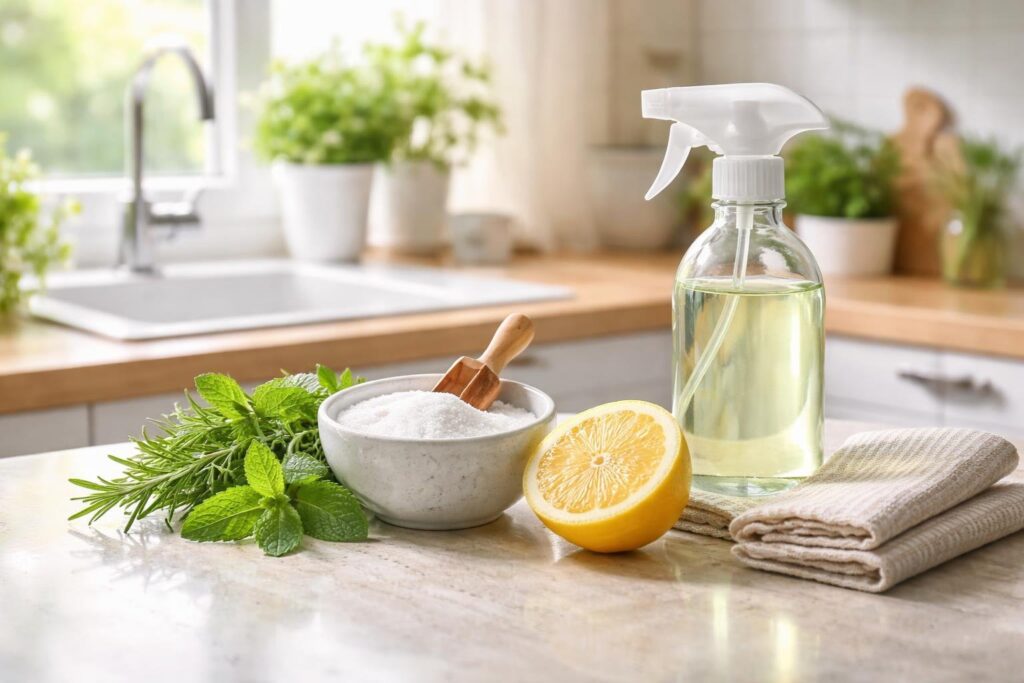
Cleaning the kitchen doesn’t require harsh chemicals or expensive commercial products. Natural ingredients like lemon juice, white vinegar, baking soda, and hydrogen peroxide can effectively clean, disinfect, and deodorize kitchen surfaces while being safer for families and the environment. These eco-friendly sustainable cleaning swaps are gentler on kitchen surfaces[1], helping to preserve countertops and cabinets without causing damage or discoloration over time.
Many people worry that natural cleaners won’t be strong enough to tackle kitchen grease, bacteria, and stubborn stains. The truth is that simple pantry staples can handle most kitchen cleaning tasks when used correctly. From countertops to cutting boards, these natural solutions work just as well as store-bought products.
Learning to make homemade kitchen cleaners[2] saves money and reduces exposure to toxic chemicals in food preparation areas. With just a few basic ingredients, anyone can create effective cleaning solutions for every part of the kitchen.
Table of Contents
Key Takeaways
- Natural ingredients like vinegar, baking soda, lemon, and hydrogen peroxide effectively clean and disinfect kitchen surfaces
- Homemade cleaners are gentler on surfaces, safer for families, and more affordable than commercial products
- Simple recipes and techniques can tackle everything from countertops and appliances to floors and dishes
Benefits of Cleaning Your Kitchen Naturally
Natural cleaners offer significant advantages over commercial products, from protecting your family’s health to saving money. These eco-friendly sustainable cleaning swaps are gentler on kitchen surfaces[1] while still providing effective cleaning power.
Health and Safety Advantages
Kitchen cleaners made with natural ingredients reduce exposure to harsh chemicals that can irritate skin, eyes, and respiratory systems. Commercial products often contain volatile organic compounds and synthetic fragrances that linger in the air long after cleaning.
Homemade cleaners using ingredients like vinegar, baking soda, and lemon juice pose minimal risk if accidentally ingested or touched. This makes them particularly valuable in homes with children and pets who spend time near cleaned surfaces.
Natural disinfectants like hydrogen peroxide effectively kill bacteria, viruses, and fungi without leaving toxic residues on countertops where food is prepared. These alternatives eliminate the need for gloves and ventilation requirements that many commercial cleaners demand.
Common irritants avoided with natural cleaners:
- Ammonia fumes
- Chlorine bleach vapors
- Synthetic fragrances
- Phosphates
- Triclosan
Environmental Impact of Natural Cleaners
Natural kitchen cleaners break down quickly in water systems without harming aquatic life or contaminating groundwater. Commercial cleaning products often contain ingredients that persist in the environment and accumulate in ecosystems.
The production of homemade cleaners requires no industrial manufacturing, reducing carbon emissions from factories and transportation. A single bottle of vinegar or box of baking soda replaces multiple plastic bottles of specialized commercial products.
Packaging waste decreases dramatically when people reuse spray bottles and containers for their natural cleaning solutions. This shift away from single-use plastics helps reduce landfill waste and ocean pollution.
Cost-Effectiveness Compared to Commercial Products
Basic ingredients for natural cleaners cost significantly less than brand-name commercial products. A gallon of white vinegar typically costs under $5 and can replace dozens of specialized cleaners.
Baking soda, lemon juice, and hydrogen peroxide serve multiple cleaning purposes throughout the kitchen. One box of baking soda works as a scrub, deodorizer, and stain remover instead of requiring three separate products.
Simple ingredients like baking soda, vinegar, lemon, and castile soap[3] can handle nearly every kitchen cleaning task. These multipurpose solutions eliminate the need to purchase different products for counters, appliances, sinks, and floors.
Essential Natural Ingredients for Kitchen Cleaning
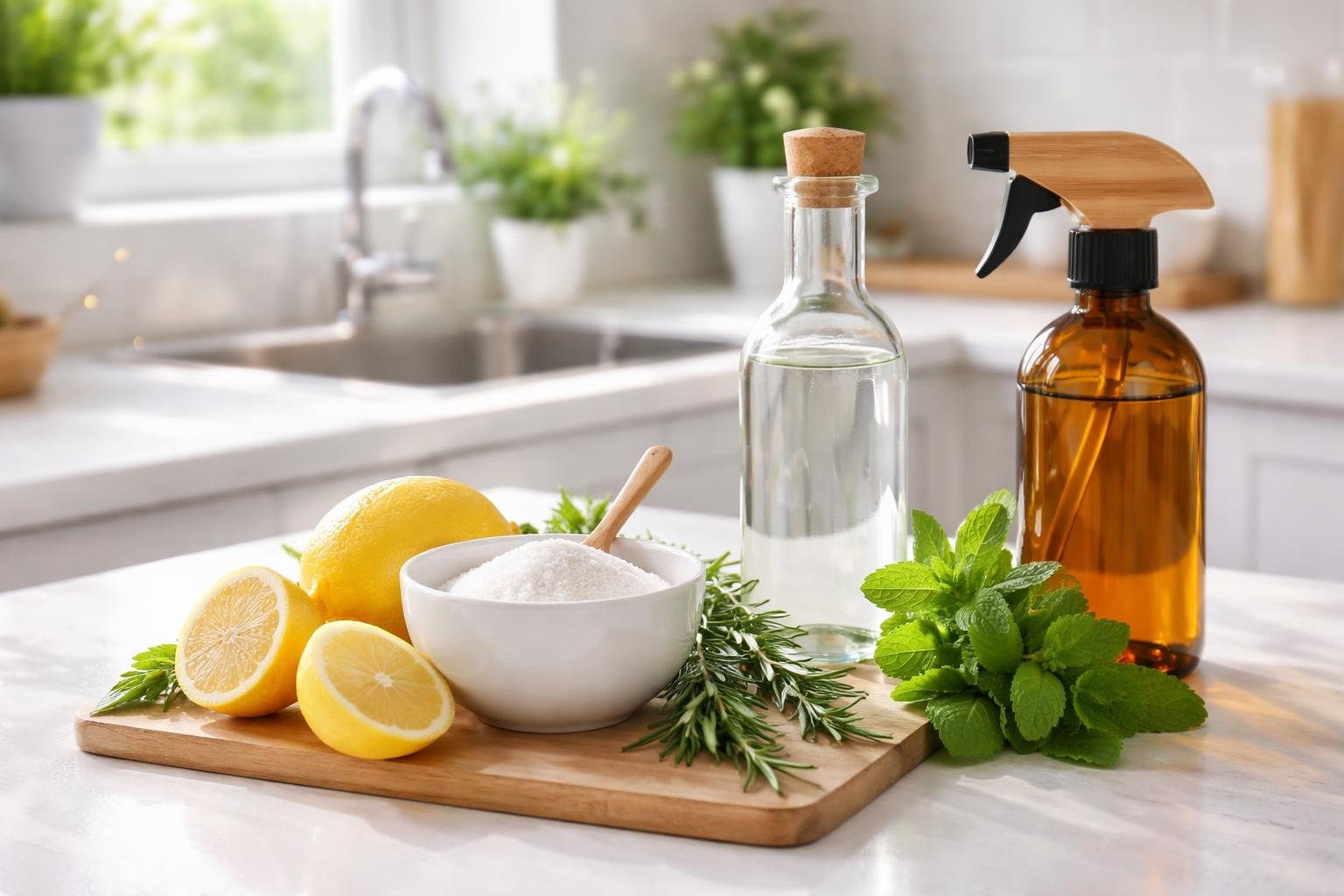
Natural kitchen cleaners rely on a few powerful ingredients that tackle grease, grime, and bacteria without harsh chemicals. These common household items work effectively on countertops, appliances, and floors while being gentler on surfaces than commercial products.
Baking Soda
Baking soda works as a mild abrasive that scrubs away stubborn stains without scratching surfaces. Its alkaline nature breaks down grease and dirt on countertops, ovens, and sinks. The ingredient also neutralizes odors in refrigerators, trash cans, and drains.
To use baking soda, sprinkle it directly on a damp sponge or mix it with water to form a paste. For tough stains on stove tops or in ovens[4], apply a thick layer of the paste and let it sit for 15-20 minutes before scrubbing. This waiting period allows the baking soda to break down grime more effectively.
The ingredient is non-toxic and safe around food preparation areas. It can be combined with other natural cleaners like vinegar or lemon juice for extra cleaning power.
Vinegar and Its Uses
White vinegar cuts through grease and grime while acting as a natural disinfectant. The acetic acid in vinegar has antibacterial properties that sanitize surfaces and eliminate bacteria. It works particularly well on glass, tiles, and stainless steel.
A mixture of equal parts vinegar and water creates an effective all-purpose spray[1] for most kitchen messes. This solution dissolves mineral deposits and soap scum on faucets and countertops. For stainless steel appliances, spray the vinegar solution and wipe with a microfiber cloth for a streak-free shine.
Vinegar should not be used on natural stone surfaces like marble or granite. The acid can damage and etch these materials over time.
Lemon Juice and Lemon Essential Oil
Lemon juice removes grease, disinfects surfaces, and tackles tough stains with its citric acid content. The natural antibacterial and antiseptic properties make it effective for sanitizing kitchen areas. Fresh lemon juice can clean and shine copper cookware, leaving pots and pans gleaming.
Lemon essential oil provides similar cleaning benefits while adding a fresh scent to homemade cleaning products[5]. A few drops mixed with olive oil creates a wood polish for cutting boards and butcher blocks. The oil also enhances other natural cleaners by boosting their antibacterial properties.
To make a lemon-salt scrub, dip half a lemon into salt and use it to scrub cutting boards or wooden utensils. The combination removes stains and deodorizes surfaces naturally.
Castile Soap and Other Additives
Castile soap is a plant-based, biodegradable cleaner that works on nearly any kitchen surface. Both liquid and bar versions reduce water’s surface tension, allowing it to lift away dirt and grease more effectively. The soap cleans dishes, countertops, and floors without harsh chemicals.
Essential oils like tea tree, lavender, and eucalyptus add antibacterial and antifungal properties to cleaning solutions. Tea tree oil kills bacteria and mold, while lavender and eucalyptus freshen the air.
Additional natural additives include:
- Salt: Provides abrasive texture for scrubbing when mixed with lemon juice or vinegar
- Hydrogen peroxide: Disinfects cutting boards and removes stains from tiles
- Olive oil: Polishes wooden surfaces and gives stainless steel a protective shine
These ingredients work together or separately to create safe, eco-friendly cleaning solutions[6] for every kitchen task.
DIY All-Purpose Kitchen Cleaner Recipes
Making homemade kitchen cleaners requires just a few basic ingredients that work effectively on most surfaces. White vinegar, water, and essential oils form the foundation for simple recipes that clean without harsh chemicals.
All-Purpose Spray for Most Surfaces
The most basic DIY all-purpose cleaner[7] combines equal parts distilled white vinegar and water. This simple mixture works well on countertops, stovetops, and tables.
Basic Recipe:
- 1 cup distilled white vinegar
- 1 cup water
- 16-ounce spray bottle
White vinegar contains 5% acetic acid, which cuts through grease and grime effectively. The water dilutes the vinegar’s strong smell while maintaining cleaning power.
Users should shake the bottle before each use to mix the ingredients. They can spray the solution directly on surfaces or apply it to a cloth first. This homemade kitchen cleaner costs less than store-bought options and contains no synthetic chemicals.
Important note: This cleaner should not be used on marble or other soft stone surfaces. For these materials, a gentler mixture of dish soap and hot water works better.
Natural Disinfectant Solutions
Adding certain ingredients to a basic vinegar spray creates a natural disinfectant[8] with antimicrobial properties. Tea tree oil and grapefruit essential oil both offer antibacterial benefits.
Disinfecting Recipe:
- 1 cup distilled white vinegar
- 1 cup water
- 3 drops tea tree oil
- 3 drops grapefruit essential oil
The vinegar itself acts as a natural disinfectant due to its acetic acid content. Essential oils add extra cleaning power and help fight bacteria on kitchen surfaces.
Some people add a tablespoon of baking soda to create a stronger cleaning solution. However, baking soda and vinegar react together, so they should be added separately when cleaning rather than mixed in the bottle.
Customizing Scents with Essential Oils
Essential oils let people customize their homemade kitchen cleaner[9] with pleasant scents. Different oils offer various benefits beyond just smell.
Popular Essential Oil Options:
- Lemon: Fresh scent, cuts grease
- Lavender: Calming smell, antibacterial
- Peppermint: Energizing aroma, repels pests
- Eucalyptus: Clean scent, antimicrobial
- Orange: Uplifting smell, degreasing
Users should add 5-10 drops total of essential oils per 16 ounces of cleaner. They can combine different oils to create custom scent blends.
Essential oils float on top of water-based cleaners. Shaking the bottle well before each use distributes the oils throughout the solution. Glass bottles work better than plastic for storing cleaners with essential oils since the oils can break down some plastics over time.
Targeted Natural Cleaning Solutions for Kitchen Surfaces
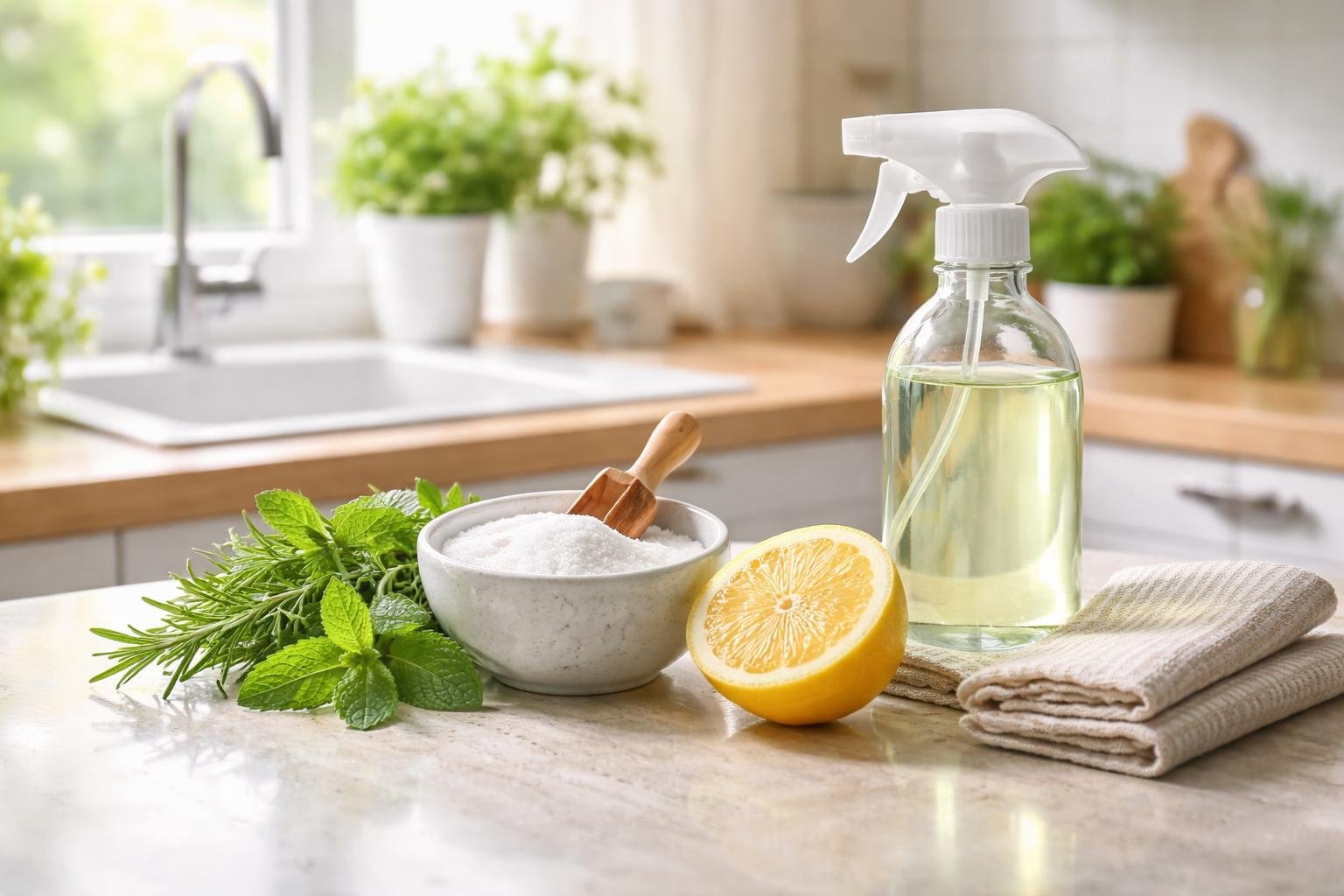
Different kitchen surfaces need specific cleaning approaches to avoid damage while getting them truly clean. Natural ingredients can be combined in targeted ways to safely clean glass, stainless steel, and stone without harsh chemicals.
Homemade Glass Cleaner
A simple mixture of equal parts distilled white vinegar and water creates an effective glass and mirror cleaner[6] for kitchen windows and glass cabinet doors. Adding one tablespoon of rubbing alcohol helps the solution dry faster and prevents streaking.
For best results, spray the solution onto glass surfaces and wipe with a lint-free cloth or crumpled newspaper. The vinegar cuts through grease and fingerprints while leaving a streak-free shine. Adding 10 drops of lemon essential oil provides a fresh scent and boosts cleaning power.
Store the cleaner in a clearly labeled spray bottle. This solution works on any glass surface in the kitchen, from oven doors to light fixtures.
Natural Stainless Steel Cleaner
Stainless steel appliances and fixtures stay shiny with a simple combination of olive oil and vinegar. First, spray undiluted white vinegar on the surface and wipe with a microfiber cloth following the grain of the steel.
Next, apply a small amount of olive oil to a clean cloth and buff the surface in the direction of the grain. This removes smudges and creates a protective coating that resists fingerprints. The oil also helps restore the natural luster of stainless steel.
For stubborn spots, create a paste with baking soda and water. Apply it gently with a soft cloth, scrub in the direction of the grain, then rinse and dry thoroughly. Never use harsh abrasives that can scratch the finish.
Granite and Stone Countertop Cleaner
Stone surfaces require special care since acidic cleaners like vinegar and lemon can etch and dull the finish. A gentle mixture suitable for natural stone[1] combines one-quarter cup of rubbing alcohol, three drops of dish soap, and two cups of water.
Spray this solution on granite, marble, or other stone countertops and wipe with a soft cloth. The alcohol disinfects without damaging the stone’s sealant. For daily cleaning, warm water and a few drops of castile soap work well.
Avoid acidic ingredients on these surfaces. Dry the countertop after cleaning to prevent water spots and maintain the stone’s natural beauty.
Deep Cleaning Specific Kitchen Areas
Certain kitchen spots need extra attention with targeted natural cleaners. Baking soda and vinegar handle most tough jobs, while lemon juice tackles odors and stains without harsh chemicals.
Sink Scrub and Grout Cleaner Recipes
A simple sink scrub combines half a cup of baking soda with enough water to form a thick paste. The mixture works on stainless steel, porcelain, and composite sinks without scratching the surface.
For grout cleaner between tiles, mix three parts baking soda with one part water to create a paste. Apply it to grout lines with an old toothbrush and scrub in circular motions. Let it sit for 10 minutes before rinsing with warm water.
Natural alternatives are gentler on surfaces[1] and help preserve their condition over time. For stubborn sink stains, sprinkle baking soda directly on the surface and scrub with half a lemon. The combination of acid and abrasive removes buildup while deodorizing the drain.
Add a few drops of dish soap to the baking soda paste for extra cleaning power on greasy areas. This homemade cleaner costs pennies compared to commercial products.
Oven and Microwave Cleaner Methods
A homemade oven cleaner requires three-quarters cup of baking soda mixed with one-quarter cup of water. Spread the paste throughout the oven interior, avoiding heating elements. Let it sit overnight before wiping clean with a damp cloth.
For the microwave cleaner method, fill a microwave-safe bowl with one cup of water and three tablespoons of white vinegar. Heat on high for three to five minutes until the mixture boils and steam builds up. The steam loosens dried food particles, making them easy to wipe away.
White vinegar and baking soda can clean and disinfect kitchen appliances[2] effectively without toxic fumes. For burnt-on oven spots, spray white vinegar over the dried baking soda paste to create a foaming reaction that lifts grime. Use a plastic scraper for stubborn areas.
Refrigerator and Cutting Board Cleaner Tips
Mix equal parts water and white vinegar in a spray bottle for an effective refrigerator cleaner. Remove all food items and shelves before spraying down interior surfaces. Wipe with a clean cloth and dry thoroughly.
Wooden cutting boards need special care to prevent bacteria growth. Sprinkle one-third cup of coarse salt over the board surface and let it sit for 10 minutes. Scrub the salt into the wood using half a lemon, then rinse with hot water and let it air dry completely.
For plastic cutting boards, hydrogen peroxide kills bacteria and viruses[1] without leaving harmful residue. Apply it directly to the surface and let it sit for several minutes before rinsing. Store the cutting board cleaner solution in a dark bottle to maintain its effectiveness.
Baking soda also removes odors from refrigerator shelves. Make a paste and apply it to sticky spots before wiping clean.
Eco-Friendly Floor Cleaning Methods
Natural floor cleaners work just as well as chemical products while keeping your home safe for family and pets. Simple ingredients like castile soap, vinegar, and baking soda can tackle dirt and grime on most kitchen floor types.
Homemade Floor Cleaner for General Use
A basic all-purpose floor cleaner starts with castile soap mixed with warm water. This olive-oil-based cleaner removes stubborn stains and works on hardwood, tile, linoleum, vinyl, and laminate surfaces.
To make this natural floor cleaning solution[10], mix 1/4 cup of liquid castile soap into a bucket with 2 gallons of warm water. For extra cleaning power, add 10 drops of lemon or tea tree essential oil.
Key benefits:
- Won’t damage floor finishes
- Removes grease and food spills
- Safe for all common floor types
- Costs less than store-bought cleaners
Use a microfiber mop to apply the solution across the floor in overlapping strokes. Start in a corner and work backward toward the door. The microfiber material picks up more dirt than traditional mops and requires less water.
Wood Floor Cleaner Solutions
Wood floors need special care since too much water can cause warping or damage. A spray bottle method works best for protecting hardwood while still getting it clean.
When cleaning hardwood floors[11], combine 1 teaspoon of castile soap with 24 ounces of hot water in a spray bottle. Add 10 drops of lemon or rosemary essential oil for a fresh scent and extra cleaning power.
Sweep or vacuum the floor first to remove loose dirt. Lightly spray small sections at a time and immediately wipe with a dry microfiber mop. Never let water sit on wood floors.
This method uses minimal moisture while still breaking down kitchen grease and grime. The castile soap won’t strip the floor’s protective finish like harsh chemicals can.
Vinegar Floor Cleaner for Tiles
Tile floors handle more water and stronger solutions than wood. White vinegar cuts through grease and leaves tiles sparkling clean without harsh chemicals.
Mix equal parts white vinegar and warm water in a bucket for cleaning tile floors naturally[12]. For tough stains, spray undiluted vinegar directly on the spot and let it sit for 5 minutes before mopping.
Important note: Avoid using vinegar on grout, as the acidity can cause discoloration over time. For grout lines, stick with the castile soap solution mentioned earlier.
After mopping with the vinegar solution, go over the floor once more with plain warm water. This removes any vinegar residue and prevents a sticky feeling. The tiles will dry streak-free and clean.
For extra scrubbing power on stubborn spots, sprinkle baking soda on the area before applying the vinegar solution. The combination creates a gentle fizzing action that lifts stuck-on food.
Safe and Gentle Dish and Utensil Cleaning
Natural dish soap recipes use simple ingredients that cut through grease without harsh chemicals. Wood utensils need special care to prevent cracking and maintain their natural antibacterial properties.
DIY Dish Soap and Homemade Dish Soap
Making dish soap at home gives people control over what touches their dishes and food. A basic recipe combines 1 cup of liquid castile soap with 1 tablespoon of washing soda and 10-15 drops of essential oil like lemon or tea tree for antibacterial properties.
For a thicker formula, people can heat 1 cup of water and dissolve 1 tablespoon of washing soda in it. After cooling, they add 1 cup of castile soap and mix gently to avoid excess bubbles.
Key ingredients for homemade dish soap:
- Liquid castile soap (base cleaner)
- Washing soda (cuts grease)
- White vinegar (adds shine)
- Essential oils (natural scent and antibacterial action)
Store the mixture in a glass bottle or repurposed soap dispenser. The soap works just as well as store-bought versions for daily dishwashing. People should shake the bottle before each use since natural ingredients may separate over time.
Cleaning Wood Utensils with Natural Ingredients
Wooden utensils require gentle hand washing to prevent damage. Wooden utensils should never go in the dishwasher[13] because high heat causes cracking and warping.
After each use, people should wash wood items with warm water and mild soap. A mixture of coarse salt and half a lemon works excellently for deeper cleaning. They rub the lemon and salt over the surface to remove stains and odors naturally.
For sanitizing, white vinegar diluted with equal parts water kills bacteria without soaking the wood. People should wipe the solution on, let it sit for a few minutes, then rinse and dry immediately.
Wood utensil care routine:
- Wash by hand after each use
- Dry completely before storing
- Apply mineral oil monthly to prevent cracking
- Never soak in water
The wood stays in better condition when people apply food-grade mineral oil every few weeks. This keeps the material from drying out and extends the life of spoons, spatulas, and cutting boards.
Natural Stain and Odor Removal Techniques
Common kitchen messes respond well to simple household ingredients that clean without harsh chemicals. Baking soda, vinegar, lemon juice, and hydrogen peroxide tackle most stains and smells effectively.
Stain Remover Methods for Kitchen Surfaces
Baking soda works as a gentle abrasive that scrubs away stubborn marks without scratching surfaces. Users can make a paste by mixing three parts baking soda with one part water, then apply it to stained countertops, sinks, or stovetops. The paste should sit for 10-15 minutes before scrubbing with a damp sponge.
Lemon juice contains natural acids that break down grease and lighten discoloration on many surfaces. For cutting boards, a person can sprinkle coarse salt on the surface, let it sit for 10 minutes, then scrub with half a lemon before rinsing. The acid in lemons also provides natural bleaching effects for countertop stains[1], though it should not be used on marble or natural stone.
Hydrogen peroxide serves as a powerful disinfectant for kitchen surfaces. It kills bacteria and removes stains when applied directly to affected areas. The solution should sit for a few minutes before wiping clean with a damp cloth.
Odor Elimination Using Natural Ingredients
White vinegar neutralizes kitchen odors without masking them with artificial fragrances. A spray bottle filled with equal parts white vinegar and water eliminates food smells from counters, appliances, and trash cans. For persistent refrigerator odors, a cotton ball with two drops of lemon essential oil absorbs unwanted smells when placed in the back of the fridge.
Elevate Your Health for Just $29.99/Month
Join the Precision Wellness Subscription at My Healing 365 and get discounted services, priority coaching access, virtual care, and exclusive wellness resources to support your physical, emotional, and hormonal health.
Join for $29.99/MonthBaking soda absorbs odors in enclosed spaces like refrigerators, trash cans, and dishwashers. An open box placed inside these areas captures smells for up to three months. For drain odors, running lemon rinds through the garbage disposal[1] clears away trapped food particles and freshens the sink.
Fresh lemon peels release natural oils that freshen the air when simmered in water on the stovetop. This method works particularly well after cooking fish or strong-smelling foods.
Frequently Asked Questions
Natural cleaning ingredients like baking soda, vinegar, and lemon work effectively on most kitchen surfaces without harsh chemicals. These common household items can tackle grease, stains, and odors throughout the kitchen.
What is the best homemade cleaning solution for kitchen surfaces?
A mixture of equal parts water and white vinegar creates one of the most versatile homemade cleaning solutions for kitchen surfaces[14]. This combination breaks down grease, soap scum, and mineral deposits on countertops, appliances, and faucets.
For tougher jobs, people can add a few drops of dish soap to the vinegar and water mixture. The soap helps lift stubborn grime while the vinegar disinfects.
Some prefer to add essential oils like tea tree or lavender for extra cleaning power and a pleasant scent. A spray bottle makes application easy on most kitchen surfaces.
How do you make a natural kitchen cleaner spray with common pantry ingredients?
A simple three-ingredient spray cleaner[9] combines one cup of water, one cup of white vinegar, and a tablespoon of baking soda in a spray bottle. People should add the baking soda slowly since it fizzes when mixed with vinegar.
Another effective spray uses one cup of water, a quarter cup of white vinegar, and ten drops of lemon essential oil. This mixture cuts through grease while leaving a fresh scent.
For surfaces that need extra degreasing power, a person can increase the vinegar ratio to two parts vinegar and one part water. Shaking the bottle before each use ensures the ingredients stay mixed.
What can you use to clean kitchen countertops naturally without damaging the finish?
Different countertop materials require specific cleaning approaches. For granite and marble, a mixture of warm water and a few drops of mild dish soap works best since acidic cleaners like vinegar can damage these surfaces.
Laminate countertops handle a baking soda paste mixed with water[15] well for stubborn stains. The paste should sit for a few minutes before wiping with a damp cloth.
Quartz countertops stay clean with just warm water and dish soap. People should avoid abrasive scrubbers that might scratch the surface.
Wood countertops need a gentler touch with just warm water and a soft cloth for daily cleaning. A person can apply food-grade mineral oil monthly to keep the wood protected.
How can you clean kitchen grease naturally from stovetops and backsplashes?
Baking soda works as a powerful degreaser when made into a paste with water. A person should spread the paste on greasy areas, let it sit for 15 minutes, then scrub with a damp sponge.
Orange essential oil helps break down grease[15] naturally thanks to its citrus properties. Mixing a few drops with water and dish soap creates an effective spray for backsplashes.
For heavy grease buildup behind the stove, a spray combining white vinegar, water, and lemon juice cuts through the grime. The person should spray generously, wait five minutes, then wipe clean.
Hot water also helps loosen baked-on grease. Placing a hot, damp cloth over greasy spots for a few minutes makes scrubbing easier.
What homemade cleaning products can be made with baking soda for the kitchen?
Baking soda creates an effective sink scrub[15] when mixed with liquid castile soap and essential oils. This paste cleans and deodorizes kitchen sinks without scratching.
A person can make garbage disposal refreshers by freezing baking soda and lemon juice in ice cube trays. These cubes clean and freshen the disposal when run through it.
For burnt pots and pans, sprinkling baking soda on the bottom and adding hot water creates a soaking solution that loosens stuck-on food. Letting it sit overnight works best for severe burns.
Mixing baking soda with hydrogen peroxide forms a paste that removes stains from white cutting boards and plastic containers. The paste should sit for 30 minutes before rinsing.
What are effective homemade kitchen cleaner options that do not use vinegar?
Lemon juice serves as an excellent vinegar alternative with similar acidic cleaning properties. A person can mix fresh lemon juice with water in equal parts for an effective all-purpose cleaner.
Castile soap mixed with water creates a gentle yet effective cleaner[6] for most kitchen surfaces. Adding ten drops of essential oil per cup of solution boosts cleaning power.
Hydrogen peroxide works well as a disinfectant spray on its own. A person can keep it in a dark spray bottle since light breaks down its effectiveness.
Salt combined with lemon juice creates a scrub that cleans cutting boards and removes stains from cookware. The coarse texture helps lift stuck-on residue without harsh chemicals.
Post Views: 14
References
- How to clean a kitchen naturally: 5 methods the pros love. https://www.homesandgardens.com/solved/how-to-clean-a-kitchen-naturally Accessed April 12, 2026
- 11 Easy-to-Make Kitchen Cleaner Solutions. https://www.tipsbulletin.com/homemade-kitchen-cleaner/ Accessed April 12, 2026
- Natural Kitchen Cleaning: How to Deep Clean Your Kitchen. https://fullspectrumcare.com/natural-kitchen-cleaning-guide/ Accessed April 12, 2026
- 8 Natural Ingredients for Eco-Friendly Kitchen Cleaning. https://www.casacatalog.com/8-natural-ingredients-for-eco-friendly-kitchen-cleaning/ Accessed April 12, 2026
- 9 Easy Homemade Cleaning Products You Can Make Yourself. https://homesteadhow-to.com/9-easy-homemade-cleaning-products-you-can-make-yourself/ Accessed April 12, 2026
- DIY Natural Kitchen Cleaners: Effective & Eco-Friendly Recipes. https://simplysustainablehome.com/diy-natural-kitchen-cleaners-effective-eco-friendly-recipes/ Accessed April 12, 2026
- DIY all-purpose cleaner. https://www.thespruce.com/diy-all-purpose-cleaner-7152792 Accessed April 12, 2026
- Access to this page has been denied.. https://www.thekitchn.com/how-to-make-an-allnatural-cleaner-for-your-kitchen-counters-projects-from-the-kitchn-213066 Accessed April 12, 2026
- homemade kitchen cleaner. https://www.southernliving.com/homemade-cleaner-i-use-in-my-kitchen-8734578 Accessed April 12, 2026
- How to Clean Floor Tile Naturally: Safe & Eco-Friendly Methods. https://branchbasics.com/blogs/cleaning/how-to-clean-floor-tile-naturally Accessed April 12, 2026
- When cleaning hardwood floors. https://www.marthastewart.com/1510564/how-to-serious-deep-clean-kitchen-floor Accessed April 12, 2026
- Eco-Friendly Ways to Clean Floors: Simple, Effective & Safe Tips. https://handykitchengear.com/eco-friendly-ways-to-clean-floors/ Accessed April 12, 2026
- How to Clean And Sanitize Kitchen Utensils: Ultimate Guide. https://purekitchenstyle.com/how-to-clean-and-sanitize-kitchen-utensils/ Accessed April 12, 2026
- DIY Natural Cleaning Products for the Kitchen: Safe and Simple Solutions. https://kitchenasking.com/kitchen-diy/eco-sustainable-diy/diy-natural-cleaning-products-for-the-kitchen-safe-and-simple-solutions/ Accessed April 12, 2026
- 20 DIY Solutions For A Super Clean Kitchen (Naturally). https://www.hunker.com/13765071/kitchen-cleaning-solution-diy-tutorials/ Accessed April 12, 2026

























