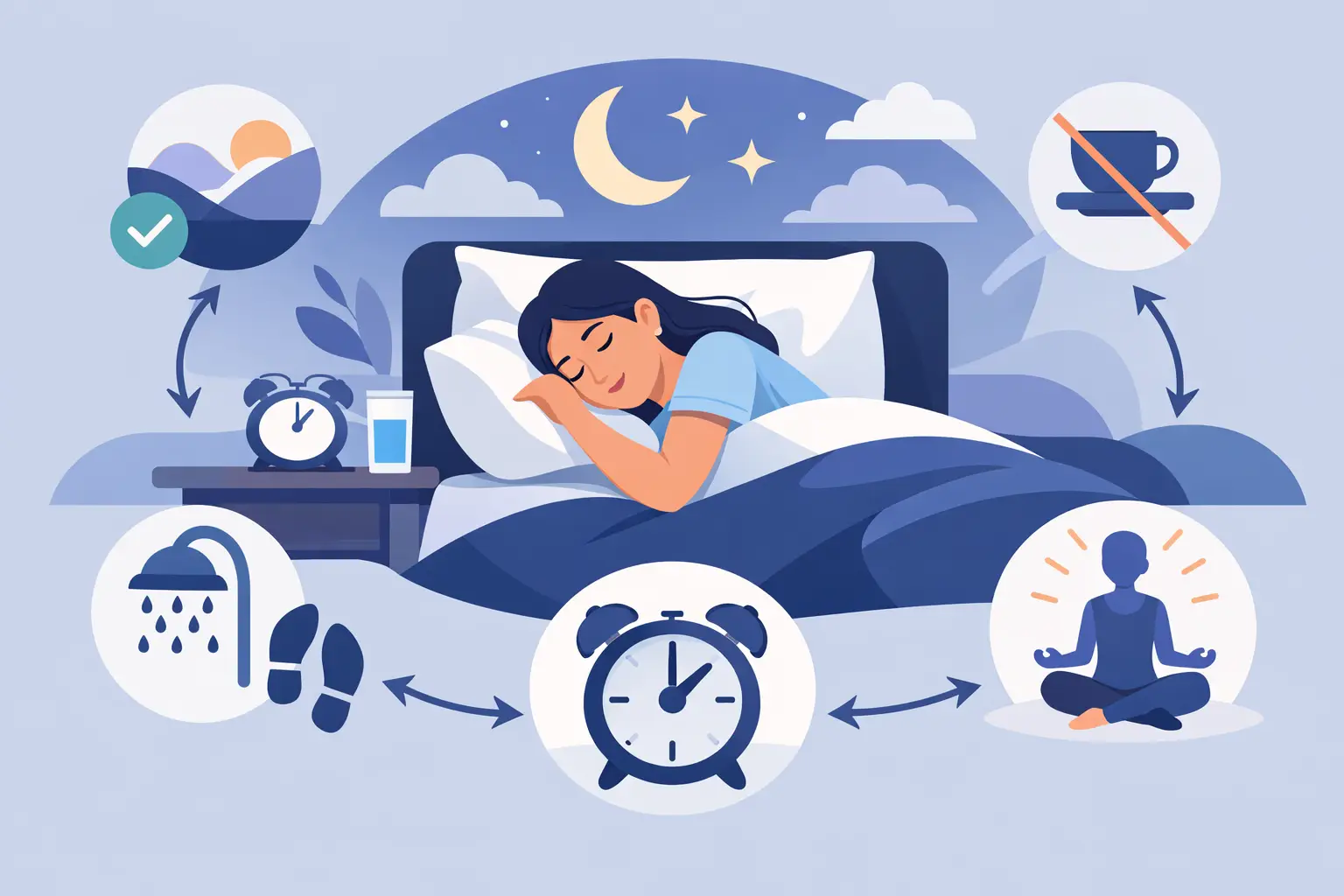
A second wind at 10 p.m., one more email, a few minutes of scrolling – then suddenly it is midnight and your mind will not slow down. If this pattern feels familiar, learning how to improve sleep hygiene can help you create conditions that make rest more likely, without turning bedtime into another stressful task.
Sleep hygiene is not about following a perfect routine or forcing yourself to fall asleep. It is the collection of daily habits, environmental cues, and mental health supports that affect your ability to fall asleep, stay asleep, and wake up feeling more restored. Small changes can add up, especially when stress, anxiety, grief, a demanding job, or a full household has made sleep feel harder than it used to be.
Table of Contents
How to Improve Sleep Hygiene Without Overhauling Your Life
Start by choosing one or two changes you can repeat most nights. Consistency matters more than an elaborate routine you only follow once a week. Your body responds well to predictable signals that the day is winding down.
1. Keep a steady wake-up time
A regular wake-up time is often more helpful than trying to force an identical bedtime every night. Getting up at roughly the same time, including weekends when possible, helps set your internal clock. Over time, this can make it easier to feel sleepy at a more reliable hour.
You do not need perfection. If your weekdays require a 7 a.m. alarm, sleeping until noon every Saturday may leave you feeling as if you changed time zones by Monday. Aim to keep weekend wake-up time within about an hour or two of your normal schedule when you can.
2. Create a short wind-down routine
Your brain needs a transition between solving problems all day and trying to sleep. A wind-down routine can be as simple as dimming lights, washing your face, changing into comfortable clothes, and reading a few pages of something low-stakes.
The goal is not to perform the perfect set of calming activities. It is to repeat a sequence that tells your brain that work, caregiving, and decision-making are done for now. If your thoughts tend to race, write down tomorrow’s tasks before getting into bed. Giving those thoughts a place to live can reduce the urge to mentally rehearse them all night.
3. Make your bedroom work for sleep
Your sleep environment does not need to look like a luxury hotel. It needs to feel comfortable and predictable. Most people sleep better in a cool, dark, quiet room with bedding that supports their comfort.
If outside noise is a problem, consider a fan or another steady source of background sound. If light comes through the window early, room-darkening shades or an eye mask may help. Keep your phone out of reach if possible, especially if notifications pull you back into work, social media, or upsetting news. For many people, the biggest benefit is not the absence of blue light alone – it is the absence of stimulation, comparison, and unfinished conversations right before bed.
4. Watch caffeine, alcohol, and late meals
Caffeine can stay in the body longer than people expect. A late-afternoon coffee may not affect everyone, but if you are having trouble falling asleep, try moving caffeine earlier in the day for a week or two and notice what changes. Energy drinks and some pre-workout supplements can be particularly disruptive.
Alcohol may make you feel sleepy at first, but it can fragment sleep later in the night and lead to early waking. Heavy or spicy meals close to bedtime can also cause discomfort or reflux. You do not have to eliminate every evening pleasure. Instead, pay attention to the trade-off: if something repeatedly leaves you awake at 3 a.m., adjusting the timing may be worthwhile.
5. Get daylight and movement during the day
Morning daylight helps reinforce your body clock. Even a few minutes outside after waking, during a commute, or on a walk can be useful. If mornings are hectic, opening the blinds and sitting near a bright window is a reasonable start.
Regular movement can also support better sleep and lower stress. It does not have to mean an intense workout. Walking, stretching, gardening, or taking the stairs all count. Some people find vigorous exercise too close to bedtime makes them feel energized, while others sleep well after an evening workout. Your own pattern matters more than a rigid rule.
6. Reserve the bed for sleep when you can
When your bed becomes the place where you answer emails, watch hours of television, worry about bills, and lie awake frustrated, your brain can start associating it with alertness rather than rest. Try to keep work and high-stimulation activities outside the bed when possible.
If you cannot fall asleep after what feels like a long stretch, get up and do something quiet in low light until you feel drowsier. Avoid checking the clock repeatedly. Clock-watching can turn a difficult night into a cycle of pressure: now you are not only awake, you are calculating how little sleep you have left.
7. Address the thoughts that keep sleep away
Poor sleep and mental health often affect each other. Anxiety can keep your body on alert. Depression may lead to oversleeping, early waking, or low energy that disrupts routines. Major life changes, relationship stress, loss, and burnout can all make nighttime feel emotionally louder.
Try a simple reset when worry rises: slow your breathing, name what you are feeling, and remind yourself that you do not need to solve every problem before morning. Relaxation exercises can help, but they are not a cure-all. If intrusive thoughts, panic, persistent sadness, or emotional distress are regularly interrupting your sleep, the most helpful next step may be addressing the underlying concern with professional support.
Elevate Your Health for Just $29.99/Month
Join the Precision Wellness Subscription at My Healing 365 and get discounted services, priority coaching access, virtual care, and exclusive wellness resources to support your physical, emotional, and hormonal health.
Join for $29.99/Month8. Be realistic about naps and catch-up sleep
A short daytime nap can be helpful after a rough night, especially for parents, shift workers, or anyone recovering from illness. But long or late naps can reduce your sleep drive and make bedtime harder. If you nap, keeping it earlier and relatively brief may protect your nighttime sleep.
One bad night does not mean you need to spend the next day trying to compensate for every lost minute. Keep your usual wake-up time when possible, get daylight, eat regularly, and return to your routine that evening. This approach can feel counterintuitive, but it gives your body a clearer chance to rebuild sleep pressure naturally.
When Sleep Hygiene Is Not Enough
Healthy habits are valuable, but they cannot always resolve ongoing sleep problems on their own. Consider speaking with a licensed provider if sleep trouble lasts for weeks, affects your work or relationships, or comes with significant anxiety, depression, hopelessness, panic, or changes in appetite and motivation.
It is also wise to seek medical guidance if you snore loudly, wake up gasping or choking, have frequent leg discomfort at night, or feel dangerously sleepy during the day. These symptoms can point to conditions that need more than a better bedtime routine. Avoid starting, stopping, or changing sleep medications or supplements without medical guidance, particularly if you take other medications or manage a health condition.
For adults who want discreet support, online mental health care can make it easier to discuss sleep alongside stress, anxiety, or depression. My Healing 365 connects eligible patients with licensed providers online for individualized treatment plans and ongoing messaging, so getting support does not have to require adding another in-person appointment to an already full schedule.
Better sleep rarely comes from doing everything right. It often starts with one repeatable cue, one less source of nighttime pressure, and the recognition that if sleep is affecting your wellbeing, you do not have to work through it alone.

























