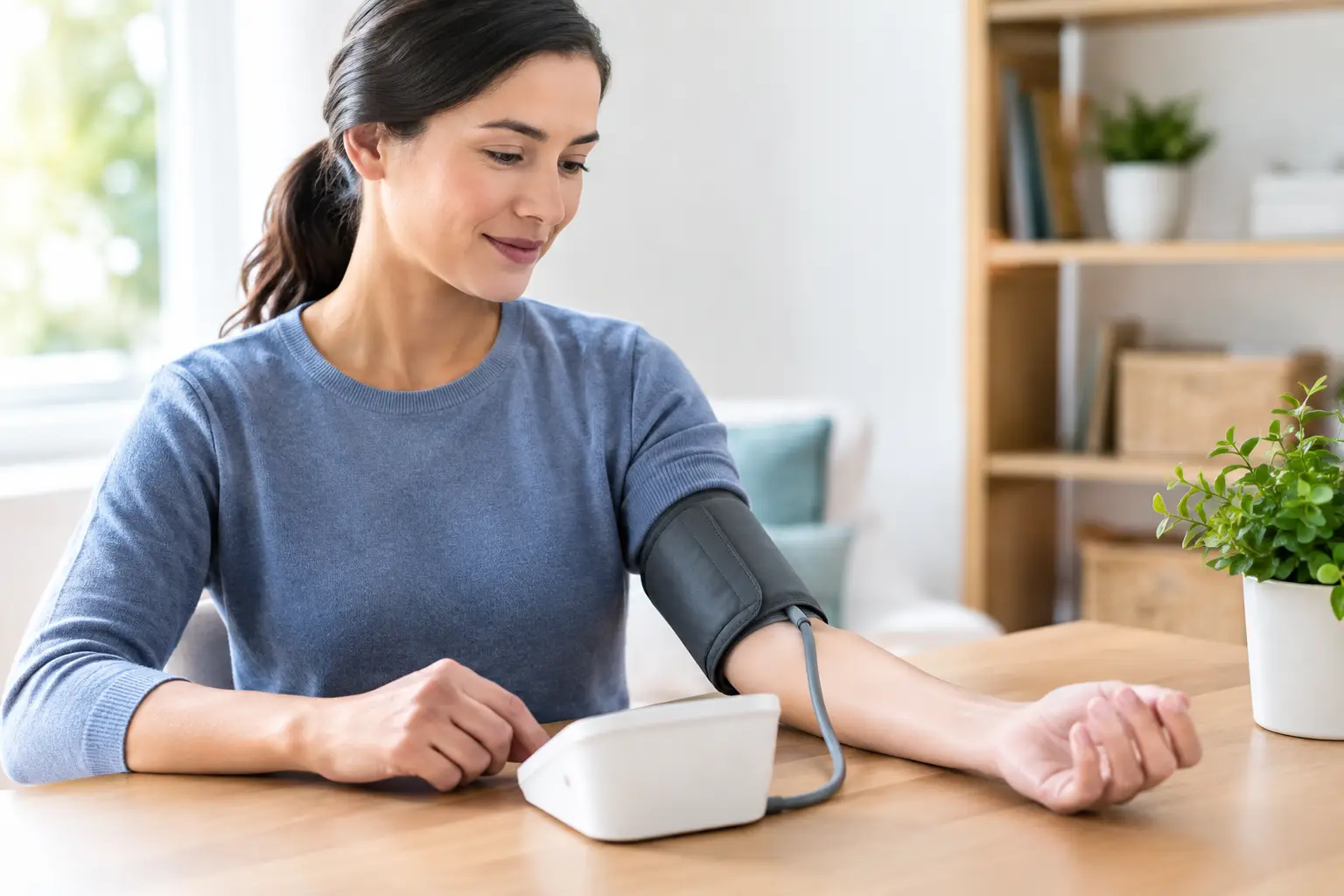
A single blood pressure number can be affected by a rushed morning, a stressful meeting, a cup of coffee, or simply talking during the measurement. The real value in learning how to monitor blood pressure is seeing the pattern over time. With consistent technique and ongoing clinical guidance, home readings can help you and your care team make informed decisions before a concern becomes more serious.
Table of Contents
Why home blood pressure monitoring matters
Blood pressure measures the force of blood against your artery walls. It is recorded as two numbers. The top number, systolic pressure, reflects pressure when your heart beats. The bottom number, diastolic pressure, reflects pressure when your heart rests between beats.
Blood pressure can change throughout the day. That is normal. What deserves attention is a repeated pattern of readings that are higher or lower than your usual range. Home monitoring gives a more complete picture than an occasional office reading, particularly for people managing hypertension, kidney disease, diabetes, heart concerns, pregnancy-related blood pressure changes, or medication adjustments.
It can also help clarify whether a high office reading is temporary. Some people have higher readings in a medical setting because they feel anxious. Others may have normal office readings but elevated blood pressure at home. Neither situation should be assumed based on one number. Repeated, well-measured readings provide more useful information.
Choose a monitor you can use consistently
For most adults, an automatic upper-arm monitor is the best option for home use. Wrist and finger monitors can be convenient, but they are generally more sensitive to positioning and may be less reliable. A monitor that is difficult to operate is not helpful, even if it has advanced features.
Look for a device that has been independently validated for accuracy and uses the right cuff size for your upper arm. A cuff that is too small can produce readings that are falsely high, while one that is too large can affect accuracy in the other direction. Measure the circumference of your upper arm if you are unsure, and check the monitor packaging for its cuff range.
If possible, bring your home monitor to an in-person appointment at least once. A clinician can compare its readings with the office equipment, confirm that the cuff fits, and watch your technique. This is especially useful when you are newly diagnosed with high blood pressure or notice readings that do not match how you feel.
How to monitor blood pressure for an accurate reading
The preparation before a reading matters as much as the monitor itself. Try to measure at approximately the same times each day, such as morning before medication or breakfast and evening before dinner. Follow the timing your clinician recommends if you are monitoring medication changes or a specific health condition.
For the 30 minutes before measuring, avoid exercise, smoking, caffeine, and alcohol when possible. Empty your bladder, then sit quietly for at least five minutes. These small steps reduce common sources of temporary elevation.
Sit in a chair with your back supported, both feet flat on the floor, and legs uncrossed. Rest your arm on a table so the middle of the cuff is level with your heart. Place the cuff directly on bare skin, not over a sleeve. You should be comfortable and quiet during the measurement. Talking, texting, or watching something stressful can alter the result.
Take two readings about one minute apart and record both, unless your clinician has asked you to follow a different schedule. If the numbers are noticeably different, a third reading may be helpful. Do not keep checking repeatedly because the first result worries you. Repeated measurements without a plan can increase anxiety and make the readings harder to interpret.
For many people starting home monitoring, measuring twice daily for several days provides a useful baseline. Your clinician may recommend a different approach depending on your diagnosis, medications, pregnancy status, or cardiovascular risk. The goal is not to collect as many numbers as possible. It is to collect reliable numbers that support a care decision.
Record context, not just the numbers
A blood pressure log is most useful when it includes the date, time, systolic and diastolic readings, and pulse if your device records it. Note whether the reading was taken before or after medication, as well as anything relevant that day, such as poor sleep, illness, unusual stress, pain, or missed doses.
Many monitors store readings automatically or connect to an app. That can be convenient, but a simple paper log works well too. What matters is having a record you can share with your clinician during a virtual or in-person visit.
Try to focus on averages and trends rather than reacting to one unexpected measurement. A higher reading after a sleepless night may be worth noting, but it does not automatically mean your treatment plan has failed. On the other hand, a gradual rise across multiple days may signal that it is time to review your routine, medications, and other health factors.
Understand what the readings may mean
For adults, normal blood pressure is generally below 120/80 mm Hg. Elevated blood pressure is often defined as a systolic reading from 120 to 129 with a diastolic reading below 80. Readings of 130/80 or higher may fall into a high blood pressure range, depending on the pattern and your overall health history.
These categories are useful reference points, not a substitute for individualized care. Your personal target may differ if you have diabetes, cardiovascular disease, kidney disease, are pregnant, take certain medications, or have a history of low blood pressure and dizziness. Never start, stop, or change a prescribed medication based only on home readings without speaking with a clinician.
If your reading is higher than expected, sit quietly and repeat it after a few minutes using proper positioning. Record both readings. Contact your care team if high readings persist, particularly if they are new or you are already being treated for hypertension.
A reading above 180/120 mm Hg requires prompt attention. Repeat the measurement after a few minutes. If it remains that high and you have symptoms such as chest pain, shortness of breath, weakness or numbness, trouble speaking, confusion, severe headache, or vision changes, call 911. Do not wait for a telehealth appointment in a possible emergency.
Make monitoring part of ongoing care
Home monitoring works best when it is connected to a care plan. A clinician can review your readings alongside your symptoms, medical history, lab work, medications, sleep, stress, nutrition, physical activity, and other conditions that may affect blood pressure. This broader view helps avoid overreacting to a number or overlooking a meaningful trend.
For example, consistently high morning readings may lead to a conversation about medication timing, sleep apnea, sodium intake, stress, or other factors. Frequent low readings with lightheadedness may call for a review of medications, hydration, recent illness, or weight changes. The right response depends on the full picture.
My Healing 365 supports ongoing primary care through regular check-ins and personalized monitoring, so patients can bring home blood pressure trends into a larger conversation about prevention and chronic-condition management. That continuity can be particularly helpful when multiple health needs, prescriptions, or specialists are involved.
Common mistakes that can change a reading
Small habits can make a meaningful difference. Measuring immediately after climbing stairs, sitting with unsupported feet, placing the cuff over clothing, or holding your arm below heart level can skew a result. So can using an incorrect cuff size or measuring while you are talking.
Elevate Your Health for Just $29.99/Month
Join the Precision Wellness Subscription at My Healing 365 and get discounted services, priority coaching access, virtual care, and exclusive wellness resources to support your physical, emotional, and hormonal health.
Join for $29.99/MonthAnother common mistake is only checking blood pressure when you feel unwell. High blood pressure often has no symptoms, which is why regular monitoring is valuable. Consistent readings on ordinary days are usually more informative than a single measurement taken during a stressful moment.
If tracking your numbers begins to create anxiety, discuss that with your clinician. You may benefit from a simpler schedule, a clearer action plan, or support in understanding which readings truly require follow-up.
Your blood pressure log is not a test you can pass or fail. It is a practical tool for noticing change, asking better questions, and staying connected to care that fits your real life.