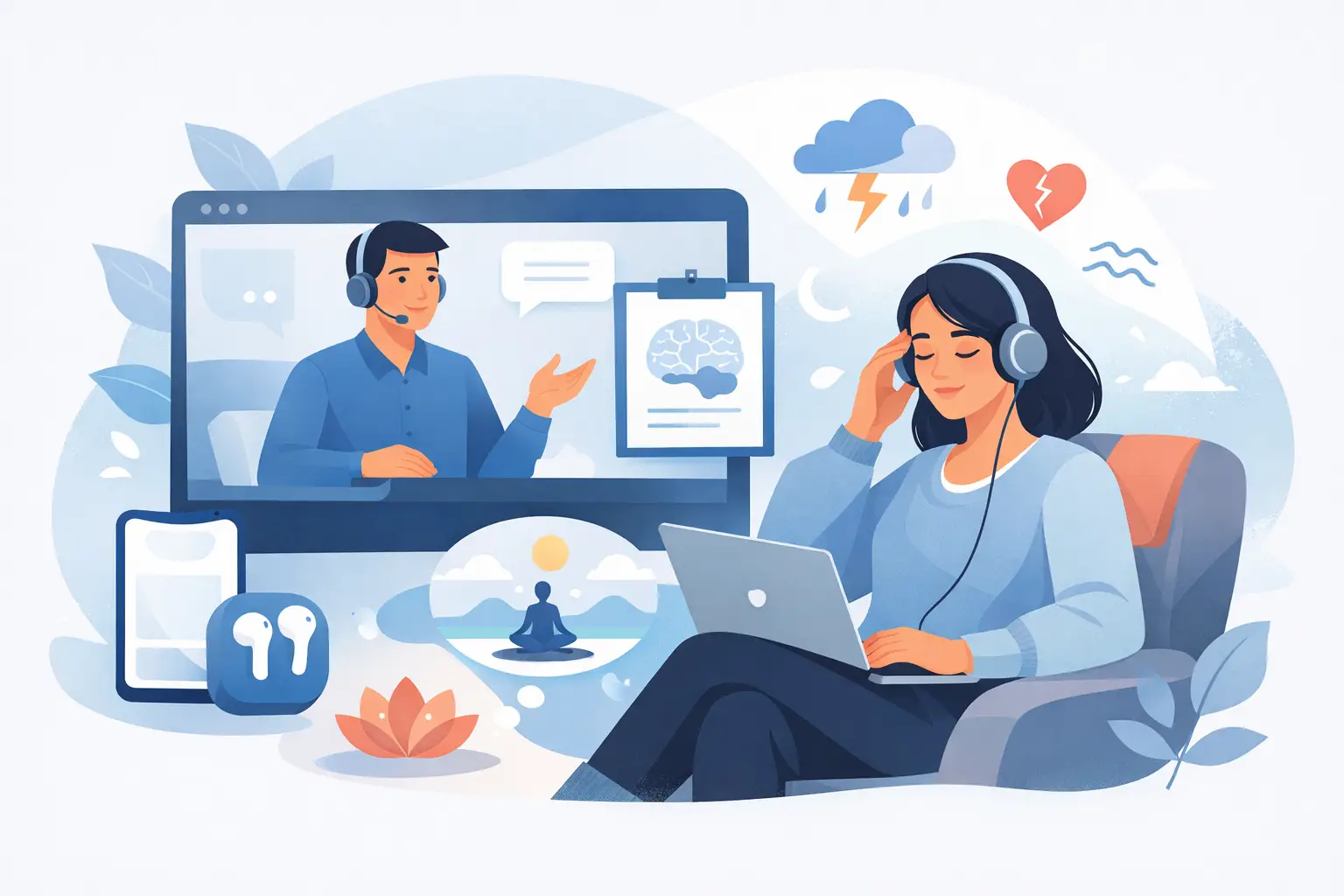
Anxiety rarely shows up at a convenient time. It can hit during a work meeting, while you are trying to fall asleep, or in the middle of a normal day when nothing looks obviously wrong from the outside. That is one reason so many people want to understand how virtual anxiety treatment works – they need support that fits real life, not a waiting room schedule.
Virtual anxiety treatment is online care for anxiety symptoms through a secure digital platform. Instead of driving to an office, sitting in traffic, or rearranging your week around appointments, you complete your intake online, connect with a licensed provider remotely, and receive a treatment plan built around your symptoms, history, and goals. For many adults, that makes starting care feel more manageable.
Table of Contents
How virtual anxiety treatment works from the first step
Most virtual treatment starts with an online assessment. You answer questions about what you are feeling, how long it has been happening, and how anxiety is affecting your daily life. That might include racing thoughts, panic, trouble sleeping, irritability, physical tension, or avoidance of certain situations.
This step is not just paperwork. It helps a licensed provider understand whether your symptoms fit an anxiety-related condition, whether something else may also be going on, and what kind of care makes the most sense. Anxiety can overlap with depression, stress after a major life change, sleep disruption, or burnout. A good evaluation looks at the full picture, not just one symptom.
After review, a licensed provider creates a personalized care plan. Depending on the service, that plan may include medication, symptom tracking, treatment guidance, ongoing check-ins, and secure messaging so you can ask questions between formal visits. The goal is not to give every patient the same answer. It is to build treatment around how your anxiety shows up in your life.
What a provider looks at during online anxiety care
People sometimes assume virtual care is less thorough because it happens online. In practice, the quality depends more on the clinical process than the setting. A licensed provider can assess a lot through your health history, symptom patterns, current medications, and follow-up communication.
They may look at when your anxiety began, whether it feels constant or situational, how it affects sleep and focus, and whether you have physical symptoms such as restlessness, chest tightness, stomach discomfort, or a racing heart. They will also consider safety, including whether your symptoms are severe enough to need a higher level of care.
That matters because anxiety treatment is not one-size-fits-all. Someone dealing with chronic generalized anxiety may need a different approach than someone whose symptoms started after a breakup, job loss, postpartum changes, or ongoing sleep problems. Virtual care can work well when the treatment plan is individualized and monitored.
What treatment can include
For many patients, virtual anxiety treatment includes a combination of provider oversight, education, and medication support when clinically appropriate. Evidence-based medications may be prescribed based on your symptoms, history, and medical profile. The provider monitors how you respond and may adjust the plan over time.
Medication is not the only part of care, and it is not right for everyone. Some people want symptom relief quickly because anxiety is interfering with work, relationships, or sleep. Others prefer to start with guided support and see how symptoms change. Often, the right answer depends on symptom severity, prior treatment experience, and personal comfort level.
Many platforms also include treatment guides or self-directed tools that help you understand triggers, build coping routines, and recognize patterns. These resources can be useful between provider check-ins because anxiety tends to fluctuate. Support matters most when it is available in the moments you actually need it, not only during a scheduled appointment.
Unlimited or ongoing messaging can be especially helpful here. If you are wondering whether a side effect is normal, whether your sleep changes are part of anxiety, or whether your symptoms are improving, being able to message your provider can reduce uncertainty. That kind of access often makes care feel more responsive and less isolating.
Why many adults prefer online treatment
The biggest reason is usually not technology. It is friction. Traditional care can involve long waits, commuting, time off work, childcare planning, and the stress of trying to get help while already overwhelmed. Virtual treatment removes many of those barriers.
Privacy matters too. Some people do not want to sit in a public waiting room or explain repeated appointments to coworkers or family members. Getting care from home can feel more discreet. That can make it easier to start treatment earlier, before symptoms become harder to manage.
Speed is another factor. When anxiety is affecting your concentration, energy, or sleep, waiting weeks for the next available appointment can feel discouraging. A digital care model can often move faster, which helps people take action while they are still motivated to get support.
That said, convenience should not come at the expense of clinical quality. The best virtual care combines ease of access with licensed providers, secure communication, and evidence-based treatment. That balance is what makes online anxiety treatment feel both modern and trustworthy.
When virtual anxiety treatment is a good fit
Virtual care can be a strong option for adults with mild to moderate anxiety, recurring anxiety symptoms, panic episodes, stress-related anxiety, or anxiety that overlaps with sleep issues or depression. It can also work well for people who have been meaning to get help but keep putting it off because life is busy.
It may be especially helpful if you want a structured plan without adding more disruption to your schedule. Busy professionals, parents, caregivers, and people going through major life changes often benefit from care that fits around daily responsibilities.
There are limits, and those limits matter. If someone is in immediate crisis, having thoughts of self-harm, experiencing severe psychiatric symptoms, or needs urgent in-person evaluation, virtual treatment alone may not be appropriate. A responsible provider will recognize that and direct the person to a higher level of care when needed.
What the patient experience usually feels like
Good virtual care should feel simple, not impersonal. You begin by sharing what is happening. A licensed provider reviews your information and helps determine the next step. If treatment is appropriate, you receive a plan that is clear and practical rather than full of medical jargon.
From there, care tends to be more continuous than many people expect. Instead of one visit and a long silence, you may have regular follow-up, progress monitoring, and the ability to message when questions come up. That ongoing connection can help patients stay engaged with treatment instead of dropping off after the first step.
This model also gives people a greater sense of control. You can review your plan at home, respond on your own time, and stay connected without rearranging your entire day. For people with anxiety, that lower-pressure format can make it easier to be honest about what they are experiencing.
At My Healing 365, that digital experience is designed to make treatment feel approachable while still being grounded in licensed care, secure processes, and symptom-specific support.
How to know if you are ready to start
You do not need to wait until anxiety becomes unbearable to get help. If your mind feels constantly on edge, your sleep is suffering, your body feels tense, or your daily life is getting smaller because of worry, that is enough reason to explore treatment.
You also do not need to have everything figured out before you begin. Many people start because they know something feels off, even if they cannot neatly label it. A provider can help sort out whether what you are experiencing is anxiety, stress, depression, sleep disruption, or a mix of several things.
Elevate Your Health for Just $29.99/Month
Join the Precision Wellness Subscription at My Healing 365 and get discounted services, priority coaching access, virtual care, and exclusive wellness resources to support your physical, emotional, and hormonal health.
Join for $29.99/MonthThe real value in virtual treatment is not just that it happens online. It is that care becomes easier to begin, easier to continue, and easier to fit into a real adult life. If anxiety has been taking up more space than you want it to, getting support from home may be the first step that finally feels doable.
You do not have to go through it alone, and you do not have to wait for the perfect time to ask for help.

























