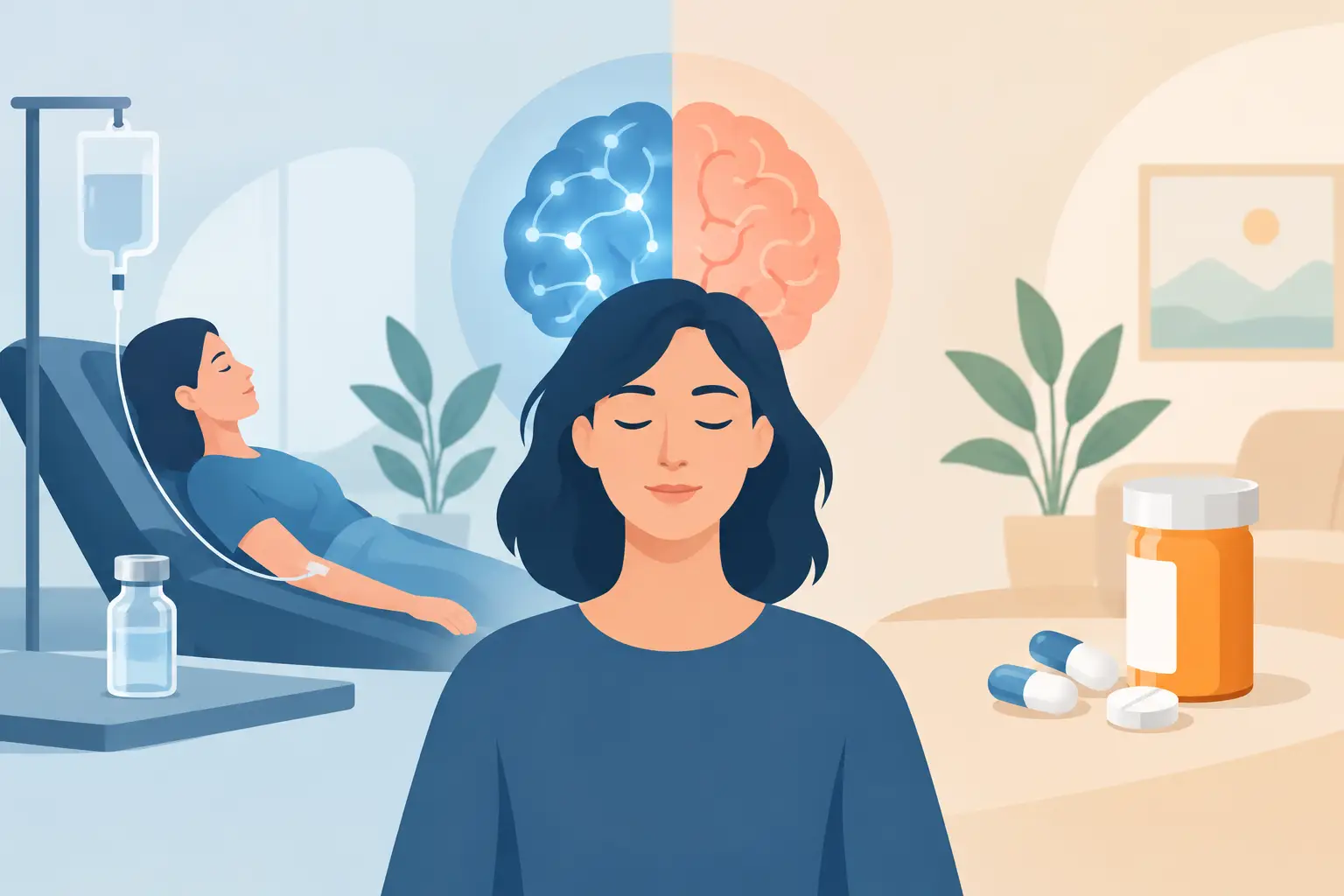
When depression has made everyday tasks feel impossibly heavy, waiting weeks to see whether a medication helps can be discouraging. The conversation around ketamine therapy vs antidepressants often centers on one question: which option can help me feel better sooner? The more useful question is which approach fits your symptoms, health history, treatment experience, and level of support.
Both treatments can have a place in depression care. They work differently, have different safety requirements, and may be used at different points in a treatment plan. You do not have to sort through those choices alone. A licensed provider can help you understand what is appropriate and create a plan that feels manageable.
Table of Contents
Ketamine Therapy vs Antidepressants: The Core Difference
Traditional antidepressants are commonly prescribed for depression and anxiety. Many work by changing the availability of brain chemicals such as serotonin, norepinephrine, or dopamine. Selective serotonin reuptake inhibitors, or SSRIs, are among the most familiar examples. They are usually taken daily and are often paired with therapy, sleep support, stress-management strategies, or other forms of care.
Ketamine acts through a different pathway, primarily involving glutamate. Glutamate is a brain chemical connected to learning, mood, and communication between nerve cells. Ketamine may produce antidepressant effects more quickly than standard oral medications for some people, particularly those with treatment-resistant depression. But faster does not mean simpler. Ketamine treatment requires careful screening, medical oversight, and a structured follow-up plan.
One key distinction is availability and approved use. Many antidepressants are widely prescribed as first-line treatments for depression. Esketamine, a ketamine-derived nasal spray, is approved for specific depression-related uses in closely monitored clinical settings. Other forms of ketamine may be prescribed off-label by qualified clinicians. The right option depends on the details of your care, not on a one-size-fits-all promise.
How Quickly Can Each Treatment Work?
Antidepressants often take several weeks to show their full effect. Some people notice improved sleep, appetite, or energy first, while mood changes may take longer. Finding the right medication and dose can also take time. This process can be frustrating, especially when you are already struggling, but gradual improvement is still meaningful improvement.
Ketamine can work on a different timeline. Some eligible patients report changes in depressive symptoms within hours or days after treatment. That potential for rapid relief is one reason ketamine has drawn attention in mental health care. It may be considered when multiple antidepressants have not worked well enough, when side effects have limited treatment, or when symptoms are severe and a provider believes a specialized approach is warranted.
Still, ketamine is not an instant or permanent fix. Its effects may fade, and some people need a series of treatments or ongoing maintenance under clinician guidance. It should be part of a larger care plan, not a substitute for addressing the patterns, stressors, sleep problems, or life changes affecting your mental health.
When Antidepressants May Be the Better Starting Point
For many people with new or mild-to-moderate depression, an antidepressant is a practical place to begin. These medications have decades of research behind them, can be used over the long term when appropriate, and are generally easier to incorporate into daily life. A provider can monitor how you feel and adjust your medication without requiring in-person treatment sessions in many cases.
Antidepressants may also help with conditions that often overlap with depression, including generalized anxiety, panic symptoms, obsessive thoughts, or certain sleep concerns. The best medication choice depends on your symptoms and medical background. For example, someone experiencing low energy may need a different approach than someone dealing with insomnia, agitation, or persistent anxiety.
Side effects are possible. Depending on the medication, these may include nausea, headaches, sexual side effects, sleep changes, weight changes, or feeling emotionally flat. Not everyone has side effects, and many improve over time. If a medication is not working or does not feel tolerable, that is useful information for your provider, not a reason to give up on care.
When Ketamine May Be Worth Discussing
Ketamine therapy is often discussed for treatment-resistant depression, meaning depression that has not improved enough after adequate trials of standard treatments. It may also be considered in specialized circumstances when a clinician determines that a faster-acting intervention could be helpful.
A thorough evaluation matters. Ketamine is not right for everyone, including some people with uncontrolled high blood pressure, certain heart conditions, a history of psychosis, or active substance-use concerns. Pregnancy, other medications, and your personal and family mental health history can also affect whether treatment is appropriate.
During ketamine treatment, some people experience dissociation, dizziness, nausea, increased blood pressure, or temporary changes in perception. These effects are a major reason supervised treatment and safety protocols matter. You should know who is prescribing the treatment, how they will monitor you, what follow-up is included, and what to do if symptoms worsen between appointments.
Be cautious about any service that frames ketamine as universally effective, requires no meaningful screening, or offers little support after the prescription is sent. Mental health treatment should feel accessible, but it should never feel rushed or careless.
Is Ketamine Better Than Antidepressants?
Neither treatment is automatically better. Ketamine may offer faster symptom relief for some people, especially after standard medications have not provided enough benefit. Antidepressants may be more appropriate for others because they are well-studied, convenient, and effective for many common depression and anxiety presentations.
In some cases, the answer is not either-or. Esketamine is often used alongside an oral antidepressant, and people receiving ketamine-based care may also benefit from therapy, regular medication management, and lifestyle support. Depression can affect your body, relationships, focus, motivation, and sleep. A plan that accounts for the full picture is usually stronger than one treatment alone.
Elevate Your Health for Just $29.99/Month
Join the Precision Wellness Subscription at My Healing 365 and get discounted services, priority coaching access, virtual care, and exclusive wellness resources to support your physical, emotional, and hormonal health.
Join for $29.99/MonthYour goals matter, too. If you need discreet, ongoing support for anxiety, low mood, sleep disruption, or stress tied to a major life event, online care may make it easier to begin and stay connected. My Healing 365 helps eligible adults access licensed providers and individualized mental health treatment through a secure online model, with messaging support that can make follow-up feel less overwhelming.
Questions to Ask Before Choosing a Treatment
A good treatment conversation is collaborative. Before starting or changing medication, ask your provider how the treatment works, how soon you may notice a difference, and how progress will be measured. Ask about common side effects, serious risks, medication interactions, costs, and what happens if the first plan does not help enough.
If ketamine is being considered, ask whether your symptoms meet the criteria for this type of care and whether an in-person evaluation or monitored administration is required. Clarify the expected treatment schedule, transportation restrictions after treatment, and the plan for maintenance and mental health support afterward.
It is also worth discussing safety directly. Tell your provider if you have thoughts of harming yourself, feel unable to stay safe, have severe mood changes, or are using alcohol or other substances to cope. If you are in immediate danger or may act on thoughts of self-harm, call or text 988 in the United States, call 911, or go to the nearest emergency room.
Choosing Care That You Can Continue
The right depression treatment should be clinically appropriate, but it also has to work in real life. A medication plan is harder to maintain when appointments are difficult to schedule, privacy is a concern, or you are left waiting for answers between visits. Consistent communication can make a meaningful difference while you and your provider learn what helps.
Whether your next step is a traditional antidepressant, an evaluation for ketamine therapy, therapy, or a combination of support, seeking care is not a sign that you have failed to cope. It is a practical step toward feeling more like yourself, with a plan and a licensed professional beside you.

























