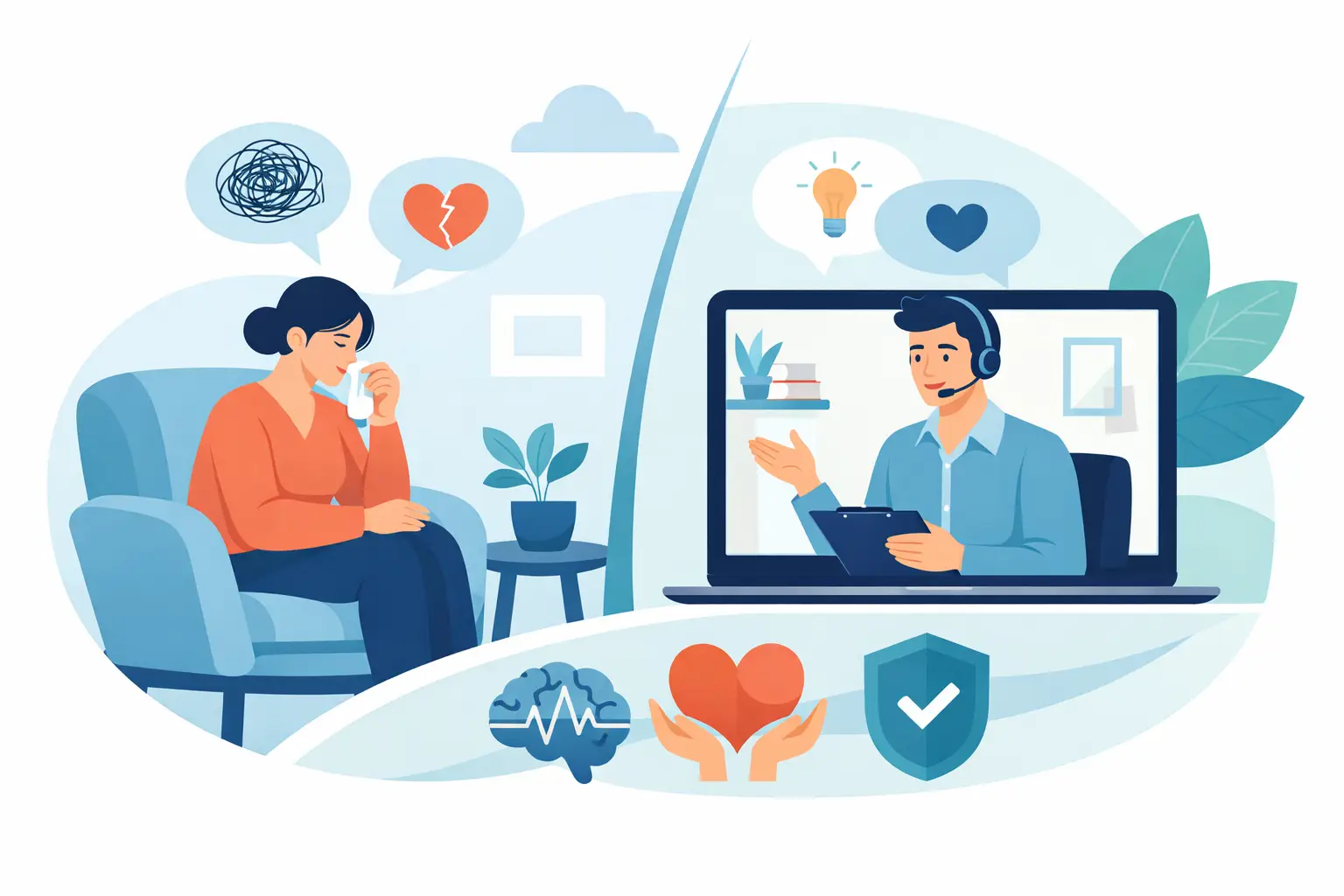
When your mind feels too loud, even simple tasks can start to feel heavy. That is often the moment people begin looking for licensed online mental health providers – not because they want something impersonal, but because they want real help without added friction.
For many adults, traditional care can feel hard to reach. You may need support for anxiety, depression, stress after a breakup, grief, burnout, or sleep problems, yet the process of finding a local provider, calling during business hours, waiting weeks for an appointment, and arranging time away from work or family can make treatment feel out of reach. Online care changes that equation.
Table of Contents
What licensed online mental health providers actually do
Licensed online mental health providers are qualified clinicians who assess symptoms, create treatment plans, monitor progress, and provide care through a secure digital platform. Depending on the provider type and your needs, that care may include diagnosis, medication support, ongoing check-ins, education, and direct messaging.
The word licensed matters. It means the clinician has met professional standards set by a state licensing board and is authorized to practice within that scope. For patients, that is more than a credential on paper. It means your care is being handled by someone trained to evaluate symptoms carefully, recognize safety concerns, and recommend evidence-based treatment rather than guesswork.
Online mental health care is not a lesser version of in-person care. In many cases, it is simply a more practical format. If your symptoms are making it harder to leave the house, stay on schedule, or talk openly in unfamiliar settings, getting support from home can make starting treatment feel far more manageable.
Why online care feels easier to start
The biggest advantage is not technology for its own sake. It is reduced resistance.
When people delay treatment, it is rarely because they do not care about their mental health. More often, they are overwhelmed, embarrassed, short on time, or unsure whether their symptoms are serious enough. A digital care model removes several of those barriers at once. You can begin privately, move at a clear pace, and communicate without needing to rearrange your entire day.
That matters if you are a working professional squeezing healthcare into a packed calendar, a parent with no extra childcare, or someone who simply does not want to sit in a waiting room and explain why you are there. Fast access can also matter when symptoms are building. Anxiety, depression, and sleep disruption tend to affect concentration, energy, relationships, and physical health over time. Starting sooner can prevent things from becoming harder than they need to be.
When licensed online mental health providers are a good fit
Online care works especially well for common but disruptive concerns that benefit from ongoing support and structured treatment. That often includes anxiety, low mood, depression, chronic stress, emotional distress after major life events, and sleep-related concerns.
If you find yourself overthinking everything, feeling emotionally flat, waking up exhausted, losing interest in things you normally enjoy, or struggling to function the way you usually do, online treatment may be an appropriate next step. It can also be a strong fit if you know you need help but keep putting it off because the logistics of in-person care feel too complicated.
There are trade-offs. Some people prefer face-to-face visits and feel more grounded in a physical office. Others have severe or complex symptoms that may require a higher level of care, local coordination, or immediate in-person support. Good telehealth is not about forcing everyone into the same model. It is about matching the right type of care to the right situation.
What to expect from licensed online mental health providers
A strong online mental health experience should feel clear, responsive, and personalized.
Most platforms start with a medical intake that asks about symptoms, health history, treatment goals, and any relevant life changes. A licensed provider reviews that information and determines what kind of care makes sense. That might include a treatment plan with medication options, symptom tracking, educational resources, or follow-up communication to see how you are responding.
The best part for many patients is continuity. Mental health symptoms change. What feels manageable one week may feel much harder the next. Having access to unlimited messaging or regular check-ins can make care feel more supportive and less like a one-time transaction.
Elevate Your Health for Just $29.99/Month
Join the Precision Wellness Subscription at My Healing 365 and get discounted services, priority coaching access, virtual care, and exclusive wellness resources to support your physical, emotional, and hormonal health.
Join for $29.99/MonthThat does not mean instant fixes. Medication can take time to work. Sleep issues may improve in stages. Anxiety treatment often involves adjusting habits, expectations, and follow-up care over time. But having a provider who knows your case and can respond as things shift makes the process feel less isolating.
Medication, guidance, and why both matter
Some people come to online mental health care because they believe they may need medication. Others are not sure what they need, only that they do not feel like themselves. Both starting points are valid.
For certain conditions, clinically proven medications can be an effective part of treatment, especially when they are prescribed thoughtfully and paired with monitoring. But medication alone is not the whole story. Patients also benefit from understanding what they are experiencing, what side effects to watch for, how long improvement may take, and what daily patterns may be making symptoms worse.
That is where a more complete care model stands out. Guided treatment plans, provider access, and symptom-specific education can help people stay engaged long enough to actually see results. Convenience gets you started. Ongoing support helps you continue.
Privacy is not a bonus feature
For many adults, privacy is one of the main reasons online mental health care feels possible. You may not want to explain repeated appointments to your employer. You may live with family and want more control over when and how you seek support. You may simply feel safer discussing your symptoms in a private digital setting.
Licensed online mental health providers typically use secure systems designed to protect personal health information. That practical layer of privacy can reduce stigma and lower the emotional threshold for reaching out. If you have been avoiding care because you do not want your mental health to become public business, discreet access is not a small detail. It can be the difference between waiting and getting help.
How to choose the right provider online
Not every platform offers the same level of care, so it helps to look past marketing language and focus on what your experience will actually be.
First, check whether you are being treated by licensed clinicians, not generic wellness coaches standing in for medical care. Then look at the care model itself. Will you receive an individualized treatment plan, or are you being funneled into a standard package? Can you message your provider if symptoms change? Is the process built around specific conditions like anxiety, depression, or sleep concerns, or is it too broad to feel useful?
Cost matters too. Affordable care is only helpful if it still feels responsive and clinically grounded. A lower-friction option that starts at an accessible price point can be a meaningful alternative to the high cost and scheduling burden of traditional care, especially if it includes provider oversight and ongoing communication.
For people who want mental health support as part of a broader wellness plan, an integrated telehealth platform may also make sense. Mental health does not exist in a vacuum. Sleep, stress, hormones, physical symptoms, and life changes often overlap. A connected care environment can make it easier to address the full picture instead of chasing one symptom at a time.
Why people stick with online treatment
Starting care is one hurdle. Staying with it is another.
People are more likely to continue treatment when it fits real life. If reaching your provider is simple, follow-up feels manageable, and the plan is easy to understand, care becomes something you can maintain rather than another source of stress. That is especially true during periods when motivation is low or daily life feels crowded.
This is where online care can quietly outperform traditional systems. Not because it replaces every form of support, but because it meets people where they already are. If treatment is private, fast, and guided by licensed professionals, it becomes easier to take the next step before symptoms take over more of your life.
At My Healing 365, that approach is built around helping people get real support without extra hurdles. If you have been waiting for the right time to ask for help, this may be it. You do not have to go through it alone, and getting care can be simpler than you think.