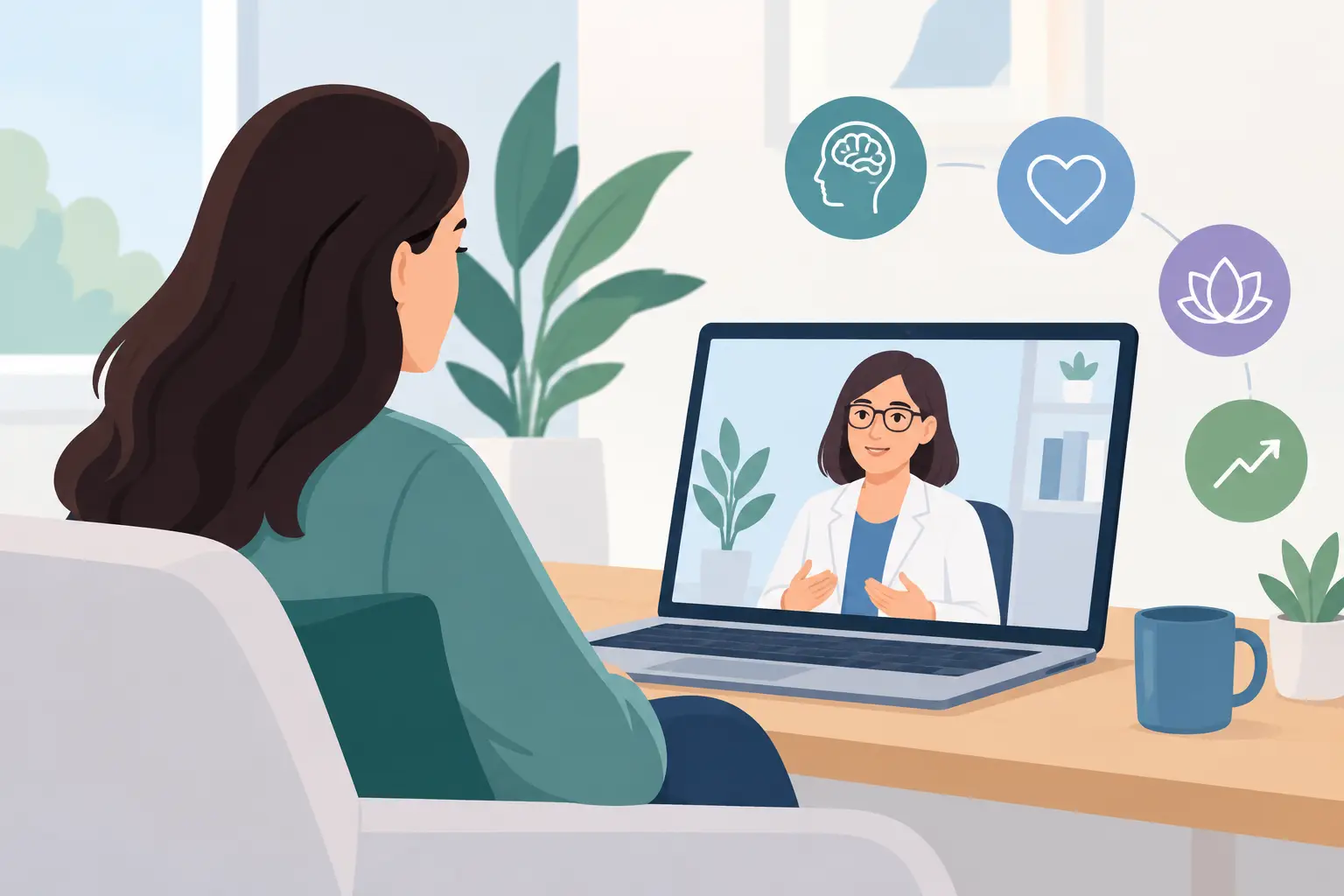
The hardest part of getting mental health support is often not recognizing that something feels off. It is finding time for an appointment, sitting in a waiting room, or wondering whether your concerns are “serious enough” to discuss. Mental health telemedicine trends are changing that experience by bringing licensed care, ongoing communication, and treatment planning into a setting that can fit more naturally into real life.
For someone managing persistent anxiety between meetings, low mood while caring for a family, or sleep problems after a major life change, online care can remove friction without making your concerns feel less important. The goal is not to replace human connection with an app. It is to make qualified support easier to reach when you are ready for it.
Table of Contents
Why mental health care is moving online
Traditional care can be deeply valuable, but it does not work easily for every schedule, budget, or location. A weekly office visit may require time away from work, childcare, travel, and weeks of waiting for an opening. Those barriers can keep people in a cycle of putting off care until symptoms become harder to manage.
Telemedicine gives many adults another path. Secure online visits and messaging can make it possible to talk with a licensed provider from home, during a break, or from another private place that feels comfortable. That convenience matters, but it is only one piece of the shift. People also want care that is responsive, clear, and built around their specific symptoms rather than a one-size-fits-all recommendation.
Online treatment is not the right fit for every person or every situation. Still, for common concerns such as anxiety, depression, sleep disruption, and emotional distress, it can be a practical place to begin. A qualified provider can assess your symptoms, review your health history, discuss treatment options, and help determine whether virtual care makes sense for you.
Mental health telemedicine trends reshaping care
Care between appointments is becoming part of treatment
One of the most meaningful changes is the move away from care that only happens during a scheduled visit. Many people do not need a new appointment every time they have a question about side effects, a change in symptoms, or a treatment plan they are struggling to follow. Secure messaging gives patients a way to stay connected with their care team between check-ins.
That does not mean a provider is available for emergency help at every moment, and it should never replace emergency services. It can, however, make routine follow-up feel less isolating. When communication is easier, patients may be more likely to raise concerns early instead of silently stopping a medication or waiting until symptoms escalate.
Personalized plans are replacing generic advice
“Get more sleep” and “reduce stress” may be well-intended suggestions, but they are rarely enough when someone is dealing with persistent symptoms. Current telehealth models increasingly focus on individualized plans that account for what a person is experiencing, their history, their goals, and the practical realities of their day.
For one person, that may mean support for anxious thoughts that interfere with work. For another, the focus may be low motivation, disrupted sleep, or emotional changes following a move, breakup, loss, or new parenthood. When appropriate, a licensed provider may discuss evidence-based medication options alongside behavioral tools, education, and follow-up. The best plan is not necessarily the most complicated one. It is the one you understand and can realistically follow.
Mental health is being treated as part of whole-person health
Mental health does not sit in a separate box from the rest of your life. Sleep, hormones, chronic stress, relationships, physical health, and major transitions can all affect how you feel emotionally. That is why more people are looking for care that recognizes these connections instead of treating a symptom in isolation.
An integrated virtual wellness model can be especially helpful when someone is already working on related health goals. For example, poor sleep may worsen anxiety, while ongoing stress can affect energy, motivation, and self-care. A mental health provider should still stay within their clinical role, but coordinated, person-centered care can make the next step feel clearer.
Privacy is becoming a core part of access
Stigma has not disappeared, even though conversations about mental health are more open than they were a decade ago. Some people are comfortable seeking support but do not want coworkers, neighbors, or family members to know they are attending appointments. Others simply feel more able to speak honestly from a familiar setting.
Elevate Your Health for Just $29.99/Month
Join the Precision Wellness Subscription at My Healing 365 and get discounted services, priority coaching access, virtual care, and exclusive wellness resources to support your physical, emotional, and hormonal health.
Join for $29.99/MonthTelemedicine can offer discretion by reducing the need to visit a physical office. Reputable platforms should also use secure systems, explain how patient information is handled, and make it clear who is involved in your care. Privacy is not just a feature. It can be the reason someone feels safe enough to start treatment.
Faster access is raising expectations
People are increasingly unwilling to wait months for an initial conversation when they are struggling now. Telehealth has helped set a new expectation: getting support should not require navigating a maze of phone calls and paperwork.
Speed should not come at the expense of thoughtful care. A quick intake is useful only when it leads to a genuine clinical review, clear next steps, and an opportunity to ask questions. The strongest telemedicine services balance efficiency with provider oversight, so patients do not feel rushed through a process that deserves care and attention.
What online mental health care can and cannot do
Virtual care can be a strong option for many non-emergency mental health needs, particularly when you want convenient access, ongoing communication, and a structured plan. It may be a good fit if travel is difficult, your schedule is unpredictable, or privacy makes it easier to take the first step.
There are limits. If you are in immediate danger, thinking about harming yourself or someone else, or experiencing a mental health emergency, call 911, contact 988 for the Suicide & Crisis Lifeline, or go to the nearest emergency room. Telemedicine is not a substitute for emergency intervention.
Some people may also need a higher level of care, in-person evaluation, specialized therapy, or coordinated support from several clinicians. A responsible provider should be willing to say when virtual treatment alone is not enough and help guide you toward more appropriate resources.
How to choose an online mental health service
The right platform should make care feel simpler, not vague. Before enrolling, look beyond marketing language and consider whether the service offers the support you actually need.
- Confirm that you will be evaluated by licensed providers who can practice in your state.
- Ask how follow-up works, including whether secure messaging is available between appointments.
- Understand what is included in the price and whether treatment recommendations are personalized.
- Review the platform’s privacy practices and what happens if your needs fall outside its scope of care.
It is also reasonable to ask about medication. Not everyone needs it, and medication is not automatically the best answer for every symptom. If it is part of your plan, you should understand why it is being considered, what benefits and side effects to watch for, and when you will check in again.
A more manageable first step
For many people, the value of telemedicine is not that it makes mental health care effortless. Real progress still takes honesty, follow-through, and time. What it can do is remove unnecessary obstacles between you and qualified support.
My Healing 365 is built around that lower-friction approach, with online access to licensed providers, individualized treatment plans, ongoing messaging, treatment guides, and clinically appropriate medication options when indicated. With care starting at $99, it offers a more approachable way to begin addressing symptoms without putting your entire life on hold.
You do not need to have the perfect words, a complete explanation, or a crisis-level problem to ask for help. If your thoughts, mood, sleep, or stress are making daily life feel heavier than it should, a private conversation with a licensed provider can be a meaningful place to start.