It’s common to hear casual descriptions of “schizophrenic” behavior, describing a person oscillating between two extremes.
“I really want that luxurious Italian cashmere sweater,” followed by “What am I saying? I can’t even afford a $20 polyester top right now!”
I’m a professor of psychology who studies cognition and rehabilitation in schizophrenia, and I have found that these misunderstandings are not limited to the public. Health officials and political leaders who make critical decisions about funding and resources for schizophrenia can also hold these poorly informed views.
Better awareness is needed as researchers around the globe are actively studying a suite of innovative, non-drug treatments targeting the cognitive and social challenges common to the disorder.
Initial results from this research show great promise for therapeutic benefit. Unfortunately, few people with the disorder ever gain access to these treatments.
Table of Contents
What is schizophrenia?
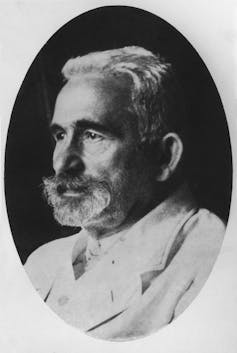
Schizophrenia as it is currently known by specialists was first described in 1899 by Emil Kraepelin, a German psychiatrist who combined several disorders previously thought to be separate under a single label. He called it “dementia praecox,” or early-onset dementia.
According to Kraepelin, schizophrenia could be recognized by several key symptoms. One was hearing illusory voices that often commanded the patient to take specific actions like “throw the cup of water you are holding into the face of the psychiatrist trying to interview you.” Another was holding strange beliefs, such as “A communication device has been placed inside my brain and is transmitting my thoughts to the police.”
Kraepelin also defined the disorder by its trajectory, which he thought was an inevitable worsening of daily living skills over time.
Today, schizophrenia in the U.S. is diagnosed using the Diagnostic and Statistical Manual for Mental Disorders, or DSM, which is the gold standard for classification of psychiatric conditions. The DSM’s definition criteria are based on many of the same signs and symptoms that Kraepelin described more than 125 years ago.

Hulton Archive/Getty Images
Troubling statistics
While many of Kraepelin’s observations were spot on, his views on the disorder causing inevitable worsening were incorrect. Studies following people from the onset of symptoms show that approximately 40% of those diagnosed with the disorder have mild or no symptoms, hold jobs within their community and have significant social relationships for sustained periods of their lives.
For the majority of people with schizophrenia, however, the condition is persistent, disabling and isolating.
The World Health Organization lists schizophrenia among the top 10 leading causes of disability.
Some estimates suggest at least 1 in 5 homeless people suffer from a severe mental illness, often schizophrenia.
Other data shows that 15% of inmates in U.S. state prisons have severe mental illnesses like schizophrenia.
The public health challenges are vast, and effective treatments are desperately needed.
Overlooked cognitive struggles
Kraepelin alluded to difficulties with concentration in his description of schizophrenia. But research since the early 2000s has revealed that difficulties in cognitive and social processes are among the most central – yet most overlooked – aspects of the condition.
The vast majority of people with schizophrenia suffer from some level of cognitive difficulty: paying attention, like tracking a conversation with a friend; actively retaining information, like remembering a new password while a website’s login page refreshes; or forming new memories, such as what one ate for breakfast, at what time and with whom. These difficulties persist even when the acute phase of illness has passed and the person is stable.
Some schizophrenia patients I work with may describe in rich detail how they are the son of Jesus Christ, how their internal organs have been forcibly removed from their body and replaced by someone else’s, or how they will soon part the waters of a local river. When they struggle to pay attention to my clinical advice or fail to remember something I said just a minute before, I am struck by how cognitive difficulties like memory and attention would be easy to miss in the face of such dramatic symptoms.
People with schizophrenia also struggle socially. They are not always able to recognize others’ emotions through facial expressions or tone of voice, place themselves in another’s shoes to understand motivations, or recognize that friends and family are not trying to sabotage their goals.
Elevate Your Health for Just $29.99/Month
Join the Precision Wellness Subscription at My Healing 365 and get discounted services, priority coaching access, virtual care, and exclusive wellness resources to support your physical, emotional, and hormonal health.
Join for $29.99/MonthNew treatments, new hope
The good news is that over the past 15 years, mental health experts have developed new therapies to address difficulties with cognition and memory among people with schizophrenia – and scientific studies are increasingly showing that the treatments are effective.
One treatment, called cognitive remediation, includes exercises to improve mental sharpness. For example, a person may practice remembering the location of items in a refrigerator, with the goal of eventually linking the skill to finding items in a supermarket.
In more than 100 controlled trials, cognitive remediation has been shown to improve cognition and function in daily living skills.
Other therapies focus on teaching strategies to better understand the emotions and motivations of others and help people with schizophrenia avoid jumping to negative conclusions. For example, a relative’s benign remark about the texture of a turkey dinner at a family gathering might be interpreted by someone with schizophrenia as a statement meant to embarrass them. Training in social cognitive skills makes people with schizophrenia less likely to assume that others are trying to hurt or undermine them.
Both cognitive and social cognitive therapies teach people with schizophrenia to think more flexibly and use a broader range of strategies to understand their world.
While no therapy is a cure, the new behavioral treatments offer hope even for those with the most severe forms of the disorder.
Unfortunately, few mental health treatment centers currently have the expertise or resources to offer these time- and effort-intensive therapies. A 2025 report from the WHO found that roughly two-thirds of people with schizophrenia around the world do not receive any kind of specialized mental health treatment – let alone the novel therapies described in this article.
Until these treatments become more accessible, improvements in functioning in mild to more severe forms of the illness will be poorer than they should be, and people with schizophrenia will fall short of their potential for living richer and more satisfying lives.

























