• Twenty47HealthNews
  • Health & Wellness
  • Disclaimer
    • Terms of Use
    • Privacy Policy
    • DMCA Notice
  • Twenty47HealthNews
  • Health & Wellness
  • Disclaimer
    • Terms of Use
    • Privacy Policy
    • DMCA Notice
24/7 Health News
No Result
View All Result
Struggling with energy, weight, or blood sugar?
Get personalized medical & wellness support at My Healing 365.
Book Your Wellness Strategy Session
Home Article

No safe tan: Why Canada’s sunburn problem keeps getting worse

August 26, 2026
in Article
No safe tan: Why Canada’s sunburn problem keeps getting worse

Scroll through social media and you will encounter a strange vocabulary for an old impulse: “tanmaxxing,” “UV chasing” and “SPF shunning.” In some corners of the internet, sunscreen is described as toxic, while a “natural” tan is portrayed as protective.

As a dermatologist and skin-cancer researcher, and a medical student, we find the misinformation troubling. But after years studying Canadian sun behaviour, our team has concluded that correcting myths alone will not solve the problem.

TikTok may have invented the term “tanmaxxing,” but it didn’t invent the desire to be tanned.

Table of Contents

  • Fighting biology and beauty standards
  • The sunscreen paradox
  • Photoaging can be prevented
  • The goal: No tan, no burn

Fighting biology and beauty standards

Ultraviolet radiation stimulates beta-endorphin production in skin, engaging our endogenous opioid system. It feels good to be in the sun after a long winter, and most of us can relate to that. Experimental research suggests UV exposure can reinforce sun-seeking behaviour.

Tanning also carries social rewards. In our focus-group research on beauty standards, participants described a “sun-kissed” appearance as healthy, attractive and even affluent.

That makes it harder for public-health advice to persuade people to limit their sun exposure and avoid tanning. Cancer-prevention messages have to compete with the body’s response to sunlight, as well as the beauty standards and sense of belonging that can come with looking tanned.

The sunscreen paradox

In our recent national study published in JAMA Network Open, we analyzed more than 7,000 Canadian adolescents, representing 2.3 million youths. More than 40 per cent reported a sunburn last year. About 62 per cent rarely or never used body sunscreen, 73 per cent rarely or never wore a hat and 75 per cent rarely or never wore long clothing.

Nor does the problem disappear at 18. In our adult national study, roughly one in three reported a sunburn in the previous year, while sunscreen use declined and time outdoors increased.

But our adolescent data revealed an interesting point: groups reporting greater sunscreen use, including girls and higher-income adolescents, were also more likely to report sunburn.
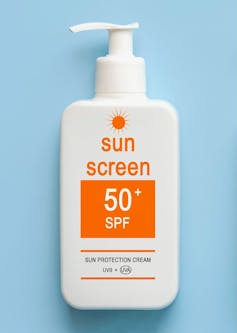
A pump bottle of SPF 50 sunscreen against a blue background
Sunscreen does not cause sunburn, melanoma or skin cancer.
(Canva)

We have seen this before. In 22 focus groups across Atlantic Canada, residents of Nova Scotia and Prince Edward Island knew about sun safety and frequently relied on sunscreen. Yet in our survey of nearly 8,000 Canadians, residents there reported roughly twice as many sunburns as those in provinces with lower melanoma incidence. We called this apparent contradiction the “sunscreen paradox.”

However, sunscreen does not cause sunburn, melanoma or skin cancer. Scientific precision is important, and the apparent paradox is an observational finding that needs scrutiny. For example, people at greatest risk may use more sunscreen. Others may apply too little, fail to reapply or spend longer outdoors.

Behavioural compensation is also plausible because SPF/sunscreen may make someone feel safe enough to stay outside longer.

I often counsel patients that shade does not wear off. A shirt cannot be applied too thinly. Sunscreen remains important, but works best with clothing, hats, sunglasses and shade.

The protective “base tan” is another persistent myth in my practice. In our Manitoba survey, more than 40 per cent believed a base tan provides protection. Dermatology guidance describes that protection as minimal, roughly SPF 2 to 4 (dermatologists recommend SPF 50+). Also, the logic is backward: you expose your skin to UV to acquire the tan you hope will protect you from UV.

A tan is not proof that your skin handled the sun safely; it is proof that your skin was damaged by it.
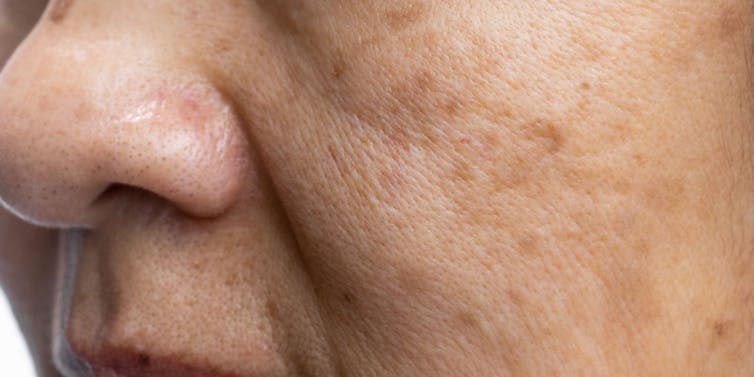
Close-up photo of facial skin showing brown marks and signs of photoaging
UV exposure accelerates photoaging: premature wrinkles, coarse texture, brown marks often called ‘sun spots,’ mottled pigmentation and visible blood vessels.
(Canva)

Photoaging can be prevented

Perhaps dermatologists have made a tactical mistake. We tell a 16-year-old that UV exposure increases cancer risk decades later. That’s true, but adolescents are not known for making decisions based on what might affect their health at 55.

Elevate Your Health for Just $29.99/Month

Join the Precision Wellness Subscription at My Healing 365 and get discounted services, priority coaching access, virtual care, and exclusive wellness resources to support your physical, emotional, and hormonal health.

Join for $29.99/Month

If appearance helps drive tanning, appearance may help prevention. UV accelerates photoaging, which can include premature wrinkles, coarse texture, brown marks often called “sun spots,” mottled pigmentation and visible blood vessels.

Severe photodamage can produce deep neck furrows, cysts around the eyes and precancerous actinic keratoses.

This is not about shaming aging. Aging is normal; photoaging is not, and can be prevented. The contradiction is that people tan to look better, while accelerating changes that many people later pay to prevent or reverse.

A woman seen from behind wearing a hat, and a white shirt with sleeves
Layering sun protection includes shade, clothing, a hat, sunglasses and sunscreen generously applied to exposed skin and reapplied appropriately.
(Unsplash+/Getty Images)

The goal: No tan, no burn

In our first national melanoma analysis, we identified more than 72,000 cases in Canada from 1992 through 2010. A follow-up analysis identified nearly 40,000 from 2011 through 2017, with incidence reaching roughly 21 cases per 100,000 people annually. One mortality analysis estimated 20.4 years of potential life lost for a person dying from melanoma.

Globally, melanoma accounted for roughly 1.6 million disability-adjusted life years in 2015. In Canada, skin cancer cost an estimated $532 million in 2004. Of this, 83.4 per cent — about $444 million — was attributable to melanoma. The annual burden was projected to reach $922 million by 2031.

We have mapped associations between melanoma and geography, temperature, summer UV and vegetation. We’ve identified distinct patterns among LGBTQ+ Canadians and studied sun-protection experiences among Inuit communities in the North.

Our policy comparison shows how Australia and New Zealand reinforce education with structural measures, including tanning-bed restrictions, shade and workplace or school policies.

Our message should not simply be “use sunscreen.” It should be “no tan, no burn.” That does not mean hiding indoors. Enjoy our short Canadian summers by layering sun protection: shade, clothing, a hat, sunglasses and sunscreen generously applied to exposed skin and reapplied appropriately.

There is no healthy UV-induced tan. There is healthy time outdoors, without the tan and without the burn.


ShareTweetSharePin

Most Read

What causes stuttering? A speech pathology researcher explains the science and the misconceptions around this speech disorder

What causes stuttering? A speech pathology researcher explains the science and the misconceptions around this speech disorder

December 15, 2022
In war-torn Iran, air pollution from burning oil depots and bombed buildings unleashes invisible health threats

In war-torn cities, air pollution from burning oil depots and bombed buildings unleashes invisible health threats

March 25, 2026
3 women stroke prevention

Silent Stroke Symptoms in Women: What You Might Be Overlooking

February 27, 2026
morning back pain

Morning Again Ache Trigger Is Not the Mattress

October 11, 2021
Socialising, work, exercise: what makes a good day and is there a ‘formula’ for making it better?

Socialising, work, exercise: what makes a good day and is there a ‘formula’ for making it better?

April 12, 2026

4 steps to building a healthier relationship with your phone

January 28, 2025
lower back pain relief exercises

5 decrease again ache aid workouts

October 11, 2021

Why Circadian Rhythms Matter for Your Health

July 30, 2024
bleeding in gum

When The Bleeding in gum Is Severe ?

October 11, 2021
Good Night Sleep

6 Causes of Good Evening Sleep

October 11, 2021
Nasal vaccines promise to stop the COVID-19 virus before it gets to the lungs – an immunologist explains how they work

Nasal vaccines promise to stop the COVID-19 virus before it gets to the lungs – an immunologist explains how they work

December 14, 2022
3 years after legalization, we have shockingly little information about how it changed cannabis use and health harms

3 years after legalization, we have shockingly little information about how it changed cannabis use and health harms

October 15, 2021
Kick up your heels – ballroom dancing offers benefits to the aging brain and could help stave off dementia

Kick up your heels – ballroom dancing offers benefits to the aging brain and could help stave off dementia

January 3, 2023
Ten small changes you can make today to prevent weight gain

Ten small changes you can make today to prevent weight gain

October 12, 2021
Biden is getting prostate cancer treatment, but that’s not the best choice for all men − a cancer researcher describes how she helped her father decide

Biden is getting prostate cancer treatment, but that’s not the best choice for all men − a cancer researcher describes how she helped her father decide

May 20, 2025

COVID vaccines: how one can pace up rollout in poorer international locations

October 5, 2021

Maximize Your Performance – Sync with Your Circadian Rhythms

August 9, 2024
GLP-1 drugs may fight addiction across every major substance, according to a study of 600,000 people

GLP-1 drugs may fight addiction across every major substance, according to a study of 600,000 people

March 6, 2026
woman covered with white blanket

Exploring the Impact of Sleep Patterns on Mental Health

August 4, 2024

This Simple Hygiene Habit Could Cut Your Risk of Stroke, New Research Reveals

February 1, 2025
Five ways to avoid pain and injury when starting a new exercise regime

Five ways to avoid pain and injury when starting a new exercise regime

December 30, 2022
Support and collaboration with health-care providers can help people make health decisions

Support and collaboration with health-care providers can help people make health decisions

December 16, 2021
Greece to make COVID vaccines mandatory for over-60s, but do vaccine mandates work?

Greece to make COVID vaccines mandatory for over-60s, but do vaccine mandates work?

December 1, 2021

Multiple sclerosis: the link with earlier infection just got stronger – new study

October 12, 2021
Six ways to improve your cat’s one wild and precious life

Six ways to improve your cat’s one wild and precious life

June 6, 2026
GPs don’t give useful weight-loss advice – new study

GPs don’t give useful weight-loss advice – new study

December 16, 2022
Four ways to avoid gaining weight over the festive period – but also why you shouldn’t fret about it too much

Four ways to avoid gaining weight over the festive period – but also why you shouldn’t fret about it too much

December 22, 2022
How regulatory agencies, not the courts, are imposing COVID-19 vaccine mandates

How regulatory agencies, not the courts, are imposing COVID-19 vaccine mandates

October 24, 2021
You’ve reached your weight loss goal on GLP-1 medications – what now?

You’ve reached your weight loss goal on GLP-1 medications – what now?

February 5, 2026
Backlash to transgender health care isn’t new − but the faulty science used to justify it has changed to meet the times

Backlash to transgender health care isn’t new − but the faulty science used to justify it has changed to meet the times

January 30, 2024

Ready to take control of your health?

Get a personalized plan for your weight, energy, hormones, and blood sugar with My Healing 365.

Book Your Session Now – Limited Weekly Spots
  • Twenty47HealthNews
  • Health & Wellness
  • Disclaimer

© 2020 DAILY HEALTH NEWS

  • Twenty47HealthNews
  • Health & Wellness
  • Disclaimer
    • Terms of Use
    • Privacy Policy
    • DMCA Notice

© 2020 DAILY HEALTH NEWS