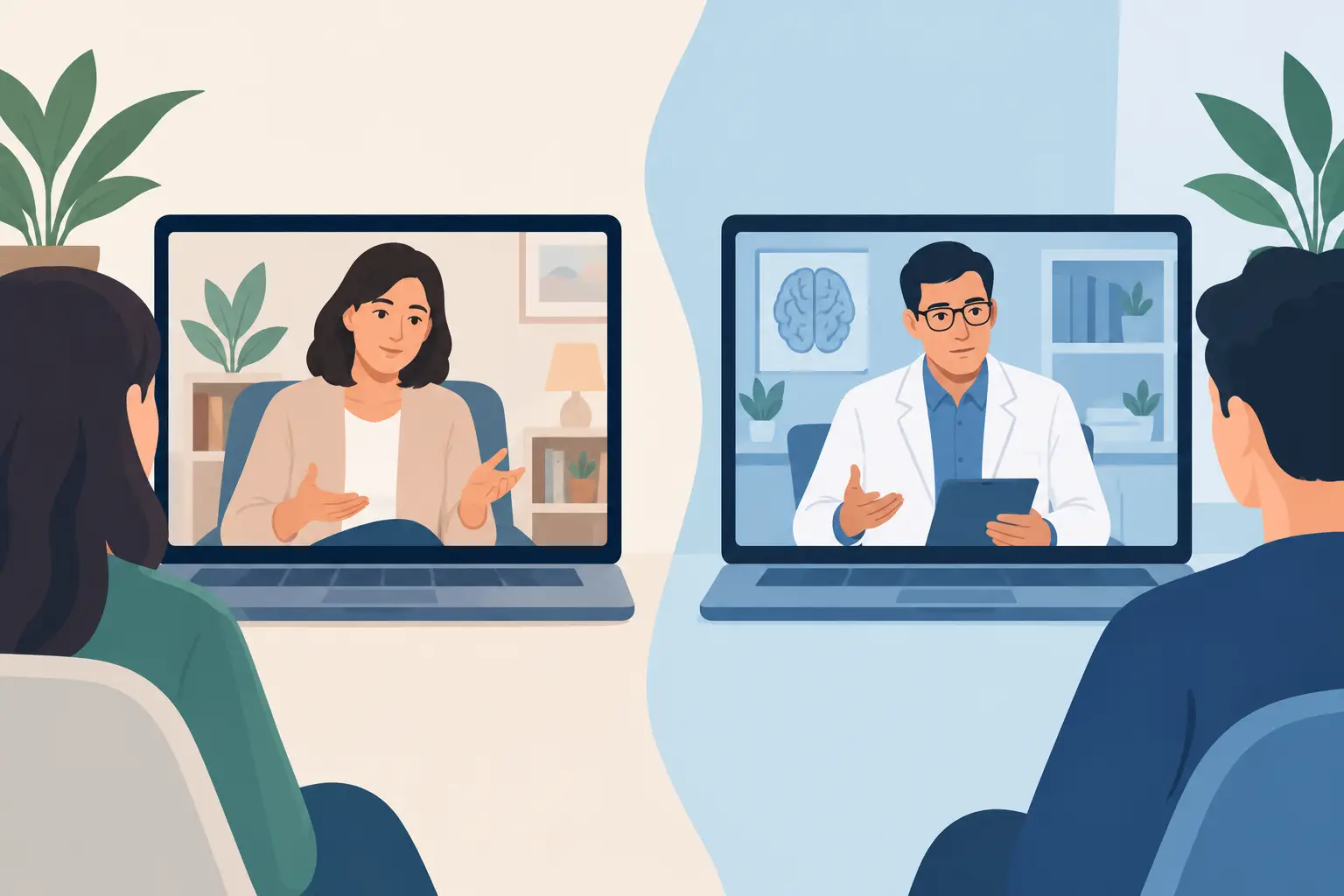
When anxiety starts affecting your sleep, work, relationships, or ability to feel like yourself, deciding where to turn can feel like one more overwhelming task. Understanding online counseling versus psychiatry services can make that next step clearer and help you choose support that fits what you are experiencing right now.
Both options can be delivered privately online, often without the scheduling barriers of traditional office visits. But they serve different roles. Counseling focuses on talking through emotions, patterns, relationships, and life stressors. Psychiatry focuses on medical assessment and, when appropriate, medication management for mental health conditions.
You do not have to know the perfect answer before asking for help. The right type of care depends on your symptoms, goals, health history, and how much those symptoms are interfering with daily life.
Table of Contents
Online counseling versus psychiatry services: the key difference
Online counseling is talk-based mental health support with a licensed therapist, counselor, psychologist, or social worker. Sessions can help you understand what is driving your stress, build practical coping skills, process difficult experiences, and make changes that support your emotional well-being.
A counselor may help if you are feeling stuck after a breakup, overwhelmed by caregiving, stressed by work, grieving a loss, or caught in a cycle of worry. Therapy can also be a meaningful part of care for anxiety, depression, trauma-related concerns, and relationship difficulties.
Psychiatry services are provided by medical professionals trained to diagnose and treat mental health conditions. Psychiatrists and psychiatric nurse practitioners can evaluate symptoms through a medical lens, consider whether medication may be helpful, prescribe when clinically appropriate, and monitor how treatment is working over time.
The distinction matters, but it is not a competition. Many people benefit from both therapy and psychiatric care. Medication may help reduce symptoms enough that therapy skills become easier to use. Therapy can help you create lasting strategies while medication addresses symptoms such as persistent low mood, intense anxiety, panic, or disrupted sleep.
When online counseling may be the better starting point
Counseling can be a strong first step when you want space to talk, reflect, and learn tools for handling a specific challenge or recurring pattern. You might be functioning day to day but feel emotionally drained, irritable, disconnected, or unable to stop replaying stressful situations.
It may also fit when your main goal is personal growth rather than medication. For example, you may want help setting boundaries, managing conflict, rebuilding confidence, navigating parenthood, or adjusting after a major life change. A therapist can offer structure and perspective without treating your experience as something you need to simply “get over.”
Virtual counseling is especially useful for people who need care to work around real life. Busy professionals may have limited time between meetings. Parents may not have childcare for an in-person appointment. Others want privacy and would rather meet from home than sit in a waiting room.
Elevate Your Health for Just $29.99/Month
Join the Precision Wellness Subscription at My Healing 365 and get discounted services, priority coaching access, virtual care, and exclusive wellness resources to support your physical, emotional, and hormonal health.
Join for $29.99/MonthStill, counseling is not always the only support you need. If symptoms feel severe, are lasting for weeks, or make it hard to work, sleep, eat, or care for yourself, a psychiatric evaluation may add important medical guidance.
When psychiatry services may make more sense
Psychiatry can be appropriate when symptoms are persistent, intense, or creating a major disruption in your life. This can include ongoing depression, frequent panic attacks, anxiety that does not ease with self-care, severe insomnia, or mood symptoms that keep returning.
A psychiatric provider looks at the full picture. They may ask about symptom timing, past treatments, current medications, physical health, family history, substance use, sleep, and major stressors. The goal is not to rush you into a prescription. It is to understand what may be contributing to how you feel and discuss evidence-based options.
If medication is part of your plan, care should include follow-up. Finding the right treatment can take time, and medication effects, side effects, and symptom changes need thoughtful monitoring. Online psychiatric services can make that follow-up more convenient by allowing you to connect with a licensed provider from a private location.
Medication is not a sign that you have failed or that your concerns are not valid. For some people, it is one helpful tool among several. For others, therapy, lifestyle changes, or support through a difficult season may be the better fit. Your plan should be individualized, not one-size-fits-all.
What online mental health care can make easier
For many adults, the hardest part of getting help is not recognizing they need it. It is finding time, managing the cost, getting to an office, or feeling comfortable enough to start. Telehealth can remove some of that friction.
With online care, you can often complete an assessment from home, communicate with a provider digitally, and follow a treatment plan without rearranging your whole week. That may be especially valuable if you live far from a specialist, travel often, have mobility limitations, or simply prefer a more discreet experience.
Convenience should not mean less care. Look for services that use licensed providers, protect your health information, clearly explain the treatment process, and make it easy to ask questions. You should understand what type of provider you are seeing, what they can treat, how follow-up works, and what to do if your needs change.
At My Healing 365, mental health care is designed to make that first step feel more manageable, with online access to licensed providers, individualized treatment plans, and ongoing messaging support. For eligible patients, treatment may include clinically appropriate medication and guidance for concerns such as anxiety, depression, sleep disruption, and emotional distress connected to major life events.
How to decide what you need right now
Start with the problem you most want help solving. If you are looking for support to process feelings, manage stress, change unhelpful patterns, or work through a difficult experience, counseling may be the most natural fit. If you want a clinical evaluation for persistent symptoms or want to discuss whether medication could help, psychiatric care may be more appropriate.
It is also reasonable to begin with one and add the other later. You may start therapy and realize that ongoing insomnia or anxiety is making progress difficult. Or you may start medication management and decide that talking with a therapist would help you address the stressors behind your symptoms.
A few questions can help guide the decision:
- Are my symptoms mild to moderate, or are they significantly affecting sleep, work, relationships, or daily tasks?
- Do I want to focus on coping skills and emotional support, medication options, or both?
- Have I tried therapy, medication, or other approaches before? What helped and what did not?
- Can I commit to regular appointments or follow-up, whether that is through video visits, messaging, or both?
There is no prize for handling a mental health concern alone. The goal is to choose care that feels accessible enough to begin and supportive enough to continue.
When to seek urgent help
Online counseling and psychiatry can support many common mental health concerns, but they are not a substitute for emergency care. If you are thinking about harming yourself or someone else, feel unable to stay safe, are experiencing severe confusion, or are in immediate danger, call 911 or 988 in the United States, go to the nearest emergency room, or contact a trusted person who can stay with you.
For non-emergency concerns, reaching out early can prevent symptoms from becoming more disruptive. You deserve care that takes your experience seriously, whether you need someone to talk to, a medical evaluation, or a plan that includes both. A private online assessment can be a practical place to start, one step at a time.

























