

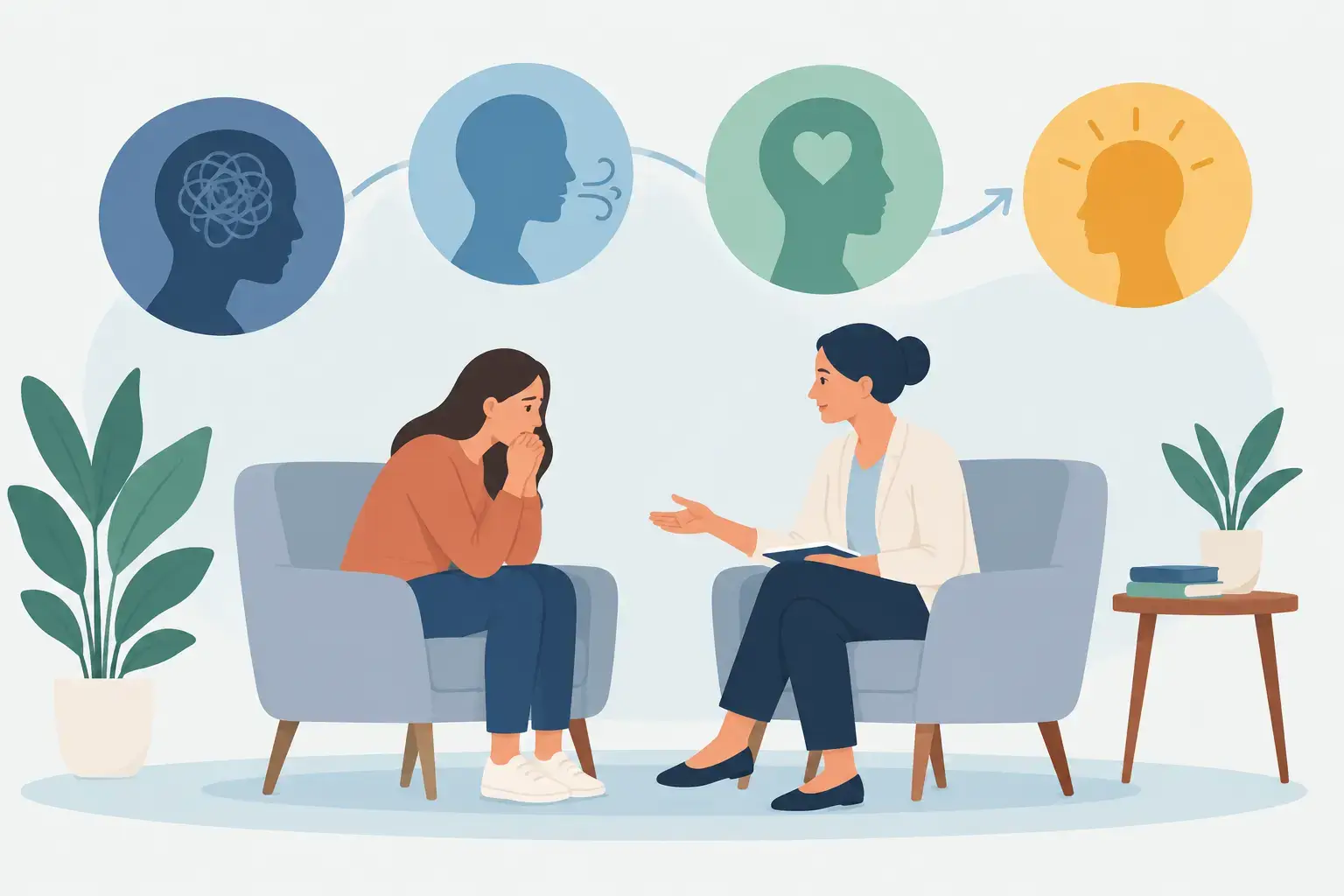
A panic attack can make a normal moment feel dangerous in seconds. Your heart may race, your chest may tighten, and you may feel dizzy, detached, or certain that something is terribly wrong. The panic attack treatment process is designed to help you understand those symptoms, rule out urgent concerns, and build a practical plan for feeling safer and more in control.
You do not have to wait until panic disrupts every part of your life to ask for support. Treatment can be helpful after a first frightening episode, when attacks become recurrent, or when you start avoiding places and situations because you fear another one.
Table of Contents
The Panic Attack Treatment Process, Step by Step
Care usually begins with a conversation about what you have been experiencing. A licensed provider will ask when your symptoms started, how often attacks happen, what they feel like in your body, and whether you have noticed patterns around stress, sleep, caffeine, alcohol, medications, or major life changes.
This assessment is not about judging your response to stress. Panic attacks are real physical experiences, even when anxiety is the trigger. A provider also reviews your health history because symptoms such as chest pain, shortness of breath, palpitations, and dizziness can have medical causes that need different care.
Start with safety and a clear diagnosis
Panic attacks can occur on their own or alongside panic disorder, generalized anxiety, depression, trauma-related symptoms, sleep problems, or substance use. The distinction matters because a treatment plan should address the full picture, not just the most alarming 10 minutes of your day.
Your provider may recommend an in-person medical evaluation, lab work, or urgent care if your symptoms could point to a heart, thyroid, respiratory, or other physical condition. Telehealth can make mental health support more accessible, but it does not replace emergency care or hands-on medical testing when those are needed.
Build a plan around your symptoms and goals
The next step is a personalized plan. For some people, that starts with learning what panic is and practicing skills to lower the intensity of an attack. For others, ongoing therapy, medication, lifestyle changes, or a combination of approaches may be appropriate.
Your goals should guide the plan. Maybe you want to drive without pulling over, sleep without waking in fear, attend meetings without scanning for exits, or stop avoiding the grocery store. Specific goals make progress easier to recognize, even before panic attacks disappear completely.
What to Do During a Panic Attack
Panic attacks often peak within minutes and then begin to ease, though the experience can feel much longer. In the moment, the goal is not to force yourself to feel calm immediately. It is to give your nervous system steady signals of safety while allowing the wave to pass.
Try slowing your exhale rather than taking big, fast breaths. For example, breathe in gently through your nose and let the exhale last a little longer. Look around and name a few ordinary details you can see, hear, or feel. Press your feet into the floor, hold a cool object, or remind yourself: “This is panic. It is uncomfortable, and it will pass.”
These tools do not work like an off switch. They are more effective when practiced between attacks, when your body is not already on high alert. A provider or therapist can help you find techniques that feel realistic for your routine rather than giving you a long list you will never use.
Treatment Options That May Be Part of Your Plan
Many people benefit from cognitive behavioral therapy, often called CBT. This approach helps you notice the thoughts, body sensations, and behaviors that keep panic going. For example, if a fast heartbeat leads to the thought “I am having a medical emergency,” that fear can increase adrenaline and make the heartbeat feel even more intense. CBT helps interrupt that cycle with more accurate interpretations and new responses.
Exposure-based work may also be used. With professional guidance, you gradually face sensations or situations you have been avoiding, such as a crowded store, an elevator, exercise, or a long drive. This can sound intimidating, but the process is paced carefully. The purpose is to teach your brain that discomfort is not the same as danger.
Medication may be an option when symptoms are frequent, severe, or making it hard to engage in therapy and daily life. Certain daily medications can reduce anxiety and lower the frequency of panic over time. They often take several weeks to have a full effect. Some fast-acting medications may be considered in limited circumstances, but they are not right for everyone and can carry risks such as sedation, tolerance, or dependence.
There is no single best medication for every person. A licensed provider considers your medical history, other medications, pregnancy status when relevant, past treatment experiences, and personal preferences before recommending anything. If medication is part of your care, follow-up is essential so your provider can monitor side effects, adjust the dose if needed, and make sure the plan is helping.
Daily habits can support treatment, but they should not be framed as a cure-all. Consistent sleep, regular meals, movement, hydration, and reducing stimulants such as caffeine or nicotine can make the nervous system less reactive for some people. If cutting back on coffee suddenly feels impossible, start by noticing whether symptoms are worse after certain amounts or at certain times. Small changes are more likely to last.
How Online Care Can Fit Into Panic Treatment
When panic makes it difficult to leave home, sit in a waiting room, or coordinate another appointment, online mental health care can remove some of the friction. You can discuss your symptoms privately with a licensed provider, receive a treatment-specific plan, and follow up from a place where you feel comfortable.
The best virtual care is not just a one-time questionnaire. Look for clear clinical oversight, secure communication, a way to ask questions between visits, and guidance about what to do if symptoms change. My Healing 365 offers online access to licensed providers and individualized mental health treatment plans, helping eligible adults get support without adding another stressful trip to their schedule.
Online care may be a strong fit for ongoing anxiety and panic support, particularly if you value privacy and flexible communication. It may not be the right setting if you are in immediate danger, experiencing severe physical symptoms, or need urgent in-person assessment. Good care includes knowing which situation you are in.
When Panic Symptoms Need Urgent Help
Do not assume new or severe symptoms are “just anxiety,” especially if you have chest pain, fainting, trouble breathing, weakness on one side of the body, confusion, or symptoms that feel different from past panic attacks. Seek emergency medical care right away for symptoms that could be life-threatening.
If you are thinking about harming yourself, feel unable to stay safe, or are in immediate emotional crisis, call or text 988 in the United States for the Suicide & Crisis Lifeline. If there is immediate danger, call 911 or go to the nearest emergency room.
Panic can make your world feel smaller, one avoided place or one canceled plan at a time. Asking for help is a practical first step toward taking that space back. With the right assessment, consistent support, and a plan you can actually follow, relief can become something you practice and build.