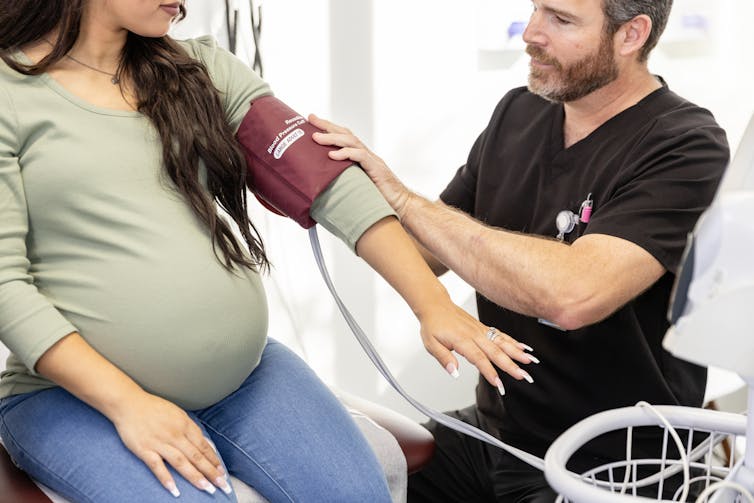
In November 2020, Lupe was in the final weeks of her pregnancy when dark spots began distorting her vision. Lupe, a participant in a study on emotional distress and maternal health in El Paso, Texas, recounted her birth experience in a postpartum interview. (All participant names, Lupe’s included, are pseudonyms used to protect privacy.)
Feeling like something was not quite right, Lupe decided to go to the emergency room. Her blood pressure registered 167 over 98, a sharp contrast to her ideal reading of 115 over 70 documented in her medical chart at her first prenatal visit. Lupe was quickly diagnosed with preeclampsia, a serious pregnancy complication that can cause high blood pressure and organ damage.
Timely medical support prevented Lupe’s symptoms from worsening. In the absence of timely intervention, preeclampsia symptoms can rapidly escalate, with brain hemorrhages, cardiac events, organ damage and seizures. Preeclampsia is a leading cause of maternal death worldwide.
We are a medical anthropologist and a human biologist based in El Paso, where we study the social factors that contribute to preeclampsia.
During the first two years of the COVID-19 pandemic, we documented a nearly 25% prevalence rate of preeclampsia among a sample of 176 Latinas who used publicly funded prenatal care in El Paso. For comparison, the national prevalence rate was around 8% in 2021.
El Paso and Juarez, Mexico, form one of the largest binational metropolitan communities in the world. Of the nearly 700,000 residents of El Paso, over 80% identify as Latino. Historically, the city has had a high poverty rate, with 35% of households reporting food insecurity in 2023.
We see El Paso as a key place for understanding how social inequities lead to a biological risk for preeclampsia.
Table of Contents
Why does preeclampsia occur?
Preeclampsia has complex origins. It likely occurs in some pregnant people due to irregularities in how the placenta attaches to the uterine wall. Yet, only some pregnant people with these irregularities will go on to develop preeclampsia. Researchers believe a combination of environmental, social and individual factors play a role in the progression of the condition.
One complication of preeclampsia is eclampsia, or seizures likely caused by damage to the vascular system that affect the brain. Even in the absence of seizures, severe damage to organ systems, a stroke and other preeclampsia symptoms can become deadly. Delivery of the baby and placenta typically halt further progression of preeclampsia. Induction of labor and management of symptoms can be lifesaving interventions.
Elevated stress, exposure to environmental toxins, COVID-19 infection during pregnancy and extreme heat are among the factors that have the potential to unleash a chain of physiological responses that can lead to preeclampsia.
While an estimated 4.4% of pregnancies result in preeclampsia globally, the rates are typically higher in low- and middle-income countries compared to wealthier nations. Sub-Saharan Africa has the highest regional prevalence rate, at 13%.
In the U.S., the preeclampsia rate rose from 4.5% in 2008 to 8% in 2021, during the height of the COVID-19 pandemic. But racial and ethnic minorities in the U.S. experience higher prevalence rates.

SDI Productions/E+ via Getty Images
El Paso is a window into a broader problem
Our team is focused on understanding the social factors that contribute to the disproportionately high preeclampsia risk in the El Paso area, and also on what lessons this offers for understanding maternal health among other socially disadvantaged populations.
In El Paso, a variety of social and environmental conditions converge that are likely contributing to the high preeclampsia prevalence rate that we documented.
Some of the factors that put people at higher risk of preeclampsia include socioeconomic insecurity, past exposure to stressful and traumatic life events, severe mental health symptoms, and racism and discrimination. These stressors may activate physiological responses that play a role in the progression of the condition.
Notably, we did our research in the aftermath of the 2019 racially motivated mass shooting in El Paso, a time when immigration was becoming more politically polarizing. It also overlapped with the region’s disproportionate burden of the overlapping economic, social and public health crises created by the COVID-19 pandemic.
The women who participated in our research qualified for publicly funded prenatal care and reported significant economic and social challenges during a period of intense insecurity. Many had transnational family ties, immigrant family members or both. Some 21% of participants reported having an immediate family member who had been deported or detained by immigration officials.
Our research participants are not necessarily representative of El Paso as a whole, since we limited our study to women with an income low enough to qualify for public benefits. We also recruited participants from the prenatal clinic serving the county public hospital, which is heavily utilized by immigrants.
Therefore, the prevalence rate of preeclampsia was likely higher in our sample than we would have found in a broader cross section across the region. However, our findings demonstrate the risks faced by populations that are experiencing multiple, compounded hardships.

Jeremy Poland/E+ via Getty Images
The physiological toll of emotional distress
In our interviews, women who developed preeclampsia often emphasized how their emotions contributed to their pregnancy complications. Immigration-related concerns and the pandemic were central to their experiences of emotional distress.
Brisa, an undocumented immigrant from rural Mexico, spent most of her pregnancy living in view of the U.S.-Mexico border wall. Her neighborhood had a constant presence of Border Patrol vehicles and helicopters. She described a pregnancy plagued by anguish stemming from her immigration status and the economic concerns resulting from her loss of steady work during the pandemic.
While still pregnant, Brisa described the swelling in her hands and feet as a result of her emotional state. Speaking in Spanish, she said, “If I go outside, I feel that despair. It’s like this worry and an anxiety. I feel this despair in my hands and feet.” Swelling is also a common symptom of preeclampsia, which she later developed.
Janeth, a U.S.-born citizen who had undocumented family members, developed preeclampsia that was further complicated by gestational diabetes. She attributed these complications to her mental health during the pregnancy. Research shows a potential link between mental health status and gestational diabetes risk.
Janeth explained, “I did get very, very depressed during the pregnancy. My husband became unemployed and it was just a very stressful pregnancy. I was having suicidal thoughts.”
Janeth’s stress came from economic concerns and isolation caused by the pandemic. She felt like she could not rely on other family members for economic support, since they were undocumented and therefore had not qualified for the pandemic stimulus checks. She was also battling a lingering sadness over the recent deportation of three family members after their asylum claims were denied.
The social roots of preeclampsia risk
The medical establishment historically focuses on individual risk factors for preeclampsia. For example, the World Health Organization’s list of risk factors includes first-time pregnancy, obesity and preexisting conditions.
Elevate Your Health for Just $29.99/Month
Join the Precision Wellness Subscription at My Healing 365 and get discounted services, priority coaching access, virtual care, and exclusive wellness resources to support your physical, emotional, and hormonal health.
Join for $29.99/MonthBut a focus on individuals tells only part of the story of preeclampsia.
Brisa’s, Janeth’s and Lupe’s accounts offer a more complex story about this condition.
Like many of the women we interviewed, they saw their social worlds as producing emotional states that contributed to their bodily ills. What researchers like us know about the physiology of preeclampsia offers evidence to support this connection between their social experiences and health outcomes.
Preeclampsia rates are rising most significantly in contexts with the greatest social, political and economic insecurities. These factors will almost certainly put more and more people in socially marginalized communities at risk for adverse maternal health outcomes.
Research like ours identifies opportunities for healthcare and policy interventions to improve outcomes for communities facing the greatest risk.

























