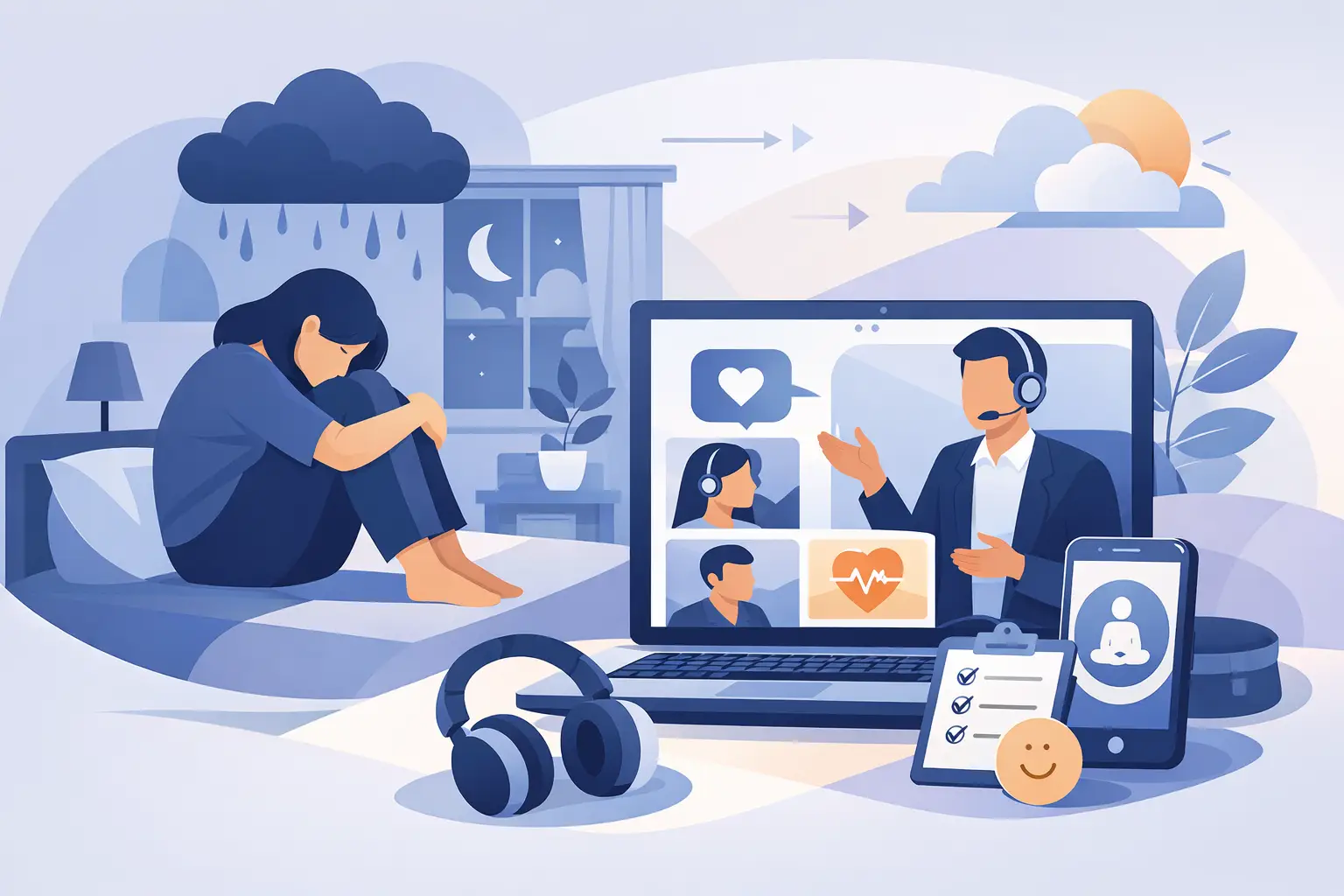
Depression can make even a simple appointment feel like too much. When getting dressed, commuting, sitting in a waiting room, or finding child care becomes another barrier, online treatment may offer a more manageable first step. This review of virtual depression treatment programs explains what these services can provide, where they differ, and how to choose care that feels safe, practical, and right for you.
Virtual care is not a shortcut around real treatment. The best programs connect you with licensed professionals, use secure communication, and create a plan based on your symptoms, health history, goals, and response over time. But programs are not interchangeable. The details matter, especially when you are trusting someone with your mental health.
Table of Contents
What virtual depression treatment programs typically offer
Most programs begin with an online intake. You may answer questions about low mood, loss of interest, sleep changes, concentration, energy, appetite, anxiety, and past treatment. A licensed provider then reviews your information, often through a video visit or secure online evaluation.
Depending on the service and your clinical needs, treatment may include therapy, medication evaluation and management, structured education, ongoing symptom check-ins, or a combination of these options. Some programs are therapy-first. Others focus primarily on medication management. A few offer both, though the exact availability can vary by state and provider.
For many adults, the convenience is the main advantage. You can seek support privately from home, communicate from your phone, and avoid the weeks-long wait that often comes with traditional care. That does not mean every concern can or should be handled virtually. Severe symptoms, urgent safety concerns, complicated medical histories, or a need for intensive therapy may call for in-person or higher-level care.
A review of virtual depression treatment programs: what to compare
A polished website and a low introductory price can be appealing, but they are not the whole story. Look closely at how a program delivers care after you enroll.
Licensed provider access
Start with who is providing treatment. A credible program clearly explains that care is delivered by licensed clinicians and identifies the types of professionals on its team. Depending on the service, that may include psychiatrists, psychiatric mental health nurse practitioners, physicians, therapists, or counselors.
Elevate Your Health for Just $29.99/Month
Join the Precision Wellness Subscription at My Healing 365 and get discounted services, priority coaching access, virtual care, and exclusive wellness resources to support your physical, emotional, and hormonal health.
Join for $29.99/MonthYou should also know whether you can communicate with the same provider over time. Continuity matters. Depression treatment often involves adjusting a plan gradually, and it is easier to discuss subtle changes when your provider understands your baseline, preferences, and past concerns.
Treatment approach and medication options
Depression is not one-size-fits-all, and neither is treatment. Some people want therapy and coping tools. Others may want to discuss whether medication is appropriate. Many benefit from both. A quality virtual program should not promise that one medication, supplement, or protocol will work for everyone.
If medication is part of the service, check how the evaluation works, what follow-up is included, and whether the provider can adjust treatment when needed. Medication decisions should account for current symptoms, other prescriptions, medical conditions, pregnancy considerations when relevant, and possible side effects. Evidence-based care includes ongoing monitoring, not just a prescription after a brief questionnaire.
Communication between visits
The difference between a frustrating telehealth experience and a supportive one often comes down to what happens after the initial appointment. Can you message your care team with a question? How quickly can you expect a response? Is messaging included, limited, or billed separately?
For someone dealing with depression, a simple way to ask, “Is this side effect expected?” or “My mood has changed this week” can reduce uncertainty. My Healing 365 is designed around this kind of lower-friction support, with individualized plans and unlimited provider messaging as part of its mental health care model. Still, messaging is not the same as 24/7 crisis care, and a responsible program should say that clearly.
Privacy and practical fit
Discretion is a valid reason to choose online care. Before enrolling, confirm that the platform uses secure communication and has a clear privacy policy. You should feel comfortable asking where your records are stored, who can access them, and how messages and video visits are protected.
Practical fit matters, too. Consider the appointment hours, video requirements, pharmacy process, state availability, and whether the platform works well on the device you actually use. A program can have excellent clinicians but still be a poor fit if appointments are only available during your workday or if its process feels confusing.
Cost beyond the first month
Affordable access is meaningful, particularly when depression care may be ongoing. But compare the full cost, not only the starting price. Ask what the monthly fee includes, whether appointments cost extra, whether medications are included or separate, and whether there are cancellation requirements.
A lower price may make sense if you need straightforward medication follow-up and prefer digital communication. A more comprehensive plan may be worth it if it includes frequent clinician access, therapy, or extra support. The best value is care you can realistically continue, not simply the lowest number advertised.
When online treatment can be a strong fit
Virtual treatment can work especially well for adults with mild to moderate depression who want a private, structured way to begin care. It may be a practical option if you have a demanding job, family responsibilities, limited transportation, or difficulty finding a local provider with timely openings.
It can also help when taking the first step feels emotionally difficult. Logging in from a familiar space may make it easier to be honest about symptoms you have been minimizing. That said, virtual care still requires participation. You may need to complete an intake, attend follow-ups, track changes, and speak up if your plan is not helping.
Online programs are often most effective when they make care feel easier to maintain, not when they ask you to manage everything alone. Look for clear guidance on what happens next, how to contact your provider, and when to schedule a follow-up.
When virtual care may not be enough on its own
Telehealth is valuable, but it has limits. If you are having thoughts of harming yourself, feel unable to stay safe, are experiencing hallucinations or severe confusion, or cannot manage daily needs, seek immediate help rather than waiting for an online appointment. In the United States, call or text 988 for the Suicide & Crisis Lifeline, call 911, or go to the nearest emergency room.
You may also prefer in-person care if you need intensive therapy, a higher level of support, detailed medical testing, or simply feel more comfortable meeting face-to-face. Choosing in-person care is not a failure of telehealth. It is about matching the level and format of treatment to what you need right now.
Questions to ask before you enroll
Before choosing a program, ask whether it serves your state, who will oversee your care, and what treatment options are available for your symptoms. Find out how follow-up works, how quickly messages are answered, what the total monthly cost may be, and what the program recommends if your symptoms worsen.
It is also reasonable to ask whether you can change providers if the relationship does not feel like a fit. Feeling heard is not a luxury in depression treatment. It can affect whether you continue care long enough to see progress.
Starting treatment does not require having the perfect words for what you feel. If your days have become heavier, your sleep is off, or you no longer feel like yourself, a licensed provider can help you sort through what is happening and discuss next steps. You do not have to go through it alone.

























