

The latest episode of Saturday Night Live (SNL) featured a viral comedy sketch in which a series of men confidently explain that their sisters will shoulder the burden of caring for their aging parents.
The sketch is funny because it’s so familiar. In just three minutes of satire, it captures a reality many women know all too well: when parents need care, daughters are often expected to step in while sons step aside.
Social media reactions were swift. Responses ranged from “I am sister” to comments on social media calling on men to start doing their fair share.
Beneath the humour lies an uncomfortable truth about who provides care and the growing pressures facing families as the population ages. The SNL sketch resonates because it reflects a private family reality that has become a public policy issue.
Table of Contents
The burden on women
Globally, the International Labour Organization estimates 708 million women are unable to join the labour force because of unpaid care responsibilities.
According to the United Nations, women around the world do 16 billion hours of unpaid care work every day. Cleaning, cooking and looking after the elderly are among the essential daily tasks predominantly performed by women and girls.
In Canada, data show that women continue to shoulder most unpaid caregiving responsibilities. Men accounted for only 20 per cent of caregiving in the early 2000s, rising to 42 per cent by 2018. This progress is worth celebrating.
As is the case globally, the Statistics Canada report also showed the intensity and type of the unpaid care remains highly gendered. Women are more likely to provide personal care, including bathing, dressing, feeding and toileting, while men are more likely to undertake home maintenance and outdoor work. Women also spend more time caregiving, averaging 10 hours a week compared with six hours for men.
And this is happening at a time when several demographic forces are coming to a head.
Globally, fertility rates are falling. More women are participating in the labour force around the world than ever before. Canada, for example, is experiencing its highest-ever rate of women aged 25-54 in the workforce, at 85 per cent.
Taken together, these trends mean families are getting smaller and women are less available to serve as unpaid caregivers.
Families therefore need to work together to make the division of labour between members more equitable. Women carers need to ask for the supports they need, and men need to step up, recognizing that care tasks, like cooking and medical management, are learned and can be taught.

(Getty Images/Unsplash)
The role of the workplace
But one of the most important places left to make the changes needed is the workplace. My research advocates for more carer-inclusive workplaces and caregiver-friendly employers.
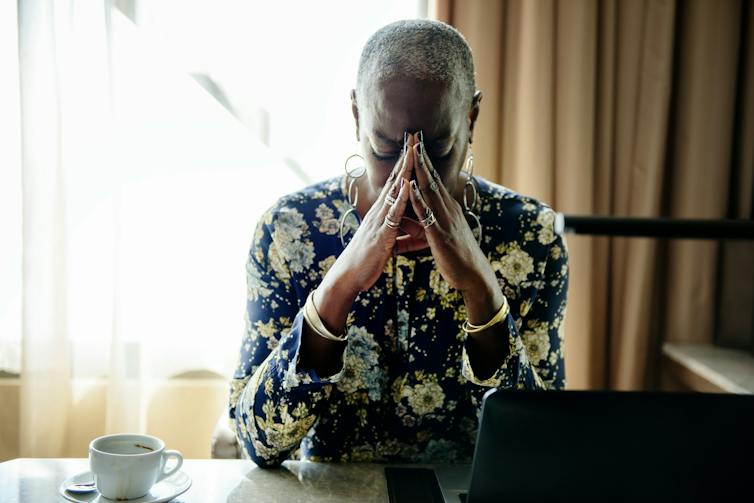
In Canada in 2018, one in 20 employees who were working full-time while also providing unpaid care to an adult left or intended to leave paid employment. Another one in seven worked fewer hours for pay.
The consequences can be significant, particularly for women. Leaving a job or moving from full-time to part-time work can negatively affect health, income, pension, benefits, career progression, social networks and quality of life.
(Unsplash)
Carer-friendly workplaces recognize that many of their employees are also managing unpaid care to an adult. These employers have policies and practices in place to support and accommodate employee-caregivers.
These include flex time, telework, job sharing, paid or unpaid leave, government supports, benefits and caregiver support groups.
Research shows there is a strong business case for these kinds of care-inclusive practices. A report from the American Association of Retired People found that for every dollar invested, employers can expect an average return of between two and four dollars.
There are also increases in productivity, reduced absenteeism, lower presenteeism — when people are showing up to work but not really engaged — as well as improved employee retention and reduced recruitment costs.
Supporting caregivers
In Canada, provincial and jurisdictional supports are more readily available now than ever before, including those from the Ontario Caregivers Organization or the Family Caregivers of British Columbia.
McMaster University in Hamilton, Ont., has partnered with the Canadian Standards Association to build a voluntary Carer-Inclusive and Accommodating Organizations Standard and handbook, “Helping worker-carers in your organization.”
These tools will hopefully encourage workplaces across the country to better support employee-caregivers.
Read more:
Women caregivers need more support to manage their responsibilities and well-being
The SNL sketch resonated because it transformed a familiar family tension into comedy. But for millions of women who are juggling both employment and an increasing unpaid care load, the issue is no laughing matter.
Employers must recognize the ethical imperative and the business case for carer-inclusive workplace policies. This is critical as public health-care systems face increasing pressure, work lives grow busier and the population continues to age.
Otherwise, we risk seeing more women burn out or leave the workforce altogether, undermining progress toward the United Nations Sustainable Development Goal of achieving gender equality.