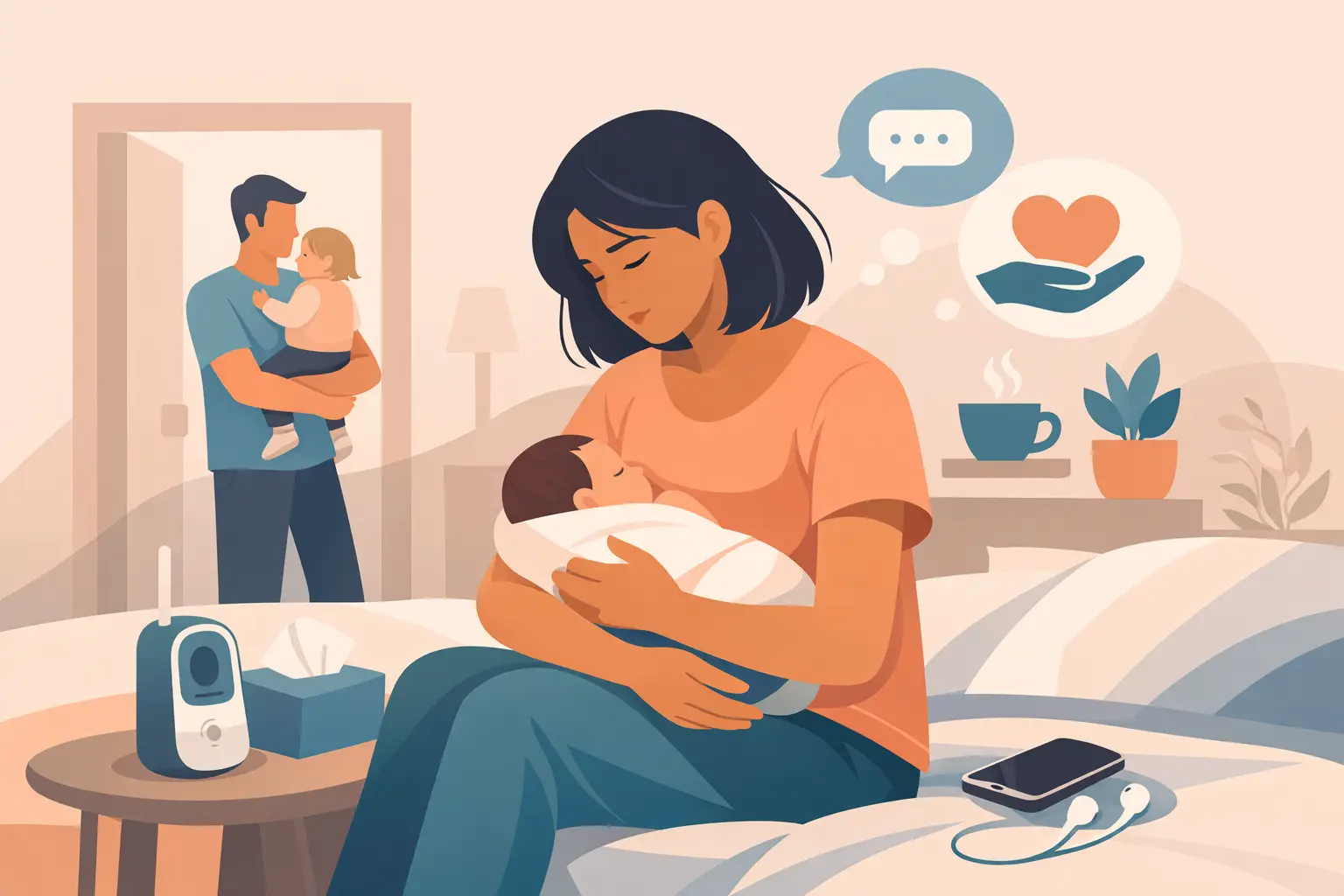
The days after a baby arrives are often described as joyful, but many parents experience something far more complicated: tearfulness that will not lift, racing thoughts at 3 a.m., irritability, numbness, or a fear that they are getting it all wrong. Support for postpartum mood changes can make a meaningful difference, especially when it is private, practical, and available around the demands of feeding schedules, recovery, and very little sleep.
These feelings are not a character flaw or a sign that you do not love your baby. They are health concerns that deserve attention. Reaching out early can help you understand what is happening, feel less alone, and begin a treatment plan that fits your life.
Table of Contents
Postpartum emotions can look different for everyone
A major physical, hormonal, and emotional transition happens after birth. Your body is recovering, your routine has changed, and your responsibility for another person may feel constant. Add sleep disruption, feeding challenges, relationship changes, financial stress, or a difficult birth experience, and it makes sense that your emotional health may need care too.
Many people have the “baby blues” in the first days after delivery. This can include crying more easily, feeling sensitive, or being overwhelmed. These symptoms commonly improve within about two weeks.
When symptoms last longer, become more intense, or interfere with your ability to rest, connect, work, or care for yourself, it may be postpartum depression, postpartum anxiety, or another perinatal mood and anxiety condition. These conditions can begin during pregnancy or in the weeks and months after birth. They can also affect parents who did not give birth, including partners and adoptive parents.
There is no single right way for postpartum mood changes to feel. Depression may show up as sadness, guilt, low energy, loss of interest, or feeling emotionally disconnected. Anxiety may feel like persistent dread, intrusive worries, physical tension, panic, or an inability to stop checking on the baby. Some people feel both at once.
When to seek support for postpartum mood changes
You do not need to wait until things feel unbearable to ask for help. A licensed provider can help you sort through symptoms that feel confusing or hard to explain. Consider reaching out if low mood, worry, anger, hopelessness, or exhaustion are sticking around beyond two weeks or making daily life harder.
It is also worth speaking with a provider if you are avoiding sleep even when you have the chance, having frequent panic symptoms, withdrawing from people you care about, or relying on alcohol or other substances to get through the day. A treatment conversation can be useful even if you are unsure whether what you are feeling is “serious enough.” You deserve care before you reach a breaking point.
Urgent symptoms need immediate attention. If you are thinking about harming yourself or someone else, feel disconnected from reality, hear or see things others do not, feel unusually energized without sleep, or have frightening beliefs that feel impossible to control, call or text 988 in the US for the Suicide & Crisis Lifeline, call 911, or go to the nearest emergency room. Postpartum psychosis is rare but an emergency, and fast in-person care is essential.
Care should fit the reality of new parenthood
Traditional appointments can be difficult when leaving the house feels like a major operation. You may be recovering physically, managing childcare, returning to work, or simply too depleted to coordinate another visit. That does not make mental health treatment less necessary. It makes accessible care more necessary.
Online mental health care can offer a lower-friction place to start. Instead of arranging transportation, sitting in a waiting room, or delaying care because your calendar is packed, you can connect with a licensed provider from home. For many new parents, the privacy and convenience of virtual care reduce one of the biggest barriers: getting started.
At My Healing 365, licensed providers can evaluate symptoms online and help create an individualized treatment plan. Depending on your needs, that plan may include education, coping strategies, ongoing provider messaging, and clinically appropriate medication. The goal is not to hand you a generic answer. It is to understand your symptoms, health history, daily responsibilities, and preferences.
Medication may be a helpful part of treatment for some people, while others may benefit most from therapy, stronger practical support, changes to sleep routines when possible, or a combination of approaches. If you are breastfeeding or pumping, tell your provider. They can discuss the potential benefits and risks of treatment options in the context of your individual situation. Avoid stopping or starting prescribed medication without clinical guidance.
Small supports can ease the pressure between appointments
Clinical treatment matters, but so does reducing the load you are carrying every day. You do not have to create a perfect wellness routine while caring for a newborn. Start with the supports that are realistic and specific.
Ask for help in a concrete way. “Can you hold the baby for 30 minutes so I can sleep?” is often easier for others to respond to than “I need help.” If someone offers to bring food, do laundry, handle a school pickup, or sit with you during an appointment, accepting that help is not failure. It is part of protecting your health.
Try to make rest a shared priority, even if uninterrupted sleep is not possible. A partner, family member, or trusted friend may be able to take one feeding, cover an early morning shift, or give you time to lie down without listening for every sound. Sleep loss alone can intensify anxiety, sadness, and irritability.
It can also help to name what you are feeling to one safe person. You do not need a polished explanation. A simple sentence such as, “I am not feeling like myself, and I think I need support,” can open the door to practical help and accountability.
What an online treatment plan may include
The right plan depends on symptom severity, your medical history, whether you are pregnant or breastfeeding, and what support you have at home. A thorough provider will ask about mood, anxiety, sleep, past mental health care, current medications, physical recovery, and safety concerns. Honest answers help them recommend care that makes sense for you.
For mild symptoms, a provider may recommend close monitoring, structured coping tools, therapy, and changes that protect rest and reduce isolation. For moderate or more persistent symptoms, medication and therapy may be considered together. Medication is not a shortcut or a personal failure. For the right person, it can reduce symptoms enough to make sleep, connection, therapy, and daily functioning more possible.
Elevate Your Health for Just $29.99/Month
Join the Precision Wellness Subscription at My Healing 365 and get discounted services, priority coaching access, virtual care, and exclusive wellness resources to support your physical, emotional, and hormonal health.
Join for $29.99/MonthA good telehealth experience also includes follow-up. Mood changes can shift quickly during the postpartum period, and treatment sometimes needs adjustment. Ongoing messaging with a provider can make it easier to ask questions, report side effects, or share that a plan is not working as expected without waiting weeks for another appointment.
You do not have to prove that you are struggling
Many parents minimize their symptoms because someone else seems to have it harder, because they are grateful for their baby, or because they worry they will be judged. Gratitude and depression can exist at the same time. Loving your child and needing mental health support can both be true.
Getting care is an act of care for you and your family. A calmer, more supported version of you is not something you have to earn by pushing through. It can begin with one honest conversation and a plan that respects the life you are actually living.

























