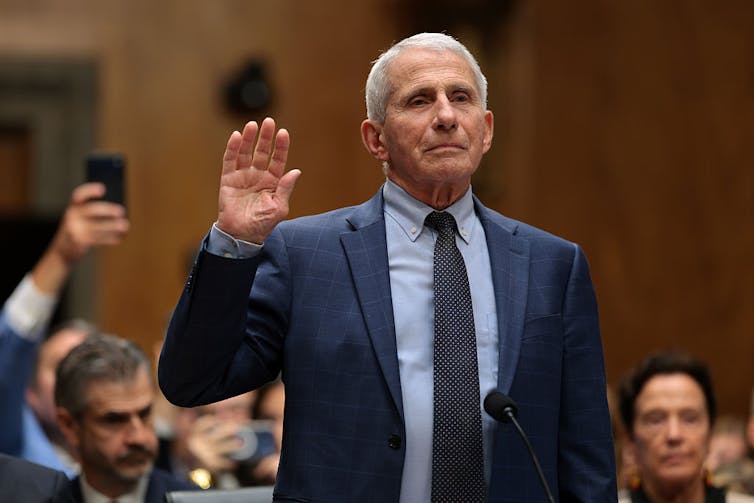
Following an appearance on The Pat McAfee Show on Aug. 3, 2026, Aaron Rodgers, quarterback for the Pittsburgh Steelers, received attention for calling Dr. Anthony Fauci an “absolute coward” and “criminal.” Rodgers’ comments were in response to Fauci invoking his Fifth Amendment rights at a congressional hearing on pandemic-era policies and the origins of COVID-19.
Fauci exercised his Fifth Amendment right against self-incrimination more than 100 times, rather than answer questions about his role in the government’s pandemic response. The invocation came amid years of congressional investigations and hearings scrutinizing his handling of the pandemic.
Fauci’s testimony likely didn’t do much to build public trust – invoking the Fifth Amendment dozens of times may have read as evasive even when it’s legally sound, and the format didn’t help either. Congressional hearings and press briefings aren’t, by design, places where people show much of themselves. Rodgers, on the other hand, has spent years doing the opposite – speaking candidly and often, in settings built for exactly that kind of rapport-building.
This isn’t unique to Rodgers. Many public figures – athletes, influencers, podcast hosts – have more regular opportunities to build rapport with audiences than experts do, at a time when Americans express decreased trust in experts overall.
There’s a reason for that decreased trust. Trust research can both help make sense of why someone might pay attention to a football player’s opinion of the former head of The National Institutes of Health. But that research also highlights the limits of opinion surveys that simply ask people how much they trust various groups in society.
These “how much do you trust” questions probe Americans’ overall views of specific groups, like scientists. The issue is that these questions sidestep deeper discussions about what makes people willing to put their trust in others.
Many researchers, including me, study the intersection of trust and how scientists engage the public. One thing essential to understanding trust is to separate behaviors from beliefs.
Table of Contents
Trust behaviors vs. trustworthiness beliefs
Trust researchers often treat trust as a type of behavior rather than an overall evaluation about a group. When it comes to healthcare, this might mean looking at how willing people are to follow their doctor’s medical advice. It matters less whether people say they trust doctors on a survey and more how they behave in their daily lives.
Trust behaviors involve making yourself vulnerable to someone else, and such behaviors are everywhere in our lives, once you know to look for them.
People demonstrate trust in automakers, mechanics, government employees who regulate and police roadways, and even other drivers by choosing to drive. People also demonstrate trust in economists, ecologists and epidemiologists, when they consider their advice while making personal or civic decisions.
Defining trust as a type of behavior helps clarify the key question: What beliefs make people more likely to trust?
Understanding what researchers often call trustworthiness beliefs – sometimes called perceptions – can help experts understand where they are falling short, whether in their behaviors or in how they communicate.
Expertise beliefs aren’t enough
Scholars have long known that people don’t just trust scientists because they believe they hold expertise. What people believe about others’ character also matters.

Anna Moneymaker/Getty Images News via Getty Images
While some research focuses on beliefs about expertise and character, other trust frameworks break character into smaller parts.
Benevolence beliefs can be understood as feeling that someone has goodwill toward you and cares about your well-being. Integrity beliefs focus on expectations about honesty and morality.
For example, a scientist might show a real desire to help, but fail to show how they protect their work’s integrity – like by being transparent about a study’s limitations or disclosing potential conflicts of interest. Likewise, an expert might demonstrate integrity without communicating care for the people that their decisions might affect.
Some researchers consider other character attributes too. Two common ones include beliefs about whether someone will listen and share information and whether someone shares your values.
These distinctions matter for experts who want to earn trust because the actions needed to demonstrate one aspect of trustworthiness may not demonstrate other aspects.
For example, experts might put a lot of effort into listening to community needs to demonstrate integrity and openness, but miss opportunities to communicate the underlying benevolent motivations driving their work. A public health department might hold listening sessions before rolling out a new program, but if it doesn’t also explain why it’s investing in that program – what it’s trying to protect people from, and who benefits – residents may come away seeing a checkbox exercise rather than genuine care.
Trust isn’t one-size-fits-all
Another challenge: Trustworthiness beliefs depend heavily on context. This is easy to see with expertise beliefs. The expertise you look for in a mechanic differs from what you look for in a doctor.
Elevate Your Health for Just $29.99/Month
Join the Precision Wellness Subscription at My Healing 365 and get discounted services, priority coaching access, virtual care, and exclusive wellness resources to support your physical, emotional, and hormonal health.
Join for $29.99/MonthTrustworthiness beliefs also aren’t the only thing that shapes whether someone follows expert advice. Behavior change research points to other factors – like whether people believe an action actually benefits them, whether it’s socially accepted among their friends and family, and whether they feel capable of doing it.
In other words, someone might trust Fauci and still not get vaccinated, if they don’t believe the shot benefits them or don’t think they can manage the side effects.
How experts can earn trust
Experts cannot assume that others see them as trustworthy or that people will pay attention to them while ignoring sources who have demonstrated other aspects of trustworthiness.
Experts also cannot assume people will pay close attention to every choice they’re asked to make or the trustworthiness of every information source.

SOPA Images/LightRocket Collection via Getty Images
People may also often rely on the most available information or follow potentially misleading cues like how compelling someone sounds, their appearance or existing beliefs.
Camera-ready influencers who interact regularly with audiences and health gurus who spend substantial time with their clients have many opportunities to shape beliefs about their ability, benevolence and integrity that busy experts cannot easily match.
These examples point to the reality that bona fide experts need to take advantage of every opportunity to demonstrate trustworthiness in engaging ways. This way, trustworthiness beliefs already exist when people make choices and when encountering potential causes for concern like Fauci’s testimony.
I often advise scientists to be more proactive in demonstrating their motivations and how they protect their work’s integrity while avoiding choices that may communicate a lack of concern or shared values.
Read more of our stories about Pittsburgh and Pennsylvania.

























