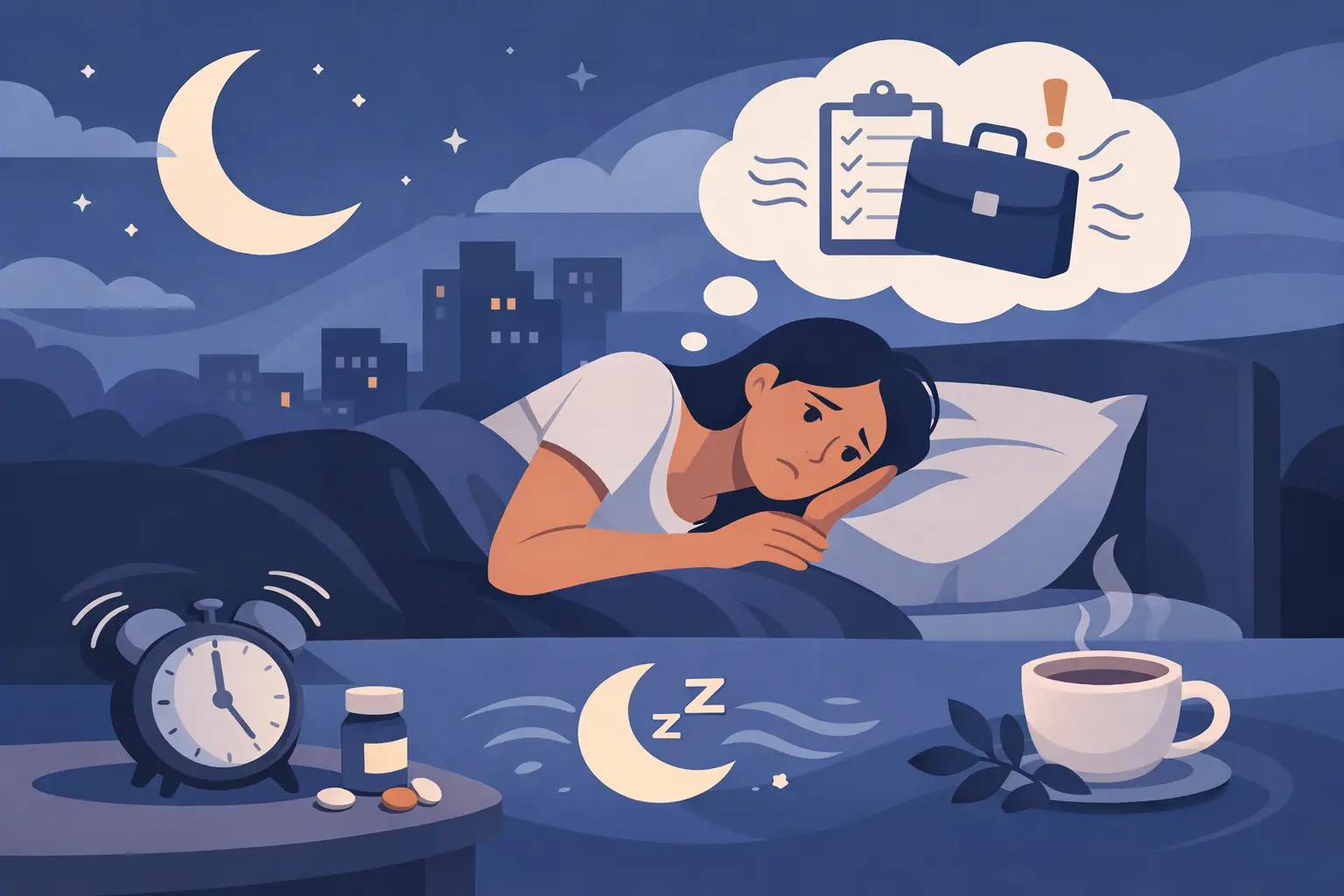
You finally get a quiet moment, turn off the light, and your brain decides it is time to replay the meeting, the bills, the family issue, and every unfinished task. If you are asking what helps sleep problems from stress, the answer is usually not one perfect bedtime trick. It is a combination of calming your body, changing the habits that keep stress active at night, and getting support when sleeplessness starts affecting your daily life.
Stress-related sleep trouble is common, but that does not make it something you have to simply push through. A few difficult nights can leave anyone exhausted. When the pattern continues, lack of sleep can also make anxiety, low mood, irritability, and stress feel harder to manage the next day.
Table of Contents
Why stress keeps you awake
Your body is designed to stay alert when it senses a threat. That response can be useful during a real emergency, but work pressure, caregiving demands, financial uncertainty, grief, relationship strain, and major life changes can keep the same system switched on long after the day is over.
You may notice a racing heart, tense muscles, shallow breathing, or thoughts that will not settle. Some people cannot fall asleep. Others wake at 2 or 3 a.m. and immediately begin worrying. Stress can also lead to habits that offer short-term relief but disrupt sleep later, such as scrolling in bed, drinking alcohol to wind down, or relying on late-day caffeine to get through fatigue.
The goal is not to force sleep. Trying hard to make yourself sleep often adds more pressure. The more helpful approach is to give your mind and body repeated signals that the day is ending and that it is safe to rest.
What helps sleep problems from stress?
Start with a routine that is realistic enough to repeat, including on busy nights. Consistency matters more than making your evening routine elaborate. Choose a rough wake-up time that you can keep most days, then allow your sleep schedule to settle around it. Sleeping very late after a bad night may feel tempting, but it can make it harder to feel sleepy at the right time the following evening.
Create a brief transition between your responsibilities and bed. For some people, that is a warm shower, a few pages of a book, light stretching, or calm music. For others, it is sitting with a cup of caffeine-free tea and writing down tomorrow’s tasks. The activity itself matters less than repeating it often enough that your brain begins to associate it with winding down.
If thoughts are the biggest obstacle, try giving them a place to go before you get into bed. Spend five to ten minutes making a simple list: what is worrying you, what can wait until tomorrow, and one next step you can take. You are not solving every problem at night. You are reminding your mind that it does not need to keep rehearsing the problem until morning.
Slow breathing can help when physical tension is high. Try breathing in gently and making your exhale a little longer than your inhale for a few minutes. You can also do a quick body scan, relaxing your jaw, shoulders, hands, stomach, and legs one area at a time. These practices do not erase stress, but they can lower the level of activation that makes sleep feel out of reach.
Make the bedroom work for sleep
A cool, dark, quiet room supports sleep, but your bedroom does not need to look perfect to be effective. Start with the changes that are available to you: lower the lights in the hour before bed, silence unnecessary notifications, and keep your phone out of reach if checking it pulls you back into work or worry.
Avoid using the bed as your regular place to answer emails, pay bills, or scroll through upsetting news. Over time, your brain can begin to connect the bed with alertness and problem-solving rather than rest. If you have been awake for a while and feel increasingly frustrated, get up and do something quiet in dim light. Return to bed when you feel sleepy again. This can be more useful than lying there and watching the clock.
Watch the stress-sleep disruptors
Caffeine affects people differently, but afternoon coffee, energy drinks, pre-workout supplements, and some teas can still be active at bedtime. Consider moving caffeine earlier in the day and see whether your sleep changes. Nicotine can also be stimulating.
Alcohol may make you drowsy at first, but it often fragments sleep later in the night. If you notice you wake more often after drinking, reducing alcohol in the evening may help. Heavy meals close to bedtime, irregular sleep timing, and intense late-night workouts can be disruptive for some people as well. There is no need to change everything at once. Pick one factor, try it consistently for a week or two, and notice the pattern.
Daytime habits matter too. Exposure to daylight in the morning, regular movement, meals at reasonably consistent times, and brief breaks from screens can help your body recognize the difference between day and night. Even a short walk can reduce some of the restless energy that follows a stressful day.
When stress needs more than sleep tips
Sleep hygiene can support better rest, but it cannot fully address ongoing anxiety, depression, trauma, panic symptoms, or a major life event that is keeping your nervous system on high alert. If you are lying awake because you feel overwhelmed, persistently sad, fearful, or unable to turn off intrusive thoughts, support for the underlying stress can be a meaningful part of improving sleep.
A licensed mental health provider can help you identify what is driving the pattern and create a treatment plan that fits your symptoms and health history. Depending on your needs, that may include therapy strategies, lifestyle guidance, or medication. Medication is not the right answer for everyone, and sleep aids are not always meant for long-term use. A qualified provider can talk through benefits, risks, interactions, and alternatives rather than leaving you to guess.
Online care can be especially helpful when finding time for an in-person appointment feels like one more stressful task. My Healing 365 connects eligible adults with licensed providers through a secure online process, with individualized mental health treatment and ongoing messaging support. You can discuss sleep concerns alongside anxiety, mood changes, or emotional stress instead of treating each symptom in isolation.
Know when to seek care promptly
Reach out to a healthcare professional if sleep problems last more than a few weeks, interfere with work, driving, relationships, or parenting, or leave you relying on alcohol, over-the-counter sleep products, or other substances to cope. It is also worth getting evaluated if you snore loudly, wake up gasping, have unusual movements during sleep, or feel extremely sleepy during the day, since these may point to a sleep condition beyond stress.
Elevate Your Health for Just $29.99/Month
Join the Precision Wellness Subscription at My Healing 365 and get discounted services, priority coaching access, virtual care, and exclusive wellness resources to support your physical, emotional, and hormonal health.
Join for $29.99/MonthSeek urgent help right away if you are having thoughts of harming yourself or feel unable to stay safe. In the United States, call or text 988 for the Suicide & Crisis Lifeline, or call 911 in an emergency.
You do not need to earn rest by finishing every task or resolving every worry before bed. Start with one small change tonight, then give yourself permission to ask for support if stress keeps taking sleep away.