• Twenty47HealthNews
  • Health & Wellness
  • Disclaimer
    • Terms of Use
    • Privacy Policy
    • DMCA Notice
  • Twenty47HealthNews
  • Health & Wellness
  • Disclaimer
    • Terms of Use
    • Privacy Policy
    • DMCA Notice
24/7 Health News
No Result
View All Result
Struggling with energy, weight, or blood sugar?
Get personalized medical & wellness support at My Healing 365.
Book Your Wellness Strategy Session
Home Article

Decades after 9/11, toxic dust and PTSD may be accelerating brain aging among first responders

September 2, 2026
in Article
Decades after 9/11, toxic dust and PTSD may be accelerating brain aging among first responders

Hundreds of first responders have told me they remember exactly how they felt during the World Trade Center attacks, even 25 years on.

They tell me that they remember not being able to think, see or smell anything. They could focus only on digging and pulling debris out of the way. They could not rest because those trapped beneath the rubble could not wait. Death was all around them, and they could only do as much as they could to hold it back.

While what happened on 9/11 was unprecedented, similar tragedies happen quite frequently. As a physician in occupational health who works with 9/11 first responders, I can easily imagine those same thoughts from other firefighters, paramedics and construction workers trying to save lives after the deadly summer 2026 earthquakes in Venezuela, Colombia and Indonesia or the disastrous floods in Nepal.

Elevate Your Health for Just $29.99/Month

Join the Precision Wellness Subscription at My Healing 365 and get discounted services, priority coaching access, virtual care, and exclusive wellness resources to support your physical, emotional, and hormonal health.

Join for $29.99/Month

These first responders may also need to recover human remains from the rubble. Surrounding these moments of intimate grief are dust, toxic fumes and cries for help. And this trauma takes a toll.

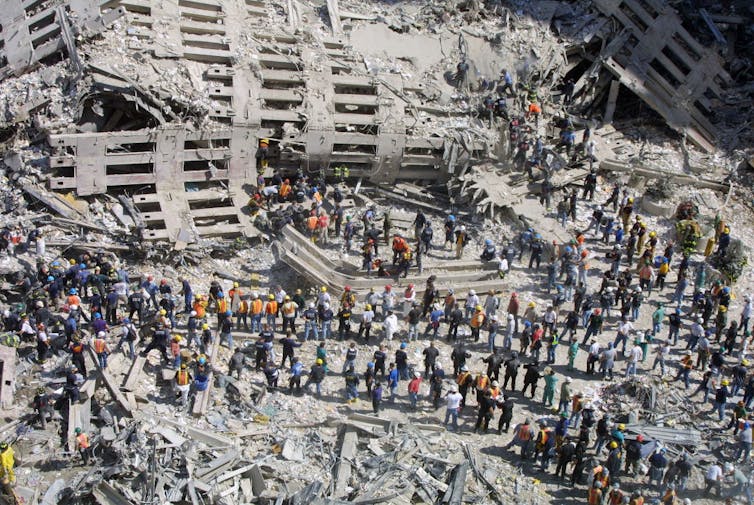
Aerial view of the wreckage of the World Trade Center, crowds of first responders attempting to rescue and recover survivors from the rubble

The destruction of the World Trade Center was unprecedented, but such disasters are not uncommon throughout the world.
Mario Tama/Getty Images

Whether it’s industrial or nuclear disasters, extreme weather, wildfires, volcanic eruptions, war or terrorist attacks, first responders and affected communities can experience significant physical and mental health effects both during rescue and recovery operations and for years afterward. All are vulnerable to mental and physical harm no matter how well trained they may be.

Research from my team suggests that among these risks is post-traumatic stress disorder that may cause their brain to age faster.

Table of Contents

  • PTSD among first responders
  • Trauma speeds brain aging
  • Caring for first responders

PTSD among first responders

Post-traumatic stress disorder, also known as PTSD, is a complex mental health condition that can develop after experiencing or witnessing a traumatic event. Psychological trauma refers to the lasting emotional effects of direct or indirect exposure to life-threatening circumstances or violence.

PTSD may involve intrusive memories, avoidance, heightened alertness, sleep problems and changes in mood and thinking. Anxiety and depression commonly occur alongside PTSD.

Around 23% of World Trade Center responders have been diagnosed with PTSD. In comparison, around 6% of the U.S. general population are estimated to have had PTSD over their lifetime.

When I talk to 9/11 first responders, they describe their PTSD and cognitive difficulties as interconnected problems that continue to affect their lives today. Those traumatic memories remain vivid, and some first responders continue to experience anxiety, depression, intrusive thoughts, sleep problems and difficulty controlling their emotions.

Trauma speeds brain aging

As they age, many 9/11 first responders have also noticed their memory, concentration and mental sharpness get worse. They increasingly fear losing their independence. Rather than occurring as separate conditions, physical illness, cognitive changes and emotional distress often reinforce one another.

In another study, researchers from my team monitored the cognitive function of more than 5,000 World Trade Center first responders without dementia between 2014 and 2022. Over approximately five years, 228 developed dementia before age 65. First responders with the most severe exposure to potentially neurotoxic dust and debris at ground zero had a substantially higher incidence of dementia than those with minimal exposure or who consistently used personal protective equipment such as respirators. This link remained after controlling for demographic, lifestyle, medical and genetic factors.

Before I began studying the health effects of 9/11, I was examining workers exposed to neurotoxic metals and industrial pollution in northern Italy. Knowing the harmful toxins in World Trade Center dust, I began to wonder whether 9/11 responders might face similar long-term risks to their brains. That concern grew when brain scans of both groups showed a similar increase in deposits of a protein linked to Alzheimer’s disease and cognitive decline called beta-amyloid.

Person looking directly at the camera, wearing construction hat adorned with various patches, including one with an etching of the Twin Towers reading 'NEVER FORGET'

Construction worker James Nolan is among the 9/11 first responders sickened by the toxic dust and debris from the World Trade Center.
AP Photo/David Goldman

Research from my team also found that the brains of 9/11 male responders with PTSD had MRI results consistent with older-appearing brains than those without PTSD.

In that 2025 study, we measured the brain structures using MRI scans and an AI model to estimate each participant’s brain age. The AI model had been trained to predict a person’s chronological age from the overall structure of their brain, based on data from more than 11,500 MRI brain scans from healthy people ages 5 to 95. We used the difference between a person’s predicted brain age and their actual age as a measure of accelerated brain aging.

We also saw that first responders with PTSD had brains that appeared about three years older than their chronological age. In contrast, the estimated brain age of responders without PTSD approximately matched their actual chronological age. Each additional month a first responder spent working at ground zero was associated with roughly four to five additional months of apparent brain aging, suggesting that how long they were exposed to the disaster played a key role in this aging process.

Caring for first responders

The experiences of first responders show that the effects of 9/11 are an ongoing health issue. These health consequences evolve as people age, and they still require coordinated mental, cognitive, physical and social support decades later.

Every 9/11 anniversary brings back vivid memories of the tragedy, along with the same restlessness, frustration and pain of being there. Yet many on the front lines have told me that they feel pride and a sense of belonging with the knowledge that they helped people in desperate need. Their service remains an enduring example of human solidarity in a moment of crisis.

Honoring that legacy also means protecting those who come to our rescue during the emergency. I believe that, as a society, Americans have a responsibility to safeguard, protect and care for their health throughout their entire lives. They were there for America in one of its darkest moments; Americans must be there for them in the years to come.


ShareTweetSharePin
Next Post
Review of Virtual Depression Treatment Programs

Review of Virtual Depression Treatment Programs

Most Read

What causes stuttering? A speech pathology researcher explains the science and the misconceptions around this speech disorder

What causes stuttering? A speech pathology researcher explains the science and the misconceptions around this speech disorder

December 15, 2022
3 women stroke prevention

Silent Stroke Symptoms in Women: What You Might Be Overlooking

February 27, 2026
In war-torn Iran, air pollution from burning oil depots and bombed buildings unleashes invisible health threats

In war-torn cities, air pollution from burning oil depots and bombed buildings unleashes invisible health threats

March 25, 2026
morning back pain

Morning Again Ache Trigger Is Not the Mattress

October 11, 2021
Socialising, work, exercise: what makes a good day and is there a ‘formula’ for making it better?

Socialising, work, exercise: what makes a good day and is there a ‘formula’ for making it better?

April 12, 2026

4 steps to building a healthier relationship with your phone

January 28, 2025
lower back pain relief exercises

5 decrease again ache aid workouts

October 11, 2021

Why Circadian Rhythms Matter for Your Health

July 30, 2024
bleeding in gum

When The Bleeding in gum Is Severe ?

October 11, 2021
Good Night Sleep

6 Causes of Good Evening Sleep

October 11, 2021
Nasal vaccines promise to stop the COVID-19 virus before it gets to the lungs – an immunologist explains how they work

Nasal vaccines promise to stop the COVID-19 virus before it gets to the lungs – an immunologist explains how they work

December 14, 2022
3 years after legalization, we have shockingly little information about how it changed cannabis use and health harms

3 years after legalization, we have shockingly little information about how it changed cannabis use and health harms

October 15, 2021
Kick up your heels – ballroom dancing offers benefits to the aging brain and could help stave off dementia

Kick up your heels – ballroom dancing offers benefits to the aging brain and could help stave off dementia

January 3, 2023
Ten small changes you can make today to prevent weight gain

Ten small changes you can make today to prevent weight gain

October 12, 2021
Biden is getting prostate cancer treatment, but that’s not the best choice for all men − a cancer researcher describes how she helped her father decide

Biden is getting prostate cancer treatment, but that’s not the best choice for all men − a cancer researcher describes how she helped her father decide

May 20, 2025

COVID vaccines: how one can pace up rollout in poorer international locations

October 5, 2021

Maximize Your Performance – Sync with Your Circadian Rhythms

August 9, 2024
GLP-1 drugs may fight addiction across every major substance, according to a study of 600,000 people

GLP-1 drugs may fight addiction across every major substance, according to a study of 600,000 people

March 6, 2026
woman covered with white blanket

Exploring the Impact of Sleep Patterns on Mental Health

August 4, 2024

This Simple Hygiene Habit Could Cut Your Risk of Stroke, New Research Reveals

February 1, 2025
Five ways to avoid pain and injury when starting a new exercise regime

Five ways to avoid pain and injury when starting a new exercise regime

December 30, 2022
Support and collaboration with health-care providers can help people make health decisions

Support and collaboration with health-care providers can help people make health decisions

December 16, 2021
Greece to make COVID vaccines mandatory for over-60s, but do vaccine mandates work?

Greece to make COVID vaccines mandatory for over-60s, but do vaccine mandates work?

December 1, 2021

Multiple sclerosis: the link with earlier infection just got stronger – new study

October 12, 2021
Six ways to improve your cat’s one wild and precious life

Six ways to improve your cat’s one wild and precious life

June 6, 2026
GPs don’t give useful weight-loss advice – new study

GPs don’t give useful weight-loss advice – new study

December 16, 2022
Four ways to avoid gaining weight over the festive period – but also why you shouldn’t fret about it too much

Four ways to avoid gaining weight over the festive period – but also why you shouldn’t fret about it too much

December 22, 2022
How regulatory agencies, not the courts, are imposing COVID-19 vaccine mandates

How regulatory agencies, not the courts, are imposing COVID-19 vaccine mandates

October 24, 2021
You’ve reached your weight loss goal on GLP-1 medications – what now?

You’ve reached your weight loss goal on GLP-1 medications – what now?

February 5, 2026
Backlash to transgender health care isn’t new − but the faulty science used to justify it has changed to meet the times

Backlash to transgender health care isn’t new − but the faulty science used to justify it has changed to meet the times

January 30, 2024

Ready to take control of your health?

Get a personalized plan for your weight, energy, hormones, and blood sugar with My Healing 365.

Book Your Session Now – Limited Weekly Spots
  • Twenty47HealthNews
  • Health & Wellness
  • Disclaimer

© 2020 DAILY HEALTH NEWS

  • Twenty47HealthNews
  • Health & Wellness
  • Disclaimer
    • Terms of Use
    • Privacy Policy
    • DMCA Notice

© 2020 DAILY HEALTH NEWS














