Pain in your legs when you walk may seem like a normal part of getting older. But it can be a warning sign that the arteries carrying blood to your legs are becoming blocked: a condition called peripheral artery disease (PAD). If these blockages become severe, blood flow to the leg can suddenly be cut off, causing what is sometimes described as a “heart attack of the leg.”
The PAD burden is also not shared equally. People who smoke and have diabetes have the greatest risk of PAD, and it disproportionately affects those living on lower incomes, those in rural and remote communities, Indigenous Peoples and other under-served populations. That’s because these groups often face greater barriers to preventive care, diagnosis and vascular specialists, which — because of delayed care — results in worse outcomes, like amputation.
As physicians working in vascular medicine, we regularly care for people with PAD and see the consequences when the disease is recognized too late. Together with colleagues affiliated with the Canadian Society of Vascular Medicine and Prevention (CSVMP), we developed the Canadian National Action Plan for Peripheral Artery Disease, a road map for improving how we recognize, diagnose and treat this overlooked disease. The plan focuses on six areas: awareness, earlier diagnosis, better treatment and care pathways, Indigenous-led care, research and advocacy.
(Unsplash+/Zyanya Citlalli)
Table of Contents
PAD is more than a problem with your legs
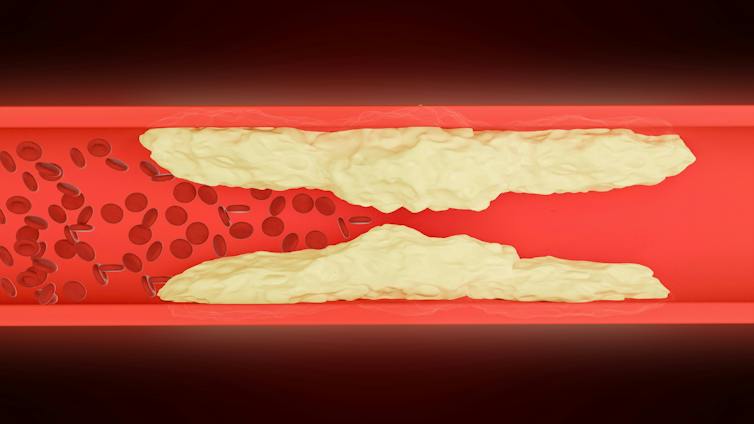
PAD occurs when plaque builds up inside arteries and restricts blood flow, most commonly to the legs. It is part of the same disease process that causes heart attacks and many strokes.
One of its most common symptoms is discomfort, aching, cramping or fatigue in the leg muscles that occurs during walking and improves with rest. This is called claudication. But symptoms are not always typical, and some people have few or no symptoms.
This helps explain why PAD can go unnoticed. People may simply start walking less, avoid stairs and they or their front-line health-care professionals attribute their symptoms to arthritis or aging. The action plan identifies health literacy as an important issue: many patients do not realize PAD is a cardiovascular disease and may interpret their walking difficulties as a normal part of getting older.
That misunderstanding matters because PAD is not simply about leg pain. It is an important warning sign about a person’s overall cardiovascular health.
Why PAD goes undiagnosed
The lack of awareness of PAD extends beyond patients.
Despite its prevalence and clinical importance, PAD receives far less attention than heart disease and stroke. The action plan cites an estimate that Canadian medical students may receive only about 15 minutes of PAD-specific education during their training.
Diagnosis can also be challenging to access.
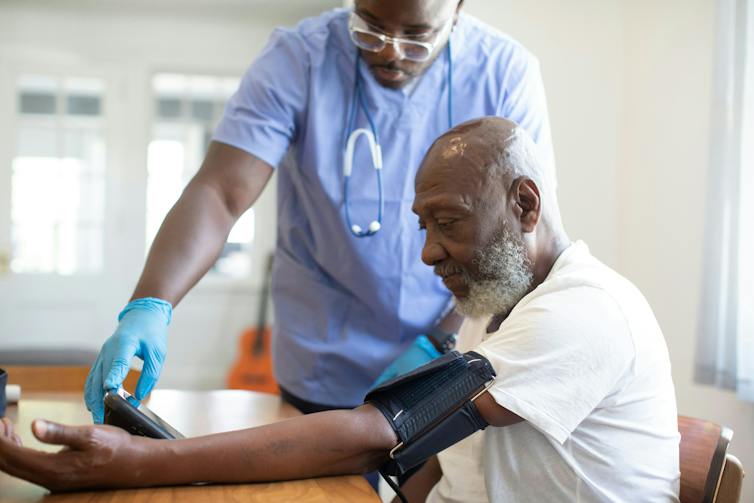
One of the simplest tests for PAD is measuring leg blood pressure using the ankle-brachial index, or ABI. It compares blood pressure measured at the ankle with blood pressure in the arm. A lower pressure in the leg can indicate narrowed arteries.
Yet access to this simple, non-invasive test varies widely across Canada, particularly in primary care. Canadian guidelines recommend ABI testing for appropriate high-risk patients, but its use remains limited.
The result is a disease that can remain undetected until it has progressed. A recent Canadian call to action highlighted that patients may not receive PAD care until late in their disease, when some already have limb-threatening complications.
(Unsplash+/Nappystudio)
Unequal access to diagnosis
Perhaps most concerning are the striking inequities in who develops PAD and who receives timely care.
Lower-income populations, Indigenous communities and people living in rural areas experience a disproportionate burden of PAD. Poverty, food insecurity, reduced access to preventive care, long distances to specialists and other structural barriers can all contribute.
For Indigenous people, these challenges are compounded by systemic inequities and the effects of colonial health systems. The action plan therefore calls for PAD strategies to be co-developed with Indigenous communities and under Indigenous leadership, including training community-health workers and supporting Indigenous-led mobile clinics that can bring screening and care closer to home.
Where someone lives or how much they earn should not determine whether vascular disease is recognized before they lose their mobility, or their limb.
Elevate Your Health for Just $29.99/Month
Join the Precision Wellness Subscription at My Healing 365 and get discounted services, priority coaching access, virtual care, and exclusive wellness resources to support your physical, emotional, and hormonal health.
Join for $29.99/MonthA roadmap for change
The good news is that much of the harm associated with PAD is preventable.
Once PAD is recognized, there are effective ways to reduce cardiovascular and limb complications. These include stopping smoking, controlling blood pressure, cholesterol and diabetes, taking appropriate low-cost medications and participating in regular walking exercise. For some people with more advanced disease, procedures to restore blood flow may also be necessary.
The challenge is getting evidence-based care to the people who need it most.
The Canadian National Action Plan for Peripheral Artery Disease proposes practical changes. These include:
- Increasing public and professional awareness
- Expanding access to ankle-pressure testing
- Bringing screening into rural and remote communities
- Using virtual consultations to connect patients with vascular specialists
- Improving access to supervised exercise programs
- Creating co-ordinated PAD care pathways
The plan also calls for multidisciplinary PAD centres that bring together medical treatment, diagnostic testing, vascular procedures and services supporting exercise, smoking cessation, wound care and other needs, rather than forcing patients to navigate a fragmented system. This builds on previous Canadian calls for PAD centres of excellence and team-based vascular care.
The goals are straightforward: Raise awareness, diagnose PAD earlier, prevent avoidable amputations and hospitalizations, preserve mobility and quality of life and make high-quality vascular care more equitable across Canada.
PAD should not be a disease that’s discovered only after someone develops a non-healing wound, loses a limb or suffers a heart attack or stroke.
Leg pain with walking deserves attention. Recognizing PAD earlier provides an opportunity not only to protect a person’s legs and mobility, but also to protect their heart, brain and life.

























