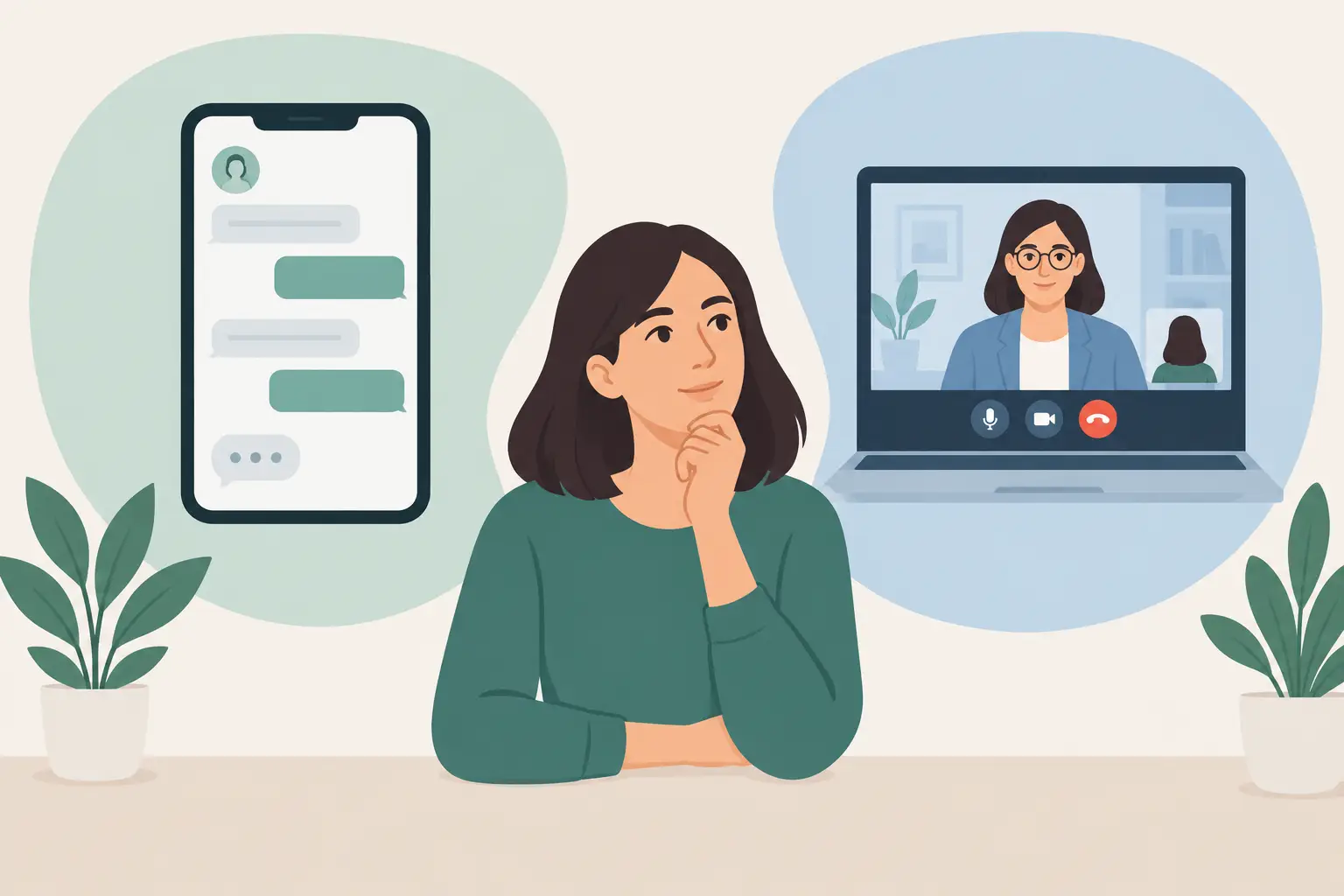
A hard conversation does not always need to happen at a scheduled time, in a quiet office, or face-to-face on a screen. When comparing messaging therapy vs video sessions, the better choice is the one that makes it easier to be honest, stay engaged, and get support that fits the realities of your day.
For some people, typing out a thought after the kids are asleep feels far more manageable than talking through it in real time. For others, seeing a provider’s expression and hearing a calm voice creates the connection they need. Both formats can be meaningful parts of online mental health care. The difference is in how you communicate, how quickly you need to process something, and what helps you feel safe enough to open up.
Table of Contents
Messaging Therapy vs Video Sessions: The Core Difference
Messaging-based care allows you to communicate with a licensed provider through a secure digital platform. Rather than reserving everything for one appointment, you can share symptoms, questions, updates, and reflections in writing as they come up. Your provider responds according to the care plan and platform availability.
Video sessions are live, scheduled conversations. You and your provider meet virtually at the same time, much like an office appointment without the commute or waiting room. The session gives you dedicated time to talk, be heard, and work through concerns in a more immediate back-and-forth.
Neither format is automatically better. A person managing ongoing anxiety may appreciate having a place to send an update when racing thoughts return. Someone processing grief, relationship stress, or a major life change may prefer a live conversation where pauses, tone, and emotion can be addressed in the moment.
Why Messaging Can Feel More Approachable
Messaging can remove some of the pressure that keeps people from asking for help. You do not have to find an uninterrupted hour, get camera-ready, or explain a complicated feeling before you have found the right words. You can write a few sentences, come back later, and add what you remembered.
Elevate Your Health for Just $29.99/Month
Join the Precision Wellness Subscription at My Healing 365 and get discounted services, priority coaching access, virtual care, and exclusive wellness resources to support your physical, emotional, and hormonal health.
Join for $29.99/MonthThat extra space is valuable when anxiety makes it difficult to speak clearly or depression leaves you low on energy. Many people find that writing helps them notice patterns: sleep has been worse for two weeks, work stress spikes every Sunday, or a medication side effect started after a specific change. Details like these can help a licensed provider understand what is happening and shape a more individualized treatment plan.
Messaging also offers discretion. If you live with family, have a demanding schedule, travel often, or simply do not want to arrange your life around appointments, secure written communication can feel easier to maintain. Consistency matters in mental health treatment. A format you can realistically use is often more helpful than one that looks ideal on paper but becomes hard to keep up with.
Still, messaging is not the same as instant support. Response times depend on your provider and treatment plan. It should not be used for an emergency or a moment when you may be at immediate risk of harming yourself or someone else. In those situations, call 911, call or text 988 in the United States, or go to the nearest emergency room.
When Video Sessions May Be the Better Fit
Video can offer a stronger sense of real-time connection. Your provider can ask follow-up questions right away, clarify what you mean, and respond to your tone or visible emotion. For people who think out loud, that can be a relief. You do not have to organize every feeling into a written message before sharing it.
Live sessions may be especially useful when your concerns feel layered or difficult to describe. If you are navigating a breakup, burnout, panic symptoms, family conflict, or a major change in your life, a scheduled conversation can create protected space to focus. It can also help if you tend to put off reaching out until a concern feels overwhelming.
The trade-off is that video requires more planning. You need a private place, a stable connection, and time on your calendar. Some people also feel self-conscious on camera or find that the formality of an appointment makes it harder to speak freely. Those barriers are real, not a sign that you are doing treatment wrong.
Think About How You Process Feelings
The most useful question is not, “Which option is more effective?” It is, “How am I most likely to communicate honestly and consistently?”
If you often need time to sort through your thoughts before you speak, messaging may help you be more specific. If you find yourself writing long notes you wish you could say aloud, video may give you the relief of being able to talk it through. Some people use both approaches at different points in their care, depending on what they are going through.
Consider your typical week, too. A working parent may have small windows to check in but no reliable hour for a live session. A professional who spends all day in meetings may prefer one dedicated video appointment rather than continuing conversations in writing. Your treatment should fit into your life without asking you to ignore the demands already on your plate.
What Support Do You Need Right Now?
Your symptoms and goals can also guide the decision. Messaging may work well when you want ongoing check-ins, help tracking changes, answers to treatment questions, or support staying accountable to a plan. It can make it easier to share brief updates before they turn into a larger setback.
Video may be preferable when you want more in-depth discussion during a dedicated block of time. It can be useful when emotions are intense, when communication feels unclear, or when you benefit from live guidance. A provider may also recommend a particular format based on your symptoms, history, and the type of care you are seeking.
If medication is part of your plan, make sure you understand how follow-up works. Ask how you will communicate about benefits, side effects, refills, missed doses, and changes in symptoms. Evidence-based medication can be a helpful tool for some people with anxiety, depression, or sleep-related concerns, but it is not one-size-fits-all. A licensed provider should review your health history and discuss what is appropriate for you.
Privacy Matters in Both Formats
Both messaging and video require a secure platform, but privacy also depends on your environment. Messaging may feel more private because you can write when you have a moment alone. At the same time, think about notification settings, device passwords, and whether someone else can access your phone or computer.
With video, the question is often physical privacy. Can you sit somewhere you will not be interrupted or overheard? A parked car may work for some people, but only if it is safe, private, and comfortable. Headphones can help, as can letting people around you know that you need uninterrupted time.
You deserve care that feels confidential and respectful. If privacy is a concern, bring it up early. Your provider can help you think through practical options.
A Simple Way to Choose
Start with the format that lowers the biggest barrier between you and care. Choose messaging if flexibility, writing time, and frequent low-pressure check-ins would make it easier to start. Choose video if you want live conversation, immediate clarification, and a dedicated space to focus on yourself.
You do not have to commit to a communication style forever. Your needs can change as your symptoms improve, your schedule shifts, or a new stressor appears. The right treatment relationship leaves room to talk about what is working and what is not.
At My Healing 365, online mental health care is designed to make that first step feel more manageable, with licensed-provider access, secure communication, and treatment plans built around your needs. Whether you are dealing with anxiety, low mood, disrupted sleep, or the emotional weight of a major life event, you do not have to carry it alone.
The best format is the one that helps you keep showing up for yourself. Start with the kind of conversation you can have today, then let your care evolve from there.

























