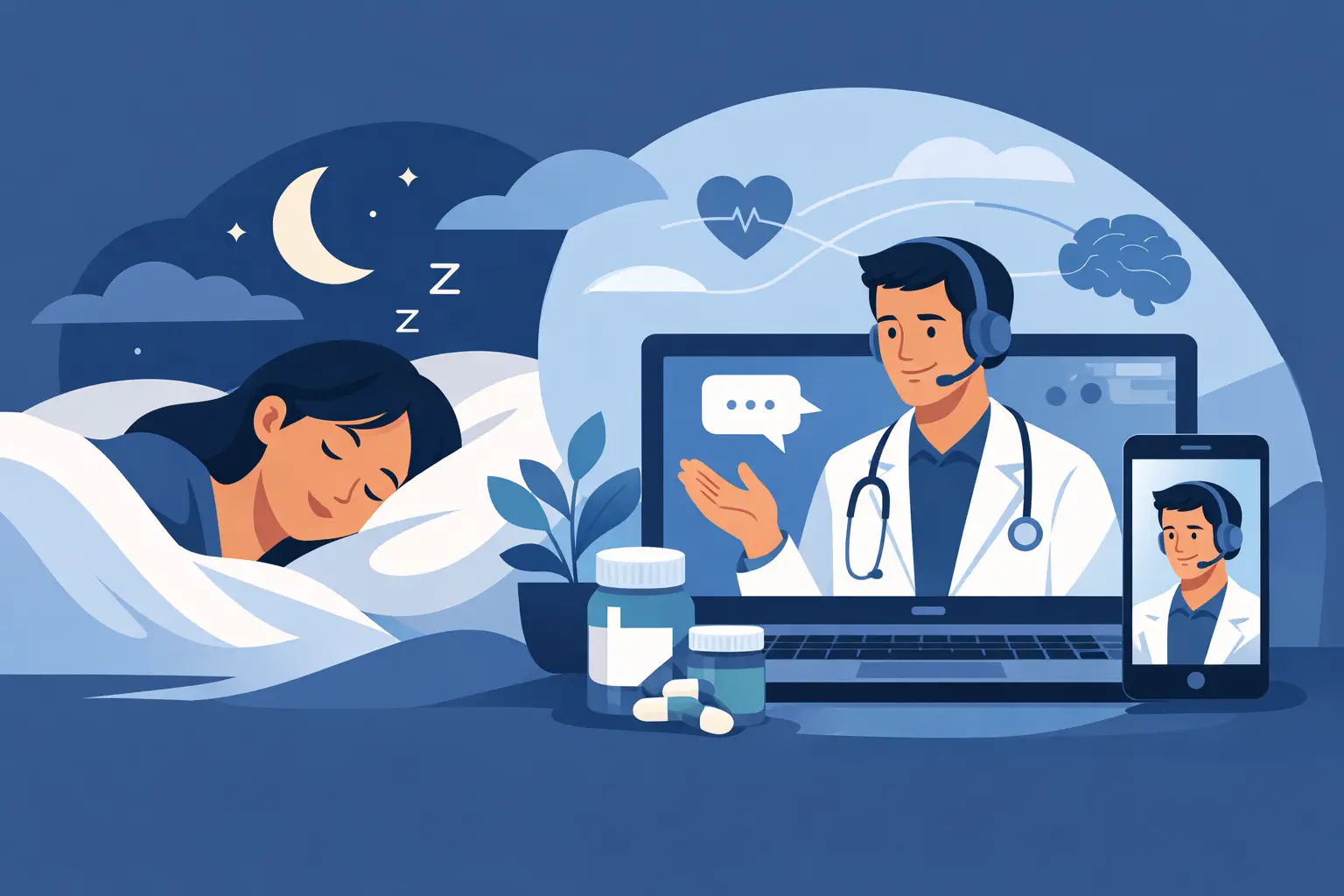
A night of staring at the ceiling can leave you tired. Several nights can make everything feel harder: work, parenting, relationships, concentration, and your ability to cope with stress. Sleep support from licensed providers can give you a private, practical place to talk through what is happening and build a treatment plan that fits your life.
Poor sleep is not always just about a bad bedtime routine. Racing thoughts, anxiety, low mood, grief, schedule changes, hormone shifts, medication changes, and ongoing stress can all affect how easily you fall asleep or stay asleep. You do not have to sort out the cause alone.
Table of Contents
When sleep problems may need more than tips
Everyone has an occasional restless night. The bigger concern is a pattern that does not ease up, especially when it starts affecting your mood, health, safety, or day-to-day responsibilities.
You may benefit from professional support if you regularly lie awake for long stretches, wake up repeatedly, wake earlier than you intend to, or sleep for many hours and still feel drained. It can also help to reach out when sleep loss is making anxiety feel louder, depression harder to manage, or simple tasks feel overwhelming.
Sleep concerns can show up differently from person to person. One person may dread bedtime because their mind will not slow down. Another may fall asleep quickly but wake at 3 a.m. with a sense of panic. Someone else may be working late shifts, caring for a new baby, or going through a major life change that has thrown off an established routine. The right next step depends on the pattern and the factors behind it.
A licensed provider can look beyond the obvious advice to avoid screens or drink less caffeine. Those habits may matter, but they are not a complete answer when emotional health, a medical concern, or medication effects may be involved.
What sleep support from licensed providers can include
Online care begins with a confidential review of your symptoms, health history, current medications, and goals. Your provider may ask about your sleep schedule, daytime energy, stress level, mood, substances that can interfere with sleep, and whether you have symptoms that point to another sleep or medical condition.
That conversation creates room for a more individualized plan. Depending on your needs and clinical eligibility, your plan may include guidance around sleep habits, coping tools for nighttime worry, support for anxiety or depression, and medication options when a provider determines they are appropriate. Medication is not the right fit for everyone, and it is usually most helpful when considered alongside the full picture of your health and sleep patterns.
At My Healing 365, eligible adults can access mental health support online with licensed providers, treatment-specific guidance, and ongoing messaging. That means you can ask follow-up questions without having to schedule your life around a waiting room. For many people, that lower-friction access makes it easier to seek help before exhaustion becomes their normal.
Why insomnia and mental health often overlap
Sleep and mental health can create a frustrating cycle. Anxiety can keep your body on alert when you want to rest. Depression can lead to sleeping too little, sleeping too much, or waking without feeling restored. Then, after a few poor nights, emotional reactions may feel sharper and everyday stress may feel less manageable.
This does not mean every sleep problem is a mental health condition. Sleep apnea, chronic pain, thyroid concerns, restless legs, substance use, and other medical issues can disrupt rest, too. A responsible provider will consider your symptoms and help determine whether virtual mental health treatment makes sense or whether you need additional evaluation.
Be clear about what you are experiencing. Mention loud snoring, gasping or pauses in breathing, severe daytime sleepiness, unusual movements during sleep, nightmares, pain, or a recent medication change. Details that seem small can help guide safer, more appropriate care.
What online sleep care looks like in real life
Telehealth care is designed to make getting started feel manageable. Instead of traveling to an appointment, you can complete an online intake from a private space. You share your symptoms and health information, then connect with a licensed provider who reviews your needs and discusses potential next steps.
The value is not simply that care happens online. It is that your treatment can be responsive. Sleep is rarely fixed by one perfect recommendation. You may need to adjust a strategy after a stressful week, ask about a side effect, or explain that a plan does not fit your work schedule. Ongoing messaging gives you a way to stay connected to your care rather than starting over each time something changes.
Privacy matters here, too. Many people put off getting help because they do not want to explain a missed appointment at work or sit in a crowded office. Secure online care can offer more discretion while still keeping licensed clinical oversight at the center of treatment.
How to prepare for your first appointment
You do not need to track every minute of sleep before asking for help. Still, a few days of simple notes can make the conversation more useful. Record roughly when you get into bed, how long it takes to fall asleep, how often you wake, when you get up, and how you feel during the day.
It also helps to write down what tends to happen before a difficult night. Maybe you work late, scroll in bed, drink alcohol, have a conflict with someone you love, or feel a wave of worry as soon as the lights go out. There is no judgment in this process. Honest information helps your provider recommend care that works with your actual life, not an idealized routine.
Elevate Your Health for Just $29.99/Month
Join the Precision Wellness Subscription at My Healing 365 and get discounted services, priority coaching access, virtual care, and exclusive wellness resources to support your physical, emotional, and hormonal health.
Join for $29.99/MonthBring a list of all medications, supplements, and over-the-counter sleep aids you use. Even products that seem harmless can affect sleep, mood, or possible treatment options. If you have tried something before, explain what helped, what did not, and why you stopped.
Small changes that can support treatment
Professional care and practical habits can work together. Rather than trying to change everything overnight, choose one or two realistic adjustments. A consistent wake-up time is often more useful than forcing an early bedtime when you are not sleepy. A short wind-down routine, such as a shower, quiet reading, or a calming audio exercise, can also help signal that the day is ending.
Try to reserve your bed primarily for sleep when possible. If you are awake and frustrated for a long time, stepping into low light for a quiet activity may be more helpful than watching the clock. The goal is not to perform sleep perfectly. It is to reduce the pressure and patterns that can make wakefulness feel more intense.
Be cautious with quick fixes. Alcohol may make you sleepy at first but can fragment sleep later. Overusing over-the-counter sleep products can create unwanted effects or mask a problem that needs a closer look. Your provider can help you weigh benefits and trade-offs based on your health history.
When to seek urgent help
Sleep loss can sometimes reach a point where immediate support is needed. Seek urgent medical or mental health help if you are having thoughts of harming yourself or someone else, feel unable to stay safe, are experiencing severe confusion, or have gone days with very little sleep and feel unusually energized, impulsive, or disconnected from reality. In the U.S., call or text 988 for immediate mental health crisis support, or call 911 in an emergency.
You deserve care that takes your exhaustion seriously without making the process feel complicated. A better night may not happen all at once, but a licensed provider can help you move from guessing at solutions to following a plan built around your symptoms, your health, and your life.

























