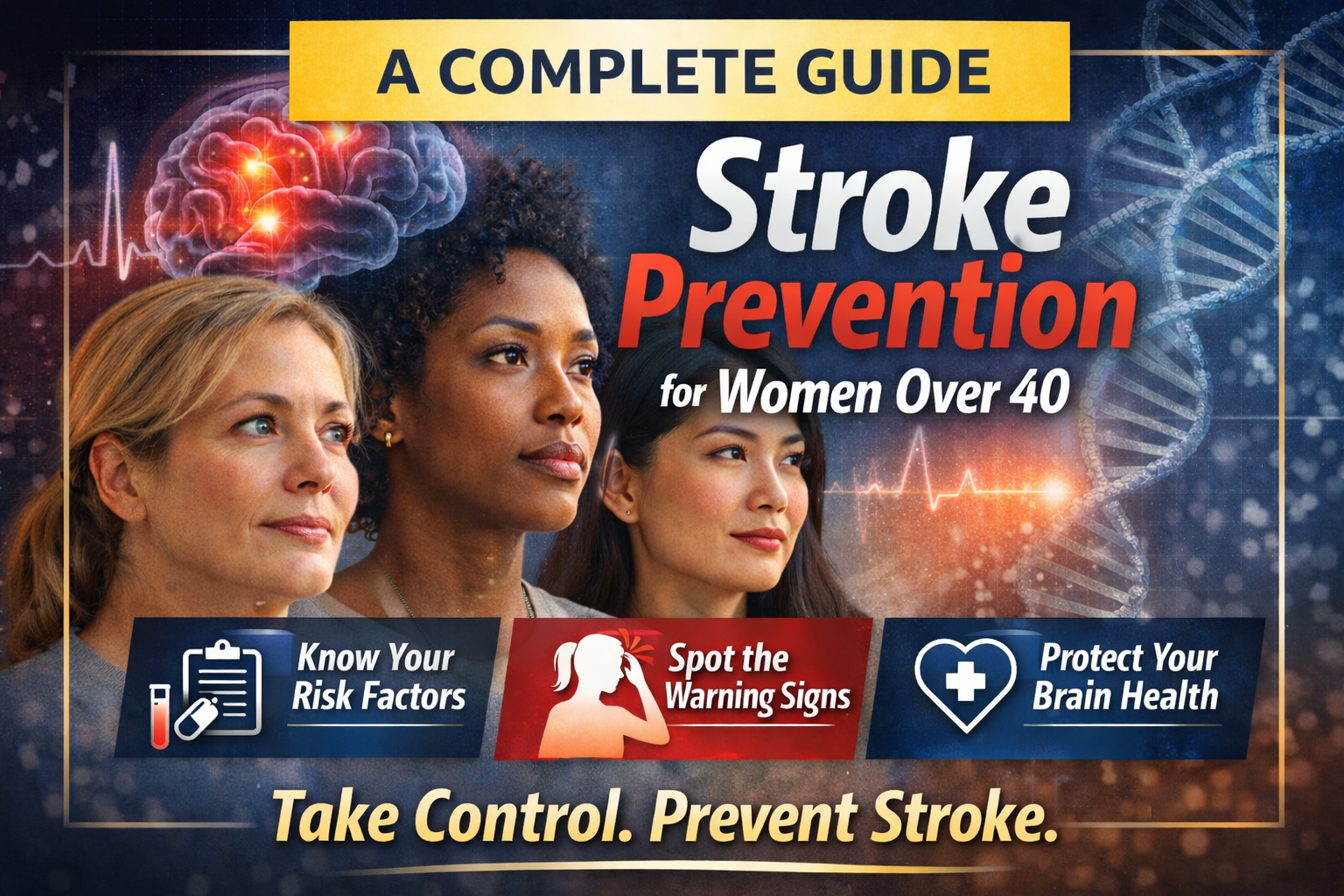
Stroke is not just a condition that affects the elderly.
For women over 40, stroke risk begins to quietly increase due to hormonal shifts, inflammation, metabolic changes, and vascular aging.
The good news?
Stroke prevention over 40 is possible — when it’s intentional and personalized.
This guide will walk you through the risk factors, early warning signs, lab markers, and proactive strategies that protect long-term brain health.
Table of Contents
Why Stroke Risk Increases After 40
After 40, several biological shifts occur:
- Estrogen fluctuations affect vascular elasticity
- Chronic inflammation increases
- Blood pressure trends begin to shift
- Insulin resistance becomes more common
- Stress accumulation impacts vascular tone
These changes don’t feel dramatic — but they compound over time.
Stroke prevention for women must become proactive at this stage of life.
The Most Common Stroke Risk Factors in Women Over 40
High Blood Pressure
Even mildly elevated readings over time increase vascular strain.
Elevated Inflammation (CRP)
Chronic inflammation damages blood vessels silently.
Insulin Resistance
Unstable blood sugar accelerates vascular aging.
Elevated Homocysteine
Often overlooked, this marker is associated with vascular risk.
Chronic Stress & Poor Sleep
Both elevate cortisol, blood pressure, and inflammatory pathways.
Early Stroke Warning Signs Women Should Never Ignore
Stroke symptoms in women are sometimes subtle.
These may include:
- Sudden confusion
- Numbness on one side
- Vision changes
- Severe unexplained headache
- Dizziness or imbalance
For a deeper breakdown, read:
👉 Early Stroke Warning Signs in Women Over 40
Silent Stroke Symptoms Most People Miss
Some strokes or vascular events are small and go undetected.
These may show up as:
- Progressive brain fog
- Subtle memory decline
- Decreased processing speed
- Mood changes
Learn more here:
👉 Silent Stroke Symptoms in Women: What You Might Be Overlooking
Lab Markers That Help Identify Stroke Risk Early
Proactive stroke prevention includes reviewing:
- hs-CRP (inflammation)
- Fasting insulin
- A1C
- Lipid patterns
- Homocysteine
- Vitamin D
- Blood pressure trends
Normal ranges are not always optimal ranges.
Precision matters.
Elevate Your Health for Just $29.99/Month
Join the Precision Wellness Subscription at My Healing 365 and get discounted services, priority coaching access, virtual care, and exclusive wellness resources to support your physical, emotional, and hormonal health.
Join for $29.99/MonthHow to Reduce Stroke Risk Naturally After 40
Effective stroke prevention strategies include:
- Anti-inflammatory nutrition
- Targeted supplementation
- Blood pressure monitoring
- Stress regulation techniques
- Consistent movement
- Sleep optimization
Generic advice helps — but personalization increases effectiveness.
When to Seek Immediate Emergency Care
If you experience:
- Facial drooping
- Arm weakness
- Slurred speech
- Sudden confusion
- Sudden vision loss
- Severe headache
Call emergency services immediately.
A Precision Approach to Stroke Prevention
After experiencing my own stroke, I shifted my practice toward precision prevention.
That includes:
- Personalized risk assessment
- Lab interpretation
- Supplement evaluation
- Telehealth-based strategy
If you are serious about stroke prevention over 40, I offer a structured Brain Risk Assessment designed to identify hidden risk factors and build a personalized roadmap.
👉 Book your Brain Risk Assessment here.
Prevention is intentional.

























