• Twenty47HealthNews
  • Health & Wellness
  • Disclaimer
    • Terms of Use
    • Privacy Policy
    • DMCA Notice
  • Twenty47HealthNews
  • Health & Wellness
  • Disclaimer
    • Terms of Use
    • Privacy Policy
    • DMCA Notice
24/7 Health News
No Result
View All Result
Home Article

Higher buprenorphine doses help patients stay in opioid use disorder treatment, new study finds

March 10, 2026
in Article
Higher buprenorphine doses help patients stay in opioid use disorder treatment, new study finds

Patients who are prescribed higher daily doses of the medication buprenorphine for opioid use disorder are significantly more likely to stay in treatment. Those on 17 to 24 milligrams averaged 190 days in care compared to 90 days for those on 8 milligrams or less. Yet Black patients are less likely than white patients to receive the higher doses.

Those are the key findings of a study my colleagues and I conducted with 5,000 adults enrolled in Medicaid in Philadelphia who are prescribed buprenorphine to treat their opioid use disorder.

I am an assistant professor at University of Pennsylvania’s School of Nursing, and my research focuses on improving care and outcomes for people with opioid use disorder.

Table of Contents

  • Why it matters
  • Why it matters
  • What still isn’t known

Why it matters

Buprenorphine is one of the most effective treatments for opioid use disorder. Unlike most opioids, buprenorphine only partially activates opioid receptors, providing enough stimulation to prevent withdrawal and cravings while not causing euphoria. This lowers the risk of overdose.

Buprenorphine also blocks other opioids from binding to opioid receptors and causing euphoric effects. This deters patients from using other opioids while on the medication.

Across the board, patients who received higher doses of buprenorphine – usually 17 to 24 milligrams per day, but sometimes more – stayed in treatment significantly longer than those who started on medium doses of 9 to 16 milligrams, or lower doses of 8 milligrams.

Staying in treatment for opioid use disorder is important because it reduces overdose risk and provides a foundation for recovery.

Our study also revealed racial disparities.

Black patients were less likely than white patients to receive the 17 to 24 milligram prescriptions. These differences may reflect prescriber preferences, inequities in health care or misconceptions among both patients and clinicians about safe dosing.

Other groups were more likely to receive higher buprenorphine doses. Over half of our sample was diagnosed with a musculoskeletal condition – such as osteoarthritis, rheumatoid arthritis and gout – alongside opioid use disorder. These patients were more likely to receive higher doses.
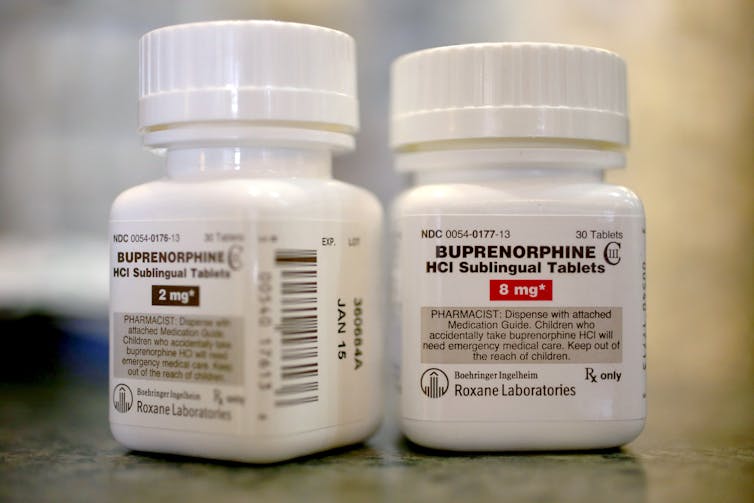
White bottles of prescription medicine
Buprenorphine reduces opioid cravings and withdrawal symptoms.
Joe Raedle/Getty Images

Why it matters

Over the past decade, the unregulated street opioid supply across the U.S. – and notably in Philadelphia – has become much more potent and unpredictable. The powerful synthetic opioid fentanyl as well as the animal tranquilizers xylazine and medetomidine are pervasive in Philadelphia. With these changes, standard buprenorphine doses may not be enough to stabilize withdrawal symptoms and prevent patients from using again.

Identifying disparities in buprenorphine dosing also sets up a number of interventions that insurers can use to address them.

For example, Community Behavioral Health, Philadelphia’s Medicaid behavioral health managed-care organization, has provided education about buprenorphine at faith‑based conferences, convened focus groups with Medicaid members to understand barriers to buprenorphine treatment, and allowed us to present our findings in a forum with local prescribers and pharmacists.

In December 2024, the U.S. Food and Drug Administration updated its recommendations about buprenorphine dosing. Previously, it supported a target dose of 16 milligrams and said that doses over 24 milligrams showed no clinical advantage.

Now, the FDA has removed the phrase “target dose” from the drug label. It also added that although doses over 24 milligrams have not been investigated in randomized clinical trials, they “may be appropriate for some patients.”

This clarification rolls back outdated language that many clinicians and insurers took to mean that 16 milligrams was the maximum for treating opioid use disorder.

What still isn’t known

Clinicians still do not fully understand patient preferences around buprenorphine dosing. Some patients may want higher doses to better manage withdrawal or cravings. Others may prefer lower doses due to concerns about not being able to discontinue buprenophrine if they are on a high dose.

The dosing patterns that we observed suggest that Black patients do not have equal access to higher doses of buprenorphine they may need. Understanding why these differences occur, and how to address them, is essential to equitable treatment.

The Research Brief is a short take on interesting academic work.

Read more of our stories about Philadelphia and Pennsylvania, or sign up for our Philadelphia newsletter on Substack.


ShareTweetSharePin
Next Post
Experts Push for Change in Black Women’s HIV Care

Experts Push for Change in Black Women’s HIV Care

Most Read

What causes stuttering? A speech pathology researcher explains the science and the misconceptions around this speech disorder

What causes stuttering? A speech pathology researcher explains the science and the misconceptions around this speech disorder

December 15, 2022
morning back pain

Morning Again Ache Trigger Is Not the Mattress

October 11, 2021
3 women stroke prevention

Silent Stroke Symptoms in Women: What You Might Be Overlooking

February 27, 2026
lower back pain relief exercises

5 decrease again ache aid workouts

October 11, 2021

Why Circadian Rhythms Matter for Your Health

July 30, 2024

4 steps to building a healthier relationship with your phone

January 28, 2025
3 years after legalization, we have shockingly little information about how it changed cannabis use and health harms

3 years after legalization, we have shockingly little information about how it changed cannabis use and health harms

October 15, 2021
Good Night Sleep

6 Causes of Good Evening Sleep

October 11, 2021
Nasal vaccines promise to stop the COVID-19 virus before it gets to the lungs – an immunologist explains how they work

Nasal vaccines promise to stop the COVID-19 virus before it gets to the lungs – an immunologist explains how they work

December 14, 2022
bleeding in gum

When The Bleeding in gum Is Severe ?

October 11, 2021
Kick up your heels – ballroom dancing offers benefits to the aging brain and could help stave off dementia

Kick up your heels – ballroom dancing offers benefits to the aging brain and could help stave off dementia

January 3, 2023
Ten small changes you can make today to prevent weight gain

Ten small changes you can make today to prevent weight gain

October 12, 2021
Biden is getting prostate cancer treatment, but that’s not the best choice for all men − a cancer researcher describes how she helped her father decide

Biden is getting prostate cancer treatment, but that’s not the best choice for all men − a cancer researcher describes how she helped her father decide

May 20, 2025

COVID vaccines: how one can pace up rollout in poorer international locations

October 5, 2021
Five ways to avoid pain and injury when starting a new exercise regime

Five ways to avoid pain and injury when starting a new exercise regime

December 30, 2022
Support and collaboration with health-care providers can help people make health decisions

Support and collaboration with health-care providers can help people make health decisions

December 16, 2021
Greece to make COVID vaccines mandatory for over-60s, but do vaccine mandates work?

Greece to make COVID vaccines mandatory for over-60s, but do vaccine mandates work?

December 1, 2021
woman covered with white blanket

Exploring the Impact of Sleep Patterns on Mental Health

August 4, 2024

Maximize Your Performance – Sync with Your Circadian Rhythms

August 9, 2024

Multiple sclerosis: the link with earlier infection just got stronger – new study

October 12, 2021
GLP-1 drugs may fight addiction across every major substance, according to a study of 600,000 people

GLP-1 drugs may fight addiction across every major substance, according to a study of 600,000 people

March 6, 2026

This Simple Hygiene Habit Could Cut Your Risk of Stroke, New Research Reveals

February 1, 2025
Nurses’ attitudes toward COVID-19 vaccination for their children are highly influenced by partisanship, a new study finds

Nurses’ attitudes toward COVID-19 vaccination for their children are highly influenced by partisanship, a new study finds

December 2, 2022
Nutrition advice is rife with misinformation − a medical education specialist explains how to tell valid health information from pseudoscience

Nutrition advice is rife with misinformation − a medical education specialist explains how to tell valid health information from pseudoscience

January 28, 2025
As viral infections skyrocket, masks are still a tried-and-true way to help keep yourself and others safe

As viral infections skyrocket, masks are still a tried-and-true way to help keep yourself and others safe

December 14, 2022
Backlash to transgender health care isn’t new − but the faulty science used to justify it has changed to meet the times

Backlash to transgender health care isn’t new − but the faulty science used to justify it has changed to meet the times

January 30, 2024
GPs don’t give useful weight-loss advice – new study

GPs don’t give useful weight-loss advice – new study

December 16, 2022
Why are some people faster than others? 2 exercise scientists explain the secrets of running speed

Why are some people faster than others? 2 exercise scientists explain the secrets of running speed

April 29, 2024
Four ways to avoid gaining weight over the festive period – but also why you shouldn’t fret about it too much

Four ways to avoid gaining weight over the festive period – but also why you shouldn’t fret about it too much

December 22, 2022
News of war can impact your mental health — here’s how to cope

Binge-eating disorder is more common than many realise, yet it’s rarely discussed – here’s what you need to know

December 2, 2022
  • Twenty47HealthNews
  • Health & Wellness
  • Disclaimer

© 2020 DAILY HEALTH NEWS

  • Twenty47HealthNews
  • Health & Wellness
  • Disclaimer
    • Terms of Use
    • Privacy Policy
    • DMCA Notice

© 2020 DAILY HEALTH NEWS















