For many Black women, caring for others often comes naturally. We show up for our families, support our communities, and carry responsibilities that rarely leave much room for ourselves. However, when it comes to breast health, we can’t afford to neglect this. Taking time to care for your own body is one of the most powerful acts of self-care you can practice.
Breast cancer remains one of the most common cancers among women, yet Black women continue to face higher death rates from the disease than other ethnicities. While the reasons death rates are higher vary, experts agree that early detection can help change outcomes.
The more we talk about breast health and make screening part of our wellness routine, the more we empower ourselves and the women around us to take action.
Early detection can save lives. That’s why conversations about breast health and access to screening are so important in our communities.
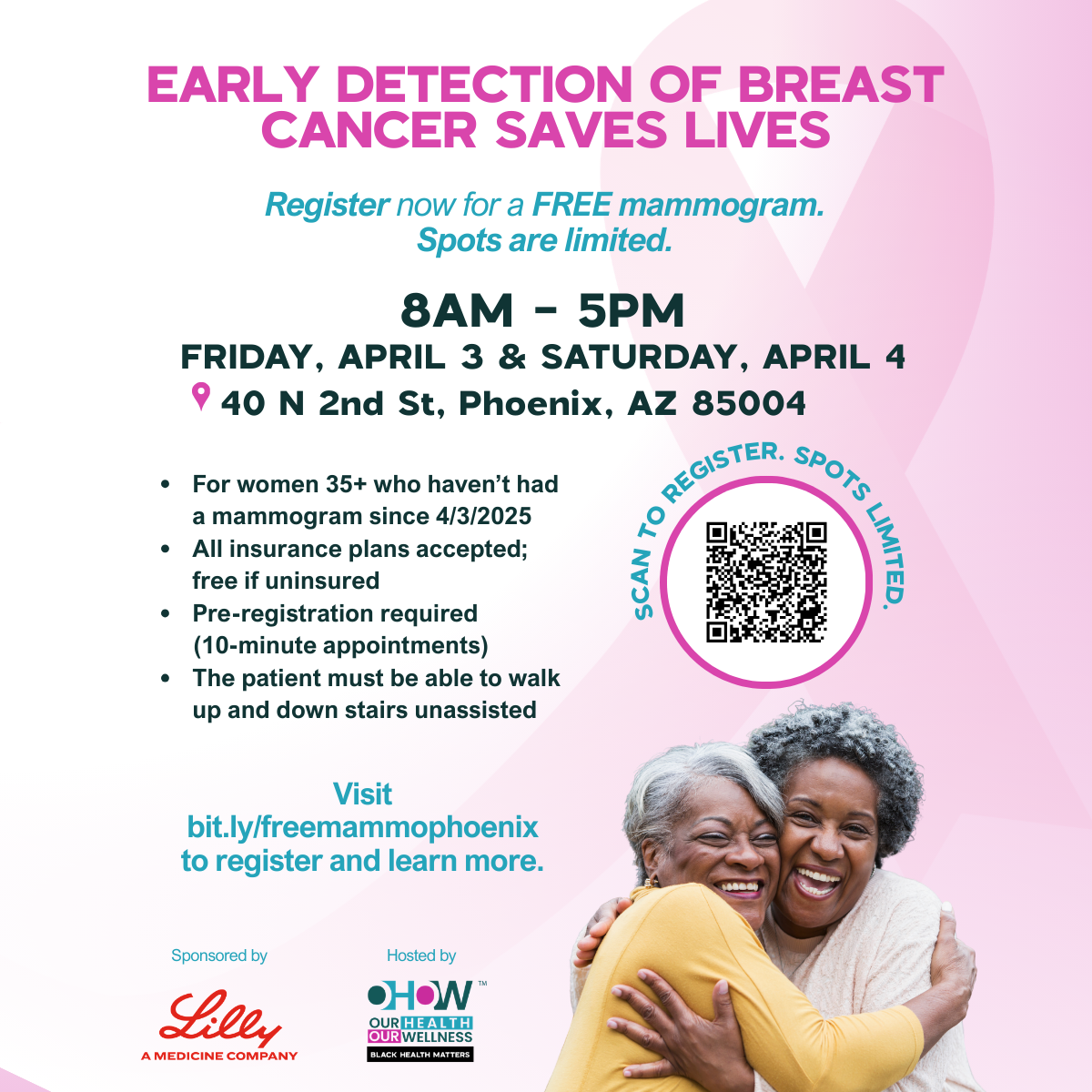
To help make screening more accessible, Black Health Matters through OHOW is once again partnering with Eli Lilly and Company to host a two-day mammogram screening event. This event will take place April 3-4 from 8 AM to 5 PM in Phoenix, Arizona. It will provide women an opportunity to take action and prioritize screening while learning more about the importance of early detection.
When we have the information and resources we need, we are better equipped to take charge of our health.
Table of Contents
Breast Cancer in Our Communities
Research shows that Black women are more likely to develop aggressive forms of breast cancer, including triple-negative breast cancer, a subtype that tends to grow faster and can be harder to treat. In addition, many Black women are diagnosed at later stages of the disease, when treatment options may be more limited.
The good news is that when breast cancer is detected early, outcomes improve dramatically. This further emphasizes the importance of awareness and screening.
Listen to Your Body
Awareness starts with paying attention to your body. You should be aware of how your breasts normally look and feel so that you are able to notice when something changes.
Changes worth discussing with a healthcare provider may include:
- A new lump in the breast or underarm
- Changes in breast shape or size
- Skin dimpling
- Nipple discharge or changes in nipple appearance
- Persistent breast pain in one specific area
While these symptoms don’t automatically mean cancer, they are worth mentioning to your provider. Trusting your instincts and speaking up when something doesn’t feel right can make a difference.
Mammograms: A Tool for Early Detection
While self-awareness is important, mammograms remain one of the most effective ways to detect breast cancer early.
A mammogram is a specialized X-ray that can identify changes in breast tissue long before they can be felt during a physical exam. Detecting cancer at these early stages often leads to more treatment options and better outcomes.
Regular screening can help:
- Identify cancer earlier
- Reduce the risk of advanced disease
- Improve survival rates
- Allow for less aggressive treatment in some cases
Most healthcare providers recommend that women begin routine mammograms around age 40, though individual risk factors like family history may influence screening recommendations.
The key is staying informed and having open conversations with your healthcare provider about when and how often you should undergo screening.
Community-centered initiatives are helping bridge the gap by bringing screening opportunities directly to the people who need them most. That’s the goal behind our upcoming breast cancer mammogram screening event in partnership with Eli Lilly and Company.
Event Details
WHO: OHOW- Black Health Matters and Eli Lilly and Company
Elevate Your Health for Just $29.99/Month
Join the Precision Wellness Subscription at My Healing 365 and get discounted services, priority coaching access, virtual care, and exclusive wellness resources to support your physical, emotional, and hormonal health.
Join for $29.99/MonthWHAT: Mammogram Screening Event
WHEN: April 3-4, 8 AM to 5 PM
WHERE: 40 N 2nd St, Phoenix, AZ 85004
By offering screenings within the community, events like this help remove some of the barriers that may keep women from scheduling preventive care. More importantly, they help spark conversations about health that can be contagious.
Sometimes the simple act of sharing information or reminding a loved one to schedule a screening can help someone take that first step. Who will you share this event with? Who are you bringing with you? We look forward to seeing you there!

























