
Medically Reviewed
Dr. Jose Rossello, MD, PhD, MHCM
Preventive Medicine & Public Health Specialist
Last Reviewed: March 24, 2026
Building a skincare routine doesn’t need to involve ten steps or hundreds of dollars in products. A basic skincare routine consists of three essential steps[1]: cleanse, moisturize, and protect with sunscreen. These core actions form the foundation of healthy skin and can be completed in under five minutes each day.
The confusion around skincare often comes from conflicting advice on social media and endless product options at the store. Many people end up either doing too much or giving up entirely. The truth is that following a logical skincare routine[2] ensures products work together instead of against each other.
Understanding which products to use and when to use them makes all the difference. This guide breaks down how to identify your skin type, choose the right products, and build a routine that fits into your daily life. Whether someone has dry, oily, sensitive, or combination skin, the same basic principles apply.
Table of Contents
Key Takeaways
- Start with the three core steps of cleansing, moisturizing, and applying sunscreen daily
- Choose products based on your specific skin type to avoid irritation and maximize results
- Consistency matters more than expensive products, with visible improvements typically appearing within six to twelve weeks
Why Building a Skincare Routine Matters
A structured skincare routine protects the skin barrier, prevents irritation, and delivers visible results when followed with consistency. The key lies in choosing the right products and using them correctly rather than buying everything on the shelf.
Benefits of a Consistent Routine
Consistency allows skincare products to work as intended. Most active ingredients need regular use over weeks or months to show results. Dermatologists recommend giving a routine six to 12 weeks[3] before evaluating its effectiveness.
A daily skincare routine strengthens the skin barrier. This protective layer keeps moisture in and harmful substances out. When the barrier stays intact, skin looks healthier and feels more comfortable.
Regular care prevents problems before they start. Daily sunscreen use stops sun damage that leads to wrinkles and dark spots. Gentle cleansing removes dirt and oil that could clog pores.
Consistent routines also make skincare simpler. Once someone establishes a pattern, they know exactly what to use and when. This removes guesswork and reduces the temptation to constantly switch products.
Common Myths and Mistakes to Avoid
Many people believe more products equal better results. This leads to overcomplicated routines with 10 or more steps. In reality, a basic skincare routine needs just three steps[1]: cleanse, moisturize, and protect with sunscreen.
Over-cleansing damages the skin barrier. Some people wash their face multiple times per day with harsh cleansers. This strips away natural oils that keep skin healthy. People with dry or sensitive skin may only need to cleanse at night and rinse with water in the morning.
Another common mistake involves switching products too quickly. Someone might try a new serum for two weeks, see no change, and move on to something else. This prevents any product from having enough time to work.
Using too many active ingredients at once causes irritation. Layering multiple acids, retinoids, and vitamin C without proper knowledge can lead to redness, peeling, and sensitivity.
The Role of Simplicity in Effective Skincare
Simple routines work better than complex ones. A streamlined approach makes it easier to identify which products help and which cause problems. When someone uses 15 different products, pinpointing the source of irritation becomes nearly impossible.
Basic routines cost less money and take less time. Someone can maintain healthy skin with a gentle cleanser, moisturizer, and sunscreen. Additional products like serums address specific concerns but aren’t necessary for everyone.
Simplicity also reduces the risk of ingredient interactions. Fewer products mean fewer chances for ingredients to clash or overwhelm the skin. This approach protects the skin barrier from unnecessary stress.
Starting simple allows room to add products gradually. Someone can begin with the basics and introduce one new product at a time. This methodical approach helps identify what their skin actually needs rather than following trends that may not suit their skin type.
Identify Your Skin Type
Knowing your skin type forms the foundation for any effective skincare routine. The bare-faced test and blotting sheet method can help you figure out whether you have dry skin, oily skin, combination skin, sensitive skin, or normal skin at home.
How to Determine Your Skin Type at Home
The bare-faced test offers a simple way to identify your skin type. A person should wash their face with a gentle cleanser, pat it dry, and wait 30 minutes without applying any products.
After waiting, they can examine their skin closely. If the skin shows no redness, dry patches, or oil, they likely have normal skin. When the face feels flaky, dry, or tight, this indicates dry skin. A greasy or oily feeling points to oily skin.
People with combination skin will notice their T-zone looks shiny while the rest of their face feels dry. If the skin appears red, itchy, or irritated, they probably have sensitive skin.
The blotting sheet method provides another testing option. Someone can press a blotting sheet against different areas of their face and check the oil levels. A small amount of oil suggests normal skin, while almost no oil indicates dry skin. Heavy oil on the sheet means oily skin, and oil only in the T-zone points to combination skin.
Understanding Dry, Oily, Combination, Sensitive, and Normal Skin
Each skin type has distinct characteristics that require different care approaches. Dry skin often feels tight and may show flaky patches or rough texture. It produces less sebum than other skin types.
Oily skin produces excess sebum, which can make the face look shiny throughout the day. This skin type is often acne-prone because the extra oil can clog pores.
Combination skin features both oily and dry areas on the face. The T-zone tends to be oily while the cheeks remain dry or normal.
Sensitive skin reacts easily to products and environmental factors. It may become red, itchy, or develop rashes when exposed to certain ingredients.
Normal skin or balanced skin maintains an even texture without excessive oil or dryness. This skin type rarely experiences major issues.
When to Seek Advice From a Dermatologist
A dermatologist can provide professional guidance when home testing methods don’t give clear results. They have tools and expertise to accurately identify your skin type[4] and any underlying conditions.
People should schedule an appointment if they experience persistent skin problems like severe acne, unexplained rashes, or extreme sensitivity. A dermatologist can also help when someone tries multiple products without seeing improvement.
Those with changing skin conditions may benefit from professional assessment. Skin can shift between types due to hormones, climate, medications, or age.
The Essential Steps of a Skincare Routine
A successful skincare routine requires three fundamental actions that work together to maintain healthy skin. These steps form the foundation that anyone can follow, whether starting fresh or simplifying an existing regimen.
The Core Three: Cleanse, Moisturize, Protect
Every effective skincare routine starts with a cleanser that removes dirt, oil, and impurities without damaging the skin barrier. A basic skincare routine consists of these three essential steps[1] that work together to keep skin healthy.
The right cleanser depends on skin type. Foaming formulas work well for oily skin, while cream-based cleansers suit dry skin better. Gentle, pH-balanced options help maintain the skin barrier without stripping away natural oils.
After cleansing, a moisturizer delivers hydration and strengthens the protective barrier. This step prevents water loss and keeps skin soft. Even oily skin needs moisturizer, though lighter gel formulas often work better than heavy creams.
The final step is daily SPF protection. Sunscreen prevents premature aging and protects against skin damage. A broad-spectrum SPF 30 or higher should be applied every morning, even on cloudy days or when staying indoors. UV rays penetrate through windows and cause damage over time.
The Importance of Consistent AM and PM Routines
Morning routines prepare skin for the day ahead. The cleanse, moisturize, and protect sequence shields skin from environmental stressors. Applying sunscreen as the final morning step provides crucial protection.
Evening routines allow skin to repair itself overnight. Cleansing removes makeup, dirt, and sunscreen that accumulated during the day. Following with a moisturizer supports the skin barrier while the body rests.
Consistency matters more than complexity. Using these core products regularly for 4 to 8 weeks produces measurable improvements[1] in skin texture and hydration. Most people see noticeable results within six to twelve weeks when they stick to a daily routine. The key is performing both morning and evening steps without skipping days.
Cleansing: Laying the Foundation
The right cleanser removes dirt, oil, and makeup without stripping the skin’s protective barrier. Matching formula to skin type and understanding when double cleansing helps prevents both clogged pores and over-cleansing damage.
Choosing the Right Cleanser for Your Skin Type
Different skin types need different cleansing formulas to stay balanced and healthy. Oily skin types benefit from salicylic acid[5], which helps dissolve oil inside pores and prevents breakouts.
Dry or sensitive skin needs a gentle cleanser with hydrating ingredients. Cream or oil-based formulas work best because they clean without removing natural moisture. These should be fragrance-free to avoid irritation.
Normal to combination skin does well with a mild gel cleanser or water-based cleanser. These formulas remove daily buildup without being too harsh or too rich.
Oily and acne-prone skin responds to gel cleansers with gentle exfoliating acids. A foaming cleanser can work, but harsh sulfates should be avoided even on oily skin.
The best cleanser leaves skin feeling soft and comfortable within 10 to 15 minutes. Tightness means the formula is too stripping, while residue or greasiness suggests it’s not cleaning enough.
Oil Cleanse, Double Cleanse, and Over-Cleansing Explained
An oil cleanse uses oil-based products to dissolve makeup, sunscreen, and excess sebum. Oil attracts oil, making this method effective for removing stubborn products that water-based cleansers miss.
Double cleansing pairs an oil cleanse with a gentle cleanser as a second step. The oil removes makeup and SPF in the first pass, while the water-based cleanser cleans the skin itself. This approach works well for people who wear heavy makeup or high-SPF products daily.
People with minimal makeup or bare skin usually don’t need to double cleanse. A single gentle cleanser or hydrating cleanser is enough for most mornings and light-wear days.
Over-cleansing happens when someone washes too often, scrubs too hard, or uses harsh formulas. This strips the skin barrier and triggers more oil production, redness, and sensitivity. Signs include constant tightness, flaking, or breakouts that won’t clear despite frequent washing.
Best Practices for Gentle and Effective Cleansing
The goal is thorough cleaning without damage. These steps protect the barrier while removing buildup.
How to cleanse properly:
- Use lukewarm water, not hot, which can irritate and dry out skin
- Apply cleanser to damp skin and massage for 30 to 60 seconds
- Avoid scrubbing or tugging; gentle circular motions work better
- Rinse completely—leftover product can cause clogged pores
- Pat dry with a clean towel instead of rubbing
Most people only need to cleanse once in the evening. Those with very oily skin or who exercise in the morning may cleanse twice, but a plain water rinse often works just as well in the AM.
Skip cleansing brushes if skin is sensitive or reactive. A soft washcloth provides gentle exfoliation without the risk of over-scrubbing. The simpler the routine, the easier it is to spot what works and what doesn’t.
Hydration and Moisturizing
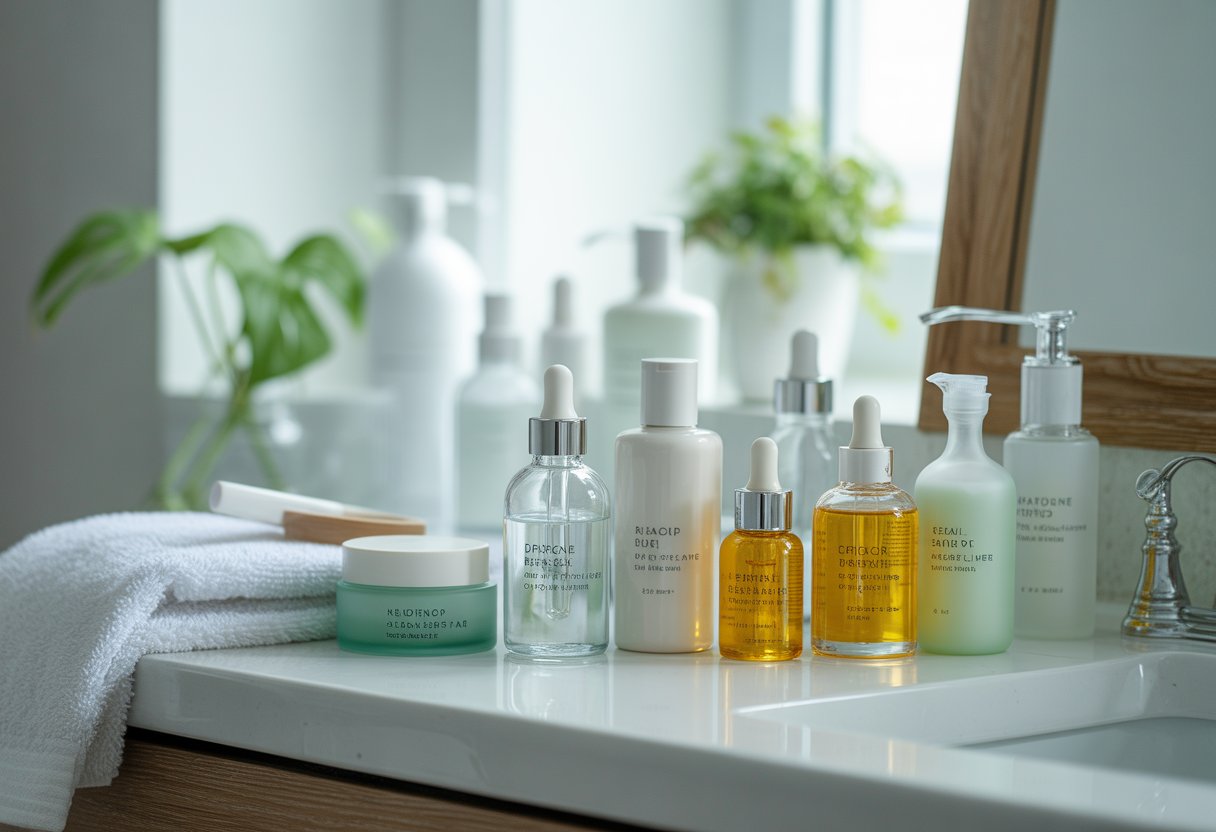
Keeping skin hydrated involves both attracting water to the skin and preventing it from escaping. The right moisturizer contains specific ingredients that work together to maintain the skin’s moisture balance and protect its natural barrier.
How Hydration Supports Skin Health
Proper hydration keeps skin functioning at its best. When skin cells have enough water, they appear plump and smooth rather than flat and rough. The skin’s outermost layer needs water to shed dead cells properly and reveal fresh skin underneath.
Dehydrated skin looks dull and feels tight[6], while well-hydrated skin maintains elasticity and resilience. The skin barrier depends on adequate hydration to keep irritants out and moisture in. Without enough water, fine lines become more visible and the skin may produce excess oil to compensate for dryness.
Hydration also helps active ingredients in skincare products penetrate more effectively. Well-hydrated skin absorbs serums and treatments better than dehydrated skin.
Types of Moisturizers and When to Use Them
Different moisturizer textures serve different purposes. Gel moisturizers contain mostly water and humectants, making them lightweight and ideal for oily or combination skin. They absorb quickly and rarely feel heavy or greasy.
Cream moisturizers have a thicker consistency with more oils and occlusives. These work well for dry skin or nighttime use when skin needs extra nourishment. Creams create a protective layer that prevents water loss while someone sleeps.
Lotions fall between gels and creams in thickness. They suit normal skin types and provide moderate hydration without excess weight. People with dry skin often need cream moisturizers in winter but can switch to lighter lotions in summer. Those with oily skin typically prefer gel moisturizers year-round.
Ingredients to Look For in a Moisturizer
Effective moisturizers combine three types of ingredients. Humectants like hyaluronic acid and glycerin[6] pull water into the skin from the air and deeper skin layers. Hyaluronic acid holds up to 1,000 times its weight in water.
Emollients such as squalane smooth the skin’s surface and fill gaps between skin cells. They make skin feel soft and help other ingredients spread evenly. Squalane mimics the skin’s natural oils without clogging pores.
Occlusives form a protective seal on the skin’s surface to prevent water from evaporating. Common occlusives include petrolatum, dimethicone, and certain plant oils.
Ceramides deserve special attention because they perform barrier repair by replacing lipids the skin loses naturally. These lipids help soften skin texture[6] and prevent moisture from escaping. A good moisturizer contains at least one ingredient from each category to hydrate, smooth, and protect the skin effectively.
Sun Protection: Guarding Against Damage
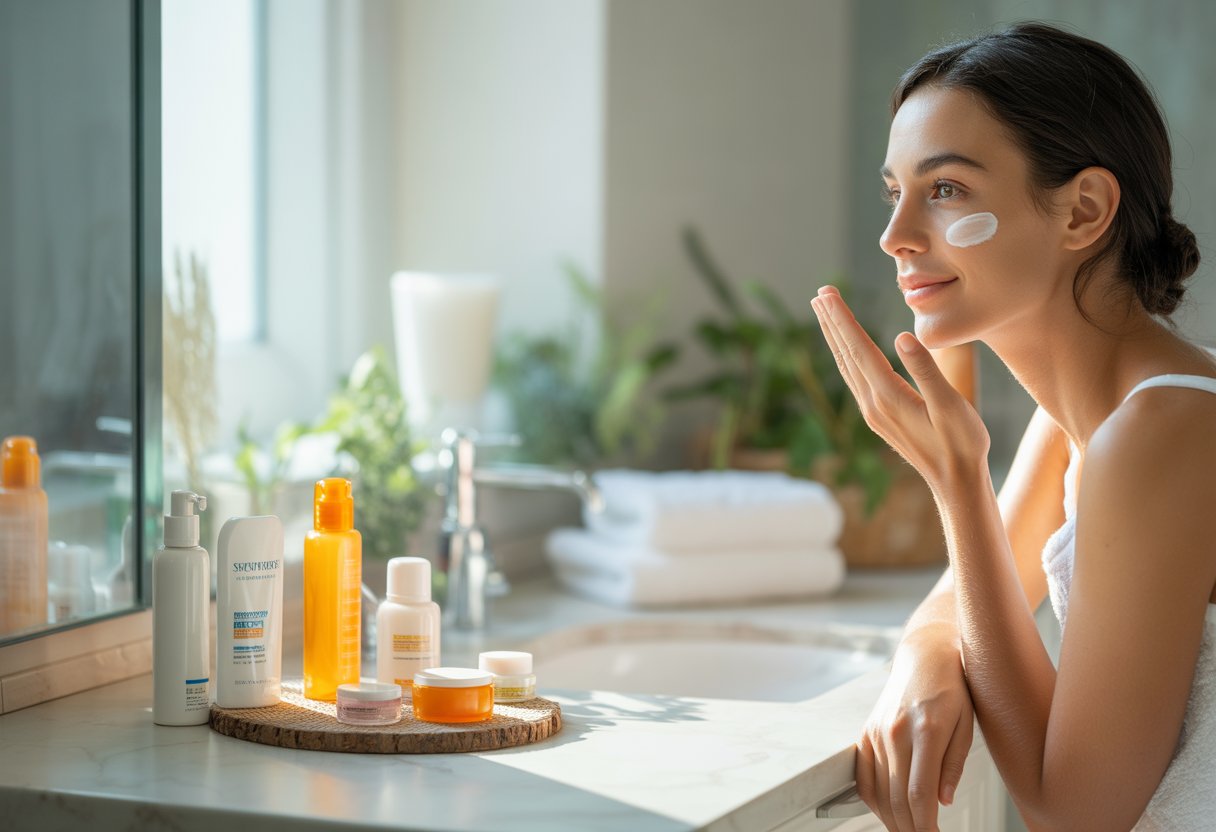
Sun exposure is the main risk factor for skin cancer[7] and a leading cause of premature aging. Protecting skin from UV rays prevents dark spots, hyperpigmentation, and wrinkles while reducing cancer risk.
Why Daily SPF Matters
UV rays damage skin every day, even when it’s cloudy or cold outside. The sun’s rays penetrate through windows and clouds, causing harm year-round. This damage accumulates over time, leading to visible signs of aging like wrinkles, dark spots, and uneven skin tone.
Daily SPF use is the most effective anti-aging strategy available. It prevents the breakdown of collagen and elastin that keeps skin firm and smooth. People who skip sunscreen experience faster development of fine lines and age spots.
Sun protection also defends against serious conditions like melanoma[8]. Regular sunscreen application reduces skin cancer risk significantly. All skin types and tones need daily protection, though darker skin tones may experience hyperpigmentation more readily after sun exposure.
How to Choose Sunscreen and Apply It Correctly
Dermatologists recommend broad-spectrum sunscreen with SPF 30 or higher. Broad-spectrum means it protects against both UVA rays (which cause aging) and UVB rays (which cause burning). SPF 30 blocks about 97% of UVB rays.
Apply sunscreen as the last step of skincare[9], right before makeup. The correct amount for the face, neck, and ears is 1/4 teaspoon or two finger lengths squeezed onto the pointer and middle fingers. Most people apply too little, which reduces protection significantly.
Reapply every two hours when outdoors[9], or after 40 to 80 minutes of swimming or sweating. For body coverage, adults need about one shot glass worth of product. Apply before getting dressed to ensure complete coverage of all exposed areas.
Mineral vs. Chemical Sunscreen
Mineral sunscreen contains zinc oxide or titanium dioxide. These ingredients sit on top of skin and physically block UV rays. They work immediately upon application and are less likely to irritate sensitive skin.
Chemical sunscreen uses ingredients that absorb UV rays and convert them to heat. These formulas often feel lighter and blend into skin more easily. They require about 15 minutes to become effective after application.
Mineral sunscreen tends to leave a white cast, though modern formulations have improved. It works well for people with reactive or acne-prone skin. Chemical sunscreen suits those who prefer invisible, lightweight textures. Both types provide effective sun protection when applied correctly and reapplied as needed.
Targeted Treatments and Actives
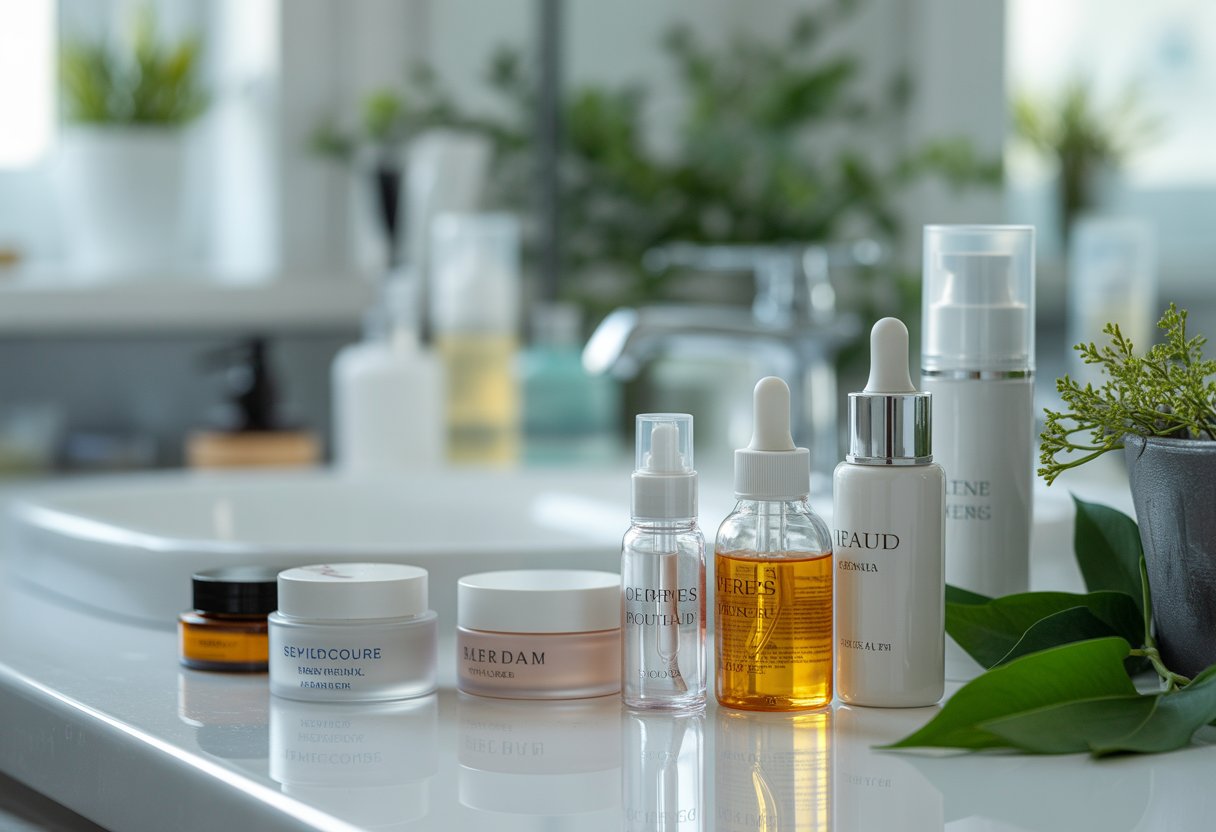
Treatments work best when introduced one at a time after establishing a basic routine, and each active ingredient addresses specific skin concerns through different mechanisms. The right combination depends on individual skin goals and tolerance levels.
When and How to Add Treatments
Anyone starting a skincare routine should establish the basics first: cleanser, moisturizer, and sunscreen. After using these for two weeks, the skin barrier is stable enough to handle targeted treatments.
Introducing one new active at a time[10] prevents overwhelming the skin and makes it easier to identify which product causes irritation. Wait at least two weeks between adding new actives to monitor how skin responds.
Start with lower concentrations and less frequent application. Use retinoids or chemical exfoliants twice per week initially, then gradually increase to every other night or nightly as tolerance builds. Apply treatments to clean, dry skin before moisturizer unless the product instructions specify otherwise.
Some actives shouldn’t be used together in the same routine. Retinol and vitamin C can both work in a routine but perform better when separated, with vitamin C in the morning and retinol at night.
Key Active Ingredients and Their Benefits
Retinoids (including retinol and prescription tretinoin) increase cell turnover and boost collagen production. They reduce fine lines, fade dark spots, and clear acne by preventing clogged pores. Start with 0.25% to 0.5% retinol two nights per week.
Vitamin C acts as an antioxidant that brightens skin and protects against environmental damage. L-ascorbic acid works at 10% to 20% concentrations, while gentler derivatives like Kakadu plum extract suit sensitive skin. Apply vitamin C serum in the morning before sunscreen.
Niacinamide regulates oil production, minimizes pores, and reduces inflammation. It works well with most other actives at 5% to 10% concentrations and suits all skin types.
Azelaic acid treats acne, rosacea, and hyperpigmentation without causing photosensitivity. It combines well with retinoids and works at 10% to 20% concentrations.
Peptides signal skin to produce more collagen and elastin. They support skin firmness and work well in combination with retinoids or vitamin C.
Exfoliation: Balancing Renewal
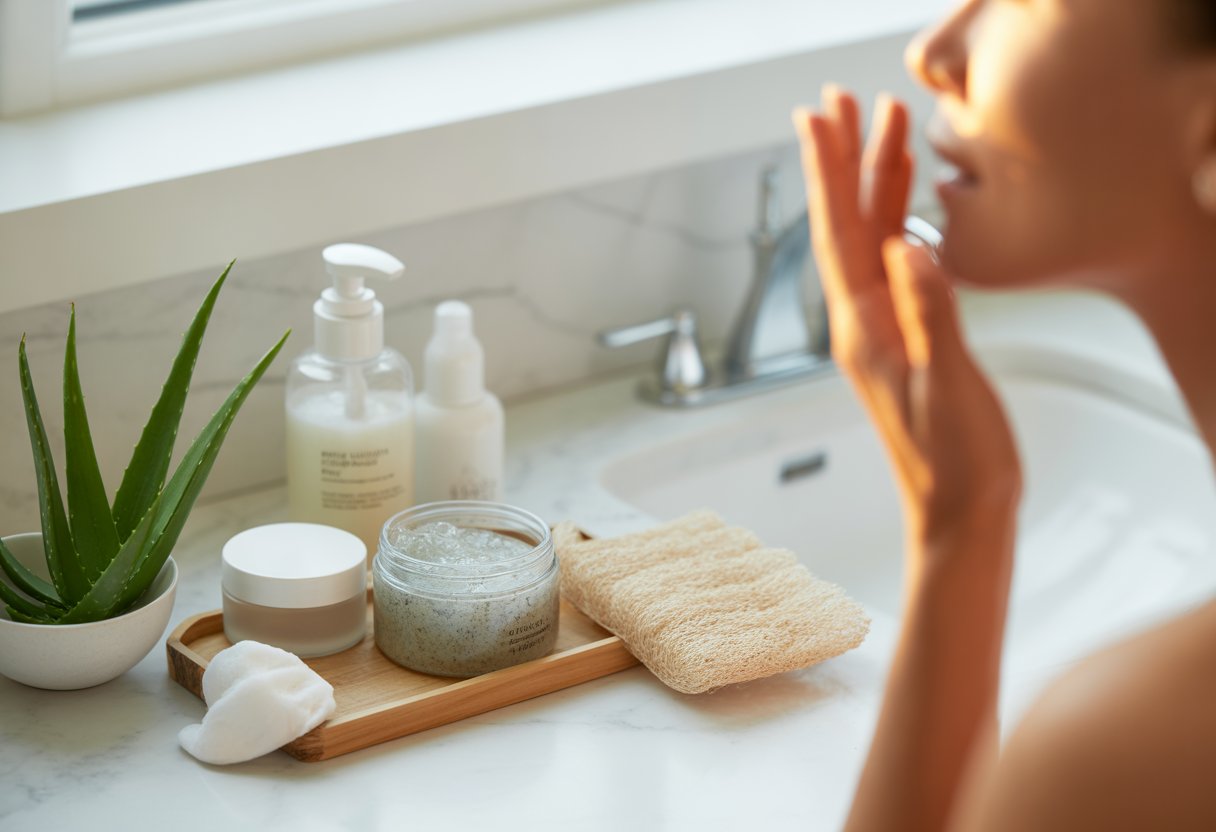
Regular exfoliation removes dead skin cells that accumulate on the surface, revealing fresher skin underneath. The key is choosing the right type of exfoliant and using it at the proper frequency to avoid irritation while maximizing benefits.
Types of Exfoliants and How Often to Use Them
There are two main categories of exfoliants: physical and chemical. Physical exfoliants use small particles or tools to manually buff away dead skin. Chemical exfoliants use acids to dissolve the bonds between dead skin cells.
Chemical exfoliation works differently than physical methods[11] because it penetrates the skin rather than just working on the surface. This makes chemical options more effective for addressing uneven texture and pigmentation issues.
Most people should exfoliate 2-3 times per week when starting out. The skin takes 28 days or more to complete its natural renewal cycle[12], so consistent use over time produces the best results.
Gentle exfoliants designed for daily use exist, but these typically have lower concentrations of active ingredients. Someone with sensitive skin might need to exfoliate only once per week, while oily skin types can often handle more frequent use.
Choosing Between AHAs, BHAs, and Gentle Exfoliants
AHAs (alpha hydroxy acids) are water-soluble acids that work on the skin’s surface. Glycolic acid is the most common AHA and effectively addresses pigmentation, fine lines, and dullness. Lactic acid is another AHA option that provides gentler exfoliation.
BHAs (beta hydroxy acids) are oil-soluble, which means they penetrate into pores. Salicylic acid is the primary BHA used in skincare. Because salicylic acid is oil-soluble, it decreases oiliness and decongest pores[11], making it particularly useful for treating blackheads and breakouts.
For dry or sensitive skin: Start with a gentle exfoliant or low-concentration AHA like lactic acid.
For oily or acne-prone skin: A BHA like salicylic acid targets excess oil and prevents clogged pores.
For uneven texture or pigmentation: AHAs provide surface-level renewal that smooths and brightens.
Some products combine multiple types of acids to address different skin concerns simultaneously. Beginners should start with single-ingredient formulas to see how their skin responds before trying combination products.
Layering and Routine Order
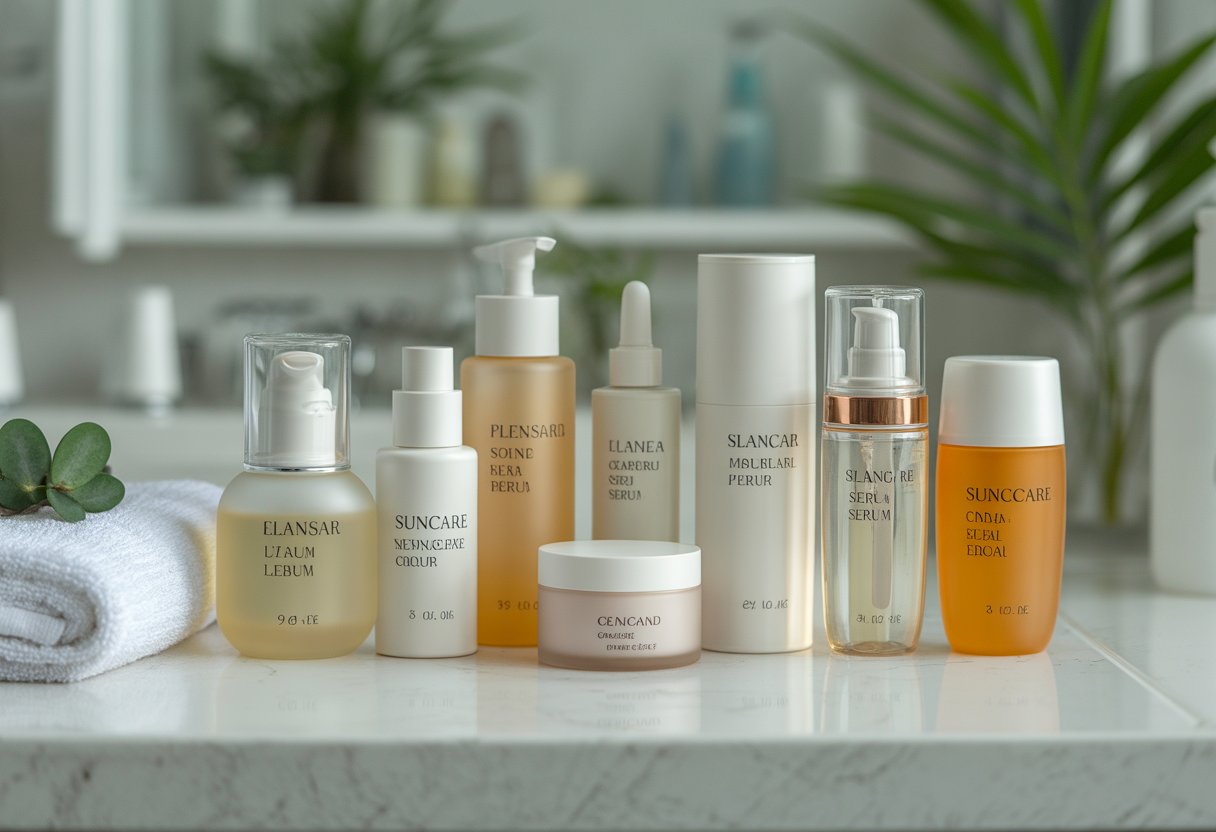
The order you apply skincare products matters because it affects how well your skin absorbs each ingredient. Applying products from thinnest to thickest consistency helps each one work properly, while adding new actives slowly prevents irritation.
Correct Product Layering: AM and PM Sequence
Morning routines focus on protection. Start with cleanser on damp skin, then apply any water-based serums while skin is still slightly moist. Follow with treatments containing actives like vitamin C or niacinamide. Next comes moisturizer, and always finish with sunscreen as the final step.
Evening routines allow for repair and renewal. After cleansing, apply toners or essences first. Then layer serums with actives that support skin cell turnover, such as retinoids or AHAs. These work best at night when skin naturally repairs itself. Add eye cream if needed, then seal everything with moisturizer.
The thin-to-thick rule[13] guides proper layering. Water-based products go on before oils. Lightweight serums come before thick creams. Wait 30-60 seconds between layers to let each product absorb.
Some actives shouldn’t mix in the same routine. Use exfoliating acids at night only. Keep vitamin C for mornings and retinoids for evenings to avoid sensitivity.
How to Introduce One Active at a Time
Adding multiple actives at once makes it impossible to identify which product causes problems. Start with one new active and use it for 2-4 weeks before adding another. This testing period reveals how skin responds.
Begin with lower concentrations of strong actives. A 0.25% retinoid is gentler than 1% for first-time users. Use the new active 2-3 times per week initially, then increase frequency as skin adjusts.
Watch for signs of irritation like redness, burning, or flaking. Some actives naturally increase skin cell turnover, which can cause temporary dryness. This differs from true irritation that worsens over time.
If irritation occurs, stop using the product for several days. Resume at a lower frequency once skin calms down. Never push through severe reactions.
Patch Testing for Sensitivity
Patch testing prevents full-face reactions to new products. Apply a small amount of product to the inner forearm or behind the ear. Leave it on for 24-48 hours and check for redness, itching, or bumps.
For actives that increase skin cell turnover, do a second patch test on the jawline. This area more closely mimics facial skin sensitivity. Wait another 24 hours before applying to the entire face.
People with sensitive skin should patch test every new product. Those with reactive skin or a history of allergies benefit most from this precaution. Skip patch testing only for products previously used without issue.
Test one product at a time to identify specific triggers. Keep notes on reactions to build a list of ingredients to avoid in future purchases.
Personalization and Adjusting Your Routine
Your skin changes over time, and your skincare routine should change with it. Recognizing when and how to adjust your products helps maintain healthy skin and prevents problems like irritation or a weakened skin barrier.
Listening to Your Skin’s Feedback
The skin provides clear signals when products aren’t working well. Redness, stinging, or burning immediately after applying a product indicates the formulation may be too strong or incompatible with someone’s skin type. Persistent irritation suggests the need to remove that product from the routine.
Increased dryness or flaking means the skin barrier needs more moisture and protection. This often happens when using too many active ingredients without enough hydration. People with sensitive skin should pay extra attention to these signs.
Breakouts in new areas or worsening acne can signal product incompatibility. Some ingredients clog pores or create an imbalance in skin’s oil production. Tracking which products cause these reactions helps identify problem ingredients.
Positive feedback matters too. When fine lines appear less visible, skin feels comfortable throughout the day, or uneven tone begins to fade, the routine is working effectively.
Adapting to Seasonal and Lifestyle Changes
Cold weather typically requires heavier moisturizers to protect the skin barrier from harsh winds and indoor heating. Someone might switch from a light lotion in summer to a richer cream in winter.
Hot, humid months often call for lighter products. Gel-based moisturizers and water-based serums work better when skin produces more oil naturally. People may need to add or increase exfoliation during this time.
Stress, travel, and hormonal changes affect skin differently than weather. A person experiencing high stress might notice more breakouts and need to simplify their routine temporarily. Those traveling to different climates should bring adaptable products that address multiple concerns.
Signs You Need to Adjust Your Routine
Immediate warning signs include:
- Burning or stinging sensations
- New or increased redness
- Tight, uncomfortable skin
- Sudden breakouts in unusual areas
Gradual changes that require adjustment:
- Products that once absorbed quickly now sit on the skin’s surface
- Makeup applies differently or looks patchy
- Skin feels greasy by midday when it didn’t before
- Fine lines become more noticeable despite regular product use
Uneven tone that doesn’t improve after 8-12 weeks suggests the current products aren’t addressing pigmentation effectively. A person should consider adding targeted treatments or switching to more effective ingredients for their skin type.
Building Long-Term Consistency and Healthy Skin Habits
Real results come from daily habits, not quick fixes. Consistency builds stronger skin barriers and helps maintain hydration levels that lead to balanced skin over time.
Tracking Progress and Setting Realistic Expectations
Most people expect immediate results, but healthy skin rarely improves overnight[2]. Visible changes in texture, fine lines and wrinkles, and overall tone typically take 4 to 12 weeks to appear.
Taking photos in the same lighting every two weeks helps track actual progress. The human eye adjusts to gradual changes, making it hard to notice improvements without comparison images.
Realistic timeline for common goals:
- Hydration improvements: 1-2 weeks
- Barrier repair: 3-4 weeks
- Texture smoothing: 6-8 weeks
- Fine lines and wrinkles: 8-12 weeks
Keeping a simple journal noting any irritation, dryness, or positive changes helps identify which products work. This record becomes valuable when deciding whether to continue or adjust the routine.
Supporting Your Skin Through Lifestyle Choices
Skincare products alone cannot overcome poor lifestyle habits. Water intake directly affects skin hydration, with most people needing 8 to 10 glasses daily for optimal moisture levels.
Sleep quality matters because skin repairs itself overnight. Adults who get 7 to 9 hours of sleep show better barrier repair and fewer signs of aging than those who sleep less.
Diet impacts skin health through inflammation and nutrient delivery. Foods high in sugar and processed ingredients can trigger breakouts and speed up aging. Eating vegetables, healthy fats, and lean proteins supports balanced skin from the inside.
Stress raises cortisol levels, which breaks down collagen and triggers oil production. Regular exercise, meditation, or simple breathing exercises help manage stress and improve circulation to the skin.
Frequently Asked Questions
Most people want to know which products they need first and how to adapt their routine to specific skin concerns. The right approach depends on skin type, age, and individual goals like managing oil or achieving a healthy glow.
What are the essential steps to establish a daily skincare routine at home?
A basic skincare routine needs just three products: cleanser, moisturizer, and sunscreen. These form the foundation of healthy skin care at any level[5].
Morning routines should start with a gentle cleanser to remove overnight oil and debris. Follow with moisturizer to hydrate the skin. Finish with broad-spectrum sunscreen of at least SPF 30 to protect against UV damage.
Evening routines begin with cleansing to remove makeup, dirt, and sunscreen from the day. Apply moisturizer while the skin is still slightly damp to lock in hydration. This simple twice-daily approach takes less than five minutes but delivers real results.
How can I tailor a skincare routine to manage oily skin effectively?
Oily skin benefits most from water-based or foaming cleansers that remove excess oil without stripping the skin. These formulas clean deeply while maintaining the skin’s protective barrier.
Look for cleansers with ingredients like niacinamide, ceramides, and hyaluronic acid. These components control oil production while keeping skin hydrated. A lightweight, oil-free moisturizer prevents the skin from overproducing oil to compensate for dryness.
Salicylic acid helps manage breakouts common with oily skin. This ingredient penetrates pores to clear out oil and dead skin cells. Use it in a cleanser or leave-on treatment a few times per week.
What are the best practices for creating a skincare routine that promotes glowing skin?
Glowing skin starts with consistent basics[14] like cleansing, moisturizing, and sun protection. These steps create the foundation for radiance by keeping skin healthy and protected.
Vitamin C serums brighten the complexion and even out skin tone. They work as antioxidants to defend against environmental damage that dulls the skin. Apply vitamin C in the morning before sunscreen for maximum protection.
Gentle exfoliation removes dead skin cells that make skin look dull. Chemical exfoliants with AHAs or BHAs work better than physical scrubs. Use them two to three times per week, not daily, to avoid irritation.
Hydration plays a major role in skin’s appearance. Hyaluronic acid serums attract moisture to plump the skin and reduce fine lines. Drink plenty of water and get adequate sleep to support skin health from the inside.
What guidance is available for beginners starting their first skincare routine?
Beginners should start with the three essentials: gentle cleanser, moisturizer, and sunscreen. Adding too many products at once makes it hard to identify what works or causes problems.
Determine skin type before buying products. Wash the face with a gentle cleanser, pat dry, and wait 30 minutes without applying anything. Normal skin shows no redness, dryness, or oil. Dry skin feels tight or flaky. Oily skin looks shiny. Combination skin shows oil in the T-zone but dryness elsewhere.
Introduce new products one at a time, waiting at least two weeks between additions. This approach helps identify which product causes any negative reactions. Patience matters because skin typically needs three months to show real improvement from new products.
Which affordable skincare products are recommended for someone in their 30s?
People in their 30s should focus on prevention and maintenance with retinoids, vitamin C, and peptides. These ingredients address early signs of aging while supporting skin health.
Retinol products help prevent premature aging by boosting cell turnover and collagen production. Affordable options work just as well as expensive ones when used consistently. Start with a low concentration and gradually increase to avoid irritation.
Peptide serums support collagen production to keep skin firm. They work gently compared to retinol, making them suitable for sensitive skin. Niacinamide serums offer multiple benefits including smoothing wrinkles, reducing pore size, and calming redness.
Sunscreen remains the most important anti-aging product at any price point. Daily sun protection prevents most visible signs of premature aging. Choose a formula that feels comfortable enough to wear every single day.
How does the 1% rule apply to building an effective skincare routine?
The 1% rule in skincare refers to making small, sustainable improvements rather than overhauling everything at once. Small changes compound over time to create significant results without overwhelming the skin or the person.
Start by perfecting one step before adding another. Master cleansing for a week or two, then add moisturizer, then sunscreen. This gradual approach prevents irritation and makes the routine feel manageable.
Consistency beats intensity in skincare. Using basic products every day produces better results than using advanced products sporadically. Build habits around the simplest effective routine first, then add targeted treatments only when needed.
Post Views: 2
References
Elevate Your Health for Just $29.99/Month
Join the Precision Wellness Subscription at My Healing 365 and get discounted services, priority coaching access, virtual care, and exclusive wellness resources to support your physical, emotional, and hormonal health.
Join for $29.99/Month- How to Build a Skincare Routine: Beginner Guide (2025). https://www.seacret.com/us_en/blog/how-to-build-skincare-routine Accessed March 24, 2026
- Skin Care Routine Step By Step Guide To Consistency And Real Skin Results. https://thenakedchemist.com/skin-care-routine-step-by-step/ Accessed March 24, 2026
- Dermatologists recommend giving a routine six to 12 weeks. https://www.goodhousekeeping.com/beauty/anti-aging/a22850819/best-skincare-routine/ Accessed March 24, 2026
- How to Build Your Skincare Routine Based on Your Skin Type. https://douglasj.edu/how-to-build-your-skincare-routine-based-on-your-skin-type/ Accessed March 24, 2026
- Oily skin types benefit from salicylic acid. https://www.health.com/skincare-routine-8364021 Accessed March 24, 2026
- Dehydrated skin looks dull and feels tight. https://www.harpersbazaar.com/beauty/skin-care/a64253892/how-to-hydrate-dry-skin/ Accessed March 24, 2026
- How to build an effective skincare routine for sun protection. https://www.clinicbarcelona.org/en/news/how-to-build-an-effective-skincare-routine-for-sun-protection Accessed March 24, 2026
- Top Ways to Prevent Sun Damage and Protect Skin Daily. https://www.revivalabs.com/how-to-protect-your-skin-from-sun-damage-without-compromising-your-routine/ Accessed March 24, 2026
- Just a moment…. https://www.vichyusa.com/blog/skin-concern/sun-care/how-to-build-sun-care-routine.html Accessed March 24, 2026
- How to Build a Skincare Routine That Actually Works (2026)
– Sand and Sky EU. https://de.sandandsky.com/en/blogs/news/how-to-build-a-skincare-routine Accessed March 24, 2026 - How To Exfoliate Your Skin: The Essential Guide. https://www.isdin.com/us/blog/all/how-to-exfoliate-your-skin-and-benefits/ Accessed March 24, 2026
- Incorporating Exfoliation into Your Skincare Routine
. https://www.tammyfender.com/blogs/journal/incorporating-exfoliation-into-your-skincare-routine Accessed March 24, 2026 - Skincare Layering Steps – Complete Guide for a Healthy Routine. https://www.yesmadam.com/blog/skincare-layering-steps/ Accessed March 24, 2026
- How to Build a Skin Care Routine: Tips and Product Suggestions. https://greatist.com/health/skincare-routine Accessed March 24, 2026

























