
Medically Reviewed
Dr. Jose Rossello, MD, PhD, MHCM
Preventive Medicine & Public Health Specialist
Last Reviewed: March 26, 2026
Dull skin happens when the complexion loses its natural glow and looks tired or lifeless. Dead skin cells build up on the surface, dehydration sets in, and environmental factors like pollution take their toll. The good news is that restoring radiance doesn’t require expensive treatments or complicated procedures.
Natural methods can brighten dull skin quickly by combining gentle exfoliation, proper hydration, and protective habits that address the root causes of lackluster skin. Simple ingredients like lemon, honey, and aloe vera can help brighten the skin[1] when used correctly. Understanding what makes skin look dull helps create an effective routine.
This guide covers practical steps to revive tired-looking skin fast. From daily skincare habits to natural remedies and lifestyle changes, these strategies work together to bring back a healthy glow and keep skin looking fresh over time.
Table of Contents
Key Takeaways
- Dull skin results from dead cell buildup, dehydration, and environmental damage that block natural radiance
- A combination of gentle exfoliation, hydration, and natural brightening ingredients restores glow quickly
- Consistent sun protection and healthy lifestyle habits prevent skin from losing its brightness long term
What Is Dull Skin and Why Does It Happen?
Dull skin lacks brightness and radiance, appearing flat or lackluster instead of healthy and glowing. This happens when dead skin cells build up on the surface, moisture levels drop, or environmental factors damage the skin’s outer layer.
Common Signs and Symptoms
Dull skin shows up in several noticeable ways. The complexion appears tired and lacks the natural glow that healthy skin displays. The skin may look gray, ashen, or washed out rather than vibrant.
Uneven skin tone[2] is another common sign. Some areas might appear darker or lighter than others. The skin texture often feels rough or bumpy instead of smooth.
Light doesn’t reflect off the face the same way it does with radiant skin. Instead, the surface looks flat and one-dimensional. Fine lines and pores may appear more visible when skin loses its brightness.
How to Tell If Your Skin Is Dull
A simple test can reveal dullness of skin[3]. Looking in natural daylight provides the clearest view of the complexion. Artificial lighting can hide or exaggerate skin concerns.
Comparing current photos to older ones helps identify changes in radiance over time. If the face appears less bright or more tired-looking than before, dullness may be developing.
The skin should bounce light and have a healthy appearance. When it doesn’t, this signals a problem. Touching the face can reveal texture issues like dryness or rough patches that contribute to a lackluster look.
People with glowing skin typically have good hydration, regular cell turnover, and a healthy skin barrier. When any of these factors fail, the result is often visible dullness.
Main Causes of Dull Skin

Skin loses its natural glow when specific factors interfere with its ability to reflect light and renew itself. Understanding these causes of dull skin[2] helps target the right solutions for faster results.
Dehydration and Dryness
When skin lacks adequate water, it creates cracks in the surface and causes the complexion to look uneven and lackluster. Dehydration[4] decreases blood flow to the skin, making it appear pale and sickly.
This condition affects the skin in two ways. First, dry skin creates an irregular surface that scatters light instead of reflecting it evenly. Second, chronic dehydration can lead to lasting damage like fine lines and sagging skin.
Elevate Your Health for Just $29.99/Month
Join the Precision Wellness Subscription at My Healing 365 and get discounted services, priority coaching access, virtual care, and exclusive wellness resources to support your physical, emotional, and hormonal health.
Join for $29.99/MonthThe skin barrier weakens when moisture levels drop too low. This makes it harder for skin to retain water and protect itself from environmental damage. People often confuse dehydrated skin with dry skin, but dehydration refers to lack of water while dryness refers to lack of oil.
Dead Skin Cell Buildup
The skin naturally sheds dead skin cells[5], but sometimes this process slows down. When old cells accumulate on the surface, they create a layer that blocks light and makes skin look flat and tired.
This buildup happens for several reasons:
- Age-related slowdown in cell turnover
- Lack of proper cleansing
- Skipping exfoliation
- Hormonal changes
Dead cells prevent skincare products from penetrating effectively. They also clog pores and create an uneven texture that catches light in unflattering ways. The accumulation typically worsens during winter months when skin produces less oil naturally.
Sun Exposure and UV Damage
UV damage[6] from the sun triggers multiple problems that steal skin’s radiance. Ultraviolet rays generate free radicals that cause oxidative stress and damage skin cells at a deep level.
Sun exposure leads to collagen breakdown[7], which makes skin appear waxy and wrinkled over time. The damage also creates dark spots and uneven pigmentation that contribute to a dull appearance. Environmental pollution combines with sun damage to accelerate these effects.
Even cloudy days expose skin to harmful rays. The cumulative effect of daily sun damage[3] builds up over years, resulting in skin that looks tired and aged. People living in urban areas face additional challenges from pollution particles that settle on skin and create oxidative damage.
Step-by-Step Skincare Routine to Revive Dull Skin
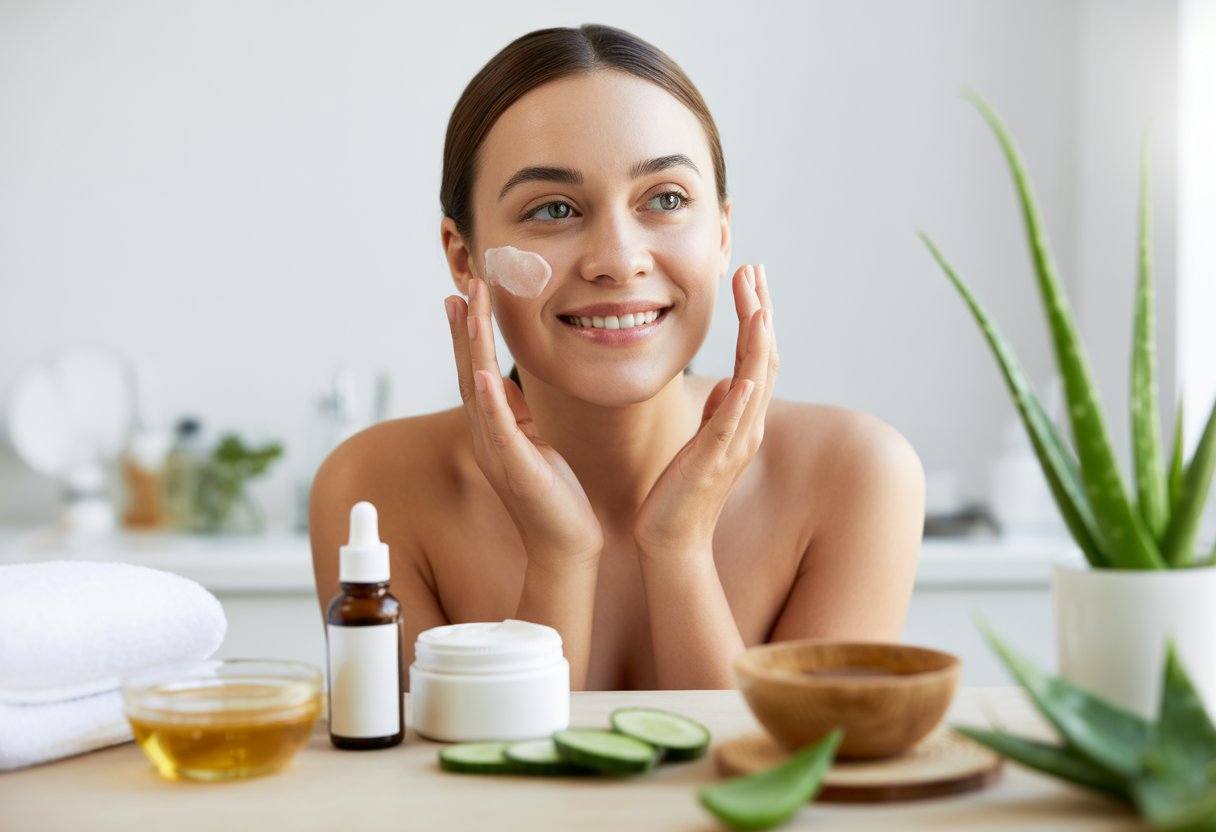
A consistent routine with the right products can transform dull skin in days. The key lies in gentle cleansing to remove buildup, strategic exfoliation to shed dead cells, and deep moisturizing to strengthen the skin barrier.
Gentle Cleansing and Double Cleanse
The double cleanse method[8] removes makeup, sunscreen, and daily grime that regular cleansing might miss. This two-step process starts with an oil-based cleanser to break down stubborn products and excess sebum.
The first cleanse uses an oil or balm cleanser. These products bind to oil-based impurities and lift them away without stripping the skin. A person should massage the cleanser onto dry skin for 30 to 60 seconds.
The second cleanse follows with a water-based cleanser suited to the skin type. This step removes any remaining residue and water-based debris like sweat. Someone with dull skin should choose a gentle, pH-balanced formula that won’t disrupt the skin barrier.
Morning cleansing can be simpler. Many people only need one gentle cleanse to remove overnight oil production and prepare skin for products. The double cleanse works best at night when removing accumulated pollution and products from the day.
Exfoliation Tips
Exfoliation removes the layer of dead skin cells that makes skin look flat and tired. Chemical exfoliants work better than physical scrubs for most people because they dissolve the bonds between dead cells without causing micro-tears.
Lactic acid stands out as one of the gentlest options for dull skin. This alpha hydroxy acid (AHA) brightens while hydrating, making it ideal for sensitive or dry complexions. People should start with a 5% concentration two times per week.
Over-exfoliation damages the skin barrier and creates more problems than it solves. Signs include redness, sensitivity, increased breakouts, and a tight feeling after cleansing. Someone experiencing these symptoms should stop all exfoliation for one to two weeks.
The frequency depends on skin type and the exfoliant strength. Oily skin tolerates three to four sessions weekly, while dry or sensitive skin does better with once or twice per week. A person should always exfoliate at night and follow with sunscreen the next morning, as these products increase sun sensitivity.
Essential Moisturizing Techniques
Applying moisturizer twice a day locks in hydration and repairs the protective barrier. Morning moisturizers should be lightweight and layer well under sunscreen, while night creams can be richer and more restorative.
Three key ingredients strengthen dull skin:
- Hyaluronic acid holds up to 1,000 times its weight in water
- Ceramides rebuild the lipid barrier between skin cells
- Glycerin draws moisture from the air into the skin
The proper application technique[9] matters as much as the product. A person should apply moisturizer to damp skin within 60 seconds of cleansing. This traps water in the skin and helps active ingredients penetrate better.
Layering products from thinnest to thickest maximizes absorption. Serums go first, followed by a regular moisturizer, then a night cream if desired. Someone with very dry or dull skin can seal everything in with a few drops of facial oil as the final step.
Hydration: Internal and External Strategies
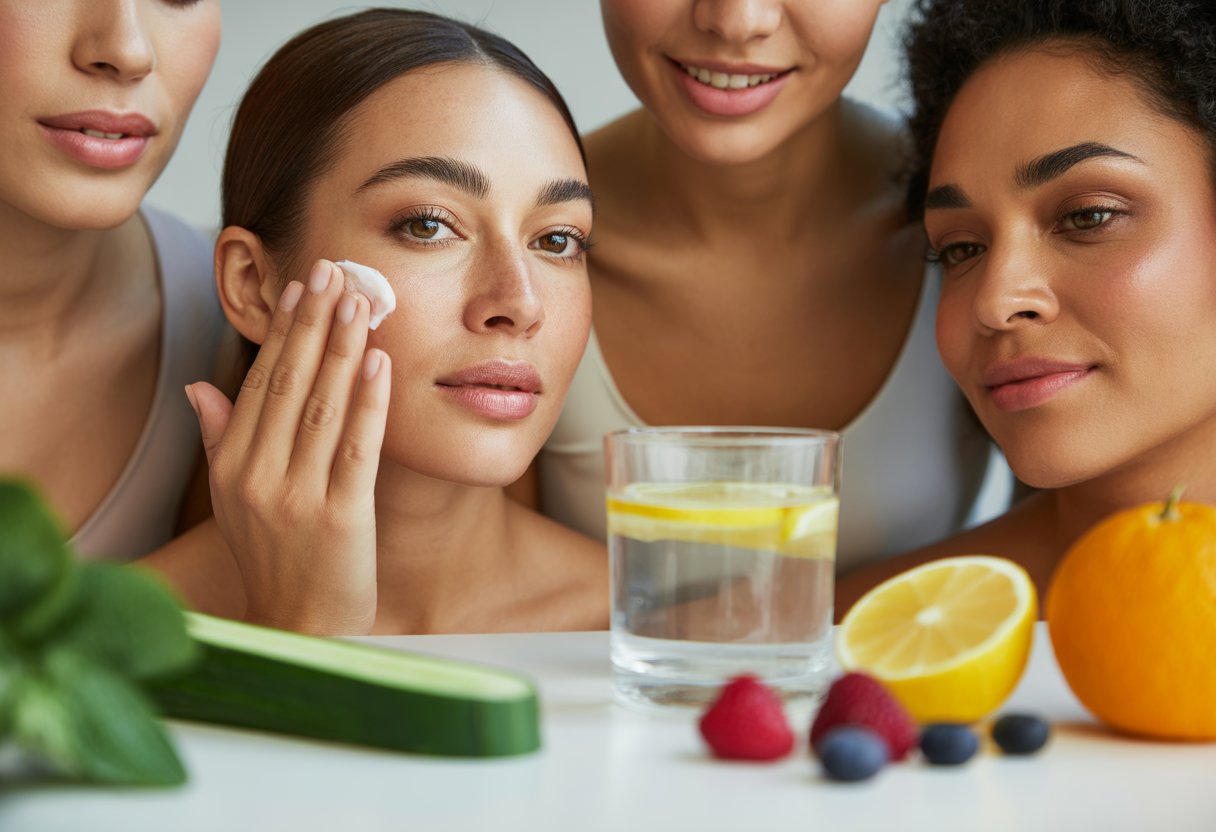
Dull skin often signals a lack of proper hydration from both what you consume and what you apply topically. Drinking enough water supports skin cells from within, while using products with humectants like hyaluronic acid helps lock moisture into the skin’s surface.
Importance of Drinking Water
Water intake directly affects how skin cells function and appear. When the body lacks adequate hydration, skin can look tired and less vibrant.
Drinking water helps flush toxins from the body and supports the delivery of nutrients to skin cells. However, water alone won’t fully hydrate your skin[10] without proper skincare and diet.
The best approach combines drinking water throughout the day with eating water-rich foods. Fruits and vegetables like cucumbers, watermelon, and oranges boost the body’s total water content. These foods also provide antioxidants that support healthy skin function.
Limiting dehydrating beverages matters too. Coffee, alcohol, and high-sodium drinks can pull moisture from the body. When consuming these drinks, balance them with extra water to offset their drying effects.
Hydrating Skincare Ingredients
The right topical ingredients draw water into skin and prevent moisture loss. Three types of ingredients work together[10] to combat dehydrated skin effectively.
Humectants pull water into the outer skin layer. Key humectants include:
- Hyaluronic acid
- Glycerin
- Aloe vera
Emollients strengthen the skin barrier and improve texture. These include ceramides, squalane, and fatty acids.
Occlusives create a protective seal that prevents water from evaporating. Common occlusives are petrolatum, beeswax, and mineral oil.
Apply moisturizer to slightly damp skin after cleansing. This helps the product trap water before it evaporates. Using a heavier moisturizer at night gives skin extra support while you sleep.
Natural Remedies to Brighten Dull Skin

Ingredients from the kitchen can transform tired-looking skin through masks, scrubs, and targeted treatments. Natural remedies like lemon, honey, and aloe vera[1] work by removing dead cells and reducing excess pigmentation.
DIY Face Masks and Scrubs
A honey and lemon face mask combines two powerful ingredients that address dullness. Honey contains alpha-hydroxy acids that reduce pigmentation, while lemon provides vitamin C to brighten skin. Mix one tablespoon of honey with fresh lemon juice and apply for 15-20 minutes before rinsing.
Aloe vera gel mixed with brown sugar creates an effective exfoliating treatment. The aloe vera inhibits melanin production while the sugar’s texture removes dead skin cells. This combination should be left on skin for 15-20 minutes twice weekly.
Yogurt-based masks deliver L-cysteine, which reduces pigmentation naturally. Combine half a cup of yogurt with one tablespoon of honey for a brightening treatment[11] that works in 10-15 minutes. The lactic acid in yogurt gently exfoliates while moisturizing.
A cucumber and aloe vera blend provides vitamin C and bioactive compounds. Blend half a cucumber with one tablespoon of aloe vera gel and apply weekly for visible results.
Safe Home Treatments
Antioxidant-rich foods consumed internally support skin health from within. Dark chocolate contains cocoa with antioxidants that neutralize oxidative stress and prevent cell deterioration. Chia seeds provide omega-3 fatty acids that maintain skin barrier function.
Hydration remains essential for preventing dullness. Drinking adequate water keeps skin cells plump and helps flush toxins that contribute to a lackluster appearance.
Sugar scrubs made with brown sugar[12], olive oil, and honey physically remove dead skin without harsh chemicals. The gentle abrasion reveals fresh cells underneath while the oils prevent over-drying.
Patch testing any new ingredient prevents adverse reactions. Apply a small amount to the inner wrist and wait 24 hours before using on the face. Lemon juice requires extra caution since it increases sun sensitivity and may cause stinging.
Protecting Skin From Further Damage
Daily sun protection and reducing exposure to environmental pollutants help maintain skin’s natural radiance and prevent new damage from forming. These protective measures work together to shield skin from the main causes of dullness and premature aging.
Using Sunscreen Daily
Applying sunscreen every morning protects skin from UV rays that cause dullness, dark spots, and premature aging. A broad-spectrum SPF 30 or higher blocks both UVA and UVB rays that damage skin cells and break down collagen.
Sunscreen should be worn even on cloudy days since UV rays penetrate through clouds. Apply it as the last step of a morning skincare routine, using about a nickel-sized amount for the face and neck.
Research shows that people who use sunscreen daily with SPF 30+[2] experience fewer signs of sun damage over time. Reapply every two hours when spending extended time outdoors.
Look for formulas that layer well under makeup. Many modern sunscreens come in lightweight textures that won’t feel heavy or greasy on skin.
Minimizing Environmental Stressors
Air pollution, harsh weather, and other environmental factors create free radicals that damage skin cells and cause dullness. These environmental stressors break down the skin’s protective barrier and accelerate aging.
Applying an antioxidant serum each morning helps neutralize free radicals before they harm skin. Ingredients like vitamin C, green tea, and resveratrol provide strong defense against environmental damage.
Cleansing face thoroughly each night removes pollutants and debris that accumulate during the day. Leaving this buildup on skin overnight can clog pores and contribute to a lackluster appearance.
During extreme weather conditions, protect skin with appropriate barriers. Use a heavier moisturizer in cold, dry air and avoid prolonged exposure to harsh winds that strip moisture from skin.
Advanced Solutions for Fast Radiance

Targeted skincare actives and professional treatments can deliver visible brightness improvements in days rather than weeks. These methods work by accelerating cell turnover, boosting collagen production, and addressing pigmentation at deeper skin layers.
Serums and Targeted Actives
Vitamin C serum stands as one of the most effective brightening treatments available. It neutralizes free radicals and inhibits melanin production while supporting collagen synthesis. A person should apply it in the morning under sunscreen for maximum benefit.
Retinol and retinoids speed up cell turnover to reveal fresh skin underneath. A retinoid works by pushing dull, damaged cells to the surface faster while stimulating new cell growth. Starting with a low concentration helps skin build tolerance.
Niacinamide reduces inflammation and regulates oil production while fading dark spots. It works well with most other actives and suits sensitive skin types. Many people see brightness improvements within two weeks of consistent use.
Salicylic acid penetrates pores to dissolve dead skin buildup and excess oil. This beta hydroxy acid works particularly well for those with congested or acne-prone skin that appears dull.
In-Clinic and At-Home Treatments
Chemical peels use concentrated acids to remove outer skin layers quickly. A chemical peel can range from gentle at-home formulas to professional-strength treatments that require downtime. Most people notice immediate brightness after even mild peels.
Microdermabrasion physically buffs away dead skin using fine crystals or a diamond-tipped wand. This treatment requires no downtime and delivers instant smoothness and glow.
Microneedling creates controlled micro-injuries that trigger healing and collagen production. The skin appears brighter and more even-toned as it repairs itself over the following weeks. Professional treatments penetrate deeper than at-home devices for more dramatic results.
Building a Sustainable Skin Care Routine
A good skincare routine requires avoiding common mistakes that damage the skin and sticking to consistent daily habits. These two elements work together to create lasting improvements in skin brightness and health.
Avoiding Skincare Mistakes
One of the biggest mistakes people make is over-exfoliating their skin. While exfoliation helps remove dead skin cells, doing it too often strips away the skin’s protective barrier. This leads to redness, irritation, and even more dullness.
Most people should exfoliate only 2-3 times per week. Using both a physical scrub and chemical exfoliant at the same time can be too harsh. It’s better to pick one type and see how the skin responds.
Another common error is skipping moisturizer, even on oily skin. Every skin type needs hydration to maintain a healthy glow. People also forget to remove makeup before bed, which lets dirt and oil clog pores overnight.
Using too many products at once can overwhelm the skin. A simple routine works better than layering 10 different serums. When in doubt, a dermatologist can help identify which products are actually needed.
Consistency and Best Practices
The best skin care routine is one that happens every single day. Skipping steps or only doing them occasionally won’t produce visible results. Morning and evening routines should become as automatic as brushing teeth.
A basic routine includes cleansing, moisturizing, and applying sunscreen in the morning. At night, cleansing and moisturizing are essential. Adding treatments like serums or retinol comes after mastering these basics.
Daily Skincare Checklist:
- Cleanse face morning and night
- Apply moisturizer while skin is still damp
- Use SPF 30 or higher every morning
- Remove all makeup before bed
- Drink at least 8 cups of water daily
It takes 4-6 weeks to see real changes from a new skincare routine. Switching products too quickly prevents the skin from adapting. Patience and regular application matter more than expensive products.
Lifestyle Factors That Affect Skin Radiance

Your daily choices directly impact how your skin looks and functions. The foods you eat, how well you sleep, and your everyday habits all play a role in whether your skin appears bright or dull.
Nutrition for Glowing Skin
What you put on your plate shows up on your face. Antioxidant-rich foods[1] help protect skin cells from damage that leads to dullness and premature aging.
Berries, leafy greens, and colorful vegetables contain vitamins C and E that support healthy skin function. These nutrients help protect against environmental stress and promote a more even skin tone. Citrus fruits and bell peppers are especially high in vitamin C, which plays a key role in collagen production.
Omega-3 fatty acids keep skin cell membranes strong and flexible. These healthy fats are found in salmon, walnuts, and flaxseeds. They help maintain the skin’s natural oil barrier, which keeps moisture in and irritants out.
Resveratrol, found in grapes and red wine, has properties that may help protect skin cells. Green tea contains compounds that support skin health when consumed regularly. Drinking enough water throughout the day helps skin cells stay plump and function properly.
Quality Sleep and Stress Management
Sleep is when your body repairs skin damage from the day. During deep sleep, blood flow to the skin increases and collagen production ramps up. Getting 7-9 hours of sleep each night gives skin time to regenerate.
Poor sleep disrupts this repair process. Aging skin becomes more noticeable when sleep is consistently inadequate. Dark circles, fine lines, and a tired appearance all stem from lack of rest.
Stress triggers hormones that can break down collagen and reduce skin’s ability to retain moisture. High stress levels show up as breakouts, inflammation, and a lackluster complexion. Managing stress through deep breathing, regular movement, or meditation helps maintain skin’s natural glow.
Daily Habits That Support Skin Health
Regular physical activity boosts circulation, delivering oxygen and nutrients to skin cells. Exercise also helps flush out toxins through sweat. Even 30 minutes of movement most days makes a visible difference.
Smoking restricts blood flow to the skin and damages collagen and elastin fibers. This habit accelerates aging and creates a gray, dull appearance that’s hard to reverse.
Limiting alcohol intake helps skin stay hydrated and reduces inflammation. Excessive drinking dehydrates the body and skin, leading to puffiness and dullness. Keeping alcohol moderate allows skin to maintain its natural moisture balance.
Touching your face transfers dirt and bacteria from your hands. This can clog pores and trigger breakouts that make skin look uneven. Being mindful of this habit helps keep skin clearer and brighter.
How to Prevent Dull Skin Long Term
Keeping skin bright over time requires consistent daily habits and the flexibility to adjust routines as needs change. Building strong prevention strategies protects against collagen breakdown, sun damage, and uneven skin tone while supporting radiant skin for years to come.
Maintenance Strategies
Daily sunscreen use stands as the most important step for preventing dull skin. UV exposure causes sun damage that leads to dark spots, hyperpigmentation, and a breakdown of collagen and elastin. A broad-spectrum SPF 30 or higher blocks harmful rays that create uneven skin tone and premature aging.
Regular exfoliation keeps dead cells from building up on the skin’s surface. Using chemical exfoliants like alpha-hydroxy acids or salicylic acid two to three times weekly helps maintain cell turnover without irritation. This process reveals fresher skin and reduces the appearance of dark spots.
Consistent moisturizer application maintains hydration that keeps skin plump and glowing. Products containing hyaluronic acid, niacinamide, or ceramides help lock in moisture and support the skin barrier.
A nutrient-rich diet and adequate sleep support skin health from within. Poor sleep disrupts natural repair processes, while environmental pollutants cause oxidative stress[4] that damages cells and reduces radiance.
Adjusting Routines With Age or Season
Skin needs shift with seasonal changes and aging. Winter weather often requires heavier moisturizers to combat dryness from cold outdoor temperatures and indoor heating. Summer routines benefit from lighter formulas and increased sun protection during extended outdoor time.
As skin ages, incorporating retinol stimulates collagen production[13] and speeds up cell turnover to address hyperpigmentation and maintain an even skin tone. Starting with two to three applications weekly allows skin to adjust before increasing frequency.
Vitamin C serums become increasingly valuable over time for protecting against free radical damage and brightening dark spots. Adding antioxidant protection helps maintain radiant skin as environmental exposure accumulates. Hydrating masks can be used multiple times weekly during dry periods, while exfoliating treatments should remain spaced out to prevent irritation.
Frequently Asked Questions
People often wonder about quick natural solutions for brightening their skin and which daily practices make the biggest difference. Understanding the root causes of dullness helps choose the most effective treatments.
What natural home remedies can help brighten dull skin quickly?
Lemon juice works as a natural brightener because it contains vitamin C, which helps improve complexion. A person can apply fresh lemon juice with a cotton pad and leave it on for 15-20 minutes before rinsing.
Honey mixed with lemon provides quick results for dull skin. The combination reduces excessive pigmentation while making skin look more supple.
Aloe vera gel acts as a melanin production inhibitor, which helps reverse hyperpigmentation effects. Mixing one tablespoon of aloe vera gel with a teaspoon of brown sugar creates an effective scrub that brightens skin in 15-20 minutes.
Sugar scrubs remove dead skin cells due to their slightly abrasive texture. Combining half a cup of brown sugar with two tablespoons of olive oil and one tablespoon of honey creates a scrub that reveals brighter skin underneath.
Cucumber contains vitamin C and bioactive compounds that reduce pigmentation. Blending half a cucumber with a tablespoon of aloe vera gel creates a mask that brightens skin after just one weekly application.
Which daily habits improve skin’s radiance effectively and naturally?
Drinking enough water throughout the day keeps skin hydrated and prevents the tired, dull appearance that comes from dehydration. Staying properly hydrated makes lackluster skin look supple and replenished.
Applying sunscreen before going outside protects against UV damage, especially between 9 AM and 4 PM when the sun’s rays are strongest. UV exposure can cause significant damage to skin[1] and contribute to dullness.
Eating a well-balanced diet with nutrient-rich foods ensures skin receives proper nourishment from the inside out. Poor eating habits force the body to neglect skin health, which leads to a dull complexion.
Removing makeup and cleansing the face before bed prevents pore clogging from pollution and environmental stressors. A consistent cleansing routine keeps skin clear and maintains its natural glow.
Managing stress levels helps prevent stress-related skin issues like acne, pimples, and dullness. The skin shows clear signs when a person experiences high stress levels.
Why does my complexion appear dull and fatigued, and how can I treat this?
Dull skin develops slowly from a combination of internal and external triggers[3] rather than appearing overnight. Lifestyle choices, environmental stress, and skincare products all contribute to a lackluster complexion.
Pollution from daily commutes and outdoor activities clogs skin pores with smoke and dust. This buildup affects the natural glow and causes uneven skin tone over time.
Dead skin cell accumulation on the surface prevents light from reflecting evenly off the face. Exfoliating once or twice weekly removes this layer and reveals fresher, brighter skin underneath.
Lack of proper sleep gives skin a tired appearance because the body needs rest to repair and regenerate cells. Getting adequate sleep allows skin to recover and maintain its healthy appearance.
Dehydration makes skin look exhausted and flat. Drinking water regularly and using hydrating skincare products restores moisture and brings back a healthy appearance.
What are the signs indicating that my skin has become dull?
Skin that has lost its natural radiance or glow appears dull. The complexion looks aged, exhausted, and unhealthy compared to vibrant, healthy skin.
An uneven skin tone with visible blemishes and spots indicates dullness. These imperfections prevent light from reflecting evenly across the face.
Fine lines and wrinkles can develop as signs of aging or photoaging. These features make skin look less vibrant and contribute to an overall dull appearance.
The absence of a healthy glow or luminosity marks dull skin. Fresh, healthy skin naturally reflects light, while dull skin appears flat and lifeless.
Could you suggest a natural weekly skincare routine to revitalize dull skin?
A weekly chocolate mask made from melted dark chocolate, milk, and honey provides antioxidants that reduce skin cell deterioration. Applying this mixture once per week for 15-20 minutes helps combat dullness.
Exfoliating with a walnut scrub once weekly removes dead cells and brightens the complexion. Mixing crushed walnuts with yogurt creates a natural scrub that contains tyrosinase inhibitors to reduce pigmentation.
Using a pineapple face pack once per week takes advantage of sulfur-containing compounds that inhibit tyrosinase activity. Blending pineapple slices with gram flour creates a paste that reduces pigmentation when applied for 10-15 minutes.
A neem face pack applied weekly inhibits tyrosinase activity and reduces excessive pigmentation. Blending neem leaves with yogurt and honey creates a brightening treatment that works in 15-20 minutes.
Applying a yogurt and honey mask twice weekly provides L-cysteine, which inhibits tyrosinase activity. This combination reduces pigmentation while nourishing the skin naturally.
What lifestyle changes can rejuvenate a dull and darkened face?
Establishing a consistent sleep schedule allows skin cells to repair and regenerate properly. The body performs essential maintenance during rest periods that keeps skin looking fresh and healthy.
Reducing exposure to pollution by cleansing skin immediately after being outdoors prevents buildup in pores. Washing the face removes environmental stressors before they damage the skin’s natural barrier.
Increasing intake of fruits and vegetables provides essential vitamins and antioxidants that support skin health. Foods rich in vitamin C, vitamin E, and other nutrients feed skin from within.
Limiting sun exposure during peak hours and wearing protective clothing shields skin from harmful UV rays. This prevents photodamage that contributes to premature aging and dullness.
Drinking at least eight glasses of water daily maintains proper hydration levels throughout the body and skin. Adequate water intake keeps skin plump and prevents the dehydrated look that causes dullness.
Practicing stress management through meditation, exercise, or hobbies reduces the negative impact stress has on skin appearance. Lower stress levels lead to fewer breakouts and a healthier overall complexion.
Post Views: 2
References
- How To Brighten Dull Skin: 10 Natural Remedies For Radiant Glow. https://www.stylecraze.com/articles/effective-home-remedies-to-get-rid-of-dull-skin/ Accessed March 26, 2026
- Uneven skin tone. https://www.goodhousekeeping.com/beauty/anti-aging/a36993/dull-skin-causes/ Accessed March 26, 2026
- Dull Skin? 6 Hidden Causes + Dermatologist-Approved Fixes – Dermatology of Seattle & Bellevue. https://dermatologyseattle.com/why-skin-looks-dull/ Accessed March 26, 2026
- Understanding Skin Dullness: Causes, Prevention, and Treatments. https://www.westlakedermatology.com/blog/skin-dullness-causes-prevention-treatments/ Accessed March 26, 2026
- Why Does My Skin Look Dull? 7 Causes + How to Fix It. https://www.solawave.co/blogs/news/causes-and-solutions-for-dull-skin Accessed March 26, 2026
- Why Does My Skin Look Dull? Common Causes and Solutions. https://www.schweigerderm.com/skin-care-articles/skin-care-tips/my-skin-looks-dull/ Accessed March 26, 2026
- collagen breakdown. https://www.goodhousekeaking.com/beauty/anti-aging/a36993/dull-skin-causes/ Accessed March 26, 2026
- 10 Easy Ways to Revive Dull Skin. https://www.themilliondollarmama.com/easy-ways-to-revive-dull-skin/ Accessed March 26, 2026
- Simple Daily Skincare Routine: The 5-Step Guide That Actually Works
– SONSIE®. https://sonsieskin.com/blogs/journal/simple-daily-skincare-routine Accessed March 26, 2026 - water alone won’t fully hydrate your skin. https://www.prevention.com/beauty/skin-care/a36292880/how-to-hydrate-skin/ Accessed March 26, 2026
- 11 Ways to Make Your Skin Glow Naturally at Home. https://greatist.com/health/home-remedies-for-glowing-skin Accessed March 26, 2026
- How to Brighten Dull Skin Naturally – Herbal Remedies and Natural Cures. https://www.homeremedycentral.com/en/home-remedies/natural-cure/how-to-brighten-dull-skin-naturally.html Accessed March 26, 2026
- incorporating retinol stimulates collagen production. https://www.womenshealthmag.com/beauty/a61946702/how-to-brighten-dull-skin/ Accessed March 26, 2026

























