Medically Reviewed
Dr. Jose Rossello, MD, PhD, MHCM
Preventive Medicine & Public Health Specialist
Last Reviewed: April 20, 2026
Americans spend over 400 hours in the kitchen each year, but many common kitchen items contain harmful chemicals that can affect health. Plastic containers, non-stick pans, and conventional cleaning products all release toxins into food and air. These chemicals can build up in the body over time and create long-term health concerns.
Creating a toxic-free kitchen involves replacing harmful materials with safer alternatives like glass storage, stainless steel cookware, and natural cleaning products. The good news is that making a kitchen healthier doesn’t require an expensive overhaul all at once. Simple swaps can make a big difference.
Making conscious choices to replace kitchen items[1] that contain harmful chemicals with safer options protects both personal health and the environment. Small changes add up to create a healthier cooking and eating space for the whole family.
Table of Contents
Key Takeaways
- Replace plastic containers and non-stick cookware with glass, stainless steel, or cast iron alternatives
- Use natural cleaning products and wooden utensils instead of plastic versions that release harmful chemicals
- Filter tap water and choose organic produce to reduce exposure to toxins in food and drinks
Understanding Kitchen Toxins
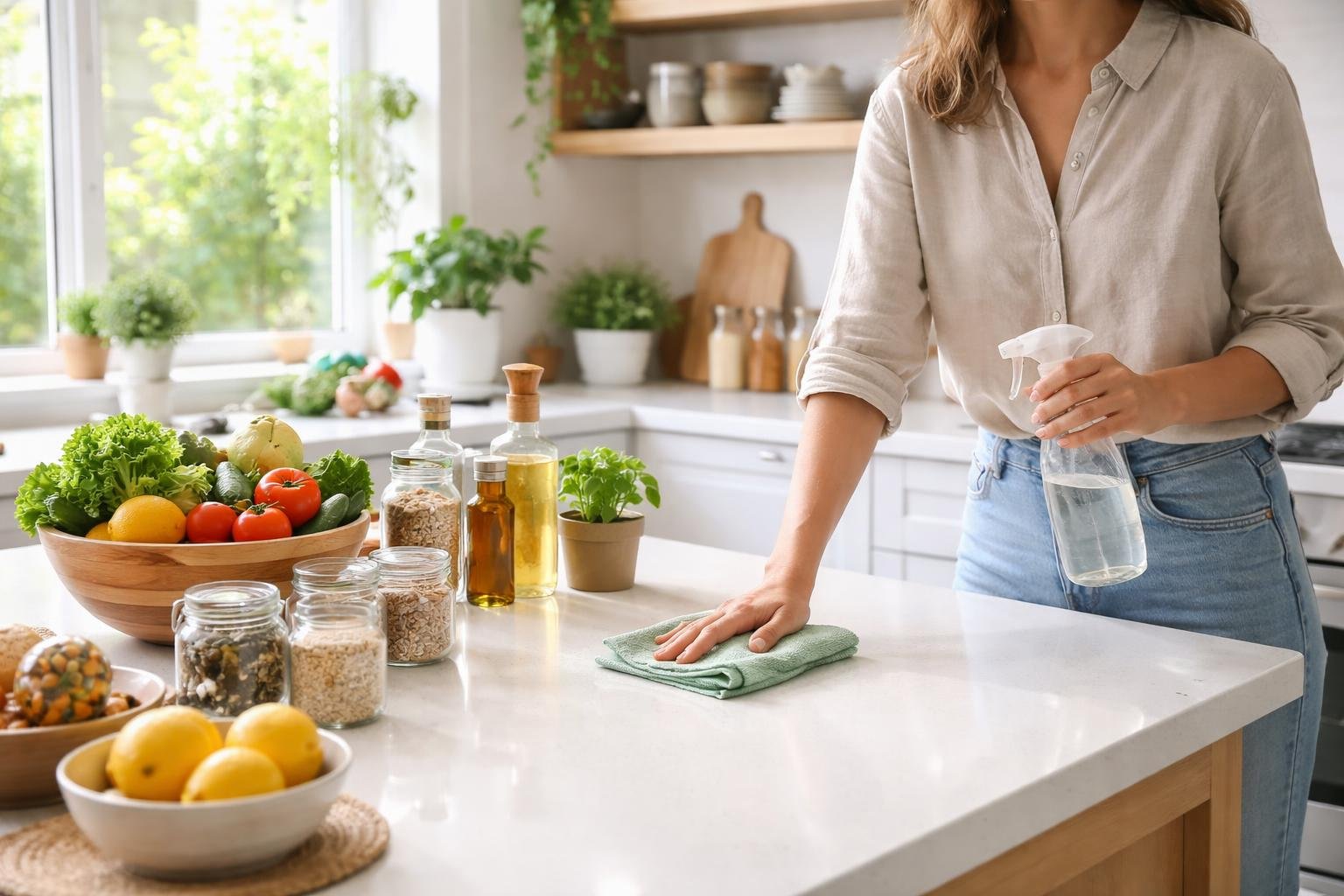
Many kitchens contain harmful chemicals that can affect health through food contamination, air pollution, and skin contact. These substances range from pesticides on produce to chemicals in cookware and cleaning products that can disrupt hormones and harm overall wellness.
Common Toxic Chemicals in the Kitchen
PFAS (per- and polyfluoroalkyl substances), also known as forever chemicals, appear in non-stick cookware and food packaging. These compounds resist breaking down in the environment or human body. Bisphenol A (BPA) leaches from plastic containers and can liners into food and beverages. Phthalates make plastics flexible and show up in food storage containers, vinyl flooring, and plastic wrap.
Cleaning products introduce additional risks. Ammonia and bleach create strong fumes that irritate lungs and skin. Triclosan, an antibacterial agent, appears in dish soaps and sponges. Synthetic fragrances in cleaners often contain undisclosed chemicals that may trigger allergic reactions. Formaldehyde can off-gas from pressed wood cabinets and flooring.
PFOA (perfluorooctanoic acid) was commonly used in Teflon production until recent years. 1,4-dioxane contaminates some dish soaps as a manufacturing byproduct. Parabens preserve liquid hand soaps and other products. Chlorine in tap water and cleaning solutions creates respiratory irritation when heated or mixed with other substances.
Health Effects of Kitchen Toxins
Endocrine disruptors like BPA and phthalates interfere with hormone production and regulation. These chemicals can affect reproductive health, metabolism, and developmental processes in children. Research links BPA exposure to increased risks of obesity, diabetes, and cardiovascular problems.
PFAS accumulation in the body connects to immune system suppression, thyroid disorders, and certain cancers. The chemicals build up over time because the body cannot eliminate them efficiently. Common kitchen toxins[2] can disrupt gut health and overall wellness.
Respiratory issues develop from inhaling fumes from ammonia, bleach, and synthetic fragrances. Short-term exposure causes coughing and throat irritation. Long-term contact with these substances may trigger asthma or chronic respiratory conditions. Skin contact with harsh chemicals leads to dermatitis and allergic reactions in sensitive individuals.
Hidden Sources of Toxins in Everyday Products
Non-stick pans coated with PFAS-based materials release toxic fumes when overheated. Plastic food containers marked with recycling codes 3, 6, and 7 often contain BPA or phthalates. Canned goods have linings that may leach bisphenol compounds into acidic foods like tomatoes.
Kitchen sponges and antibacterial soaps frequently contain triclosan. Scented trash bags, air fresheners, and dish soaps hide synthetic fragrances with unlisted chemical ingredients. Conventional produce carries pesticide residues that transfer to cutting boards and preparation surfaces.
Tap water delivers chlorine and potentially lead from old pipes. Pressed wood cutting boards and cabinets release formaldehyde gas, especially when new. Paper towels and napkins sometimes contain PFAS for water resistance. Microwave popcorn bags have PFAS-based grease-resistant coatings that transfer to food during heating.
Choose Non-Toxic Cookware and Bakeware
The pots, pans, and baking dishes you use every day can release harmful chemicals into your food. Materials like cast iron, stainless steel, and ceramic provide safe alternatives that don’t leach toxins when heated.
Elevate Your Health for Just $29.99/Month
Join the Precision Wellness Subscription at My Healing 365 and get discounted services, priority coaching access, virtual care, and exclusive wellness resources to support your physical, emotional, and hormonal health.
Join for $29.99/MonthSafest Alternatives to Non-Stick Cookware
Cast iron skillets offer a naturally non-stick surface when properly seasoned. Lodge produces affordable cast iron cookware that lasts for generations. Enameled cast iron from brands like Le Creuset combines the benefits of cast iron with a protective coating that doesn’t require seasoning.
Stainless steel cookware[3] handles high heat without releasing chemicals. It’s durable and versatile for most cooking methods.
Ceramic cookware with a PFAS-free coating provides non-stick performance without forever chemicals. GreenPan[3] uses a ceramic coating based on silicon dioxide. Our Place offers multifunctional ceramic-coated pieces in attractive designs.
Pure ceramic options like Xtrema cookware contain only clay, water, and natural minerals. These pieces are completely free of metal and chemical coatings.
Best Materials: Cast Iron, Stainless Steel, Stoneware, and Ceramic
Cast iron excels at heat retention and develops a natural non-stick surface over time. It can go from stovetop to oven without issue. The material adds small amounts of iron to food, which benefits people with iron deficiencies.
Stainless steel resists corrosion and doesn’t react with acidic foods. Look for pieces marked 18/10, which indicates high-quality chromium and nickel content. It requires some fat or oil to prevent sticking but delivers excellent browning.
Stoneware and ceramic bakeware work well for oven use. Pyrex makes glass bakeware that’s been a kitchen staple for decades. Pure ceramic cookware withstands extremely high temperatures without off-gassing. These materials distribute heat evenly for consistent baking results.
Non-toxic bakeware made from these materials replaces traditional non-stick options safely.
What to Avoid: Teflon, PFOA, PTFE, and Other Harmful Coatings
PFAS represents a class of over 12,000 chemicals used in conventional non-stick cookware. These forever chemicals don’t break down in the environment and accumulate in human blood and organs.
PFOA (perfluorooctanoic acid) was phased out in 2016 due to links to cancer and birth defects[3]. PTFE, also called polytetrafluoroethylene or Teflon, releases toxic fumes when overheated that can cause flu-like symptoms in humans and kill pet birds.
Labels claiming “PFOA-free” mean little since the chemical is already banned. Look for “PFAS-free” instead to avoid all forever chemicals in this family.
GenX, a newer replacement for PFOA, may be even more toxic[3] than the chemical it replaced. The least toxic cookware avoids all synthetic non-stick coatings entirely. Teflon-free options protect both your health and the environment from chemical contamination.
Switch to Safe Food Storage Solutions
Plastic food containers and wraps can release harmful chemicals into meals, but safer materials like glass, stainless steel, and silicone offer effective alternatives. Making simple swaps in food storage protects health while keeping meals fresh.
Dangers of Plastic Containers and Wraps
Plastic food containers pose significant health risks due to chemical leaching. When food contacts plastic, especially during heating, chemicals like BPA and phthalates can transfer into meals.
BPA is an endocrine disruptor linked to hormone imbalances, reproductive issues, and increased cancer risk. Even containers labeled BPA-free may contain similar chemicals that behave the same way. Phthalates, used to make plastics flexible, interfere with normal hormone function and have been connected to fertility problems.
PVC-based plastic wraps present additional concerns. Studies show that up to 95% of BPA can leach into food within just two hours of contact. Heat accelerates this process, making microwaving in plastic particularly problematic.
Plastic wrap often contains plasticizers that migrate into fatty or acidic foods. The average household uses around 100 plastic containers weekly, creating repeated exposure to these substances.
Non-Toxic Alternatives: Glass, Stainless Steel, and Silicone
Glass storage containers[4] provide the safest option for food storage. They are non-porous, preventing bacterial growth and chemical leaching. Glass withstands microwave and dishwasher use without degrading or releasing toxins.
Stainless steel containers offer exceptional durability and chemical-free storage. High-grade materials like 18/8 or 304 stainless steel resist corrosion and work well for acidic foods like soups and dressings. Brands like EcoLunchbox[1] manufacture reliable stainless steel options.
Food-grade silicone food storage bags and containers tolerate extreme temperatures without leaching chemicals. They collapse for easy storage and last for years with proper care.
Beeswax wraps provide a reusable alternative to plastic wrap. These fabric wraps coated in beeswax mold around food and containers using hand warmth. They work well for covering bowls and wrapping produce but should not contact raw meat.
How to Store Food Without Toxins
Choose glass food storage containers with tight-fitting lids for leftovers and meal prep. Look for products tested by NSF International or UL for safety verification.
Use unbleached parchment paper instead of plastic wrap when covering dishes or lining baking sheets. This paper contains no harmful coatings or chlorine bleach.
Replace plastic containers gradually, starting with those used for fatty or acidic foods. These foods pull chemicals from plastic more readily than dry goods.
Storage best practices:
- Store hot foods only after cooling to room temperature
- Hand wash containers with mild soap to extend lifespan
- Inspect containers regularly for cracks or damage
- Use separate containers for raw meat to prevent contamination
- Label containers with dates using non-toxic markers
Mason jars work well for storing dry goods, soups, and smoothies[5]. They cost $1-2 each and come in various sizes. Stainless steel utensils prevent scratching container surfaces during use.
Safer Cooking Oils and Ingredients
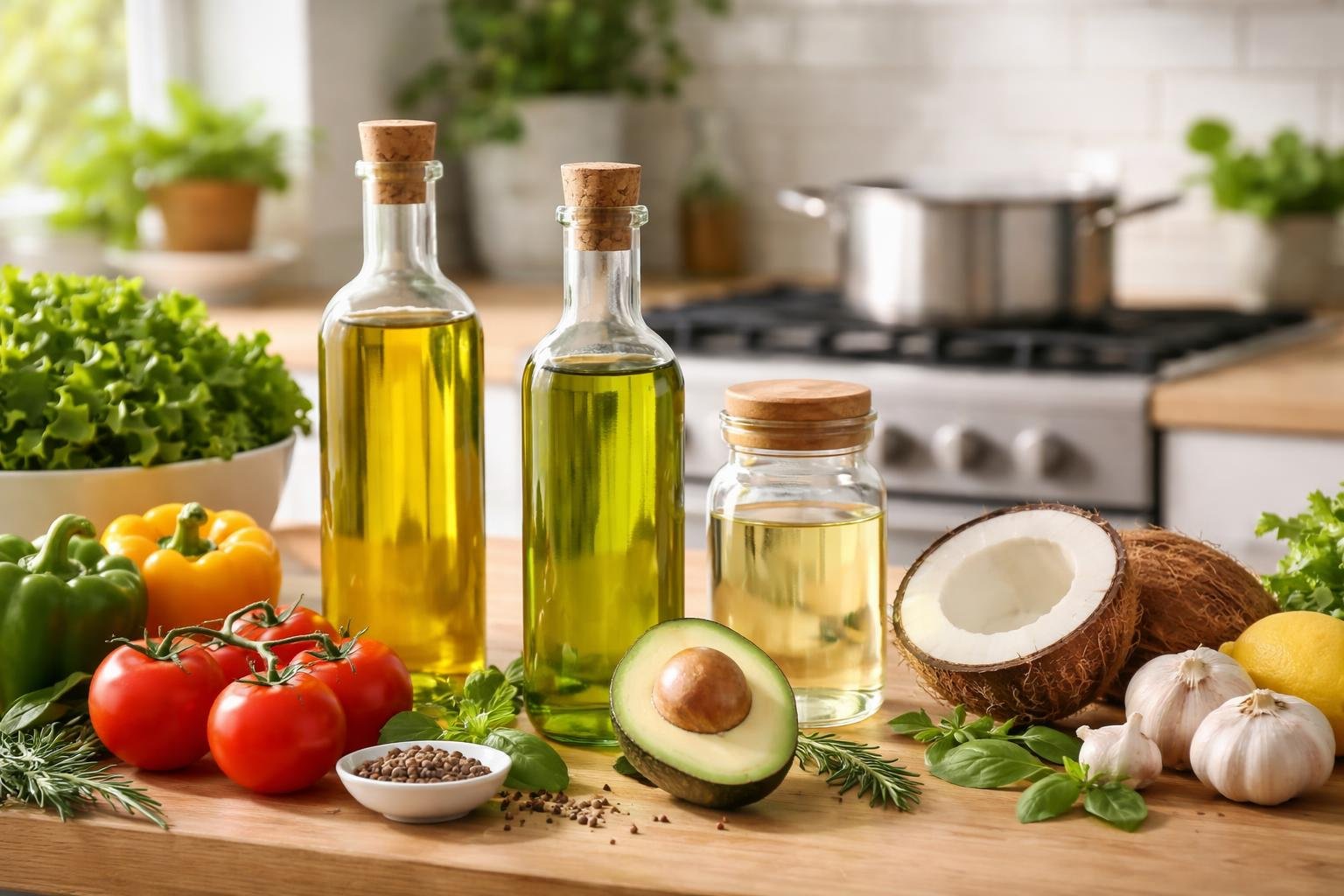
The oils and ingredients used in daily cooking can either support health or introduce unwanted chemicals into meals. Choosing stable fats, organic whole foods, and minimally processed pantry items helps create a cleaner cooking environment.
Selecting Non-Toxic Cooking Fats and Oils
Not all cooking oils perform equally when exposed to heat. Industrial seed oils like canola, soybean, corn, sunflower, and safflower oils undergo heavy processing with chemical solvents and high temperatures. These refined vegetable oils contain unstable polyunsaturated fats[6] that break down easily during cooking.
For high-heat cooking, saturated fats remain more stable. Coconut oil contains approximately 90% saturated fat, making it ideal for frying and stir-frying. Ghee (clarified butter) offers a high smoke point and works well for searing meats. Beef tallow and butter also handle moderate to high temperatures without degrading.
Olive oil and avocado oil suit low to medium-heat applications. Extra virgin olive oil contains antioxidants and anti-inflammatory compounds but shouldn’t be used for high-temperature cooking. It works best drizzled raw over finished dishes or used in dressings. Avocado oil has a slightly higher smoke point and can handle gentle sautéing.
When oil begins smoking in the pan, it has reached its breakdown point and starts forming harmful compounds. Keeping temperatures controlled protects both flavor and health.
Organic and Whole Food Pantry Staples
Buying organic produce reduces exposure to synthetic pesticides and herbicides that accumulate on conventionally grown fruits and vegetables. Items like berries, leafy greens, and apples consistently show higher pesticide residues when grown conventionally.
Whole foods like dried beans, lentils, rice, quinoa, and oats provide nutrient-dense pantry staples without added preservatives or processing chemicals. These ingredients form the foundation of clean home cooking.
Fresh herbs, spices, sea salt, and raw honey add flavor without artificial additives. Storing these items in glass containers instead of plastic prevents chemical leaching. Nuts and seeds should be purchased raw and stored in cool, dark places to prevent rancidity.
Minimizing Processed and Contaminated Ingredients
Processed foods often contain industrial seed oils, artificial preservatives, synthetic colors, and flavor enhancers. Reading ingredient labels helps identify these additives. Shorter ingredient lists with recognizable items typically indicate less processing.
Certain fish accumulate mercury and other heavy metals from polluted waters. Large predatory fish like swordfish, shark, and king mackerel contain higher mercury levels. Smaller fish such as sardines, anchovies, and wild-caught salmon offer safer options.
Canned goods may contain BPA or other chemicals in their linings. Choosing products in glass jars or BPA-free cans reduces this exposure. Rinsing canned beans and vegetables before use also helps remove some preservatives and excess sodium.
Opt for Non-Toxic Cleaning Practices
Regular cleaning supplies can release harmful chemicals into the air and leave residue on surfaces where food is prepared. Common ingredients like phthalates, ammonia, and synthetic fragrances have been linked to respiratory issues and hormone disruption.
Toxic Cleaning Products to Avoid
Several ingredients in conventional cleaning products pose health risks. Phthalates, often hidden in synthetic fragrances, can disrupt hormones. Triclosan, found in antibacterial products, may contribute to antibiotic resistance. Ammonia irritates the lungs and eyes. Chlorine bleach creates toxic fumes that can damage respiratory systems.
Many conventional cleaners release volatile organic compounds (VOCs)[7] that linger in indoor air. Products labeled “green” or “natural” can still contain questionable ingredients since the cleaning product industry remains largely unregulated.
Ingredients to watch out for:
- Synthetic fragrances (may contain phthalates)
- Triclosan and antibacterial agents
- Ammonia
- Chlorine bleach
- Quaternary ammonium compounds (quats)
- 2-butoxyethanol
People should check labels carefully and avoid products that don’t list all ingredients.
Effective Non-Toxic Cleaning Supplies and Brands
Several companies offer genuinely safe cleaning supplies. Branch Basics provides a concentrated starter kit that works for multiple cleaning tasks. Mamasuds offers plant-based formulas free from synthetic additives. Blueland sells refillable tablets that reduce plastic waste while maintaining cleaning power.
Non-toxic dish soap[1] options should be free from synthetic fragrances and dyes. Look for third-party certifications when selecting eco-friendly products. Green Seal and EcoLogo verify that products meet strict environmental and health standards.
Trusted certifications include:
- Green Seal
- EcoLogo
- EPA Safer Choice
- Leaping Bunny (cruelty-free)
These certifications help consumers identify genuinely safe natural cleaning products without extensive research.
Homemade and Natural Cleaning Alternatives
Creating homemade cleaners requires just a few basic ingredients. Castile soap works for everything from countertops to floors. White vinegar cuts through grease and acts as a disinfectant. Baking soda serves as a gentle abrasive and deodorizer.
A simple all-purpose spray combines castile soap, rubbing alcohol, and water. For tougher jobs, mix baking soda with a small amount of water to form a paste. This works well on stovetops and sinks.
Basic cleaning ingredient list:
- Castile soap (liquid or bar)
- White vinegar (30% cleaning vinegar for stronger power)
- Baking soda
- Hydrogen peroxide
- Essential oils (tea tree, lemon, or lavender)
Most people can clean their entire kitchen with these five items. They cost less than buying multiple specialized products and reduce storage clutter under the sink.
Improve Water Quality in the Kitchen
Tap water often contains chemicals that pass federal standards but may still affect health. The right filtration system removes specific contaminants based on local water quality.
Risks in Unfiltered Tap Water
U.S. drinking water typically meets federal regulations, but it often contains chemicals that can harm health[8]. Common contaminants include chlorine, lead, pesticides, and PFAS (forever chemicals). These substances can disrupt hormones and cause other health issues over time.
Heavy metals like lead leach from old pipes into water supplies. PFAS chemicals resist breakdown and accumulate in the body. Chlorine byproducts form when treatment chemicals react with organic matter.
Fluoride appears in many municipal water systems. While added for dental health, some prefer to filter it out. Other concerning substances include pharmaceutical residues, microplastics, and agricultural runoff chemicals.
Choosing the Right Filtration System
Different filters remove different contaminants. The first step involves checking local water quality to identify what needs filtering. Testing reveals which specific chemicals require removal.
Countertop filters work well for common contaminants without requiring installation. Under-sink systems offer higher capacity and better filtration for larger households. Pitcher filters provide basic protection at lower cost but need frequent replacement.
Filter replacement schedules matter greatly. An expired filter can make water worse than unfiltered tap water. Following manufacturer guidelines prevents this problem.
Reverse osmosis systems remove the widest range of contaminants, including fluoride, heavy metals, and PFAS. Carbon filters handle chlorine and improve taste. Multi-stage systems combine technologies for comprehensive protection.
Trusted Filters and Brands for a Safer Kitchen
Clearly Filtered pitchers and under-sink systems target specific contaminants with independent testing verification. Their filters address PFAS, lead, and hundreds of other chemicals.
AquaTru reverse osmosis countertop systems require no installation and remove over 80 contaminants. The four-stage filtration process handles everything from chlorine to fluoride.
ZeroWater pitchers use five-stage filtration and include a water quality meter. They remove dissolved solids that other pitcher filters miss.
When selecting a water filter, look for NSF certification. This independent testing confirms the filter removes what it claims. Check certification numbers against specific contaminants of concern.
Filtered water beats bottled water[8] for both cost and safety. Bottled water companies don’t have to disclose testing results, and plastic bottles add microplastic contamination. A stainless steel bottle filled with filtered water provides the safest drinking option.
Switching to safer kitchen tools reduces exposure to harmful chemicals that can leach into food during cooking. The right materials make a difference in both health and performance.
Benefits of Switching to Non-Toxic Utensils
Traditional plastic and coated utensils often contain BPA, phthalates, and other chemicals that transfer into food when heated. Non-toxic kitchen utensils[1] eliminate this risk while offering better durability.
These safer options don’t break down or release microplastics over time. They resist high temperatures without melting or warping. Many last for years, which means less waste and fewer replacements.
Non-toxic cooking utensils[9] also protect cookware from scratches and damage. Wood and silicone won’t scrape non-stick surfaces. Stainless steel handles high-heat tasks without deteriorating.
The investment pays off through improved food safety and reduced chemical exposure for the whole household.
Materials to Choose: Wood, Stainless Steel, Silicone
Wood utensils are naturally antibacterial and won’t scratch pots or pans. Hardwoods like maple, teak, and beech resist moisture and odors. They need occasional conditioning with food-grade mineral oil to prevent cracking.
Stainless steel utensils should be 18/8 or 18/10 grade for the safest option. These numbers indicate 18% chromium and 8-10% nickel, which provide corrosion resistance and durability. Stainless steel utensils[10] handle high heat and acidic foods without reacting or leaching metals.
Silicone utensils made from food-grade silicone withstand temperatures up to 500°F without releasing chemicals. A silicone spatula flexibly scrapes bowls clean and works well on delicate surfaces. Look for platinum-grade or LFGB-certified products to avoid fillers and unsafe dyes.
Each material serves different cooking needs while maintaining safety standards.
Cutting Boards and Kitchen Accessories
A wood cutting board provides a natural, knife-friendly surface that doesn’t dull blades. Bamboo boards offer similar benefits with faster renewability. Both resist bacteria growth when properly maintained through regular washing and oiling.
Non-toxic cutting boards[11] should avoid plastic versions that shed microplastics into food with each cut. Glass boards, while easy to clean, quickly damage knife edges.
Kitchen accessories like mixing bowls, measuring cups, and storage containers benefit from the same material upgrades. Glass and stainless steel containers replace plastic options that degrade over time. These materials don’t absorb odors or stains and clean thoroughly in the dishwasher.
Replacing worn items first makes the transition manageable. Focus on the tools used most frequently for the biggest impact on daily chemical exposure.
Adopting a Non-Toxic Kitchen Lifestyle
Making the shift to toxin-free living requires practical planning and consistent habits. Small changes in daily routines, careful budget considerations, and proper care of safer products all contribute to building a sustainable non-toxic home.
Transitioning to a Toxin-Free Routine
Starting with a non-toxic kitchen[12] doesn’t mean replacing everything at once. Homeowners should begin by identifying the most frequently used items that come into direct contact with food.
Priority replacement order:
- Plastic food storage containers
- Non-stick cookware
- Chemical-based cleaners
- Single-use plastic wraps
Reading labels becomes essential when choosing replacement products. The EWG provides databases that help identify harmful ingredients in common kitchen items. People should look for certifications like “BPA-free” or “PFOA-free” on new purchases.
Families can create a replacement timeline that spreads costs over several months. As plastic containers crack or cookware wears out, they replace them with safer alternatives like glass or stainless steel. This approach makes the transition to a toxin-free lifestyle[13] more manageable financially and less overwhelming.
Budgeting and Planning for Toxin-Free Living
Creating a non-toxic lifestyle[14] requires financial planning. Quality non-toxic products often cost more upfront but last longer than conventional options.
Budget-friendly strategies:
- Replace items gradually as they wear out
- Buy secondhand glass and stainless steel items
- Make homemade cleaners with vinegar and baking soda
- Choose multi-purpose products over specialized ones
Setting aside a monthly budget of $30-50 allows families to make consistent progress. They should prioritize items that pose the highest health risks first, like plastic food storage that contains BPA[1], which can leach into food when heated.
Investing in durable materials saves money long-term. A quality stainless steel pan might cost $100 but lasts decades, while cheap non-stick cookware needs replacement every few years.
Maintaining and Caring for Non-Toxic Products
Proper care extends the life of non-toxic kitchen items and maintains their safety. Different materials require specific cleaning and storage methods.
Material-specific care:
- Glass: Hand wash with mild soap to prevent chips
- Stainless steel: Dry immediately to prevent water spots
- Wood utensils: Oil monthly with food-safe mineral oil
- Silicone: Air dry completely to prevent mildew
Ceramic and cast iron cookware need gentle handling. Abrasive scrubbers can damage protective surfaces and reduce their non-toxic benefits. Users should follow manufacturer guidelines for seasoning and cleaning these materials.
Storage matters for non-toxic living[15] too. Keeping wood utensils in dry areas prevents bacterial growth. Glass containers should be stored where they won’t chip or break. Regular inspection helps identify wear before products become unsafe.
Frequently Asked Questions
Many people have questions about identifying toxic materials in their kitchens and finding safer replacements. Understanding which products pose the greatest risks helps prioritize improvements for better health outcomes.
What are the most common sources of toxic exposure in a typical kitchen?
Nonstick cookware contains PTFE chemicals[13] that have been detected in the bloodstream of 98% of study participants. These pans release harmful compounds when heated.
Plastic food storage containers and bags leak endocrine-disrupting chemicals into food. The problem worsens when plastic is heated in microwaves or dishwashers.
Most tap water contains chlorine, mercury, and fluoride. These heavy metals accumulate in the body over time.
Conventional cleaning products emit formaldehyde, bleach, ammonia, and synthetic fragrances into the air. These chemicals settle on surfaces where food is prepared.
Cooking oils like canola, vegetable, and grapeseed oil turn rancid at low temperatures. This process creates toxic compounds that enter the body through food.
Which cookware materials are considered safest for fertility and overall health?
Stainless steel cookware from brands like All-Clad or Tramontina 3-ply provides a non-reactive cooking surface. This material doesn’t leach chemicals into food at any temperature.
Cast iron and enameled cast iron from Lodge or Le Creuset offer durability without toxins. These materials actually add small amounts of beneficial iron to food.
Carbon steel pans heat evenly and develop a natural nonstick surface over time. Taylor & Ng produces quality carbon steel options.
Glass bakeware from Pyrex or Ikea 365 works well for oven cooking and food storage. Glass remains stable at high temperatures and never releases chemicals.
True ceramic or stoneware cookware provides another safe option. People should avoid products labeled “ceramic nonstick” as these contain different materials.
What are the most concerning kitchen tools and materials to replace first?
Nonstick pans pose the highest risk[16] because they’re used frequently and at high heat. Even pans marketed as “green” or “ceramic nonstick” can release harmful chemicals.
Plastic food containers should be replaced next since they contact food daily. The chemicals in plastic mimic hormones and create imbalances in the body.
Plastic wrap and bags transfer toxins directly to food during storage. This exposure happens every time someone packs lunch or stores leftovers.
Conventional cleaning sprays leave residue on countertops and dishes. These products also release toxic fumes that linger in enclosed kitchen spaces.
Tap water used for drinking and cooking delivers a constant stream of contaminants. Filtering water eliminates this daily exposure.
How can you identify PFAS, PFOA, lead, or cadmium risks in cookware and dishware?
Any cookware labeled as nonstick contains PFAS or PFOA unless specifically certified otherwise. The slippery coating requires these chemicals for production.
Brightly colored ceramic dishware and pottery may contain lead or cadmium in the glaze. Products made outside the United States often have fewer safety regulations.
Older cookware manufactured before 2013 more likely contains PFOA. Manufacturers phased out this specific chemical but replaced it with similar compounds.
Chipped or scratched nonstick surfaces release more particles into food. Visible damage indicates the protective barrier has broken down.
Products lacking clear material information or country of origin should raise concerns. Reputable manufacturers provide detailed composition data.
What are safer alternatives to nonstick pans and plastic food storage containers?
Glass containers with stainless steel or silicone lids eliminate plastic exposure. These containers work in ovens, microwaves, and freezers without releasing chemicals.
Stainless steel food storage works well for packed lunches and leftovers. Metal containers keep food fresh without hormone-disrupting effects.
Beeswax wraps replace plastic wrap for covering bowls and wrapping sandwiches. Parchment paper provides another single-use alternative.
Silicone storage bags offer flexibility similar to plastic without the toxins. These bags withstand dishwashers and can be reused hundreds of times.
Avocado oil, coconut oil, and grass-fed animal fats provide high-heat cooking options. These fats remain stable at cooking temperatures where other oils break down.
What are the best practices for cleaning and maintaining a low-tox kitchen without harsh chemicals?
Vinegar mixed with water cuts through grease on most surfaces. Adding lemon juice or essential oils improves the scent without synthetic fragrances.
Branch Basics and 7th Generation offer non-toxic commercial options[13] with minimal ingredients. These brands avoid formaldehyde, bleach, and ammonia.
Baking soda works as a gentle abrasive for stuck-on food. It can be mixed with water to form a paste for scrubbing without scratching.
Installing a Berkey water filter provides clean drinking and cooking water. Budget options include AquaPail or ZeroWater filters.
Regular maintenance prevents buildup that requires harsh cleaners. Wiping surfaces after each use keeps kitchens clean with simple soap and water.
Post Views: 5
References
- 21 Easy Non-Toxic Swaps For Your Kitchen. https://sustainablykindliving.com/best-non-toxic-swaps-kitchen/ Accessed April 21, 2026
- Most Common Toxins Found in a Kitchen and How to Reduce Exposure. https://www.cleanchemistry.net/post/most-common-toxins-found-in-a-kitchen-and-how-to-reduce-exposure Accessed April 21, 2026
- 9 Best Non-Toxic Cookware 2026. https://www.organicauthority.com/organic-food-recipes/non-toxic-cookware-brands-to-keep-chemicals-out-of-your-food Accessed April 21, 2026
- Non-Toxic Food Storage Containers: Healthy Cooking Made Easy. https://theecoshift.com/non-toxic-food-storage-containers-healthy-cooking-made-easy/ Accessed April 21, 2026
- How to Freeze Food Safely (Non-Toxic Food Storage). https://sarahputsimply.com/how-to-freeze-food-safely-non-toxic-food-storage/ Accessed April 21, 2026
- Best & Worst Cooking Oils for a Non-Toxic Kitchen – Non-Toxic Dad. https://nontoxicdad.com/solutions/best-worst-cooking-oils-for-a-non-toxic-kitchen/ Accessed April 21, 2026
- The Complete Guide to Non-Toxic Cleaning: From Products to Practices. https://thegoodnesswell.com/non-toxic-cleaning-guide/ Accessed April 21, 2026
- Toxic chemicals in the kitchen: 5 low-stress clean swaps. https://www.ewg.org/news-insights/news/2024/11/toxic-chemicals-kitchen-5-low-stress-clean-swaps Accessed April 21, 2026
- Want a Non-Toxic Kitchen? Here Are Some Simple Swaps to Start Today. https://greeningyourhomewithjen.com/kitchen-swaps/ Accessed April 21, 2026
- The Best Swaps For A Non-Toxic Kitchen. https://umbelorganics.com/6-swaps-toxin-free-kitchen/ Accessed April 21, 2026
- Creating a Toxin-Free Kitchen. https://www.apollohealthco.com/creating-a-toxin-free-kitchen/ Accessed April 21, 2026
- How to Create a Non-Toxic Kitchen. https://sustainablelifeideas.com/create-non-toxic-kitchen/ Accessed April 21, 2026
- 6 Ways to Create a Non-Toxic Kitchen. https://drnatashaf.com/non-toxic-kitchen/ Accessed April 21, 2026
- How to Build a Non-Toxic Kitchen: The Essential Guide
– Titanium Cooking. https://lowtoxkitchen.com/blogs/news/how-to-build-a-non-toxic-kitchen-the-essential-guide Accessed April 21, 2026 - 10 Ways to Create a Non-Toxic Kitchen . https://www.goingzerowaste.com/blog/non-toxic-kitchen/ Accessed April 21, 2026
- Your Kitchen Is Killing You. Tips To Eliminate Toxins.. https://www.mindbodydad.com/body/kitchen-toxins/ Accessed April 21, 2026

























