Medically Reviewed
Dr. Jose Rossello, MD, PhD, MHCM
Preventive Medicine & Public Health Specialist
Last Reviewed: April 22, 2026
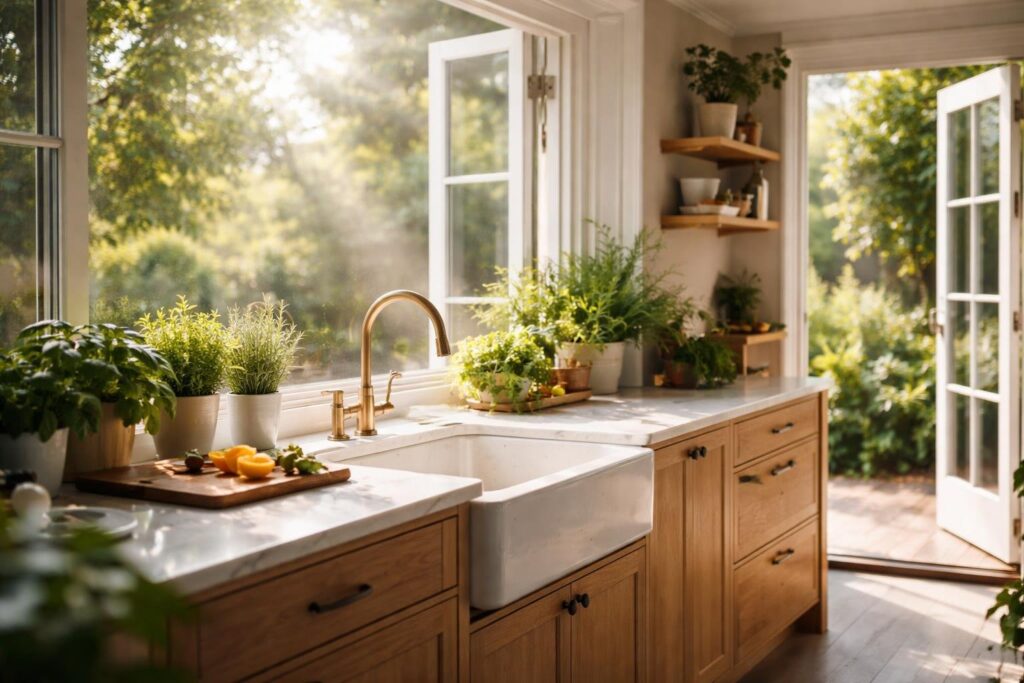
Your kitchen affects more than just the meals you cook. The design of this space can impact your physical health, mental wellbeing, and daily habits. A wellness kitchen combines thoughtful design elements like natural light, quality air filtration, and organized layouts to create an environment that supports healthier living.
Wellness kitchens focus on natural light, indoor/outdoor connections, good air and water quality[1] and tools that make cooking healthier. These spaces go beyond aesthetics to address how people prepare food, manage waste, and spend time in what many consider the heart of the home. Small changes in kitchen design can lead to better eating habits and reduced stress.
The good news is that creating a wellness kitchen doesn’t require a complete renovation. Simple updates like adding plants, improving lighting, or reorganizing storage can make a real difference. The following strategies show practical ways to transform any kitchen into a space that nourishes both body and mind.
Table of Contents
Key Takeaways
- Wellness kitchens use design elements like natural light and good air quality to support healthier daily habits
- Simple changes such as better organization and improved ventilation can create a more functional cooking space
- Smart material choices and accessible layouts help promote sustainable practices and reduce stress while cooking
Prioritizing Healthy Cooking and Eating
The right appliances and kitchen setup make nutritious cooking faster and easier. Steam ovens and air fryers reduce added fats while preserving nutrients, dedicated prep stations keep healthy ingredients organized, and intentional cooking habits help people connect with their food.
Incorporating Steam Ovens and Air Fryers
Steam ovens preserve vitamins and minerals that other cooking methods destroy. They cook vegetables, fish, and grains without added oils or fats. The gentle heat keeps food moist while maintaining its natural color and texture.
An air fryer cooks food with little to no oil while creating crispy results. Hot air circulation replaces deep frying, cutting fat content by up to 75% compared to traditional methods. These appliances work well for proteins, vegetables, and even reheating leftovers without making them soggy.
Both options fit into a wellness kitchen design[2] focused on preparing meals that support health goals. Steam ovens work especially well for batch cooking grains and proteins. Air fryers handle smaller portions quickly, making weeknight dinners simple.
These appliances take up counter or cabinet space, so planning their placement matters. Built-in steam ovens integrate into cabinetry for a clean look. Countertop air fryers need ventilation space around them to work properly.
Designing Spaces for Healthy Meal Prep
A dedicated meal prep station keeps healthy ingredients within reach. This area should include cutting boards, sharp knives, and storage containers in one convenient spot. Good lighting helps with precise chopping and portion control.
Essential meal prep station elements:
- Large cutting board for vegetables and proteins
- Quality chef’s knife and paring knife
- Glass storage containers in multiple sizes
- Measuring cups and spoons
- Compost bin for scraps
The station works best near the refrigerator to minimize steps when grabbing fresh produce. Counter space of at least 36 inches wide gives enough room to spread out ingredients. Drawers or shelves underneath store tools and containers so everything stays organized.
Cookware should live near the stove for easy access. Stainless steel or cast iron pans work better than non-stick options that may release harmful chemicals at high heat. Keeping healthy cooking tools visible encourages their regular use.
Mindful Cooking Practices
Mindful cooking means paying full attention to food preparation instead of rushing through it. This practice helps people make better ingredient choices and enjoy the cooking process. Turning off screens and focusing on chopping, stirring, and seasoning creates a calmer kitchen environment.
Reading recipes completely before starting prevents mistakes and reduces stress. Gathering all ingredients first, a practice called mise en place, makes cooking flow smoothly. This approach also helps people notice what they’re actually putting into meals.
Proper ventilation while cooking removes smoke and cooking fumes that affect air quality. Opening windows or running the range hood throughout meal preparation keeps the space healthier. These simple habits support both the physical environment and mental approach to healthy eating.
Tasting food as it cooks allows for seasoning adjustments without over-salting. Using fresh herbs and spices adds flavor while supporting health goals. Taking time to plate meals nicely, even on busy nights, reinforces the value of home-cooked food.
Maximizing Natural Light and Fresh Air
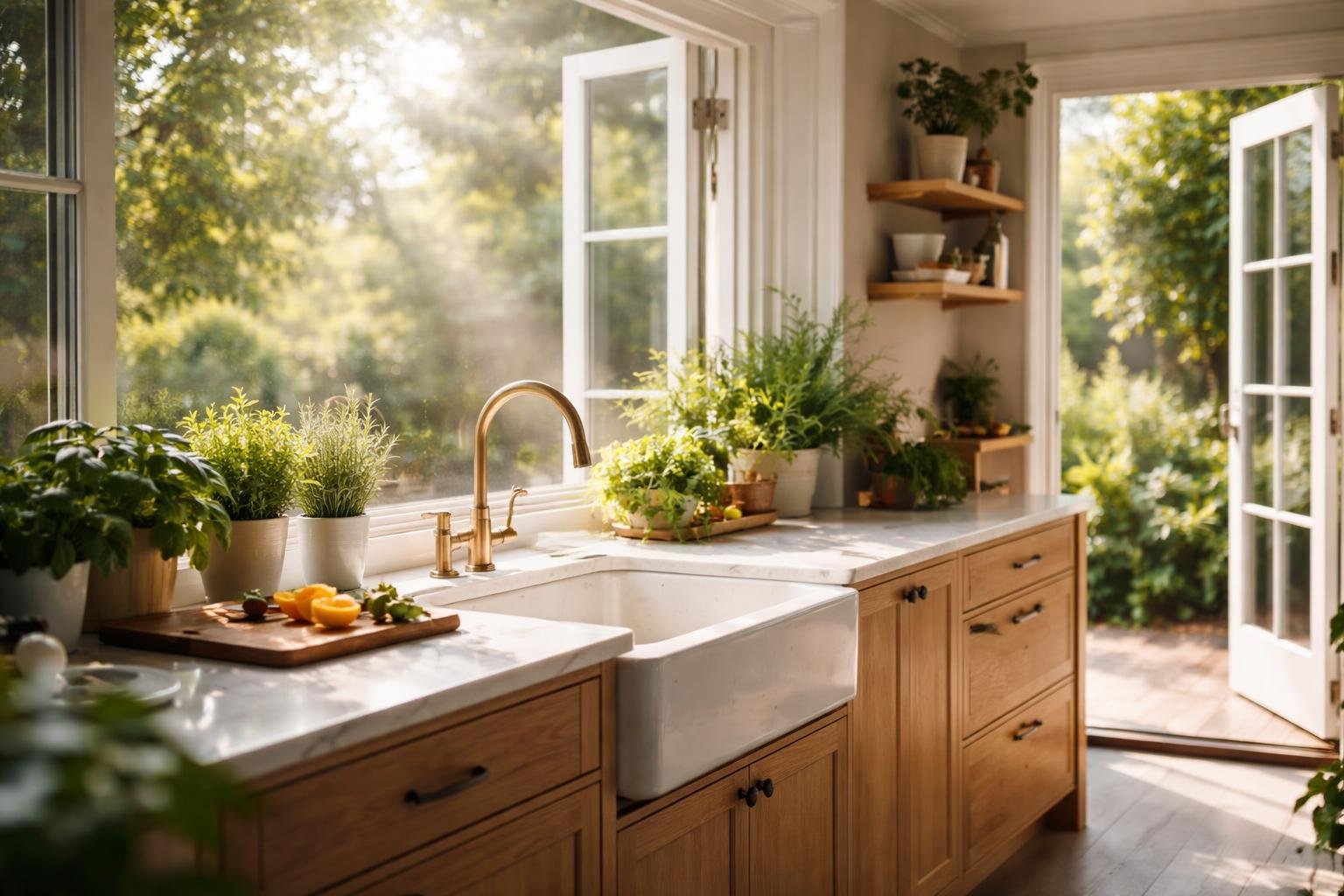
A wellness kitchen thrives on abundant natural light and clean air circulation. These elements work together to create a healthier cooking environment that supports both physical well-being and mental clarity.
Utilizing Windows and Skylights
Strategic placement of windows transforms a kitchen into a naturally bright space. Large windows positioned to capture sunlight throughout the day reduce the need for artificial lighting while improving mood and energy levels.
Skylights offer an effective solution for kitchens with limited wall space for windows. They bring light from above and can be positioned directly over work areas where task visibility matters most. Operable skylights provide the added benefit of releasing cooking heat and odors.
Banks of windows along one or more walls create dramatic natural light exposure. For best results, homeowners should consider the kitchen’s orientation and how sunlight moves through the space during different times of day. South-facing windows typically provide the most consistent natural light in northern hemisphere homes.
Embracing Biophilic and Indoor-Outdoor Connections
Biophilic design in wellness kitchens[1] brings the calming effects of nature indoors through physical connections to outdoor spaces. Sliding glass doors that open from the kitchen to a patio or garden extend the living area while flooding the space with fresh air and sunlight.
Indoor plants serve multiple purposes in wellness kitchen design. They purify the air naturally while adding visual interest and color. Options include:
- Herbs on windowsills for cooking and fresh scents
- Pothos plants requiring minimal maintenance
- Container gardens for growing vegetables
- Hydroponic herb drawers built into cabinetry
Natural materials like wood, rattan, and bamboo in cabinetry and furnishings reinforce the connection to nature. These elements combined with neutral, earth-tone colors create a tranquil atmosphere that supports healthy cooking habits.
Enhancing Air Quality Through Ventilation
Proper ventilation removes cooking fumes, odors, and airborne contaminants that affect indoor air quality. Wellness kitchen design should prioritize ventilation[1] from the planning stages, ensuring exhaust systems vent to exterior walls rather than recirculating air.
Range hoods with high-powered filtration eliminate gases and volatile organic compounds at their source. Induction ranges produce fewer pollutants than gas cooktops, making them a healthier choice for indoor air quality.
Opening windows while cooking provides immediate air circulation benefits. Cross-ventilation through multiple windows creates natural airflow that refreshes the entire space. Homeowners without elaborate ventilation systems can still improve air quality through this simple practice combined with an effective exhaust fan.
Smart and Sustainable Kitchen Design Choices
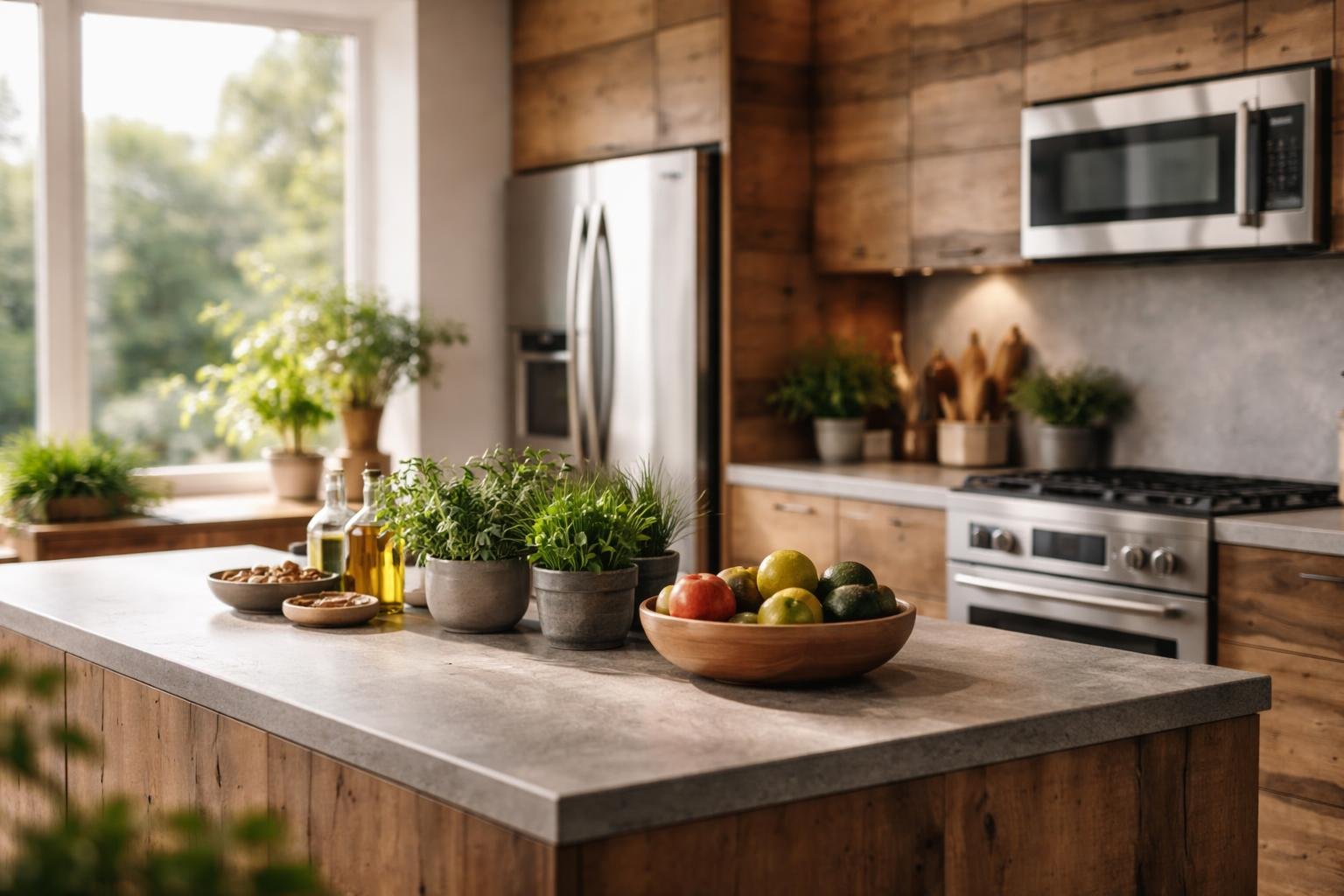
Building a wellness-focused kitchen means choosing materials that protect both personal health and the environment. The right appliances, finishes, and building materials create a space that supports long-term well-being while reducing environmental impact.
Selecting Sustainable Materials and Finishes
Natural materials form the foundation of a wellness kitchen. Stone countertops like granite, quartz, and soapstone resist bacteria naturally and don’t require harsh chemical cleaners. These surfaces last for decades and don’t release harmful chemicals into the air.
Reclaimed wood brings character to cabinets, shelving, and flooring while reducing demand for new lumber. This material has already gone through years of off-gassing, making it safer for indoor air quality. Bamboo offers another strong option since it grows quickly and regenerates without replanting.
Cork flooring provides cushioning underfoot and comes from tree bark that regrows after harvesting. It naturally resists mold and mildew without chemical treatments. Sustainable materials[3] benefit both home environments and the planet at large.
Incorporating Energy-Efficient Appliances
Energy Star-rated appliances use 10-50% less electricity and water than standard models. A high-efficiency refrigerator can save $300 or more over its lifetime while keeping food fresher.
Induction cooktops heat faster than gas or electric ranges and waste less energy. They keep kitchens cooler and improve air quality by eliminating combustion gases. Convection ovens cook food more evenly at lower temperatures, cutting cooking time by 25%.
Dishwashers with soil sensors adjust water use based on how dirty the dishes are. LED lighting under cabinets and in fixtures uses 75% less energy than incandescent bulbs and lasts 25 times longer.
Choosing Low-VOC Paints and Reclaimed Elements
Low-VOC paints release fewer volatile organic compounds into the air. Traditional paints can off-gas for months, causing headaches and respiratory issues. Zero-VOC options provide the same coverage without the chemical smell or health risks.
Cabinet finishes matter too. Water-based stains and sealers contain fewer toxins than oil-based products. Natural oils like linseed or tung oil protect wood without synthetic additives.
Reclaimed tiles, fixtures, and hardware reduce waste while adding unique style. Salvaged sinks, faucets, and light fixtures often feature better craftsmanship than modern mass-produced items. These choices align with wellness kitchen design principles[4] that prioritize health and sustainability together.
A well-organized kitchen reduces stress and makes healthy cooking easier by keeping tools and ingredients within reach. Proper storage systems and thoughtfully placed work zones help minimize unnecessary movement and physical strain during meal preparation.
Effective Pantry Organization
A clutter-free pantry makes it easier to see what food is available and helps people choose fresh ingredients over processed options. Clear containers for grains, beans, and nuts keep items visible and fresh while maximizing shelf space. Grouping similar items together—like baking supplies, canned goods, and snacks—creates zones that speed up cooking.
Labels on containers and shelves eliminate guesswork and help every household member find what they need quickly. Lazy Susans work well for corner shelves and make reaching spices or oils simple. Door-mounted racks add extra storage for smaller items without taking up valuable shelf space.
Regular pantry reviews help people donate unused items and restock healthy staples. Keeping frequently used ingredients at eye level reduces bending and reaching. A well-organized pantry encourages mindfulness[5] and makes choosing nutritious ingredients the path of least resistance.
Utilizing Open Shelving and Pull-Out Shelves
Open shelving puts everyday dishes and glasses within easy reach while creating a more spacious feel in smaller kitchens. This storage style works best for items used daily, as it eliminates the need to open cabinet doors repeatedly. However, open shelves require regular tidying to maintain a minimalist kitchen aesthetic.
Pull-out shelves solve the problem of hard-to-reach items in deep cabinets. These sliding shelves bring pots, pans, and small appliances forward for easy access. Installing them in base cabinets reduces the need to kneel or crouch, which protects joints and backs during cooking.
Smart storage solutions reduce clutter[1] and create a calmer cooking environment. Pull-out trash and recycling bins keep waste management simple and hygienic. Corner pull-outs maximize space that would otherwise go unused.
Creating Ergonomic Prep and Cooking Zones
The work triangle concept places the fridge, sink, and stove close together to reduce physical strain[6] during cooking. Each leg of the triangle should measure between 4 and 9 feet for optimal efficiency. This layout minimizes steps and keeps essential areas accessible.
A dedicated meal prep station with proper countertop height prevents neck and back pain during chopping and mixing tasks. Standard counter height sits at 36 inches, but taller cooks benefit from 38 to 39-inch surfaces. Some kitchens incorporate adjustable counter height sections that accommodate different tasks and users.
Wide pathways between work zones allow two people to cook together comfortably. Placing cutting boards near the sink simplifies vegetable washing and prep cleanup. Storing knives, measuring cups, and mixing bowls near the meal prep station keeps tools at hand and maintains smooth workflow throughout the cooking process.
Supporting Hydration and Fresh Ingredients

Clean water and fresh ingredients form the foundation of healthy eating habits. Proper storage solutions and filtration systems help maintain the quality of produce while making nutritious options more accessible.
Integrating a Water Filtration System
A water filtration system removes contaminants and improves the taste of drinking water. Many people avoid tap water due to concerns about chlorine, lead, or other chemicals. Installing a quality filtration system encourages better hydration throughout the day.
Under-sink filtration systems provide the most comprehensive cleaning without taking up counter space. These systems typically include multiple filter stages that remove sediment, chemicals, and heavy metals. Countertop filters offer a more affordable option that requires no installation.
Refrigerators with built-in filtration provide convenient access to cold, filtered water. Some models send alerts when it’s time to change the filter. Designing the kitchen to include access to clean drinking water[7] makes healthy hydration easier for everyone in the household.
Growing an Indoor Herb Garden
An indoor herb garden provides fresh flavors year-round without pesticides or preservatives. Herbs like basil, parsley, cilantro, and mint grow well in kitchen environments with adequate light. Fresh herbs contain more nutrients and flavor than dried versions.
Window-mounted gardens use natural sunlight and take up minimal space. LED grow lights allow herbs to thrive even in kitchens without south-facing windows. Compact hydroponic systems grow herbs faster than traditional soil methods.
Most herbs need at least six hours of light daily and consistent watering. Self-watering planters reduce maintenance while preventing overwatering. Having fresh herbs within reach while cooking encourages their use in everyday meals.
Incorporating Indoor Gardens and Fresh Produce Storage
An indoor garden extends beyond herbs to include microgreens, lettuce, and small vegetables. These plants provide nutrient-dense additions to meals. Vertical gardens maximize growing space in smaller kitchens.
Proper produce storage maintains freshness and reduces food waste. Refrigerators with humidity control drawers preserve fruits and vegetables longer. Clear containers make it easy to see what fresh ingredients are available.
Composting systems turn food scraps into nutrient-rich soil for indoor gardens. Countertop composters process waste without odors or pests. This creates a sustainable cycle where food waste nourishes new plant growth. Dedicated storage areas for fresh produce make healthy ingredients the first thing people see when preparing meals.
Leveraging Technology and Accessibility for Wellness
Modern wellness kitchens combine smart technology with thoughtful ergonomic design to support both physical comfort and mental ease. These features reduce daily stress while making healthy cooking habits more achievable for people of all abilities.
Implementing Smart Kitchen Features
Smart home technology[8] streamlines kitchen routines and reduces the mental load of meal preparation. Voice-controlled systems allow users to set timers, adjust lighting, or check recipes without touching devices with messy hands. Smart refrigerators can track food inventory and suggest recipes based on available ingredients, making healthy meal planning simpler.
Programmable appliances offer another layer of convenience. Coffee makers can brew at preset times to align with morning routines. Slow cookers with smartphone controls let people start dinner remotely, reducing the stress of rushed evening meal prep.
Circadian lighting systems[9] deserve special attention in wellness kitchens. These fixtures shift from bright, cool-toned light in the morning to warm, ambient light in the evening. This mimics natural sunlight patterns and supports better sleep quality and mood regulation throughout the day.
Ensuring Accessibility and Ergonomics
Adjustable counter heights make kitchens usable for people of different abilities and body types. Pull-down shelving systems bring items within reach without stretching or climbing. These features benefit everyone from wheelchair users to people with arthritis or back pain.
Proper task lighting prevents eye strain and reduces the risk of cooking injuries. Under-cabinet LED strips illuminate work surfaces without creating harsh shadows. Pendant lights over islands should hang at appropriate heights to provide focused light without glare.
Additional ergonomic considerations include:
- D-shaped cabinet handles that require less grip strength than knobs
- Soft-close drawers that prevent finger injuries and reduce noise stress
- Anti-fatigue mats at primary work stations to reduce leg and back strain
- Rounded countertop edges that prevent hip bruising and provide safer navigation
These design choices transform the kitchen into a space that supports physical wellness during daily cooking tasks.
Frequently Asked Questions
Wellness kitchen design involves specific choices about ventilation systems, material selection, lighting placement, and storage layouts that directly impact health outcomes. Understanding these practical elements helps homeowners make informed decisions about creating a kitchen environment that supports better air quality, reduces stress, and encourages nutritious eating habits.
What are the core principles of designing a kitchen that supports healthier daily habits?
A wellness kitchen prioritizes physical and mental health[10] through design choices that support nutrition, air quality, water purity, and overall wellbeing. The space should make healthy eating the easiest choice through strategic placement of appliances and storage systems.
Key elements include adequate refrigeration for fresh produce, proper ventilation to remove cooking fumes, and water filtration systems. Natural light through windows or sliding glass doors helps create an indoor/outdoor connection. The design should also accommodate multiple users comfortably and include dedicated spaces for meal preparation.
Storage solutions need to keep nutritious foods visible and accessible. Clutter-free counters reduce stress and make cooking more enjoyable. The kitchen should feel like a space people want to spend time in rather than avoid.
How can kitchen layout and workflow reduce stress and improve efficiency during meal prep?
Designing for multiple cooks requires adequate room to move without crowding. An oversized kitchen island with designated zones separates cooking areas from seating or homework spaces. This zoning approach prevents collisions and allows different activities to happen simultaneously.
Smart storage with interior accessories keeps cooking tools at easy reach. Drawers organized for knives, cutlery, packaged foods, and small appliances streamline the workflow. Task-oriented lighting illuminates work surfaces to prevent accidents and make food inspection easier.
The layout should reflect how the household actually uses the space. Families who cook together need different configurations than those who prepare meals solo. Placing frequently used items in convenient locations eliminates unnecessary steps and frustration.
Which materials and finishes are best for indoor air quality and low-toxicity kitchen design?
Natural materials like wood, rattan, and bamboo work well for flooring, cabinetry, and accents in a wellness-focused kitchen[11]. These materials avoid off-gassing associated with synthetic finishes. Quality materials with less paint and non-toxic compositions build a healthier home environment.
Neutral and calming colors dominate wellness kitchen design. These color choices create a peaceful atmosphere that supports mental wellbeing. The materials selected should withstand kitchen moisture and temperature changes without breaking down or releasing harmful compounds.
Countertop materials should be durable and easy to clean without harsh chemicals. Cabinet finishes need low or zero volatile organic compounds (VOCs). Flooring should be water-resistant and made from sustainable, non-toxic materials.
What lighting strategies create a more comfortable, functional, and mood-supportive kitchen?
Natural light through large windows or sliding glass doors provides the best illumination for wellness. This connection to outdoor light helps regulate circadian rhythms. Opening windows also brings in fresh air while reducing reliance on artificial lighting during daytime hours.
Task-oriented lighting makes foods look more appetizing and helps identify spoilage or improper cleaning. Proper lighting prevents accidents with knives and sharp objects. Better visibility improves food safety and makes cooking more pleasant.
Layered lighting combines ambient, task, and accent sources for flexibility. Dimmable fixtures allow adjustment based on time of day and activity. Warm-toned bulbs in eating areas create a relaxing atmosphere while cooler tones work better for food preparation zones.
How can ventilation and moisture control be optimized to maintain cleaner, healthier air in the kitchen?
Wellness kitchen design should begin with ventilation considerations[1] since air quality greatly affects health outcomes. Appliances must vent to an exterior wall to remove odors and fumes while cooking. A working exhaust fan or simply opening a window when cooking helps maintain air quality.
Elevate Your Health for Just $29.99/Month
Join the Precision Wellness Subscription at My Healing 365 and get discounted services, priority coaching access, virtual care, and exclusive wellness resources to support your physical, emotional, and hormonal health.
Join for $29.99/MonthInduction ranges reduce air pollution compared to gas cooking. Some ovens feature high-powered, integrated filtration to eliminate odors, gases, and VOCs at the source. These appliances prevent cooking byproducts from circulating throughout the home.
Proper whole-room ventilation extends beyond the range hood. Air should circulate throughout the kitchen to prevent moisture buildup and mold growth. Humidity control protects cabinets and prevents condensation on windows and walls.
What storage and organization choices make it easier to keep nutritious foods accessible and minimize clutter?
Adequate refrigeration space stores fresh haul from farmers markets and grocery stores. Some designs include an additional fridge dedicated to produce, while others use oversized single fridges with dedicated drawers. Refrigerated drawers integrated into the kitchen island make prep easier.
Concealed storage with organizational accessories keeps counters clear and minds calm. The minimalist kitchen aesthetic reduces clutter[12] and fosters mental serenity in the cooking space. Everything has a designated spot that makes sense for the cooking workflow.
Space for growing herbs and vegetables encourages use of fresh ingredients. Indoor container gardens on countertops or windowsills work well. Hydroponic herb drawers built into cabinets provide year-round access to fresh seasonings without taking up counter space.
Post Views: 2
References
- How to Design a Wellness Kitchen. https://www.newhomesource.com/learn/how-to-design-a-wellness-kitchen/ Accessed April 23, 2026
- Wellness Kitchen: Design for Health and Happiness. https://www.skinsimpletrue.com/wellness-kitchen-design/ Accessed April 23, 2026
- 429 Too Many Requests. https://kitchinsider.com/design-and-build-a-sustainable-kitchen/ Accessed April 23, 2026
- Wellness Kitchen Designs: Trends for Improved Well-Being. https://ucskitchendesign.com/enhance-well-being-at-home-leading-wellness-kitchen-design-trends-of-2024/ Accessed April 23, 2026
- well-organized pantry encourages mindfulness. https://ucskitchendesigns.com/enhance-well-being-at-home-leading-wellness-kitchen-design-trends-of-2024/ Accessed April 23, 2026
- Wellness Kitchen Design Tips for Peaceful Cooking. https://momfuse.com/wellness-kitchen-design/ Accessed April 23, 2026
- How to…Design a Kitchen That Supports Your Wellbeing Part 1
– WLLW. https://wllw.eco/blogs/journal/healthy-kitchen-design-ideas-part-1 Accessed April 23, 2026 - Leveraging Technology for Effective Wellness Programs | Corporate Wellness. https://www.corporatewellnessmagazine.com/article/leveraging-technology-for-effective-wellness-programs Accessed April 23, 2026
- Designing for Wellness: Kitchen and Bath Concepts That Support Self-Care – NKBA. https://nkba.org/news/design-trends-news/designing-for-wellness-kitchen-and-bath-concepts-that-support-self-care/ Accessed April 23, 2026
- Wellness-Focused Kitchen Design: Health & Smart Tech. https://spdc.net/wellness-focused-kitchen-design-health-smart-tech/ Accessed April 23, 2026
- The Wellness Kitchen: Healthy Kitchen Design Options for Everyday Living. https://kitchensandspaces.com/2025/05/28/healthy-kitchen-design-ideas-for-everyday-living/ Accessed April 23, 2026
- Designing a Kitchen that Supports Healthy Eating: The Complete Guide to Creating Your Wellness-Centered Culinary Space. https://allabouthomeandgarden.com/designing-a-kitchen-that-supports-healthy-eating-the-complete-guide-to-creating-your-wellness-centered-culinary-space/ Accessed April 23, 2026

























